
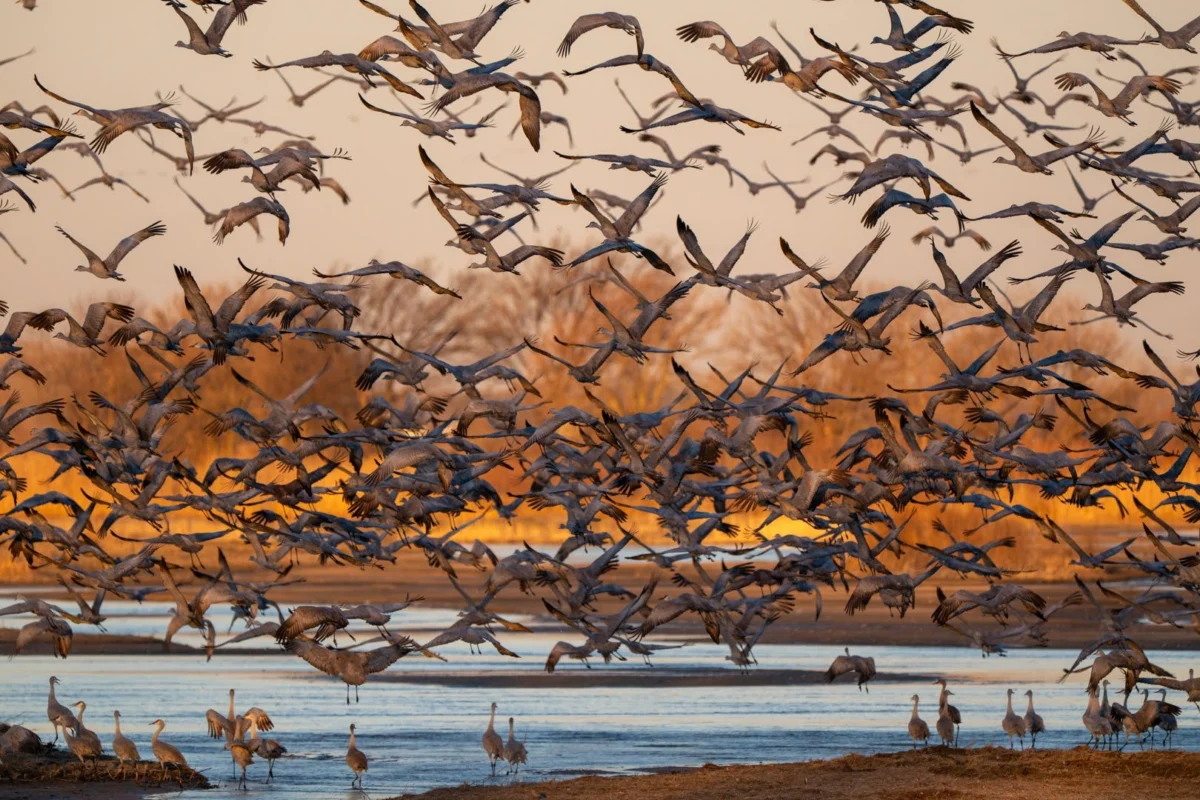
For more than half a century, the Iain Nicolson Audubon Center at Rowe Sanctuary has stood as a cornerstone of ecological preservation in Central Nebraska. Tasked with the protection of Sandhill Cranes, Whooping Cranes, and a vast array of migratory species, the sanctuary has functioned as the primary guardian of the Platte River’s unique ecosystem. As environmental pressures mount and migratory patterns shift, the sanctuary has officially released its updated strategic plan for 2025–2030, a roadmap designed to align local conservation efforts with the broader, hemispheric goals of the National Audubon Society.
A Half-Century of Conservation Legacy
Established to mitigate the loss of vital riparian habitats, Rowe Sanctuary serves as a critical stopover point along the Central Flyway. Each spring, the Platte River valley witnesses one of the world’s most significant wildlife spectacles: the congregation of nearly half a million Sandhill Cranes. This phenomenon is not merely a tourist attraction but a biological necessity for the species’ survival.
Since its inception, the sanctuary has evolved from a localized monitoring effort into a comprehensive research and education hub. Over the past 50 years, the challenges facing the Platte River have shifted from direct habitat destruction to more complex issues, including climate-induced hydrological changes, agricultural encroachment, and the degradation of riverine morphology. By codifying a new five-year strategy, the sanctuary aims to address these modern threats through a structured, data-driven approach that balances the needs of native wildlife with the realities of human land use.
The Flight Plan: A Hemispheric Framework
The foundation of Rowe Sanctuary’s new strategy is the National Audubon Society’s "Flight Plan." This overarching initiative was developed in response to a 2019 study published in the journal Science, which confirmed that North America has lost nearly 3 billion birds since 1970—a decline of roughly 29%.
The "Flight Plan" is designed to "bend the bird curve" by focusing on four strategic pillars: Habitat Conservation, Climate Action, Policy, and Community Building. By integrating these pillars into the regional context of the Platte River, Rowe Sanctuary ensures that its local activities contribute to a continental effort to reverse population collapses. This alignment is critical, as migratory birds are inherently transboundary; the success of a crane population in Nebraska is inextricably linked to habitat quality in both their northern breeding grounds and southern wintering areas.
Chronology of Strategic Evolution
The development of the 2025–2030 strategic plan was the result of a year-long collaborative effort involving staff and the stewardship board. The following timeline outlines the evolution of this institutional direction:
- 1974: Founding of the Rowe Sanctuary, marking the beginning of focused, long-term habitat management along the Platte River.
- 1970–2020: A period defined by land acquisition and the restoration of wet meadows, essential for crane foraging and roosting.
- 2019: The National Audubon Society releases data highlighting the catastrophic decline in bird populations, sparking a shift toward more aggressive, policy-oriented conservation strategies.
- 2024: Rowe Sanctuary initiates a comprehensive review of its internal operations to align with the Audubon "Flight Plan."
- Late 2025: Finalization and adoption of the 2025–2030 Strategic Plan, transitioning the organization from a reactive conservation model to a proactive, integrated management framework.
Habitat Conservation and the Dynamics of the Platte
Central to the new plan is the maintenance of the river’s physical characteristics. Sandhill Cranes require wide, shallow, and unvegetated channels for safe nocturnal roosting. Without active management—which includes mechanical vegetation removal and hydrological monitoring—the Platte River would naturally become choked with invasive woody vegetation like cottonwood and willow.
The sanctuary’s strategy moves beyond simple land management to include the provision of guidance for local stakeholders. By offering technical assistance to local county governments and agricultural producers, the sanctuary is attempting to create a "buffer zone" of bird-friendly land use. This includes advising on the management of grasslands and the mitigation of noise and light pollution that can disrupt migratory pathways. This approach represents a shift toward a collaborative conservation model, recognizing that the sanctuary cannot exist as an isolated island of biodiversity in a sea of intensive agriculture.
Data-Driven Conservation and Climate Resilience
The strategic plan emphasizes that conservation in the 21st century must be responsive to climate change. Modeling data from the National Audubon Society suggests that many species currently utilizing the Platte River will face significantly altered ranges as temperatures rise.
Rowe Sanctuary’s strategy involves:
- Hydrological Monitoring: Partnering with water management agencies to ensure the Platte River maintains the flow levels necessary to support habitat health during drought years.
- Invasive Species Control: Implementing precision management of non-native vegetation to maximize the "roosting footprint" available to cranes during the peak migration window of March and April.
- Educational Integration: Bridging the gap between scientific research and public awareness. By hosting thousands of visitors during the crane migration, the sanctuary turns passive observers into active advocates for environmental policy.
Official Perspective on Organizational Goals
Leadership at the sanctuary emphasizes that the document is a "living" entity. Unlike static mission statements, this strategic plan is subject to annual reviews and adjustments based on the success of the previous year’s outcomes.
"Our goal is to leverage our limited resources where they produce the highest return for biodiversity," stated a member of the stewardship board during the document’s release. "The strategic plan provides the focus required to prevent mission creep. Every dollar spent on educational programs or habitat restoration must be traceable to the ultimate goal: the survival and prosperity of migratory bird populations."
Broader Implications for the Central Flyway
The implications of the 2025–2030 plan extend well beyond the borders of the sanctuary. The Platte River is a critical bottleneck for the Central Flyway; if the habitat here fails, the cumulative impact on species like the Whooping Crane—which remains federally endangered—could be devastating.
By formalizing its commitment to the Audubon "Flight Plan," Rowe Sanctuary is signaling a move toward a more standardized, science-based conservation practice. This standardization allows for better regional coordination with other conservation NGOs and state agencies, creating a more cohesive front against the systemic threats of climate change and habitat loss.
Conclusion: A Lifeline for the Future
The release of this strategic plan marks a turning point for Rowe Sanctuary. By balancing the practical requirements of daily maintenance—such as preparing for the spring migration—with long-term policy advocacy and community engagement, the sanctuary is positioning itself as a leader in the next generation of conservation.
As the Platte River continues to face pressures from competing water interests and changing land use, the clarity provided by this roadmap will be essential. The sanctuary is not merely protecting a landscape; it is securing a vital link in a global biological chain. Whether through the restoration of wet meadows or the lobbying for sustainable agricultural practices, the efforts outlined in the 2025–2030 plan represent a deliberate attempt to ensure that the iconic cry of the Sandhill Crane remains a defining feature of the Nebraska landscape for decades to come.
For stakeholders, researchers, and the public, the path forward is now clearly defined. The sanctuary has invited the community to review the full strategic document, signaling a new era of transparency and collaborative stewardship that will define the next chapter of the Platte River’s conservation history.
