
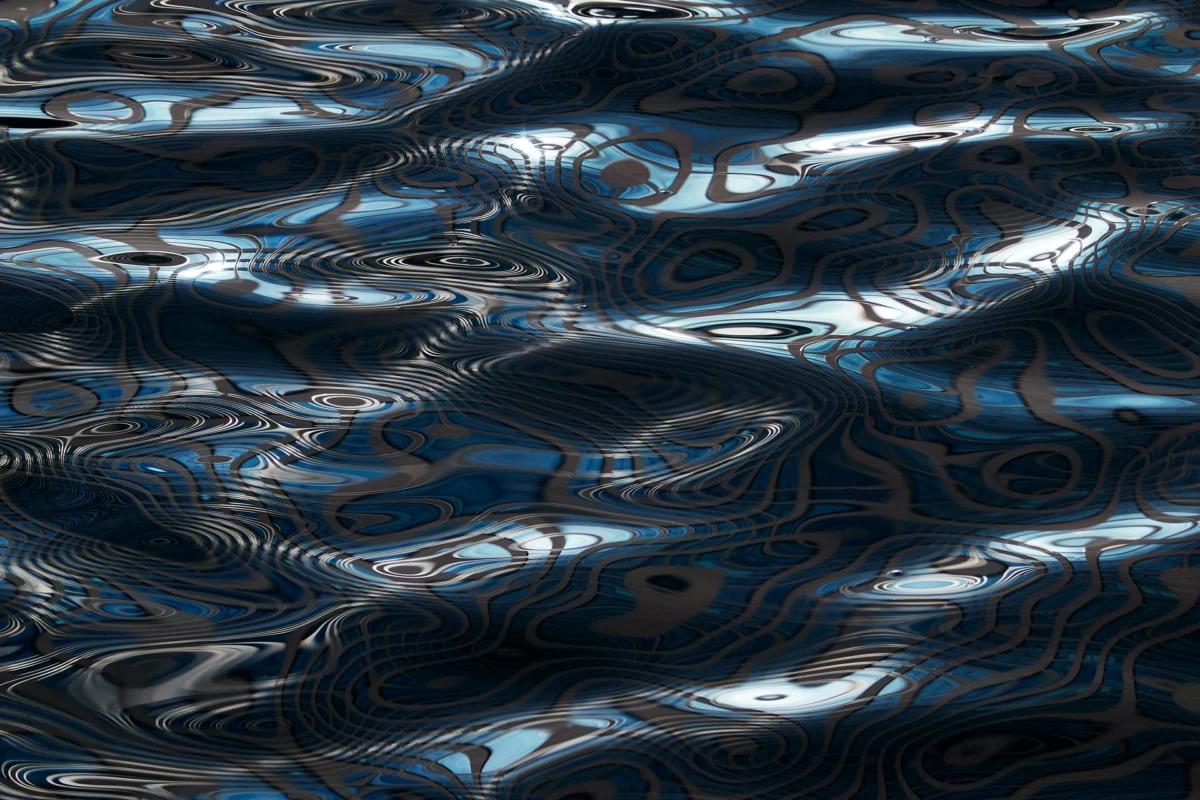
The contemporary landscape of fine art and nature photography is frequently dominated by discussions of high-end gear, remote wilderness expeditions, and advanced digital manipulation. However, a distinct counter-movement within the photographic community continues to champion the power of proximity, observation, and strict in-camera discipline. A prominent example of this philosophy is encapsulated in the decade-long project titled Fleeting Reflections, captured entirely within the urban docklands of Canary Wharf, London. Eschewing digital composites and exotic destinations, the body of work demonstrates how abstract visual art can be forged from everyday environments through the methodical application of three foundational pillars: accessibility, repeatability, and prolonged patience.
Defining the Work: Reality Without Digital Manipulation
When audiences encounter images from the Fleeting Reflections series, the initial assumption is routinely that the visual complexity—characterized by fluid ribbons of color, fractured geometries, and shimmering textures—is the product of software manipulation such as Adobe Photoshop. In practice, the imagery is recorded strictly inside the camera. The visual phenomena are the result of natural light bouncing off corporate steel and glass facades, refracting on the restless surface of the dock water, and captured either in a single frame or through meticulously composed in-camera multiple exposures.

This approach challenges modern expectations of digital art. Rather than generating forms on a computer screen, the photographer acts as an archivist of transient physical occurrences. The engine driving the series is not hardware specifications or complex post-processing pipelines, but rather an intimate, prolonged relationship between the artist and a specific geographic footprint.
Pillar One: Accessibility and the Myth of the Remote Wilderness
A pervasive myth within landscape and nature photography dictates that compelling work requires travel to dramatic, isolated locations. Proponents of this view often argue that true artistic value is tied to distance from civilization, pristine natural reserves, or majestic mountain ranges. The Fleeting Reflections project serves as a direct rebuttal to this notion, having been produced almost entirely within a single square mile of urban water bounded by corporate office towers in East London.
Canary Wharf, globally recognized as a dense financial and commercial hub, functions in this context not as architecture, but as a dynamic light source. Towering structures cast chromatic lines and structural patterns onto the water’s surface, where wind and tidal currents sculpt the reflections into waves, abstract waveforms, and jagged fractures.

The strategic advantage of this location lies entirely in its accessibility. Because the site is situated locally, it requires no international flights, special permits, extensive logistical planning, or dawn-to-dusk wilderness hikes. The creator can visit the docks on short notice—whether for a forty-minute interval during a workday, under suboptimal lighting conditions by conventional standards, or during heavy rainfall when the water surface transforms into a metallic sheet.
From an analytical perspective, geographical accessibility removes barriers to frequency. Photographers who can visit their subjects regularly build an intrinsic familiarity that transcends superficial documentation. Proximity allows the observer to bypass obvious compositions and study the micro-variations of a subject over extended periods.
Pillar Two: Repeatability and the Evolution of a Subject
The second foundational pillar, repeatability, refers to the selection of a subject capable of perpetual transformation, ensuring that subsequent visits yield entirely novel visual data rather than redundant captures. The docks of Canary Wharf provide an abundant testing ground for this principle. Environmental variables ensure that the scene is never truly identical on consecutive days or even consecutive hours.

A calm morning yields long, glassy elongations of color, whereas a gusty afternoon shatters those same architectural reflections into jagged lines reminiscent of scientific waveforms or minimalist graphics. Furthermore, transient elements—such as a passing vessel that smears reflections into hand-drawn gestures, or microscopic films of surface diesel creating brief iridescent interference patterns—introduce elements of controlled chaos.
By utilizing a repeatable environment, a photographer can engage in long-term serial documentation, shooting the "same" physical space thousands of times while continuously producing innovative imagery. This workflow relies heavily on advanced camera features, such as high-speed burst rates to freeze micro-moments in the fluid dynamics of the water, and in-camera multiple exposure modes to layer gestures.
Without environmental repeatability, photographic projects frequently devolve into static postcards. With repeatability, the subject shifts from a static monument to a behaving entity, establishing a coherent, expansive body of work over time.

Pillar Three: Patience as an Active Methodology
The final and most frequently underestimated pillar is patience. In the context of fine art photography, patience operates as an active, physically demanding methodology rather than a passive waiting period.
The process begins with meteorological anticipation. The artist must monitor weather patterns to align personal availability with specific atmospheric conditions. Hard sunlight on still water produces vastly different results than flat, overcast light accompanied by drizzle. Consequently, field sessions often involve extensive walking and observation without a single actuation of the shutter if conditions fail to align with the conceptual goals of the project.
Even when conditions are favorable, physical endurance is required. Standing at a single location for up to four hours while capturing thousands of frames of a seemingly unchanging scene demands intense concentration. The objective is to identify the fractional second when color, rhythm, structural tension, and fluid dynamics converge.

This rigorous filtering process extends to the post-production phase. Back in the studio, editing thousands of nearly identical frames requires strict discipline. The keep rate for such projects is notoriously low, as only a fraction of the captured material meets the required threshold of aesthetic and conceptual alignment. Post-processing is intentionally restrained, typically limited to global adjustments in software like Capture One—such as levels, clarity, sharpness, and contrast—while strictly avoiding shape manipulation in Photoshop. This restraint preserves the philosophical integrity of the work: an authentic record of physical reality.
Chronology and Evolution of the Project
The developmental timeline of Fleeting Reflections underscores the necessity of long-term commitment in contemporary art:
- Initial Phase (2010–2017): The creator spent over seven years quietly photographing the docks of Canary Wharf without seeking major public exposure, focusing instead on refining technique, understanding environmental behaviors, and eliminating visual noise.
- First Publication (2017): Following years of curation, the initial body of work was deemed sufficiently coherent and was published as a monograph titled Fleeting Reflections by Triplekite Publishing.
- Exhibition Milestones (2017–2019): The project gained institutional recognition through public exhibitions, notably at the Greenwich Gallery in 2017 and the Anise Gallery in London in 2019.
- Second Volume (2023): Building upon the foundational framework established in the first decade, the artist released a subsequent volume, Fleeting Reflections II, expanding the visual vocabulary and depth of the series.
Broader Implications for the Photographic Community
The sustained success of the Fleeting Reflections series offers a vital blueprint for photographers navigating an increasingly saturated visual culture. By demonstrating that profound artistic expression does not depend on geographic isolation or heavy digital manipulation, the project redirects attention toward the core tenets of the medium: observation, discipline, and temporal investment.

For emerging and established photographers alike, the methodology suggests a practical alternative to expedition-based photography. By identifying accessible, repeatable local subjects—ranging from urban canals and harbor walls to municipal drainage systems—creatives can develop deep contextual knowledge of their environments.
Ultimately, the longevity and reception of the Canary Wharf dock project illustrate that true artistic value is cumulative. While viewers initially engage with the striking colors and complex abstractions on the surface of the image, what they are ultimately witnessing is the physical manifestation of sustained attention and unwavering patience over time.
