
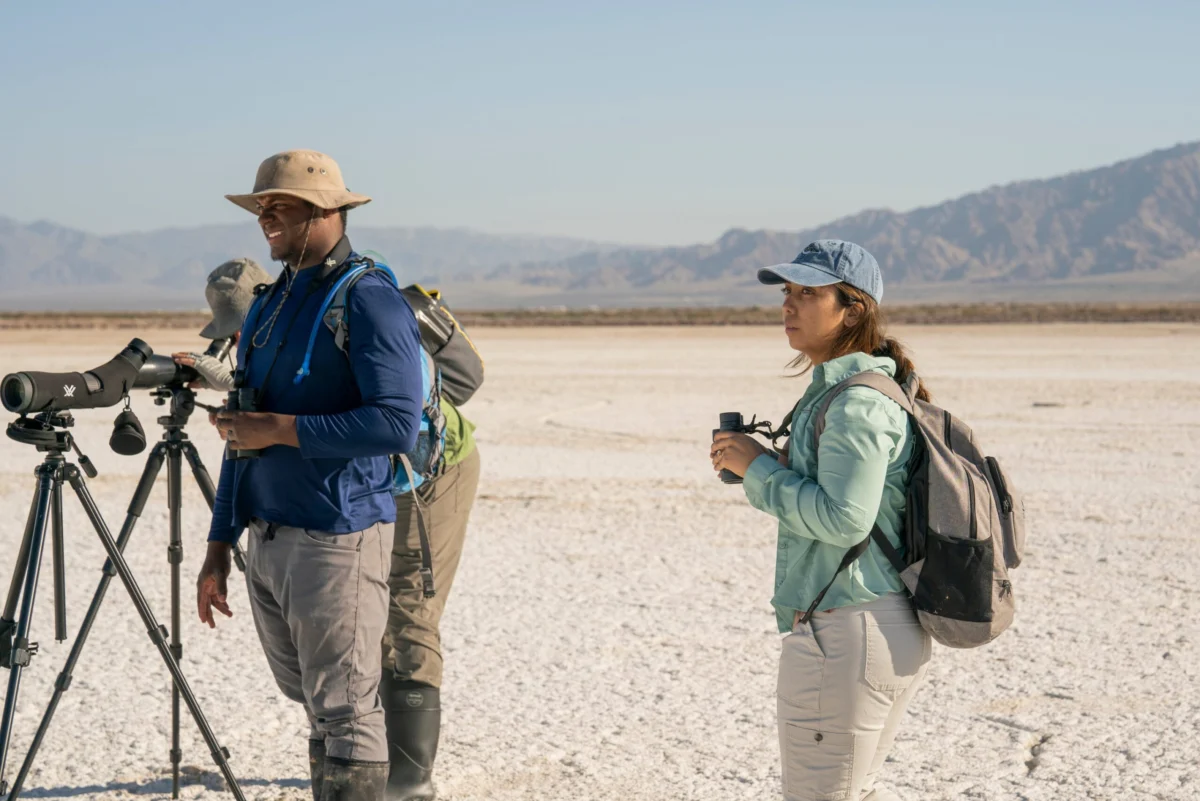
The newly established Salton Sea Conservancy held its inaugural board meeting on Thursday, May 14, 2026, in La Quinta, California, signaling a pivotal moment for the long-troubled Salton Sea region. This significant gathering, convened by Joe Shea, Assistant Secretary for Salton Sea Policy at the California Natural Resources Agency (CNRA), introduced the conservancy’s board members to the public, outlined its foundational budget and operational structure, and underscored a critical commitment to integrating local communities into its long-term conservation strategies. As the first conservancy established in California in over fifteen years, its formation represents a substantial recognition by the state of the profound ecological, public health, and economic importance of California’s largest lake.
The meeting commenced with an urgent tone, echoed by Assistant Secretary Shea, emphasizing that "the Salton Sea can’t wait." This sentiment resonated deeply with attendees, particularly Camila Bautista, Audubon California’s Salton Sea & Deserts Program Manager and the CNRA’s appointee to the Conservancy Board. Bautista expressed optimism following the session, stating, "I left the meeting hopeful for accelerated progress and strengthened partnerships, optimistic about the commitment of our diverse board, and excited to tackle the challenges ahead. As Joe said at the start, the Salton Sea can’t wait. It’s too important for the communities and wildlife that depend on it." Her appointment to the board highlights the state’s intention to incorporate expert environmental stewardship and community advocacy directly into the conservancy’s governance.
A Decades-Long Crisis: The Salton Sea’s Urgent Plight
To fully appreciate the significance of the Salton Sea Conservancy, it is essential to understand the complex history and escalating crisis surrounding the Salton Sea. Accidentally formed between 1905 and 1907 when the Colorado River breached an irrigation canal, the Salton Sea rapidly became a thriving ecosystem and a popular tourist destination, often dubbed "California’s Riviera" in its mid-20th century heyday. Its waters, fed primarily by agricultural runoff from the Imperial and Coachella Valleys, supported a robust fishery and became a critical stopover for millions of migratory birds along the Pacific Flyway. Over 400 species of birds, including numerous endangered and threatened species like the California Black Rail and Yuma Ridgway’s Rail, depend on the Sea’s wetlands and shrinking open waters.
However, the Sea’s fate began to turn dramatically in recent decades. Lacking a natural outlet, the Salton Sea’s salinity has steadily increased due to evaporation, concentrating agricultural salts and pollutants. The implementation of the Quantification Settlement Agreement (QSA) in 2003, which reduced agricultural water flows from the Colorado River to support urban Southern California, further accelerated the Sea’s desiccation. Without sufficient freshwater inflow, the Sea’s surface area has dramatically shrunk, exposing vast tracts of lakebed, known as playa. This exposed playa, rich in fine particulate matter laced with pesticides, heavy metals, and other contaminants, becomes airborne during wind events, creating severe dust storms.
These dust storms pose a grave public health crisis for the surrounding communities, particularly in the low-income, predominantly Latino communities of the Imperial and Coachella Valleys. Rates of asthma and other respiratory illnesses in these regions are significantly higher than the state average, directly linked to the toxic dust. Data from the California Air Resources Board (CARB) consistently shows exceedances of federal particulate matter (PM10 and PM2.5) standards in the region, directly correlating with the exposed Salton Sea playa. Beyond health, the ecological collapse has been catastrophic: fish populations, unable to adapt to increasing salinity, have suffered massive die-offs, depriving avian predators of food sources. The once-vibrant tourism industry has vanished, and property values have plummeted, creating an economic void in an already disadvantaged region.
Legislative Foundation: SB 583 and Proposition 4
The creation of the Salton Sea Conservancy is not an overnight development but the culmination of years of advocacy and legislative effort. Its establishment was formalized in September 2024 with the passage of Senate Bill 583 (SB 583), championed by Senator Alex Padilla. This landmark legislation provided the legal framework for the Conservancy, defining its mission and operational parameters. The bill recognized the need for a dedicated, long-term state entity to address the Salton Sea’s multifaceted challenges, moving beyond the often-fragmented and temporary project-based approaches of the past.
A crucial aspect of the Conservancy’s viability is its funding mechanism. It is currently supported through an allocation from Proposition 4, a significant climate bond approved by a majority of California voters in 2024. Proposition 4, designed to fund climate resilience, environmental restoration, and public health initiatives across the state, earmarks substantial resources for projects aimed at mitigating the impacts of climate change and protecting vital natural resources. The inclusion of the Salton Sea Conservancy within this bond underscores the state’s recognition of the Sea’s crisis as a critical climate and environmental justice issue. This dedicated funding stream is vital, providing a level of financial stability and long-term commitment that previous Salton Sea initiatives often lacked, allowing for strategic planning and execution without the constant uncertainty of annual appropriations.
According to the CNRA, the Conservancy is unique in its dual mandate: first, to ensure the long-term operations and maintenance of projects constructed under the Salton Sea Management Program (SSMP); and second, to acquire and hold land and water rights necessary for restoration and conservation efforts. The SSMP, initiated in 2017, laid out a 10-year plan to construct 30,000 acres of habitat and dust suppression projects. While progress has been made, the scale of the challenge and the pace of work have often been criticized. The Conservancy is designed to inject renewed vigor and institutional longevity into these efforts, ensuring that constructed projects remain effective and that future interventions are strategically planned and sustainably managed. Its ability to acquire and hold land and water rights is particularly powerful, offering a direct mechanism to secure resources essential for ecological restoration and dust control.
Community Engagement at the Forefront
A recurring theme throughout the inaugural meeting was the indispensable role of community engagement in the Conservancy’s success. Camila Bautista, in her presentation to the board, emphasized the need for "intentional and consistent community engagement," drawing on Audubon’s extensive on-the-ground experience. She highlighted the findings from the Salton Sea Public Access Community Study, a comprehensive survey conducted by Audubon to gather direct input from local residents regarding their needs and aspirations for public access and recreational opportunities at the Sea. This study provided invaluable insights into how future projects could better serve and involve the communities most impacted by the Sea’s degradation.
Bautista also showcased Audubon’s community-centered planning meetings for the Bombay Beach Wetland Enhancement Project, a collaborative effort aimed at creating vital bird habitat while also offering educational and recreational benefits for local residents. Furthermore, she detailed her team’s numerous education and leadership programs, which empower community members, particularly youth, to understand the Salton Sea’s challenges and envision a sustainable future. "For this to really succeed, we need our communities to see themselves reflected in this work, and to feel empowered to participate," Bautista asserted. "So much of my work has been bringing people to experience the Salton Sea and see it through a different lens – helping them understand the issues, but also envision what it can be and how they can be a part of that future." This emphasis on local participation is crucial, as historically, top-down conservation efforts have sometimes failed to gain community buy-in, leading to limited long-term success.
Stakeholder Reactions and Broader Implications
The launch of the Salton Sea Conservancy has been met with broad support from a coalition of environmental and community organizations known as the Salton Sea Partnership. This partnership, which includes Audubon California and other leading groups, has advocated for more than a decade to protect public and ecological health in the region. Michael Cohen, Senior Fellow with the Pacific Institute, a prominent member of the Partnership, and a long-time Salton Sea advocate, underscored the significance of the Conservancy’s first meeting. "The Salton Sea Conservancy’s first meeting is another important step toward ensuring a long-term state commitment to revitalize the Salton Sea ecosystem and protect the people in the region," Cohen stated. He extended "special thanks to Senator Padilla and Governor Newsom and his staff for promoting the inter-agency coordination and local representation necessary to ensure the health of the region." His remarks highlight the collaborative effort required at all levels of government and civil society.
The formation of the Conservancy carries several profound implications for the future of the Salton Sea. Firstly, it signals a renewed and potentially more effective long-term state commitment. By establishing a dedicated entity with stable funding and a clear mandate, California is moving towards a more sustained and strategic approach, rather than relying on episodic project funding or temporary task forces. This institutional longevity is critical for addressing a problem of the Salton Sea’s immense scale and complexity, which will require decades of sustained effort.
Secondly, the Conservancy’s structure and funding through Proposition 4 offer greater financial stability. While the total cost of comprehensive Salton Sea restoration is estimated in the billions of dollars, the initial allocation provides a robust foundation. This stability allows for more predictable planning and execution of projects, reducing the delays and inefficiencies often associated with uncertain funding. However, the ongoing need for additional state and federal funding will remain a critical challenge, requiring continued advocacy and political will.
Thirdly, the strong emphasis on community engagement, as championed by figures like Camila Bautista, is a positive indicator for equitable and sustainable outcomes. By empowering local residents to participate in decision-making and project implementation, the Conservancy can ensure that solutions are not only ecologically sound but also socially just, addressing the historical inequities faced by the region’s communities. This approach also fosters local ownership and stewardship, which are vital for the long-term success of any large-scale environmental restoration project.
Despite the palpable optimism, significant challenges remain. The sheer scale of the environmental degradation, compounded by the accelerating effects of climate change—including prolonged drought and extreme heat—presents an formidable task. The pace of restoration efforts must accelerate to keep up with the Sea’s rapid desiccation and the worsening dust crisis. Furthermore, effective inter-agency coordination, not only within California but also with federal agencies, tribal governments, and international partners (given the Colorado River’s cross-border nature), will be crucial for integrated water management and conservation strategies.
The Salton Sea Conservancy represents a hopeful new chapter for California’s largest lake. Its inaugural meeting has laid the groundwork for a dedicated, community-focused, and sustained effort to revitalize a critical ecosystem and protect the health and well-being of the region’s residents. While the journey ahead is undoubtedly challenging, the establishment of this new conservancy provides a much-needed institutional framework and a renewed sense of purpose in the fight for the Salton Sea’s future.
