
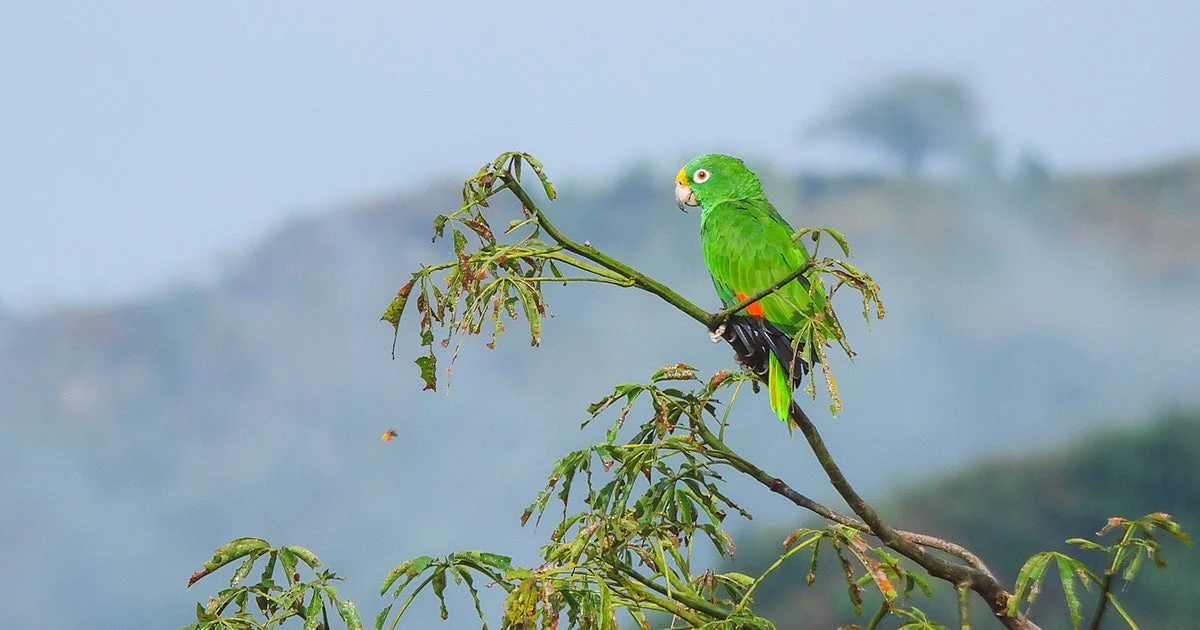
A groundbreaking fecal-sampling method, developed by a collaborative team of scientists, is poised to revolutionize efforts to identify illegally captured wild birds trafficked across Latin America and sold under the guise of captive-raised specimens. This innovative diagnostic tool offers a rapid, non-invasive, and objective means for law enforcement and customs officials to distinguish between legitimate captive-bred birds and their wild-caught counterparts, addressing a critical challenge in the fight against one of the world’s most lucrative illegal trades.
The Global Crisis of Illegal Wildlife Trade: A Deeper Dive into Parrot Trafficking
The illegal wildlife trade is a vast, interconnected criminal enterprise estimated to be worth billions of dollars annually, ranking among the largest illicit trades globally alongside drugs, arms, and human trafficking. Parrots, particularly the intelligent and vibrant Amazon species like the Yellow-crowned Amazons frequently targeted by traffickers, stand as some of the most sought-after and consequently, most endangered animals within this dark economy. According to the Convention on International Trade in Endangered Species of Wild Fauna and Flora (CITES), which regulates international trade in threatened species, the demand for parrots as pets fuels a relentless cycle of poaching and smuggling. Many parrot species face a disproportionately higher risk of extinction compared to other avian groups, with the illegal trade identified as a primary driver of precipitous population declines across their natural habitats.
The complexity of the situation is exacerbated by the legal trade in captive-bred birds. While the capture and sale of wild parrots are strictly prohibited by international and national laws, the commerce of individuals bred in captivity remains permissible. This creates a significant loophole that wildlife traffickers ruthlessly exploit, "laundering" wild-caught birds into the legal market by falsifying documents, bribing officials, or simply presenting them as captive-bred. This deceptive practice not only undermines conservation efforts but also makes the task of enforcement exceedingly difficult, as visually distinguishing between a wild-caught parrot and one raised in a breeding facility often requires specialized expertise and subjective judgment. Studies, as highlighted by Sara Walker, senior advisor on wildlife trafficking for the Association of Zoos and Aquariums, indicate that the existence of a legal trade can inadvertently mask or even stimulate the market for wild-caught birds, complicating demand reduction strategies.
Current Challenges in Enforcement: The "Tough Spot" for Officials
For wildlife and customs officials stationed at crucial choke points like airports, seaports, and border crossings, the current methods for identifying illegally trafficked parrots are fraught with difficulties. As Steven Janssen, a mobile veterinarian for the World Parrot Trust and a lead on the project, explains, existing tools often necessitate specialized training, are time-consuming to administer, and can induce significant stress on the animals involved. These methods might include detailed morphological analysis, microchipping (which can be faked or removed), or even DNA profiling, which, while accurate, is often too slow and expensive for frontline screening.
Consequently, officials frequently resort to a highly subjective process based on behavioral cues. "You base your decision on behavior. Is this an animal that is timid and starts screaming when you approach?" Janssen elaborates. "Even for people who are into birds and know birds, this is difficult." This reliance on behavioral assessment is inherently unreliable. A wild bird, traumatized by capture and transport, might appear timid, but so might a poorly socialized captive-bred bird. Conversely, a wild bird accustomed to human presence in certain environments might not exhibit typical fear. This ambiguity creates a challenging environment for enforcement, where genuinely illegal shipments might be missed, and legal ones might be subjected to unnecessary scrutiny and stress. The need for an objective, rapid, and easily deployable diagnostic tool has been paramount for years.
The Scientific Breakthrough: Unveiling the Microbiome Fingerprint
The new fecal-sampling method promises to eliminate this guesswork, offering a scientific, evidence-based approach to bird identification. The tool is the culmination of a collaborative effort involving scientists from the World Parrot Trust, the South African National Biodiversity Institute, the University of Colorado Boulder, and Nature Iraq. At its core, the method leverages the distinct "microbiome fingerprint" present in a bird’s fecal matter, which is directly influenced by its diet.
Wild parrots, foraging in their natural habitats, consume a diverse array of foods—berries, nuts, seeds, insects, nectar, and various plant materials—that vary seasonally and geographically. This varied diet fosters a complex and rich community of microorganisms within their gut, creating a unique microbial signature. In stark contrast, captive-bred parrots are typically fed commercial bird feed, often a standardized pellet or seed mix, and may also be routinely given antibiotics or other medications. This uniform and often less diverse diet results in a significantly different, and often less diverse, gut microbiome. Researchers can identify these distinct microbial patterns through advanced genetic sequencing of fecal samples. By analyzing the DNA of the bacteria present in the droppings, scientists can build a profile that effectively indicates whether a bird has been living on a natural, diverse diet or a controlled, commercial one. This fundamental difference in dietary exposure provides a robust biological marker to differentiate between wild and captive origins.
Developing a Practical Tool: From Lab to Frontline
The development of this tool has followed a rigorous scientific and practical trajectory. The initial phases involved extensive laboratory testing, where researchers successfully validated the concept by analyzing known samples from both wild and captive parrot populations. This lab-based success provided the foundational proof of concept, demonstrating the method’s accuracy and reliability under controlled conditions.
The project is now transitioning from the laboratory to practical, real-world settings, including breeding facilities and critical transit points like airports. The primary objective is to develop an easy-to-use kit with clear, standardized protocols that can be deployed by customs officials and wildlife enforcement officers without requiring extensive specialized training. "For our method, you just stick a swab in the cage and you sweep over the bottom, collect some fecal material, and you can determine it that way," Janssen explains, highlighting the simplicity and speed of the envisioned process. This ease of use is critical for high-volume scenarios, such as inspecting crates containing dozens of birds.
A significant ongoing effort involves expanding the reference database against which unknown samples are compared. The accuracy of the test is directly correlated with the size and comprehensiveness of this database, which requires a vast collection of fecal samples from confirmed wild and captive parrot populations across various species and geographic regions. Gathering samples from wild populations presents its own unique set of challenges. "We try to find spots in the wild where parrots nest or roost, but they’re really hard to find and really hard to access once you find them," Janssen notes. To overcome this, researchers often collect samples from confirmed wild birds that have recently been confiscated by law enforcement, providing valuable data points from illegally caught individuals whose origins are verified.
The team is also meticulously working to ensure that the method and its associated protocols meet stringent legal standards. Given that the test results could potentially serve as forensic evidence in criminal prosecutions against traffickers, the scientific validity, reproducibility, and chain of custody for samples must be unimpeachable. Within the next two years, the goal is to provide these user-friendly kits, empowering frontline officials to conduct initial screenings independently, thereby significantly accelerating the identification process and reducing delays at borders.
Implications for Conservation and Law Enforcement: A Game Changer?
The implications of this fecal-sampling method for conservation and law enforcement are profound. By providing an objective and rapid means of identification, the tool has the potential to be a significant deterrent to wildlife traffickers. The reduced opportunity for "laundering" wild birds as captive-bred could make the illegal trade less profitable and riskier. This could, in turn, alleviate pressure on wild parrot populations, many of which are teetering on the brink of extinction.
For enforcement officers, the tool represents a massive leap forward. It removes the subjectivity that currently hampers investigations, replacing it with hard, scientific evidence. This not only streamlines the investigative process but also strengthens legal cases against traffickers, potentially leading to higher conviction rates and more severe penalties. The ability to quickly identify wild-caught birds also means that these individuals can be promptly entered into rehabilitation programs or released back into appropriate habitats, rather than languishing in holding facilities while their origins are debated.
The conservation community, including organizations like CITES and national wildlife agencies across Latin America, is likely to welcome this innovation enthusiastically. It offers a tangible, practical solution to a long-standing problem, complementing existing efforts in habitat protection, anti-poaching, and demand reduction. Experts suggest that such technological advancements are crucial for turning the tide against sophisticated criminal networks engaged in wildlife trafficking.
Broader Impact and Future Horizons: Beyond Parrots
Looking beyond parrots, the research team harbors ambitions to expand the project to other trafficked species. The underlying principle of using dietary-influenced microbiome fingerprints to distinguish between wild and captive origins is not unique to birds. Many other taxa, including reptiles, primates, and even some mammals, exhibit distinct dietary patterns in the wild versus in captivity. Adapting this methodology could unlock similar diagnostic tools for a wider array of illegally traded animals, offering a systemic boost to global anti-trafficking efforts. This foresight underscores the potential for this research to become a blueprint for future wildlife forensics.
However, while this tool is a powerful addition to the arsenal against wildlife crime, experts like Sara Walker emphasize that technological solutions alone are not sufficient to put a real dent in parrot trafficking. A multi-faceted approach is essential, one that combines robust enforcement with sustained public education and demand reduction strategies.
The Role of the Public: Responsible Consumption and Awareness
Ultimately, the fight against illegal wildlife trade requires a concerted effort from all stakeholders, including the general public. Walker stresses that animal lovers could be unintentionally contributing to the demand for trafficked birds. Purchasing a pet parrot without thoroughly verifying its origins, or even sharing seemingly innocent "cute parrot videos" online, can inadvertently fuel the perception of parrots as desirable pets, thereby increasing demand.
"They need to understand that there is this illegal trade sometimes masked through the legal trade," Walker urges, "and they need to be responsible consumers." This call for responsible consumption extends beyond simply not buying wild-caught animals; it means scrutinizing the supply chain, demanding verifiable proof of origin, and questioning the ethics of owning exotic pets. By choosing not to participate in the demand for exotic animals, and by supporting legitimate conservation efforts, individuals can play a crucial role in protecting these intelligent and vulnerable birds for future generations. The new fecal-sampling method represents a significant scientific stride, but its full impact will only be realized when coupled with an informed and ethical global citizenry committed to ending wildlife crime.
