
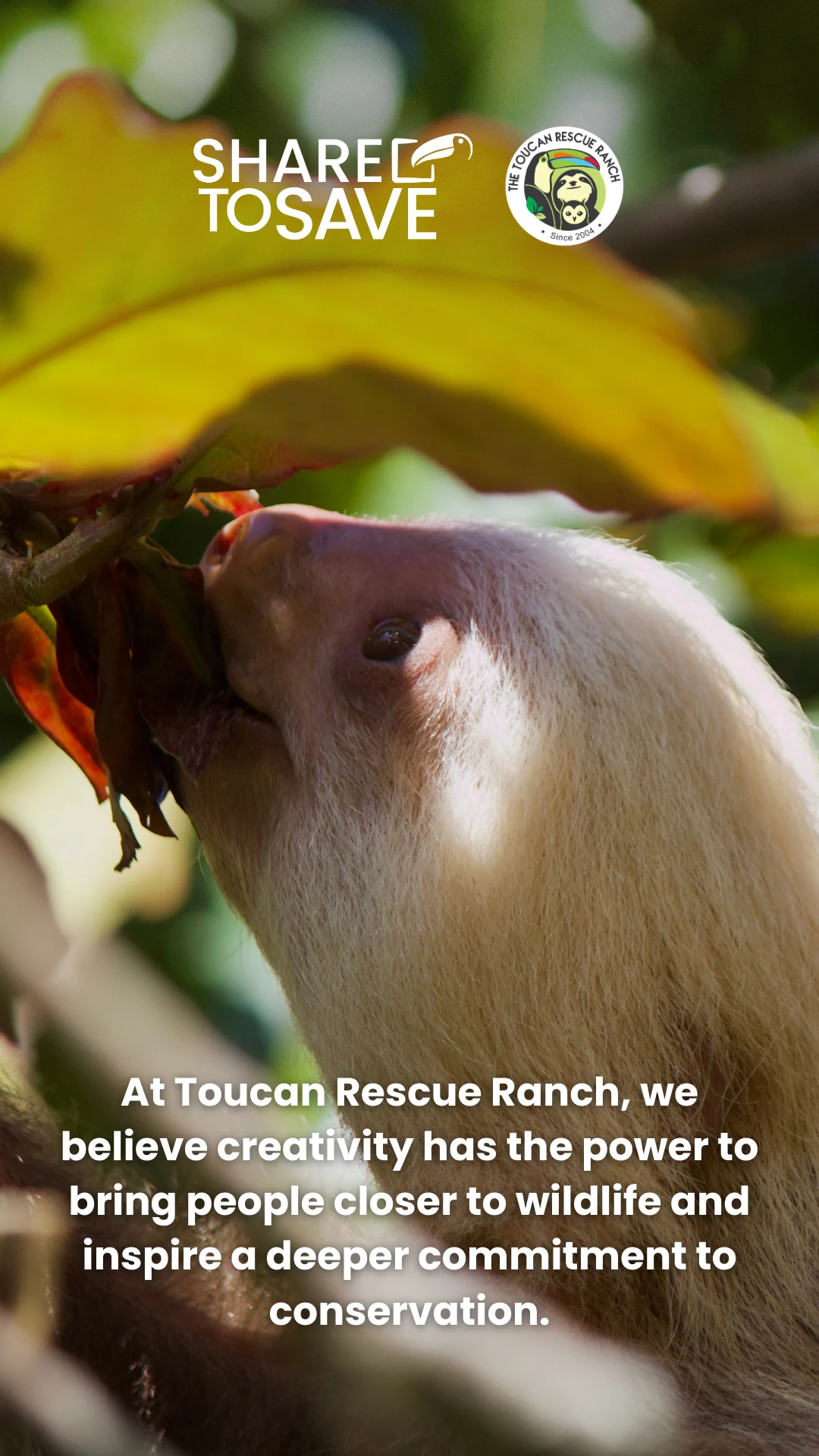
The Toucan Rescue Ranch, a leading wildlife rehabilitation facility in Costa Rica, has officially announced the rebranding and expansion of its primary fundraising and awareness campaign under the new title, Share to Save. Previously known by a variety of distinct hashtags and sub-projects including #TRRShareYourShot, #CallForArtists, and #TunesForToucans, the initiative has been consolidated to better reflect its core mission of providing a second chance to the nation’s diverse and often endangered fauna. This transition marks the fifth anniversary of the program, which has evolved from a grassroots social media effort into a global platform uniting photographers, digital artists, and nature enthusiasts in a collective effort to fund the rescue and rehabilitation of injured, orphaned, and displaced animals.
The 2026 campaign is centered on the theme "Creatives for Conservation," a call to action that invites artists from all geographical and professional backgrounds to submit visual works inspired by the natural world. This year’s initiative aims to address a critical funding gap in Costa Rican wildlife management, where private rescue centers operate without state financial support. By leveraging the power of digital media and international art galleries, Share to Save seeks to bridge the distance between global supporters and the immediate, on-the-ground needs of the Costa Rican rainforest.
The Evolution of a Global Movement
The inception of the Toucan Rescue Ranch’s creative outreach began half a decade ago as a series of disconnected social media contests. These early iterations, such as #TRRShareYourShot, were designed primarily to engage local tourists and amateur photographers. However, the unexpected volume of international submissions led the organization to realize that visual storytelling was one of the most effective tools for environmental advocacy. As the program grew, it incorporated specialized categories for musicians and traditional artists, eventually leading to the decision to unify these efforts under the Share to Save banner.
The rebranding is not merely cosmetic; it represents a strategic shift toward a more professionalized and sustainable model of non-profit fundraising. By centralizing the initiative, the Toucan Rescue Ranch can more effectively manage the logistical requirements of an international art competition while ensuring that the primary focus remains on the survival of the animals. The organization noted that the new name reflects the "true heart" of the initiative—the idea that the act of sharing a creative vision can lead directly to the preservation of a biological life.
A Critical Mission: The Operational Realities of Wildlife Rescue
The necessity of the Share to Save campaign is underscored by the staggering logistical and financial challenges faced by wildlife rescue centers in Central America. According to data provided by the Toucan Rescue Ranch, more than 500 animals arrive at their facilities annually. These animals are typically victims of habitat loss, electrocution on uninsulated power lines, vehicle collisions, or the illegal pet trade. The species range from high-profile mammals like the two-toed and three-toed sloths to iconic avian species such as the Keel-billed Toucan and the Resplendent Quetzal.
The financial burden of this operation is significant. It costs approximately $50,000 per month to maintain the Rescue Center, the Sanctuary, and the Release Site. These funds cover specialized veterinary equipment, high-protein nutritional requirements for various species, the construction of safe enclosures, and the labor-intensive process of rewilding animals that have spent months in rehabilitation.
A common misconception among the public is that such facilities receive government subsidies. In reality, wildlife rescue centers in Costa Rica operate as independent non-governmental organizations (NGOs) and rely entirely on private donations and specialized initiatives like Share to Save. Without these external funds, the capacity to provide advanced medical care—such as orthopedic surgeries for injured monkeys or laser therapy for wounded sloths—would be non-existent.
Bridging Art and Environmental Advocacy
The "Creatives for Conservation" theme serves as a unique intersection between the aesthetic world and the scientific requirements of biological preservation. The initiative invites submissions in several categories, including photography, digital design, and traditional fine arts. A unique aspect of the 2026 exhibition is its logistical approach: selected pieces will be showcased in a live gallery in Costa Rica, but all works will be printed locally. This allows artists from distant continents to participate without the environmental footprint or high cost of shipping physical art, while ensuring they retain full ownership of their intellectual property.
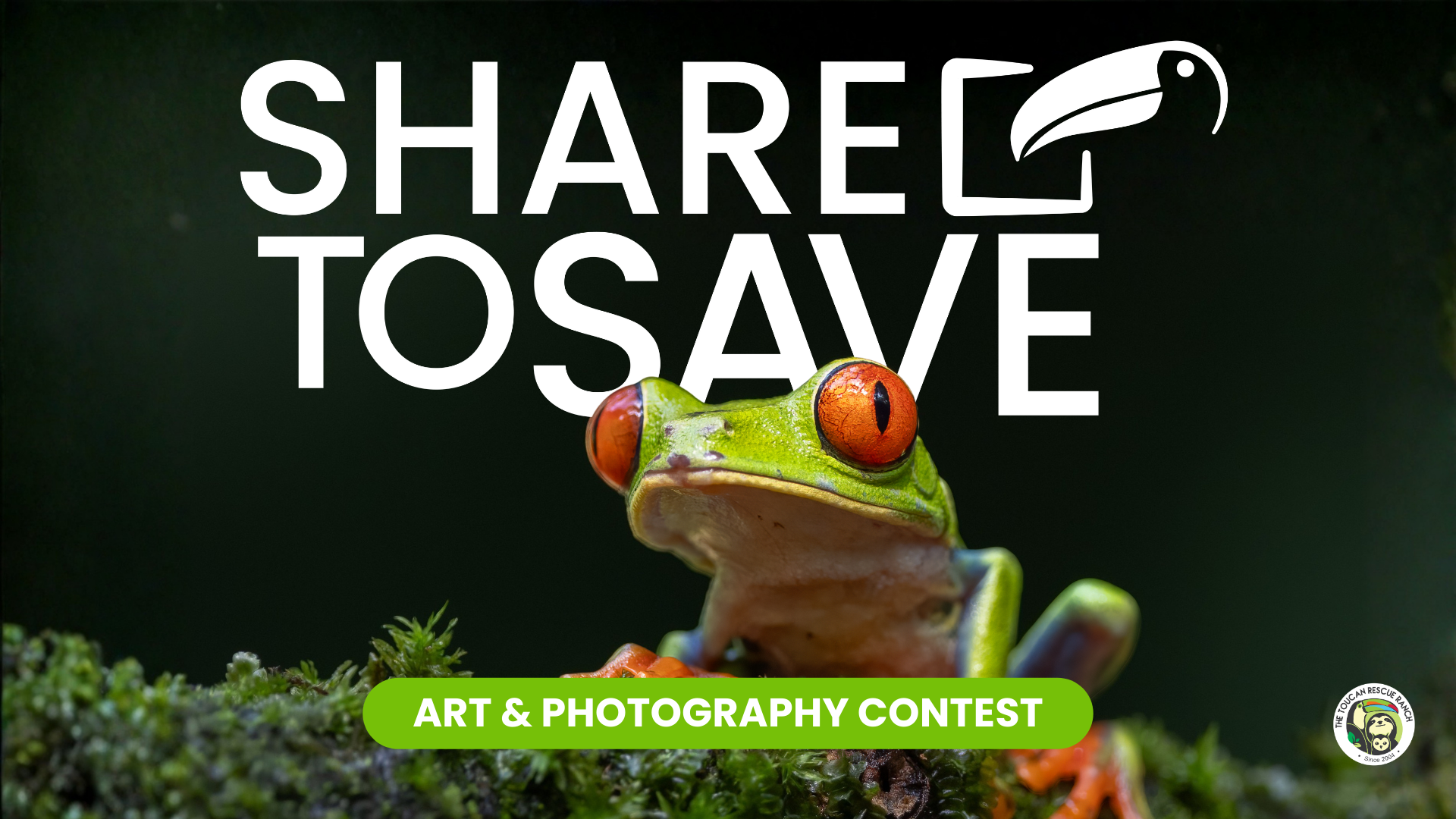
This model of participation has attracted a diverse array of contributors. For instance, artist Cibele Manfredini submitted a piece titled "Coexist," which she describes as an exploration of the idea that "the more we know, the more we love." Similarly, photographer Felix Hinsch contributed "Unexpected Visitor," a candid shot of a healthy wild sloth, emphasizing the importance of seeing these animals thriving in their natural habitat rather than just in clinical settings. These contributions serve a dual purpose: they provide the Toucan Rescue Ranch with high-quality content to raise awareness, and they allow the artists to use their skills for a measurable social good.
Economic and Social Contributions of Share to Save
Beyond the immediate goal of animal rescue, the Share to Save initiative contributes to the broader "green economy" of Costa Rica. By hosting a live gallery and promoting local printing services, the program supports the domestic creative industry. Furthermore, the initiative fosters a sense of global stewardship. The voting process for the contest is uniquely tied to the fundraising goal: a $1 donation is equivalent to one vote. This "crowd-voting" mechanism ensures that every participant, regardless of their financial status, can contribute to the cause.
Importantly, the Toucan Rescue Ranch has ensured that all contributions made during the Share to Save Art and Photography Contest are tax-deductible, providing an additional incentive for international donors. This transparent financial structure is vital for maintaining the trust of the global community, especially when dealing with the high operational costs of wildlife medicine.
Profiles in Conservation: Global Artists Answer the Call
The current pool of participants illustrates the wide-reaching impact of the campaign. Artists such as Mike Toppe have used tactile mediums, like hand-sculpted and painted clay, to represent the Golden Lion Marmoset, bringing attention to primate conservation. Others, like Darren James Sturrock, find inspiration in the specific flora and fauna of Costa Rica, such as orchids and highlands species, to promote the "Pura Vida" philosophy.
The diversity of the subject matter—from the "Howler’s Whisper" by Miguel Pires to the delicate "Bee on Flower" by Lizz R—highlights the interconnectedness of the ecosystem. The inclusion of pollinators like bees and scavengers like the Turkey Vulture, submitted by Lindsay Martland, demonstrates a sophisticated understanding of ecology; every species, regardless of its "charisma," plays a vital role in the health of the rainforest.
Some artists have used the platform to tell stories of specific rescues. Michaela Schwenk’s piece, "Becoming Wild," features Bonnie, an orphaned baby sloth who is currently undergoing the rigorous process of rewilding. Such pieces provide a human element to the data, allowing donors to see the direct result of their contributions.
Broader Impact and Implications for Biodiversity
The Share to Save campaign arrives at a pivotal time for global biodiversity. Costa Rica, while comprising only 0.03% of the earth’s landmass, contains nearly 6% of the world’s biodiversity. The success of NGOs like the Toucan Rescue Ranch is therefore of international significance. When a Resplendent Quetzal is rehabilitated and released, it is not just a success for a local ranch; it is a victory for global efforts to prevent avian extinction.
The transition to the Share to Save branding suggests a long-term commitment to this hybrid model of art and science. By creating a permanent platform for "Creatives for Conservation," the Toucan Rescue Ranch is building a repository of environmental imagery that can be used for education and advocacy for years to come. The initiative proves that while the costs of conservation are high, the collective power of global creativity can meet those challenges.
As the 2026 gallery prepares to open its doors in Costa Rica, the message from the Toucan Rescue Ranch remains clear: the survival of the world’s most vulnerable species depends on the generosity of the global community. Through the Share to Save initiative, the act of creating and sharing art becomes a tangible lifeline for the wildlife of the rainforest, ensuring that the "Pura Vida" spirit continues to thrive for future generations.
