
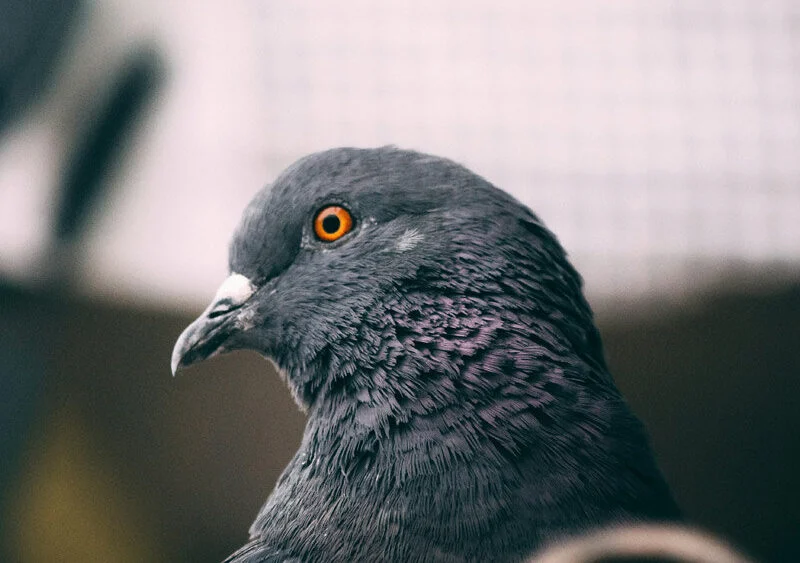
For centuries, the homing pigeon has been celebrated as a marvel of avian engineering, serving as a reliable courier in the most harrowing theaters of war and becoming a symbol of avian intelligence. While historical narratives have long focused on their bravery and the critical messages they carried across battlefields, the internal biological mechanisms that allow these birds to traverse vast, unfamiliar territories with unerring precision have remained a subject of intense scientific inquiry. Recent research published in the journal Science has unveiled a startling breakthrough in the study of magnetoreception, suggesting that the pigeon’s liver acts as a critical sensory organ, housing specialized cells that function as an internal GPS when visual cues, such as the sun, are obscured.
A History of Avian Messenger Systems
The utility of pigeons in human history is well-documented. During World War I and World War II, the United States Army Signal Corps utilized thousands of homing pigeons to transmit messages when radio communication was compromised or non-existent. These birds were often released from behind enemy lines, navigating through smoke, heavy artillery, and adverse weather conditions to reach their lofts. The most famous of these, a pigeon named Cher Ami, is credited with saving the lives of 194 soldiers of the 77th Infantry Division during the Meuse-Argonne Offensive in 1918, despite being shot through the breast and losing a leg.
Historically, naturalists have attributed these feats to a combination of visual landmarks, the bird’s internal "sun compass," and a keen sense of olfaction. However, these methods fail to explain how pigeons maintain a steady course during overcast conditions or at night. The realization that birds possess a magnetic sense—an ability to detect the Earth’s geomagnetic field—has been the cornerstone of avian navigation studies for decades, though the exact physiological "sensor" responsible for this ability has eluded researchers until now.
Decoding the Magnetic Sense
The recent study shifts the focus from the pigeon’s beak or brain—where many researchers previously suspected magnetic receptors might be located—to the liver. The core of this discovery lies in "superparamagnetic microphages," specialized cells that sequester iron-oxide nanoparticles. These nanoparticles are absorbed into the bloodstream through protein interaction and transported to the liver, where they are ingested and stored within these microphages.
When exposed to an external magnetic field, such as the Earth’s own geomagnetic force, these iron-oxide particles become strongly magnetized. Because these microphages are situated in close proximity to the hepatic nerve fibers, researchers hypothesize that the birds receive sensory input regarding their orientation relative to the planet’s magnetic poles. This creates a biological interface between the avian liver and the Earth’s magnetosphere, providing the bird with a continuous stream of navigational data that operates independently of visual stimuli.
Chronology of the Experimental Process
The research team established a controlled environment to test the efficacy of this hepatic navigation system. A cohort of 34 trained pigeons was tasked with navigating a pre-determined flight path spanning 11.8 miles (19 kilometers). The researchers implemented a rigorous testing protocol to isolate the function of the liver-based microphages:
- Phase One: Baseline Establishment. Pigeons were trained to navigate the route under clear, sunny conditions to ensure the baseline performance of the subjects was uniform.
- Phase Two: Variable Manipulation. The researchers introduced an experimental group where the microphages in the liver were intentionally depleted, while a control group remained untouched.
- Phase Three: The Overcast Challenge. The birds were released during heavy cloud cover, which eliminated the possibility of using the sun as a navigational aid.
- Phase Four: Real-Time Tracking. Each bird was equipped with an internet-connected, miniaturized GPS tracking device that transmitted flight paths and coordinates back to the laboratory in real-time.
The results were statistically significant. Every pigeon in the control group—those with their hepatic microphages intact—successfully navigated back to their home loft despite the overcast conditions. Conversely, every single pigeon in the depleted group failed to find their destination, often showing erratic flight patterns or becoming completely disoriented.
Implications of the Research
The findings presented in the Science report represent a significant milestone in sensory biology. For years, there have been four competing theories regarding how birds perceive magnetism: chemical radical pairs in the eye, magnetite-based receptors in the beak, cryptochrome proteins, and now, this hepatic-based microphage system.
The confirmation of the liver’s role suggests that magnetoreception is not a localized, single-source sense but rather a multi-modal integration system. The broader implications are profound, as they suggest that avian navigation is more resilient and complex than previously imagined. If a bird’s primary navigational sense (the sun) is blocked, it can seamlessly shift to its internal magnetic map. If the magnetic system is compromised, the bird may switch to visual or olfactory cues. This redundancy is likely what has allowed the pigeon to become one of the most successful avian species in navigating the globe.
Scientific Analysis and Future Inquiry
While the discovery of hepatic microphages is revolutionary, experts caution that it does not necessarily negate the existence of other magnetic sensors. Instead, it adds a new layer to our understanding of bio-magnetism. The proximity of these iron-oxide-rich cells to the hepatic nerves suggests a high-fidelity pathway for neural signaling, but further research is required to map the neural network that processes this information from the liver to the brain.
Furthermore, this study raises questions about the impact of environmental factors on avian migration. If the depletion of microphages—potentially caused by dietary deficiencies or environmental toxins—results in a total failure of navigation, scientists must consider how human activity, such as pollution or changes in food sources, might be affecting the migratory patterns of birds on a global scale. As urban environments expand and the "soundscape" and "lightscape" of the planet shift, the biological integrity of the pigeon’s internal compass becomes a matter of both biological curiosity and conservation importance.
Broader Impact on Ornithology
The academic community has received the study with significant interest, as it bridges the gap between biochemistry and animal behavior. By identifying the specific cellular structure involved in magnetoreception, researchers can now move toward a more quantifiable model of avian navigation. This allows for more accurate predictions regarding how climate change, which forces many bird species to alter their migratory routes, might affect the long-term survival of species that rely on these internal biological mechanisms.
As the scientific community continues to investigate the four primary theories of magnetoreception, the focus will likely shift toward how these systems interact. Do the eyes and the liver work in tandem to provide a "heads-up display" of navigational data for the bird? Or are they independent systems that activate under different stressors? These questions remain at the forefront of the field.
For the public, this discovery changes the way we view the common pigeon. No longer seen merely as an urban inhabitant or a historical courier, the pigeon is revealed to be a highly sophisticated biological machine, equipped with a specialized internal compass that rivals the most advanced GPS systems manufactured by humans. As research continues, the humble pigeon serves as a profound reminder of the complexities of the natural world and the persistent, hidden mechanisms that sustain life on Earth.
