
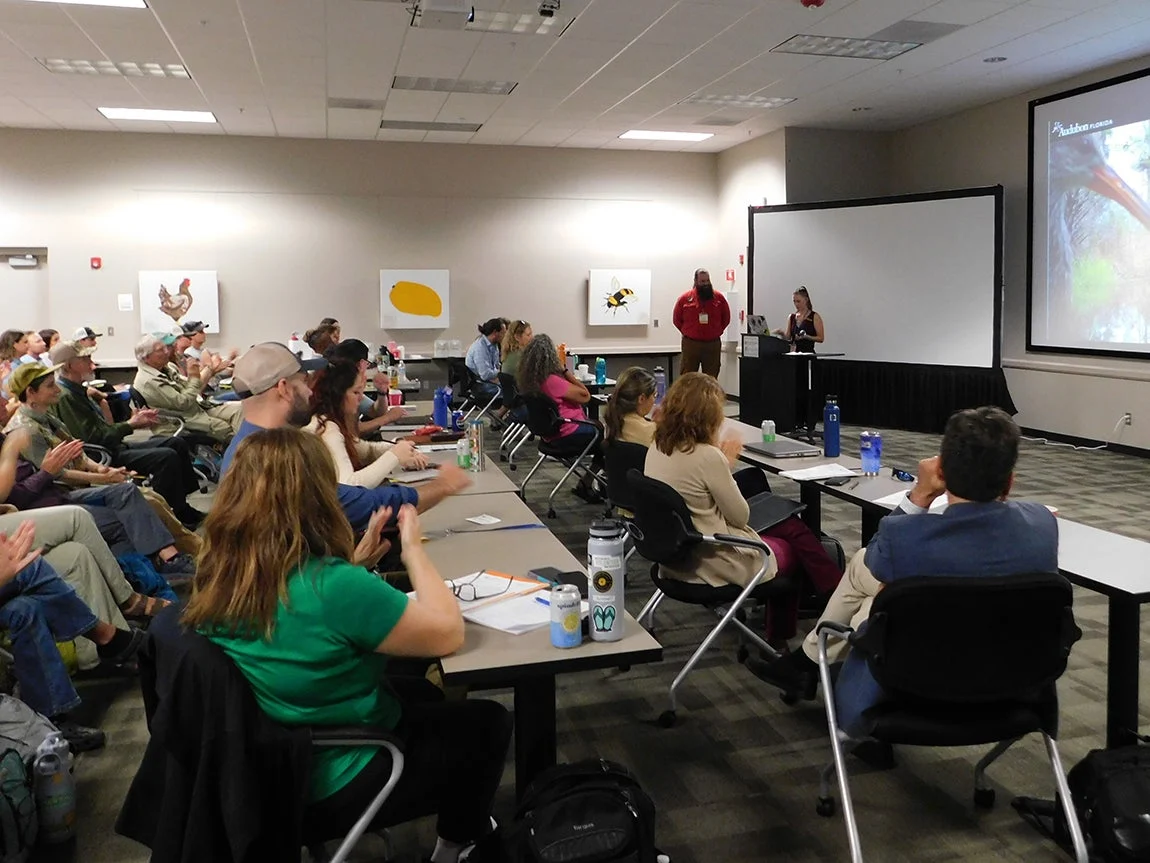
The ninth annual Corkscrew Watershed Science Forum, held on May 7, 2026, at the UF/IFAS Extension in Collier County, brought together a diverse group of 100 participants, including Audubon staff, leading scientists, environmental professionals, policymakers, and community stakeholders. This critical regional event serves as a vital platform for sharing groundbreaking research, fostering productive discussions, and building robust collaborations essential for advancing conservation efforts across Southwest Florida. By uniting experts to present their work on the complex ecological dynamics of the Corkscrew Watershed, the forum underscores the fundamental truth that a profound understanding of ecosystem function is the indispensable first step in safeguarding the invaluable resources that sustain human well-being: clean air, clean water, and a healthy, resilient environment for generations to come.
Understanding the Imperative: The Corkscrew Watershed at a Crossroads
Southwest Florida, characterized by its unique blend of wetlands, pinelands, and coastal habitats, is a region of immense ecological significance. At its heart lies the Corkscrew Watershed, a critical hydrological basin that feeds the iconic Corkscrew Swamp Sanctuary, a globally important wetland protected by Audubon. This watershed is not merely a geographic area; it is a lifeblood, supporting a rich tapestry of biodiversity, including endangered species like the Florida panther and the ghost orchid, and providing essential ecosystem services such as natural water filtration and flood attenuation. However, this ecological richness exists within one of the fastest-growing regions in the United States. Rapid urbanization, agricultural expansion, and an ever-increasing demand for water resources are placing immense pressure on these delicate natural systems. The conversion of vast tracts of natural areas into residential developments and agricultural lands has dramatically altered hydrological patterns, fragmented habitats, and introduced new threats, making forums like this indispensable for coordinating informed responses. The UF/IFAS Extension in Collier County, a local arm of the University of Florida’s Institute of Food and Agricultural Sciences, plays a crucial role in disseminating research-based knowledge to address these challenges, making it an ideal venue for such a collaborative scientific gathering.
A Decade of Dialogue: The Forum’s Evolution
The Corkscrew Watershed Science Forum, first established in 2018, has evolved into a cornerstone event for regional environmental stewardship. Conceived by Audubon Conservation Director Shawn Clem, PhD, who delivered a welcoming address at this year’s forum, the event was designed to bridge the gap between scientific inquiry and practical conservation. Its annual recurrence highlights a sustained commitment to understanding and addressing the environmental challenges specific to the Corkscrew Watershed and broader Southwest Florida. Each year, the forum meticulously curates a program that reflects the most pressing issues and cutting-edge research, bringing together diverse perspectives from academia, government agencies, and non-profit organizations. This year’s ninth iteration demonstrated the growing recognition of the forum’s importance, drawing 100 participants eager to contribute to and learn from the collective expertise. Sanctuary Director Keith Laakkonen’s introductory remarks set a somber yet urgent tone, emphasizing the alarming rate at which agricultural lands and natural areas around the Sanctuary’s borders are being converted to development. His call for increased conservation efforts and enhanced collaboration resonated deeply, underscoring the forum’s foundational purpose: to translate scientific knowledge into actionable strategies for environmental protection.
Hydrological Restoration: Reclaiming Water’s Lifeline
A central theme of the forum revolved around the critical issue of hydrological alteration and the ongoing efforts to restore natural water levels within the Corkscrew Watershed. Laura Layman of the South Florida Water Management District (SFWMD), alongside Steve Blair and Maria Loinaz, provided a crucial update on the Corkscrew Watershed Initiative (CWI). Their presentation illuminated a significant environmental challenge stemming from human intervention: the flood protection channels constructed near the Sanctuary in the early 2000s, while intended to safeguard human infrastructure, inadvertently led to a substantial lowering of surface and groundwater levels. Audubon staff, leveraging over 60 years of meticulously collected water-level data, first identified and revealed these adverse changes in 2019. This revelation spurred the SFWMD, a governmental agency responsible for managing water resources in South Florida, to begin actively exploring solutions.
Recognizing the severity of the problem, a collaborative effort was launched in 2021, culminating in an Audubon and SFWMD-funded water-level modeling study of Corkscrew Swamp Sanctuary and Bird Rookery Swamp. This comprehensive study was instrumental in pinpointing the likely causes of the hydrological imbalance and initiated crucial discussions on potential restorative measures. The CWI, a three-year planning project, represents the culmination of these efforts, aiming to develop a holistic plan for restoring water levels throughout the entire watershed. The implications of this initiative are far-reaching. Cypress trees, the dominant canopy species in the Corkscrew Swamp, are highly sensitive to hydrological changes, relying on specific water depths and durations for their health and survival. Lowered water tables can lead to stress, reduced growth, and even mortality for these long-lived trees, fundamentally altering the character of the swamp. Furthermore, the entire wetland ecosystem, which provides vital habitat for countless species and acts as a natural water purification system, depends on the intricate balance of water flow and retention. The CWI’s success is therefore paramount not only for the Corkscrew Swamp Sanctuary but for the broader ecological health and resilience of Southwest Florida, signaling a proactive commitment from governing bodies and conservation groups to rectify past environmental missteps.
The Pressure Points: Development, Extraction, and Climate Change
The forum delved into several other critical environmental stressors, highlighting the multifaceted nature of conservation challenges in the region.
Oil Drilling in Big Cypress: A Lingering Scar
Amber Crooks, representing the Conservancy of Southwest Florida, presented a stark reminder of the long-term ecological consequences of resource extraction. Her presentation focused on the impacts of oil drilling exploration within the Big Cypress National Preserve, a vast expanse of wilderness crucial for regional biodiversity and water quality. Crooks revealed that a decade after the last exploration event, the damaged cypress forest has shown minimal signs of recovery. Despite mitigation efforts, adjacent wetlands have regained less than 50% of their original ecological function, underscoring the profound and often irreversible damage caused by such activities. The proposed development of two new oil pads in the area further heightens concerns, posing renewed threats to this ecologically sensitive landscape. The preserve is a vital habitat for the Florida panther and other iconic species, and its unique hydrological features contribute significantly to the health of the Everglades ecosystem. The Conservancy’s findings serve as a potent warning against the continued pursuit of fossil fuel extraction in protected areas, emphasizing the need for robust environmental impact assessments and the prioritization of conservation over short-term economic gains.
Prescribed Fire: Balancing Ecological Need with Urban Proximity
Allyson Webb, Audubon’s land stewardship manager for Corkscrew Swamp Sanctuary, offered a historical perspective on prescribed fire, a critical management tool dating back to 1973 at the Sanctuary. Fire is an intrinsic and vital component of South Florida’s ecosystems, essential for nutrient cycling, promoting the germination of native plant species, and preventing catastrophic wildfires by reducing accumulated vegetative debris. However, the burgeoning development adjacent to the Sanctuary’s boundaries has created a complex dilemma. While the need for prescribed fires to manage fuel loads and maintain fire-dependent habitats has increased, the proximity of developed areas consistently reduces the number of acres that can be safely burned each year due to concerns over wind-driven smoke impacting human health and property. This challenge is further exacerbated by altered freshwater flows, which can impact fuel moisture, and inconsistent weather patterns, a direct consequence of climate change. The delicate balance required to meet ecological needs while mitigating risks to surrounding communities exemplifies the intricate management challenges faced by land stewards in a rapidly urbanizing landscape.
Ghost Orchids: Sentinels of Wetland Health
Adam Herdman, a PhD student at the University of Florida, captivated the audience with his research on ghost orchid populations. These enigmatic and critically endangered plants are iconic symbols of Florida’s unique wetlands, and their survival is intrinsically linked to the health of these sensitive ecosystems. Herdman explained that ghost orchids rely on a complex interplay of environmental conditions, specific fungal associations, native pollinators, and neighboring plant species for their survival. The increasing demand for water resources in Southwest Florida directly threatens these orchids by reducing the water available for wetland functions, leading to drier conditions that disrupt their delicate life cycle. Studies like Herdman’s are crucial for understanding the precise ecological requirements of these rare species, informing targeted conservation strategies, and providing scientific justification for potential legislative protections. The ghost orchid, much like other sensitive wetland flora, acts as an important bioindicator, its struggles reflecting the broader environmental degradation impacting the region’s vital wetland habitats.
Sentinels of the Environment: Wildlife and Invasive Threats
The forum also highlighted the direct impacts of environmental changes on wildlife populations, from amphibians signaling ecosystem distress to apex predators facing new health threats, and the alarming spread of invasive species.
Amphibian Decline: A Call from the Wild
John Cassani and a team from Florida Gulf Coast University (FGCU), including Dean Croshaw, Andrew Durso, Edwin Everham III, and Whitney Jo Hummel, presented a sobering update from the FrogWatch program. Their findings, based on 26 years of frog call surveys across Southwest Florida, mirrored a concerning global trend: the dramatic decline of amphibian populations, often regarded as environmental indicators due due to their permeable skin and sensitivity to environmental changes. The data revealed that at least three native species—the chorus frog, gopher frog, and spadefoot frog—are now rarely or no longer heard calling across significant portions of their historical range. While amphibians are known to be vulnerable to pollution, rainfall deficits, predation, and microbes, the FGCU team emphasized that species like the pinewoods treefrog and Southern cricket frog are struggling to adapt to the widespread loss of their natural habitat. In stark contrast, the only species that showed a clear increase in population over the 26-year period was the invasive cane toad, an aggressive non-native species that outcompetes and preys on native amphibians. This imbalance underscores the profound impact of habitat loss and the disruptive influence of invasive species on native biodiversity.
Parasites and Panthers: The Human-Wildlife Interface
Peter Sebastian, PhD, DVM, from the Florida Fish and Wildlife Conservation Commission (FWC), presented a concerning case study illustrating the direct impact of pet populations on native wildlife. The highly endangered Florida panther, a keystone species whose survival is critical for ecosystem health, faces numerous threats, including habitat loss and vehicle collisions. Dr. Sebastian’s research revealed another emerging threat: an injured Florida panther was discovered to be infected with a specific type of heartworm previously unseen in the U.S. This finding strongly suggests a transmission route from domestic animals, highlighting the increasing interface between human settlements and wildlife habitats. As human populations expand further into wild areas, the risk of disease and parasite transmission from domestic pets to native wildlife increases significantly. This not only jeopardizes the health of endangered species like the panther but also underscores the broader implications for ecosystem health and the need for responsible pet ownership, including vaccination and parasite prevention, particularly in areas adjacent to critical wildlife corridors.
Asian Swamp Eel Invasion: A Looming Threat
Rounding out the day’s presentations, FIU professor Nate Dorn, PhD, delivered a compelling account of the Asian swamp eel invasion in the Everglades. While the last known introduction of this highly adaptable aquatic predator occurred decades ago, these eels are aggressively expanding their range, devastating native prey populations. Dr. Dorn and his coauthors reported a staggering 98% loss of crayfish at one study site where the eels are present. This statistic is particularly alarming given that crayfish constitute a significant portion of the diet for many wading birds and other native predators in the Everglades food web. The arrival of Asian swamp eels therefore poses a direct threat to the survival of these iconic bird species, potentially triggering a cascade of negative ecological impacts throughout the ecosystem. While these invasive eels have not yet been detected in Collier County or the Corkscrew Swamp Sanctuary, Sanctuary biologists remain vigilant, actively monitoring for their presence. This proactive approach is crucial, as early detection and rapid response are often the most effective strategies for managing invasive species before they become irrevocably established and cause widespread ecological damage.
Innovative Approaches and Collaborative Pathways
Beyond these detailed presentations, the forum also featured several other important contributions showcasing diverse research and practical solutions. These included studies on increasing plant species diversity in wetland mitigation projects, utilizing advanced multispectral imagery for mapping and identifying invasive plant species, ongoing monitoring of mammal populations within the watershed using camera traps (a significant contribution to the SnapshotUSA program), and research into the survival rates of illegally harvested and confiscated native turtles after reintroduction into their natural habitats. Each of these presentations, while distinct in their focus, reinforced the overarching theme of the forum: the power of scientific inquiry and collaborative action to address complex environmental challenges. The exchange of best practices and research results among professionals and stakeholders is instrumental in refining conservation strategies and fostering a collective commitment to protecting Southwest Florida’s natural heritage.
Charting a Sustainable Future for Southwest Florida
The ninth annual Corkscrew Watershed Science Forum served as a powerful testament to the enduring commitment to environmental stewardship in Southwest Florida. By meticulously curating a program that covered hydrological restoration, the impacts of development and extraction, the challenges of climate change, and the threats posed by invasive species, the forum provided a comprehensive overview of the region’s most pressing ecological concerns. The rich dialogue and diverse perspectives shared among scientists, policymakers, and community members underscore the forum’s invaluable role in translating complex scientific understanding into tangible conservation actions.
Knowing more about the threats facing the Corkscrew Watershed and their multifaceted impacts on the ecosystem is not merely an academic exercise; it is a critical imperative for managing land effectively, protecting wildlife, safeguarding sensitive plant species, and preserving vital water resources in an ever-changing landscape. Events like the annual Corkscrew Watershed Science Forum are indispensable. They significantly enhance the collective ability to protect crucial habitats managed by organizations like Audubon, ensuring the long-term health of the environment for both birds and people. Furthermore, by fostering regional networking and collaboration, the forum strengthens the ties between critical conservation efforts across the entire hemisphere, building a more resilient future for Florida’s unique natural treasures. The forum’s legacy is one of continued scientific rigor, collaborative problem-solving, and unwavering dedication to the vision of a healthy and sustainable Southwest Florida.
