
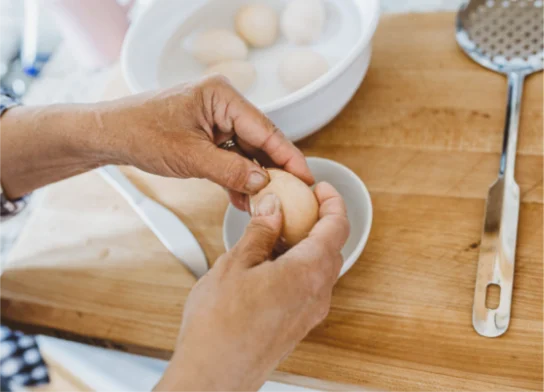
For culinary enthusiasts and small-scale poultry producers alike, the farm-fresh egg represents the pinnacle of quality, offering a rich flavor profile and superior nutritional density compared to mass-produced alternatives. However, these same fresh eggs have long been the subject of frustration in the kitchen due to their notorious difficulty to peel after being hard-cooked. Traditional wisdom has often suggested that the only solution is to allow eggs to age for several weeks, sacrificing freshness for convenience. Recent developments in culinary science and refined kitchen techniques have identified a superior alternative that preserves the integrity of the fresh egg while ensuring a clean, effortless peel every time: the steaming method. By moving away from the conventional boiling process and utilizing controlled steam, cooks can achieve aesthetically perfect results without the need for chemical additives or prolonged storage.

The Biological Obstacle: Why Fresh Eggs Resist Peeling
To understand why steaming is effective, one must first examine the biological structure of a freshly laid egg. The difficulty in peeling fresh eggs is primarily rooted in the pH level of the egg white, or albumen. When an egg is first laid, the albumen has a relatively low pH, making it slightly acidic. In this acidic environment, the proteins in the egg white bond strongly to the keratin in the inner shell membrane. This bond is so tenacious that during the peeling process, the membrane often tears away chunks of the cooked white, resulting in a pitted and unattractive appearance.

As an egg ages over the course of several weeks, carbon dioxide escapes through the thousands of microscopic pores in the shell. This process causes the pH of the albumen to rise, becoming more alkaline. In a more alkaline environment, the protein bonds weaken, allowing the shell and membrane to separate more easily from the white. While aging eggs solves the peeling problem, it introduces other culinary disadvantages. Older eggs develop a larger air cell at the blunt end, leading to a flattened or "dipped" appearance in the final product. Furthermore, the structural integrity of the yolk and white begins to degrade over time, which is undesirable for those seeking the firm, creamy texture of a truly fresh egg.

Limitations of Traditional Boiling Enhancements
For decades, home cooks have experimented with various additives in boiling water to facilitate easier peeling. These methods include the addition of white vinegar, baking soda, or high concentrations of salt. While these additives are common in domestic kitchens, their efficacy is often inconsistent and scientifically marginal. Vinegar is intended to soften the calcium carbonate of the shell, but the duration of a standard boil is rarely sufficient to make a meaningful difference in the ease of peeling. Baking soda aims to increase the alkalinity of the water, theoretically mimicking the aging process, but it often struggles to penetrate the shell effectively and can sometimes impart a faint metallic taste.

Other manual techniques, such as piercing the blunt end of the shell with a pin before boiling, are intended to release pressure and reduce the size of the air pocket. However, this method increases the risk of the shell cracking during the cooking process and does little to address the fundamental protein bonding between the membrane and the albumen. The culinary industry has therefore sought a more reliable, "hot start" method that addresses the physics of heat transfer rather than the chemistry of the water.

The Steaming Breakthrough: A New Standard for Egg Preparation
The transition from boiling to steaming represents a significant shift in how heat is applied to the egg. Steaming is a "hot start" method, meaning the eggs are introduced to a high-temperature environment instantly, rather than being placed in cold water and brought to a boil. When an egg is placed directly into a pre-heated steam environment (212°F or 100°C), the sudden thermal shock causes the egg white to contract rapidly away from the shell membrane. This immediate contraction prevents the proteins from forming a strong bond with the keratin, effectively "setting" the shape of the egg before it can adhere to its container.

Furthermore, steam is a more efficient medium for heat transfer than boiling water. Because steam molecules are in a gaseous state and moving at high velocities, they surround the egg more uniformly. This leads to more consistent cooking of both the yolk and the white, reducing the likelihood of rubbery textures or undercooked centers. For the backyard chicken owner who may be collecting eggs and cooking them within hours of being laid, steaming provides the only reliable path to a perfectly smooth, easy-to-peel hard-cooked egg.

A Chronological Guide to the Professional Steaming Method
To achieve optimal results, the steaming process must be executed with precision. The following methodology is recommended by poultry experts and culinary professionals for handling eggs of any age, particularly those that are farm-fresh.

1. Equipment Preparation
The process requires a large pot equipped with a tight-fitting lid and a steaming insert. This insert can be a traditional stainless steel steamer basket, a bamboo steamer, or even a metal colander that fits securely inside the pot. The goal is to suspend the eggs above the water level, allowing only the vapor to make contact with the shells.

2. Establishing the Steam Base
Add approximately one to two inches of water to the bottom of the pot, ensuring the water level remains below the bottom of the steamer basket. Bring the water to a vigorous boil. It is essential that the water is already producing a steady flow of steam before the eggs are introduced.

3. Egg Introduction and Placement
Rinse the eggs in warm water to prevent thermal shock from cracking the shells instantly upon contact with the steam. Using tongs or a slotted spoon, carefully place the eggs in a single layer within the steamer basket. Avoid overcrowding, as this can lead to uneven steam distribution.

4. Controlled Cooking Intervals
Cover the pot with a tight-fitting lid to trap the steam. The cooking time will vary based on the desired consistency of the yolk:

- Soft-Cooked (Runny Yolk): 6 to 7 minutes.
- Medium-Cooked (Jammy Yolk): 8 to 9 minutes.
- Hard-Cooked (Solid Yolk): 12 to 13 minutes.
5. The Thermal Shock (The Ice Bath)
Immediately upon reaching the desired cooking time, the eggs must be removed from the heat and submerged in an "ice bath"—a bowl filled with cold water and a generous amount of ice. This step is non-negotiable. The ice bath serves two purposes: it stops the cooking process instantly, preventing the yolks from becoming overdone, and it causes the egg mass to shrink further within the shell, creating a physical gap that makes peeling effortless.

The Chemistry of the Yolk: Avoiding the Discoloration Ring
A common flaw in hard-cooked eggs is the appearance of a greenish-gray ring surrounding the yolk. This discoloration is often mistaken for a sign of a spoiled egg, but it is actually a harmless chemical reaction known as iron sulfide formation.

When an egg is cooked for too long or cooled too slowly, the sulfur-containing amino acids in the egg white break down and release hydrogen sulfide gas. This gas reacts with the iron naturally present in the egg yolk. The reaction occurs at the interface where the white and yolk meet, resulting in the characteristic gray-green ring. By utilizing the steaming method and following it with an immediate ice bath, the temperature of the egg is dropped before this chemical reaction can occur. This ensures that the yolks remain a vibrant, appealing yellow or deep orange, which is particularly important for dishes like deviled eggs or Niçoise salads.

Expert Perspectives and Industry Implications
Lisa Steele, a fifth-generation chicken-keeping expert and author of "Fresh Eggs Daily," has been a vocal advocate for the steaming method. Steele notes that the traditional advice of letting eggs sit for weeks is often impractical for those who keep backyard flocks and want to enjoy the fruits of their labor immediately. "I often cook eggs that were laid a mere few hours prior, and they peel perfectly," Steele states. Her observations align with a broader trend in the culinary world toward "hot start" cooking for delicate proteins.

The implications of this technique extend beyond the home kitchen. For the restaurant industry, where presentation and efficiency are paramount, the steaming method reduces food waste by eliminating the "pitting" that occurs when egg whites stick to the shell. It also allows chefs to source the freshest possible ingredients from local farms without fearing the labor-intensive cleanup associated with difficult-to-peel eggs.

Final Analysis: The Future of Egg Preparation
As the popularity of backyard chicken keeping and local food sourcing continues to rise, the demand for reliable preparation techniques grows. The shift from boiling to steaming is backed by both physical and chemical evidence, proving that the most effective way to handle a fresh egg is through the application of intense, indirect heat followed by rapid cooling.

By adopting the steaming method, cooks can enjoy the superior taste of farm-fresh eggs with the ease of use previously reserved for older, store-bought varieties. The process is quick, requires no specialized chemical additives, and produces a visually perfect result that honors the quality of the ingredient. Whether for a simple breakfast or an elegant appetizer, the steamed egg stands as a testament to how refined technique can overcome even the most stubborn biological obstacles in the kitchen.
