
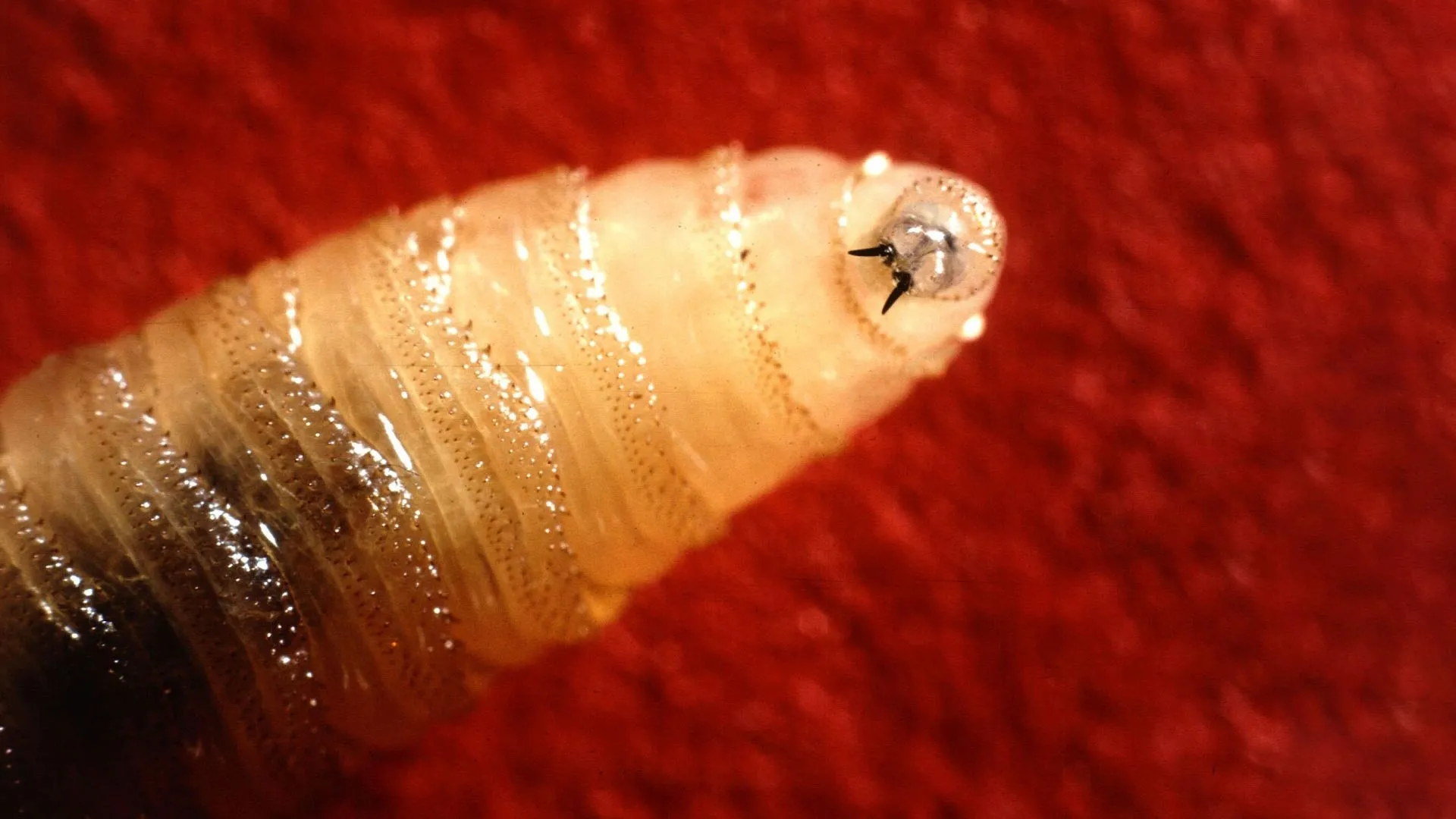
Decades after a monumental biological eradication campaign drove the New World screwworm out of the United States and far to the south, the notorious flesh-eating parasite has returned. Reaching parts of Texas and New Mexico, the reemergence of Cochliomyia hominivorax has ignited urgent concerns among agricultural producers, wildlife conservationists, veterinarians, and public health officials. Unlike typical blowflies whose larvae consume decaying organic matter, the New World screwworm targets healthy, living tissue, posing a severe threat to livestock, domestic pets, endangered wildlife, and—on rare occasions—humans.
In response to this rapid northern expansion, a coalition of academic researchers and regional health officials has engineered an advanced tracking dashboard. Developed through a collaborative effort between the University of California San Diego (UC San Diego) and the County of San Diego Health and Human Services Agency (HHSA) Public Health Services, the new tool aims to forecast the parasite’s movements, optimize resource allocation, and protect vulnerable populations before infestations spread further.
The Biology and Threat of the Flesh-Eating Parasite
The life cycle of the New World screwworm makes it uniquely destructive compared to other common insect pests. Female flies are capable of detecting open wounds, cuts, or natural body openings on warm-blooded animals. Once a host is identified, the female deposits hundreds of eggs. Within a day, these eggs hatch into ravenous larvae, or maggots, which immediately begin burrowing deep into healthy, living flesh.
As the larvae feed, they inflict massive cellular damage, deepening and widening the initial wound. This process not only causes excruciating pain to the host but also creates prime conditions for secondary bacterial infections. Left untreated, a severe infestation can prove fatal to livestock, pets, and native wildlife within a matter of days.
While livestock and wildlife bear the brunt of the threat, humans are also susceptible. Human myiasis—infestation by fly larvae—occurs when an individual with an open wound or exposed mucous membrane comes into contact with the adult fly. Though human cases remain rare and the parasite cannot be transmitted directly from person to person like a conventional infectious disease, an infection requires immediate medical intervention. Clinicians must manually remove the larvae to prevent catastrophic tissue destruction.
The potential vectors for the parasite’s geographical expansion are numerous. While adult screwworm flies are strong fliers capable of traversing considerable distances in search of hosts, human-mediated movement plays a major role. The transportation of infested livestock, domestic pets, and even migrating birds or wildlife can rapidly introduce the parasite to pristine regions far beyond its current frontier.
A Historical Retrospective: The 1950s Eradication Campaign
The United States is no stranger to the economic and ecological devastation wrought by the New World screwworm. During the 1950s, the pest cost U.S. livestock producers between $50 million and $100 million annually in the American Southwest alone—a staggering sum at the time, equivalent to hundreds of millions of dollars today. The fly decimated cattle herds, crippled the meat industry, and heavily impacted wild deer and other fauna.
To combat this crisis, government entomologists and researchers pioneered one of the most successful biological control operations in history: the sterile insect technique (SIT). Scientists mass-produced millions of screwworm flies in laboratory facilities, exposed the male pupae to controlled doses of radiation to render them sterile, and systematically released them over infested areas by the plane-load.
Because female screwworms typically mate only once in their lifetimes, wild females that mated with the sterile released males produced no viable offspring. Over time, this biological attrition drove the wild population into a steep downward spiral until the pest was entirely eradicated from the United States. The southern quarantine barrier was successfully pushed all the way down to Panama, protecting North American agriculture for decades.
However, maintaining this barrier requires constant vigilance, international cooperation, and rigorous border quarantines. The recent breach in Texas and New Mexico demonstrates that historical eradication, while remarkably effective, is not permanent if monitoring lapses or environmental and economic pressures shift.
The Genesis of a High-Tech Tracking Tool
Recognizing the accelerated pace of the screwworm’s return, public health professionals realized traditional surveillance methods were inadequate. Standard reporting pipelines—relying on field veterinarians submitting samples to diagnostic laboratories for confirmation—can be plagued by delays lasting days or weeks. In the face of a rapidly moving biological threat, weeks of delay can mean the difference between localized containment and widespread regional outbreaks.
To bridge this critical operational gap, experts at UC San Diego and San Diego County Public Health Services joined forces under the banner of "Resilient Shield," a specialized academic-public health center funded by the U.S. Centers for Disease Control and Prevention (CDC). The resulting tool is a sophisticated regional risk-profiling dashboard designed to aggregate disparate data streams into a single, actionable interface.
Dr. Eliah Aronoff-Spencer, professor of medicine at UC San Diego School of Medicine and an affiliate of the UC San Diego Design Lab and Qualcomm Institute, emphasized the practical, real-world utility of the platform. "Our County public health partners alerted us to the need for better situational awareness of New World screwworm," Dr. Aronoff-Spencer explained. "We built a dashboard to generate regional risk profiles. This is just one example of how we are responding to County needs with a focus on real-world issues. It’s a model that has brought us great success, like the Tijuana River Crisis Environmental Dashboard."
The dashboard processes multiple categories of intelligence, including confirmed laboratory detections, meteorological and environmental conditions favorable to the proliferation of the fly, and—in a novel methodological twist—real-time news media reports.
Innovations in Public Health Surveillance: The Power of Media Mining
The inclusion of media monitoring is considered one of the dashboard’s most vital breakthroughs. Traditional public health surveillance systems are inherently reactive, waiting for formal case confirmations before signaling an alarm. By incorporating natural language processing and continuous media scanning, the UC San Diego tool can capture early, ground-level warnings, field sightings, and regional rumors before official bureaucratic mechanisms catch up.
Dr. Seema Shah, medical director of the Epidemiology and Immunization Services Branch for the County of San Diego’s Public Health Services Department, highlighted the necessity of this innovation. "Traditional reporting mechanisms for public health are often delayed," Dr. Shah noted. "Lab confirmation can take days or weeks. By incorporating media reports, we can identify potential threats sooner and stay one step ahead."
This proactive posture allows public health planners to answer critical strategic questions. Dr. Mark Beatty, assistant medical director for the County’s Epidemiology and Immunization Services Branch, pointed out the operational value of foresight. "The tool gives you a sense of where you might expect to see cases next," Dr. Beatty said. "That’s helpful in determining how we should be preparing. Is the threat imminent, or do we have six months? We’re in a very concerning phase right now, and the tool backs that up."
Reflecting on the unexpected velocity of the current outbreak, Dr. Beatty added, "We knew in 2023 that New World screwworm was going to move northward, but I wasn’t expecting it to move as fast as it has. Although the source of the infections in the U.S. is still under investigation, the fact that it’s in the U.S. is 100% clear. Once it entered Texas, we quickly saw an increase in detections. It’s in a place where it used to live, so it’s not surprising it’s taking a hold again."
Currently, access to the dashboard is restricted to authorized public health officials, epidemiologists, and institutional partners directly involved in the project. However, the development team has expressed a long-term goal of releasing a streamlined, public-facing version to keep communities and pet owners informed.
A Multi-Pronged Modern Eradication Strategy
As the pest gains a foothold in the Southwest, federal and state agencies are mobilizing a comprehensive counter-offensive. The U.S. Department of Agriculture (USDA) is spearheading the contemporary eradication campaign, deploying a multifaceted strategy that blends time-tested methods with cutting-edge biotechnology.
The core of the USDA’s current effort relies on modern iterations of the sterile insect technique, augmented by targeted pesticide applications and strict animal movement quarantines designed to halt the cross-border and interstate spread of infected livestock. Furthermore, agricultural authorities are seeking regulatory approval from the U.S. Environmental Protection Agency (EPA) to deploy a genetically modified, all-male strain of screwworm fly currently undergoing advanced field trials. Simultaneously, academic teams at institutions like UC San Diego are engineering next-generation genetic tools to refine and strengthen future biological control vectors.
At the local level, inter-agency coordination is paramount. Dr. Emily Trumbull, a veterinarian and lead for the Epidemiology Unit’s One Health Program within the California Department of Food and Agriculture ecosystem, underscored the importance of a unified front. "We are working closely with the California Department of Food and Agriculture to connect local veterinarians with screwworm resources for surveillance in our region," Dr. Trumbull stated. "The flies can affect any warm-blooded animal, so working together with veterinarians serving livestock, pets and wildlife is critical for identifying suspect cases and preventing cases in people. The dashboard takes into account environmental factors that can help us understand how the risk to our local region is changing before the fly arrives. That’s why the dashboard is valuable."
The Resilient Shield Model: Bridging Academia and Public Health
The creation of the screwworm tracking tool is not an isolated academic exercise; it represents the operational framework of Resilient Shield. Operating as one of 13 core facilities within the CDC’s newly established Insight Net network—a national consortium dedicated to infectious disease modeling and outbreak forecasting—Resilient Shield was designed to dismantle traditional barriers between academic research institutions and frontline public health agencies.
Under this operational model, public health departments burdened by urgent real-time challenges submit direct requests for technological solutions to Resilient Shield researchers. Rather than academic researchers guessing what tools might be helpful, public health agencies dictate the exact priorities.
"In public health, we always know our most urgent priorities, but too often we don’t have the immediate resources or in-house technical solutions to achieve them," Dr. Shah observed. "The screwworm is a perfect example. It is a critical threat, but it is an issue our academic partners might never have prioritized without our direct ticket. This partnership solves our immediate problem while providing shareable, open reference designs that demonstrate exactly how public health, academia, and industry can successfully work together."
This collaborative structure has already proven its worth across multiple domains. The very first project submitted to the center involved tracking seasonal influenza trends, an effort co-led by Resilient Shield co-principal investigator Ruy Ribeiro at the Los Alamos National Laboratory. For the screwworm initiative, Dr. Aronoff-Spencer partnered closely with mathematical epidemiologist Dr. Natasha Martin, professor of medicine and vice chief in the Division of Infectious Diseases and Global Public Health at UC San Diego School of Medicine.
Furthermore, Resilient Shield has engineered a modular, highly scalable resource hub in collaboration with major technology partners such as Google and MITRE. This hub ingests and synthesizes vast arrays of heterogeneous data, including human health records, veterinary diagnostics, environmental metrics, meteorological data, and social listening feeds. When a novel public health threat emerges, researchers can rapidly assemble customized digital toolsets—ranging from secure computing architectures and advanced mathematical simulation engines to AI-driven agent builders and public-facing awareness portals.
"Our central innovation is the true convergence of partner priorities with scalable engineering," Dr. Aronoff-Spencer concluded. "We do not build in a vacuum. Our infrastructure is built directly on the priorities dictated by our partners. In addition, because our platform is built on an open, modular architecture, every solution we develop strengthens the system and makes it more adaptable for the next public health challenge."
Broader Implications and Future Outlook
The return of the New World screwworm to the United States serves as a sobering reminder of the constant friction between human agriculture, wildlife management, and the natural world. Climate shifts, international trade, and the inherent adaptability of resilient parasite populations mean that historical victories against biological threats can never be taken for granted.
However, the rapid deployment of advanced tracking tools like the UC San Diego-San Diego County dashboard illustrates how modern epidemiology is evolving. By merging the historical lessons of the 1950s eradication campaigns with twenty-first-century data science, artificial intelligence, and cross-sector collaboration, public health officials are better equipped than ever to anticipate, confront, and ultimately neutralize agricultural and health crises before they spiral out of control.
As federal agencies push forward with sterile insect releases and state veterinarians maintain heightened surveillance across the Southwest, the combined forces of biology, technology, and inter-agency cooperation stand as the primary shield protecting American livestock, wildlife, and communities from the encroaching threat of the flesh-eating fly.
