
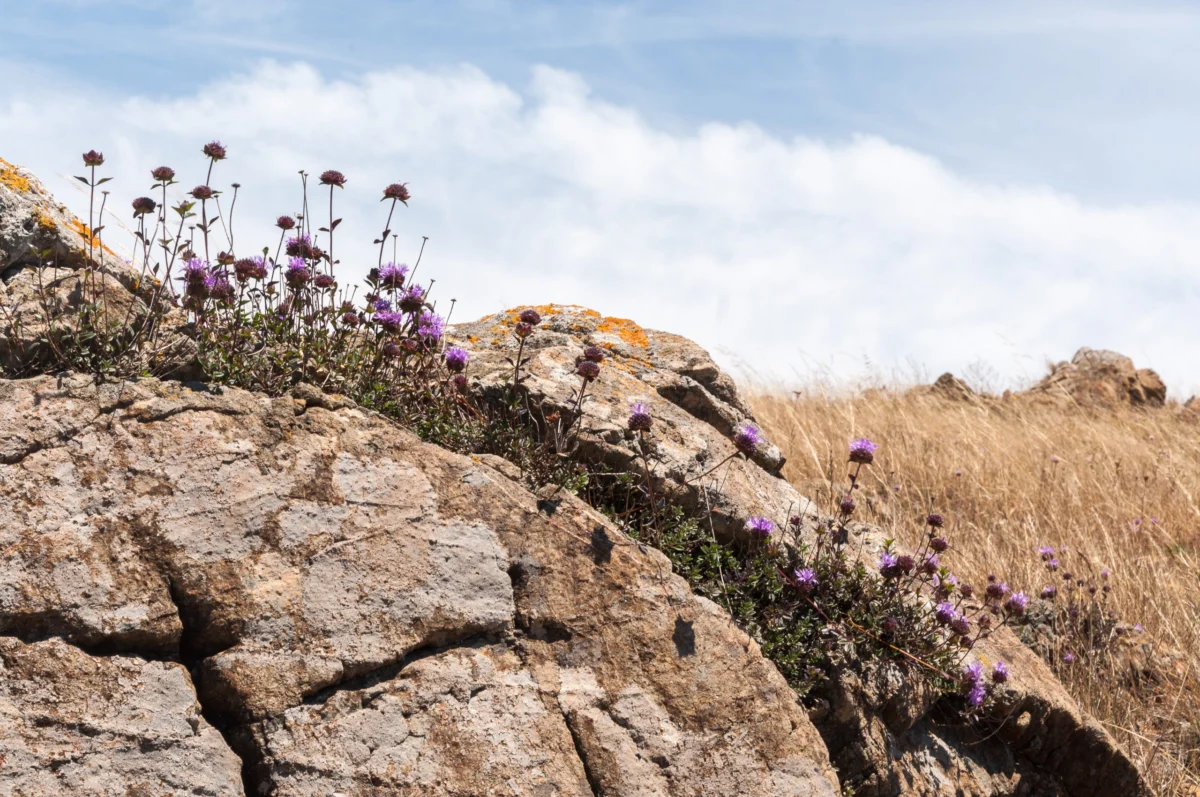
While most birdwatchers are captivated by the stunning array of species gracing the skies and habitats of the Bay Area, the story of life here is deeply intertwined with the rocks beneath their feet. Geological diversity is a fundamental driver of ecological richness, with the underlying bedrock dictating essential life conditions. It governs the intricate movement of water, shapes soil composition to either foster or restrict plant growth, and determines the elevation and slope at which vegetation flourishes. In Marin County, the singular nature of its geological setting creates extraordinarily specific conditions that support a remarkable array of rare endemic plant and animal species, many of which exist nowhere else on Earth.
The Geological Tapestry: Formation of Serpentine
Serpentine, California’s official state rock, is a distinctive bluish-green metamorphic rock that arises from a fascinating geological process. It forms deep within the Earth’s mantle, originating from peridotite, a magnesium-rich igneous rock. Through a process called serpentinization, peridotite undergoes hydration and metamorphic alteration when exposed to water, often at convergent plate boundaries where oceanic crust slides beneath continental crust. This process transforms the rock into serpentine, characterized by its slick, sometimes scaly texture and often mottled appearance. In California, particularly the Coast Ranges, serpentine exposures are widespread, a legacy of the complex tectonic activity that has shaped the state over millions of years. These ancient oceanic rocks were thrust onto the continental plate, creating the unique geological substrates we see today. The specific conditions under which serpentine forms imbue it with a chemical signature that profoundly influences the ecosystems it supports.
The Paradoxical Chemistry of Serpentine Soils
As serpentine rock weathers, it transforms into a thin, rocky soil layer with an inimitable chemical profile. Unlike most fertile soils, serpentine soils are notably poor in primary plant nutrients vital for basic life functions such as nutrient uptake and photosynthesis, including potassium, magnesium, and calcium. Conversely, they are unusually rich in heavy metals like nickel, chromium, and cobalt. These metals are naturally occurring but, at elevated concentrations, become toxic to most plant species, effectively choking growth and inhibiting the accumulation of organic matter in the soil. Furthermore, the thin, rocky composition of serpentine soil severely hampers its ability to retain water, a critical disadvantage for plants attempting to survive California’s famously long and dry summers. For the vast majority of plant life, these conditions present an insurmountable challenge, making serpentine landscapes appear barren or stunted.
An Unlikely Haven: Serpentine Flora and Their Adaptations
Despite these seemingly hostile conditions, the nutrient-poor substrate of serpentine soils has become an unlikely sanctuary for an astonishing diversity of rare endemic species, particularly grasses and wildflowers. This paradox is explained by a fascinating evolutionary dynamic. Many invasive species, often characterized by their adaptability to a wide range of environments, find the heavy, dry, and metallic serpentine soils utterly intolerable. This inherent toxicity acts as a natural barrier, protecting native serpentine plants from the aggressive competition that threatens much of California’s iconic biodiversity in other regions.
The statistics are compelling: although serpentine soils constitute only about one percent of California’s total land area, they support a staggering ten percent of the state’s endemic flora. A comprehensive 2009 study, published in ResearchGate, identified over two hundred serpentine endemic plant taxa, underscoring the disproportionate ecological importance of these unique habitats. These plants have not merely tolerated the harsh conditions; they have evolved a remarkable suite of physical, chemical, biological, and temporal adaptations to thrive. Some species have developed specialized mechanisms to block the accumulation of heavy metals like nickel in their tissues, while others possess highly efficient systems for extracting scarce calcium from the soil. Many serpentine plants appear stunted above ground, a consequence of directing a significant portion of their energy into developing dense, extensive root systems beneath the soil, crucial for anchoring and nutrient acquisition in thin, rocky substrates. Research, including a study published in Annual Review of Ecology, Evolution, and Systematics, suggests that many species have independently evolved similar adaptations to serpentine soils over long evolutionary timescales, highlighting the powerful selective pressures exerted by this unique environment.
"Serpentine ecosystems are living laboratories of evolution," states Dr. Evelyn Reed, a botanist and conservationist affiliated with the California Native Plant Society. "They demonstrate how life can find a way to flourish under extreme duress, leading to incredible biodiversity that often goes unnoticed by the casual observer. Protecting these areas is not just about saving rare plants; it’s about preserving unique evolutionary pathways."
Diverse Serpentine Environments Across California
The varied topography and microclimates across California allow for the formation of several distinct natural environments atop serpentine soils, including grasslands, barrens, chaparral, and even wetlands. While such niches are rare throughout North America, California boasts the continent’s most extensive serpentine exposures, supporting all these unique community types.
Among these, serpentine barrens represent the rarest and most extreme of serpentine communities. Defined by their rocky, open character, sparse herbaceous cover, and absence of woody growth, these barrens are simultaneously exceptionally harsh and profoundly conducive to the growth of rare endemic species. Mount Tamalpais in Marin County offers an unparalleled opportunity to observe these specialized plant communities. Here, visitors can discover thriving populations of the Mount Tamalpais Bristly Jewelflower (Streptanthus glandulosus ssp. pulchellus), Tiburon Buckwheat (Eriogonum caninum), Marin Navarretia (Navarretia rosulata), and Tamalpais Jewelflower (Streptanthus batrachopus), alongside other rare endemics that thrive on various soil substrates within the mountain’s diverse landscape.
Beyond Mount Tamalpais, Marin County harbors other critical serpentine hotspots. Ring Mountain, a preserve managed by the Marin County Open Space District, is home to the seemingly otherworldly Tiburon Mariposa Lily (Calochortus tiburonensis). This critically endangered lily grows on a single sloped serpentine outcropping on Ring Mountain and nowhere else in the world, a testament to the extreme endemism fostered by these soils. It shares its specialized habitat with other regional endemics, including serpentine reedgrasses, serpentine wheatgrass, Tiburon paintbrush (Castilleja neglecta), and Marin dwarf flax (Hesperolinum congestum), forming a miniature ecosystem of unparalleled rarity.
Invertebrate Life: Co-evolution with Serpentine Habitats
The unique ecological conditions of serpentine soils extend their influence beyond the plant kingdom, fostering a number of highly specialized invertebrate species found exclusively in the Marin area. One such creature is the Tiburon microblind harvestman (Sitalcina tiburonensis), a tiny, spider-like arachnid closely related to the more common daddy long-legs. This spooky-looking organism navigates the subterranean realms of serpentine grasslands without sight, emerging only at night and exclusively when moisture levels are high, a remarkable adaptation to its specific microhabitat.
Another serpentine dweller is Muir’s hairstreak (Callophrys muiri), an elusive, coin-sized butterfly. This exquisite insect lays its eggs exclusively on two species of serpentine-endemic cypress, demonstrating an incredibly tight co-evolutionary relationship with its host plants. Similarly, the iconic Bay Checkerspot butterfly (Euphydryas editha bayensis), endemic to the San Francisco Bay Area, also relies heavily on natural communities found on serpentine soils for breeding, particularly its larval host plants like California plantain (Plantago erecta). The survival of these delicate invertebrates is inextricably linked to the preservation of their serpentine habitats, highlighting the intricate web of life that these unusual soils support.
The Avian Connection: Serpentine’s Indirect Influence on Birds
While there are fewer bird species endemic to serpentine soils compared to plants, the principle of geological diversity fostering ecological diversity holds true across all trophic levels. Complex and varied landscapes, such as those shaped by serpentine, support a broader array of species with diverse habitat needs. Serpentine ecosystems, with their unique flora and invertebrate communities, play an unusual and critical role in the broader ecosystem, offering specialized habitats and food sources to endemic species that have coevolved with serpentine-dwelling plants.
Serpentine grasslands, in particular, serve as vital habitats for many native Californian birds, including ground-nesting species and raptors. The Golden Eagle (Aquila chrysaetos), a majestic apex predator, frequently hunts over these open landscapes. Other species, such as the Eastern Bluebird (Sialia sialis), Horned Lark (Eremophila alpestris), and Grasshopper Sparrow (Ammodramus savannarum), find crucial breeding and foraging grounds within serpentine grasslands, benefiting from the specific vegetation structure and insect populations present.
California’s significance for avian life is profound; more species of birds breed in California than in any other region in the United States. Consequently, the availability of diverse and sufficient habitat is paramount for supporting this broad array of resident and migratory birds. The variety of serpentine environments across the Bay Area and the state—including serpentine barrens, serpentine grasslands, and serpentine chaparral—are utilized by avian travelers along the great Pacific Flyway. This immense migratory corridor stretches from Alaska down to Patagonia, and the unique serpentine habitats offer critical stopover points, foraging grounds, and nesting sites for countless species undertaking epic annual journeys. The unique ecological communities developed on serpentine soils contribute to the overall health and resilience of this vast migratory network.
Conservation Imperatives and Future Outlook
The profound ecological significance of serpentine ecosystems necessitates robust conservation efforts. These habitats face a range of threats, including ongoing habitat loss due to urban development, agricultural expansion, and quarrying. While serpentine soils deter many invasive species, some aggressive non-native plants can still establish themselves, particularly in disturbed areas, posing a persistent challenge to native flora. Climate change introduces additional complexities, potentially altering precipitation patterns and temperature regimes, which could stress already specialized serpentine species.
Conservation initiatives often involve land acquisition and protection, coupled with active habitat management to control invasive species and restore degraded areas. Scientific research continues to unlock the secrets of serpentine ecology, providing critical data to inform these management strategies. Organizations like the California Native Plant Society, the Marin County Open Space District, and numerous academic institutions are actively engaged in studying, protecting, and educating the public about these invaluable ecosystems.
"Understanding the geological underpinnings of our natural world is the first step towards truly appreciating and protecting its biodiversity," reflects Dr. Rodriguez. "Serpentine soils are a powerful reminder that beauty and resilience can emerge from the harshest conditions. Their preservation is not just a local concern for Marin, but a critical component of California’s, and indeed global, biodiversity conservation strategy."
As spring blankets the Bay Area with its vibrant display of chirping songbirds and swathes of orange and yellow wildflowers, emblems of the season’s beatific beauty, take a moment to look deeper. Keep an eye out for the subtle blue-green hues of California’s state rock. By recognizing the presence and history of serpentine, one can profoundly enrich their appreciation for the remarkable flora and fauna that stubbornly, and miraculously, thrive upon its rocky soils. Identifying even a few of the rare endemics that call these unique landscapes home offers a tangible connection to the ancient geological forces and profound evolutionary adaptations that define California’s unparalleled natural heritage.
