
The sport of pigeon racing, a centuries-old tradition that balances avian biology with competitive strategy, has increasingly shifted toward digital platforms to disseminate specialized knowledge. As the complexity of pigeon training, health management, and genetic selection grows, organizations such as Pigeon Insider have implemented sophisticated social media engagement protocols to ensure that enthusiasts receive real-time, expert-level guidance. By leveraging Facebook’s algorithmic notification settings, practitioners of the sport can now bypass general feed congestion to receive direct, prioritized access to elite-level training techniques and competitive strategies.
The Evolution of Pigeon Racing Communication
Historically, pigeon racing—a sport known as "pigeon fancying"—relied on local club meetings, printed newsletters, and word-of-mouth dissemination of information. Fanciers would gather in regional lofts to exchange notes on breeding cycles, feeding regimens, and flight path navigation. However, the globalization of the sport in the late 20th and early 21st centuries necessitated a more centralized approach to knowledge sharing.

The emergence of online digital platforms marked a significant turning point in the mid-2010s. For the first time, international standards in loft hygiene, veterinary care, and race conditioning could be standardized across borders. The Pigeon Insider initiative represents this shift, utilizing social media infrastructure to build a cohesive community of practitioners who require immediate updates on racing events, health advisories, and emerging technical strategies.
The Mechanism of Digital Engagement
The transition from casual interest to a VIP-level engagement status on social media is predicated on understanding platform-specific algorithmic delivery. Social media platforms, including Facebook, frequently filter content based on user interaction levels. For the competitive pigeon fancier, this means that critical information—such as sudden changes in weather-related racing protocols or emergency health alerts—might be buried by secondary content.
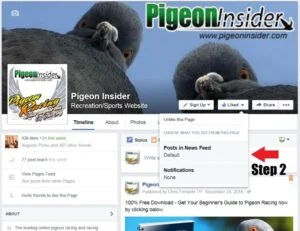
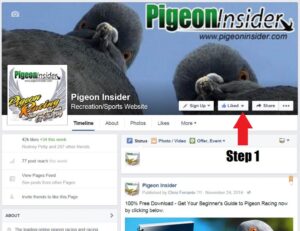
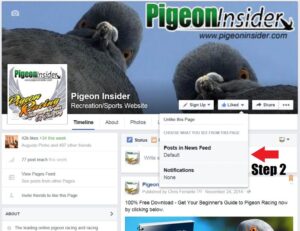
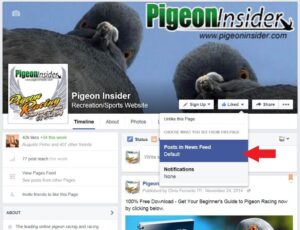
To mitigate this, users must manually override standard feed settings. The process involves a five-step configuration: first, establishing a primary connection through the "Like" function; second, accessing the administrative dropdown menu; third, prioritizing the source within the news feed; fourth, selecting "See First" to override algorithmic sorting; and fifth, activating "All Notifications" to ensure no informational updates are missed. This systematic approach ensures that the end-user maintains a high-fidelity information pipeline, which is essential for those participating in high-stakes racing where split-second decisions regarding bird health and release timing are paramount.

Supporting Data and Statistical Relevance
The efficacy of systematic information gathering is supported by the data-driven nature of modern pigeon racing. Contemporary racing is no longer purely about instinct; it is a discipline heavily reliant on aerodynamics, meteorology, and nutritional science.
According to various regional pigeon racing associations, successful loft management requires a 15–20% increase in nutrient-dense supplementation during peak training months. Furthermore, studies on homing pigeon navigation suggest that birds utilize a combination of geomagnetic sensitivity and visual mapping, both of which can be influenced by the timing of training flights. When owners receive "exclusive" updates via VIP channels, they are often receiving information derived from these broader scientific studies, allowing them to adjust their training schedules according to the latest research in avian behavioral science.
Chronology of Digital Integration
The movement toward digital-first education in the pigeon racing community follows a clear timeline:
- 2000–2010: The rise of dedicated pigeon racing forums and bulletin boards allowed for asynchronous communication but lacked the real-time notification capabilities required for modern competitive demands.
- 2010–2015: The proliferation of social media platforms allowed organizations to create direct-to-consumer pipelines. During this window, the initial structure of the "Pigeon Insider" program was conceptualized to solve the problem of information fragmentation.
- 2015–Present: The formalization of VIP lists and notification protocols. This era is characterized by the use of "See First" settings and push notifications, ensuring that professional and hobbyist fanciers alike receive uniform access to industry updates.
Official Perspectives and Community Feedback
While the primary source for this strategy remains the Pigeon Insider organization, the broader community of fanciers has responded with a high degree of utility-based adoption. Industry experts note that the democratization of information is crucial for the survival of the sport. By lowering the barrier to entry for high-quality technical advice, the sport encourages newer generations of breeders to engage with traditional methods while incorporating modern digital tools.
Proponents argue that this model of communication fosters a more competitive and equitable environment. When every participant has access to the same high-level strategies regarding health, hydration, and exercise, the competition becomes a true test of the bird’s pedigree and the trainer’s execution, rather than a test of who has access to the best private information.
Implications for the Sport
The move toward prioritized social media communication has significant implications for the future of pigeon racing. First, it ensures the standardization of veterinary and ethical care for racing birds. By circulating expert guidelines on the proper use of vaccinations and anti-parasitic treatments, organizations can raise the overall standard of care across the sport, which is vital for the continued public acceptance of pigeon racing as an organized activity.
Second, the shift serves as a catalyst for professionalization. As trainers become more adept at utilizing digital tools to manage their lofts, the data collected from these birds—ranging from flight velocity to recovery times—can be more accurately tracked and analyzed. This creates a feedback loop where trainers are not just participants, but active contributors to a larger database of pigeon performance.
Third, the strategy addresses the issue of "information noise." In an era where digital content is abundant, the ability to curate a specific, highly relevant feed is a competitive advantage. The "See First" protocol ensures that the user is not just consuming content, but consuming relevant content that directly impacts the success of their loft.
Technical Analysis: Algorithmic Control
From a technical standpoint, the five-step process advocated by the Pigeon Insider is a mastery of social media platform architecture. By toggling "All Notifications," the user is essentially signaling to the platform’s machine-learning algorithm that the specific source—Pigeon Insider—is a high-priority entity. This forces the platform to bypass standard relevancy checks and deliver every piece of content published by the page to the user’s notification center.
This is a stark departure from the traditional model where users would passively wait for a post to appear in their feed. In the context of competitive racing, where weather patterns can change within an hour and affect flight paths across hundreds of miles, the difference between a passive feed and an active notification loop can be the difference between a successful race and a lost bird.
Conclusion: The Future of Fancier Connectivity
The digitization of pigeon racing is an inevitable progression. As the sport continues to balance its historical roots with the demands of the modern era, the methods used to connect experts with enthusiasts will continue to evolve. The strategy of using Facebook’s notification architecture to create a VIP list is a current, effective solution to the problem of information delivery.
By following these established digital protocols, participants are not merely engaging with a social media page; they are securing a vital, high-speed connection to a network of expertise that defines the modern standard of the sport. Whether a novice looking to improve their first loft or a seasoned professional seeking the latest in competitive techniques, the integration of these digital tools has become a prerequisite for success in the modern, globalized landscape of pigeon racing. As the community continues to embrace these platforms, the sport remains resilient, informed, and connected, ensuring that the ancient art of pigeon racing remains a viable and exciting endeavor for generations to come.
