
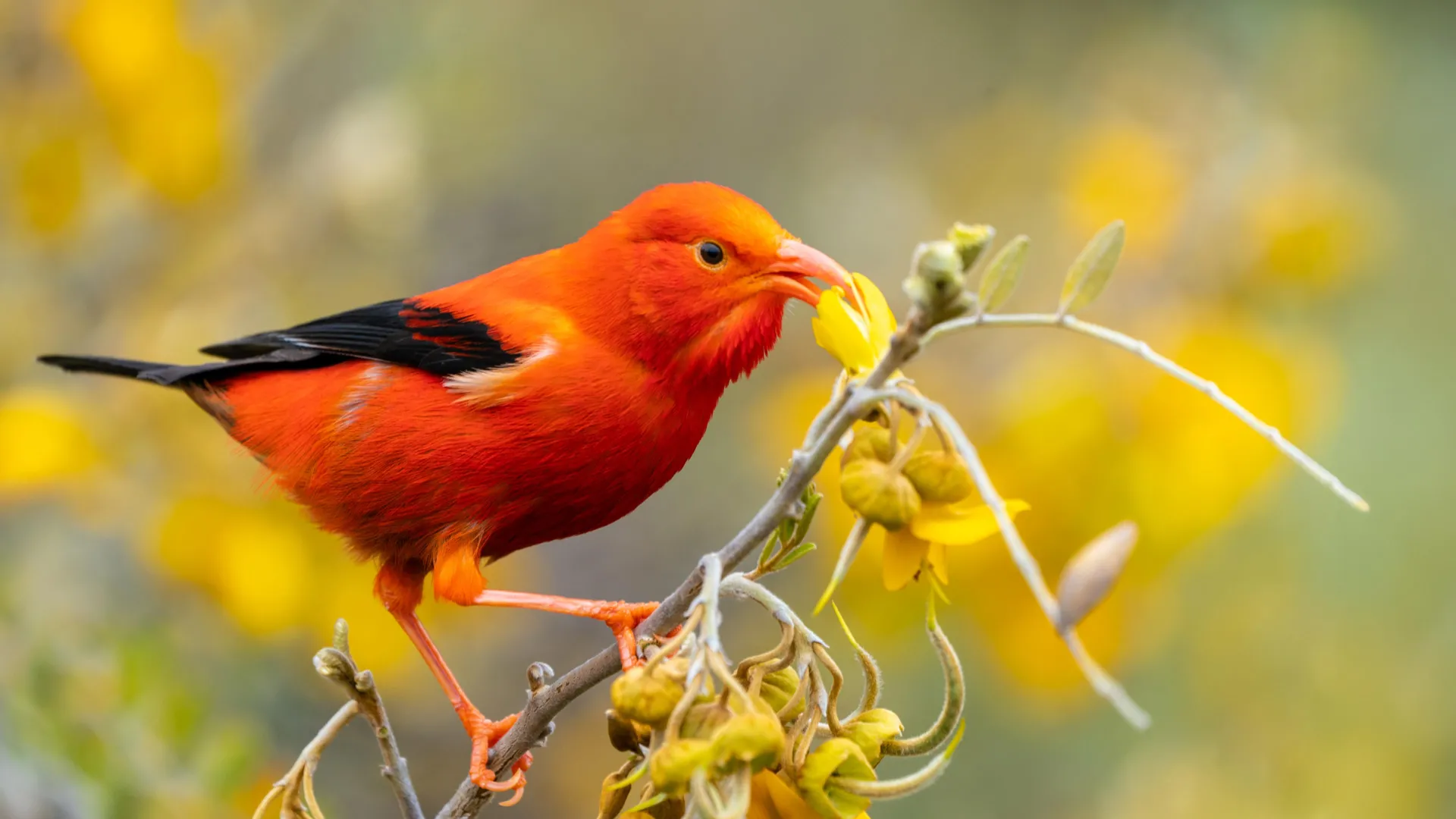
A groundbreaking new study led by researcher Christa M. Seidl, conducted as part of her PhD at the University of California, Santa Cruz, and supported by the University of Hawaiʻi at Mānoa, has revealed a critical and concerning truth: almost every forest bird species in Hawaiʻi possesses the ability to transmit avian malaria. This pervasive capacity to spread infection provides a stark explanation for the disease’s ubiquitous presence across the Hawaiian Islands, wherever mosquitoes are found. The findings, published on February 10 in the prestigious journal Nature Communications, underscore the severe and complex challenges facing Hawaiʻi’s unique and highly vulnerable native avifauna, particularly its iconic honeycreepers.
A Disease Detected Almost Everywhere
The study’s extensive fieldwork detected avian malaria at an alarming 63 out of 64 locations tested statewide, encompassing a diverse array of forest ecosystems and varying mixes of bird species. This near-universal detection highlights the deep entrenchment of the disease within the islands’ ecosystems. The illness, caused by the generalist parasite Plasmodium relictum, has been a primary driver behind the precipitous declines and, in some tragic cases, extinctions of numerous native Hawaiian honeycreeper species. These birds, having evolved in isolation for millions of years without exposure to such pathogens, possess little to no natural immunity, rendering them exceptionally susceptible.
Christa M. Seidl, who also serves as the mosquito research and control coordinator for the Maui Forest Bird Recovery Project, articulated the gravity of the findings: "Avian malaria has taken a devastating toll on Hawaiʻi’s native forest birds, and this study shows why the disease has been so difficult to contain. When so many bird species can quietly sustain transmission, it narrows the options for protecting native birds and makes mosquito control not just helpful, but essential." Her statement underscores a pivotal shift in understanding: the problem is not confined to a few reservoir species but is rather a systemic threat perpetuated by a broad spectrum of the avian community.
The Silent Scourge: How Avian Malaria Devastates Native Birds
Avian malaria operates insidiously, attacking the red blood cells of infected birds. This assault can lead to a cascade of debilitating health issues, including severe anemia, organ failure, significantly lower survival rates, and, in many susceptible species, outright death. The consequences for Hawaiʻi’s endemic birds have been nothing short of catastrophic. Research has shown that the ʻIʻiwi (pronounced "ee-EE-vee"), also known as the scarlet honeycreeper, faces a staggering mortality rate of approximately 90 percent if infected. This vibrant bird, culturally significant and ecologically vital as a pollinator, has seen its populations plummet across its range. Even more dire is the fate of the ʻAkikiki, a critically endangered honeycreeper native solely to Kauaʻi, which is now considered extinct in the wild, with avian malaria being identified as the predominant factor in its demise. Other species, such as the Kiwikiu (Maui parrotbill), ʻApapane, and ʻAnianiau, also face severe threats from the disease, pushing them ever closer to the brink.
Unlike many infectious diseases that rely on a limited number of "super-spreaders" or specific reservoir hosts to maintain transmission, this research reveals that avian malaria in Hawaiʻi operates under a different, more pervasive model. The study demonstrated that most forest birds, irrespective of whether they are native or introduced species, are at least moderately capable of infecting the southern house mosquito (Culex quinquefasciatus), which acts as the disease’s primary vector. Crucially, even birds carrying extremely low parasite loads were found to be capable of transmitting the infection to mosquitoes. This finding implies that a wide diversity of bird communities, even those without high densities of highly infected individuals, can sustain ongoing transmission, making the task of disease management significantly more challenging. Seidl emphasized this point: "We often understandably think first of the birds when we think of avian malaria, but the parasite needs mosquitoes to reproduce and our work highlights just how good it has gotten at infecting them through many different birds."
Unpacking the Transmission Dynamics: Chronic Infections and Broad Infectivity
To arrive at these critical conclusions, researchers embarked on an intensive data collection and experimental phase. They meticulously examined blood samples from more than 4,000 birds across the major Hawaiian Islands: Kauaʻi, Oʻahu, Maui, and Hawaiʻi Island. These extensive field data were then meticulously paired with laboratory experiments designed to quantify how readily mosquitoes became infected after feeding on birds with varying parasite loads. The results were unambiguous: both native and introduced bird species frequently exhibited similar levels of infectiousness, unequivocally demonstrating that both groups play significant roles in perpetuating the parasite’s spread throughout the ecosystem.
A particularly alarming revelation from the study was the discovery that birds can harbor chronic infections for extended periods, often lasting for months or even years. During this protracted stage, when birds may outwardly appear only mildly infected or even asymptomatic, they nonetheless remain fully capable of transmitting the parasite to mosquitoes. The researchers’ modeling and analysis estimate that this long-lasting, low-to-moderate infectious stage is responsible for the vast majority of avian malaria transmission observed statewide. This "silent spreading" makes detection and intervention immensely difficult, as the disease can persist and proliferate without overt signs in a large proportion of the bird population.
The Historical Context: A Legacy of Introduction and Vulnerability
To fully grasp the current crisis, it is essential to understand its historical roots. Avian malaria, along with its primary vector, the southern house mosquito (Culex quinquefasciatus), are not native to the Hawaiian Islands. The mosquito is believed to have arrived in Hawaiʻi in the early 1800s, likely via whaling ships or other maritime trade, establishing itself rapidly in the warm, humid lowlands. The Plasmodium relictum parasite itself followed later, thought to have been introduced with non-native bird species brought to the islands for various reasons, including as pets, for pest control, or as game birds, primarily in the late 19th and early 20th centuries.
For millions of years, Hawaiʻi’s native birds, particularly the honeycreepers, evolved in an environment free from avian malaria and its vectors. This prolonged isolation meant they never developed the immunological defenses necessary to combat the parasite. When the disease and its mosquito vector were introduced, they encountered a "naïve" host population, leading to devastating impacts. The lowlands quickly became death traps for native birds, forcing survivors to retreat to higher elevations where cooler temperatures historically kept mosquito populations at bay. These higher-elevation forests, often above 1,500 meters (approximately 5,000 feet), served as the last remaining refugia for species like the ʻIʻiwi, ʻAkikiki, and Kiwikiu, preserving dwindling populations from the malaria onslaught.
Climate Change: Shrinking Havens and Accelerating Extinction
The parasite’s newfound ability, as revealed by this study, to infect a broad spectrum of bird species provides a robust explanation for why avian malaria is so alarmingly widespread across Hawaiʻi. The findings strongly suggest that very few, if any, mosquito-infested habitats remain truly free of transmission risk. This already dire situation is being exacerbated by one of the most significant environmental challenges of our time: climate change.
Warming global temperatures are having a profound and immediate impact on Hawaiʻi’s delicate ecosystems. As temperatures rise, mosquitoes, and consequently avian malaria, are able to expand their range into higher elevation areas that were once reliably cool enough to serve as vital refuges for vulnerable native birds. These historical havens are rapidly shrinking, pushing endangered species into ever-smaller pockets of suitable habitat. The "malaria belt" is creeping upwards, encroaching on the last remaining strongholds of species like the critically endangered Kiwikiu on Maui and the few remaining ʻIʻiwi on Hawaiʻi Island. This upward migration of the disease effectively compresses the available safe zones, intensifying competition for resources and increasing the likelihood of infection for the remaining birds. The race to save these species is now explicitly a race against both the spread of the disease and the accelerating effects of climate change.
A Unified Front: Conservation Efforts and Innovative Solutions
Given the overwhelming evidence presented by this study, the imperative for aggressive and innovative mosquito control has never been clearer. Seidl and the Maui Forest Bird Recovery Project are integral members of Birds, Not Mosquitoes, a powerful collaboration that unites academic institutions, state and federal agencies, non-profit organizations, and industry partners. This coalition is dedicated to advancing mosquito control strategies specifically tailored to support Hawaiian bird conservation.
The flagship initiative being pursued by Birds, Not Mosquitoes is the Incompatible Insect Technique (IIT). This groundbreaking, species-specific approach involves rearing male southern house mosquitoes (Culex quinquefasciatus) in a laboratory setting and infecting them with a naturally occurring bacterium called Wolbachia. These Wolbachia-infected males are then released into the wild. When these "incompatible" males mate with wild female mosquitoes, their eggs fail to hatch, effectively reducing the wild mosquito population over time. Critically, Wolbachia cannot be transmitted to birds or humans, and the released males do not bite, making IIT an environmentally friendly and highly targeted method of population control.
Initial trials and regulatory approvals for IIT are currently underway, representing a beacon of hope in a seemingly insurmountable challenge. The Hawaiʻi Department of Land and Natural Resources (DLNR) and the U.S. Fish and Wildlife Service (USFWS) have been actively involved in facilitating the necessary permits and environmental assessments, acknowledging the urgent need for such interventions. State wildlife officials have expressed cautious optimism, emphasizing the meticulous planning and scientific rigor behind the project. "This study reinforces the critical urgency of our efforts," stated a spokesperson for the DLNR’s Division of Forestry and Wildlife (DOFAW), "and validates our commitment to deploying innovative solutions like IIT to protect our irreplaceable native birds. The science is clear; we must act decisively."
Beyond IIT, ongoing conservation efforts also include habitat restoration projects aimed at creating healthier, more resilient forest ecosystems. These efforts involve removing invasive plant species, replanting native flora, and managing ungulate populations to reduce habitat degradation. Additionally, captive breeding programs continue to serve as a vital safety net for the most critically endangered species, ensuring a genetic reservoir should wild populations succumb entirely.
The Road Ahead: Urgency, Hope, and a Global Responsibility
The findings from Seidl’s study are a clarion call, signaling that the window of opportunity to save Hawaiʻi’s remaining native forest birds is rapidly closing. The widespread capacity for avian malaria transmission, coupled with the relentless march of climate change, paints a grim picture. However, the coordinated efforts of groups like Birds, Not Mosquitoes, armed with cutting-edge science and innovative tools like IIT, offer a tangible pathway toward mitigating this crisis.
Conservation biologists and cultural practitioners across Hawaiʻi emphasize that the loss of these birds is not merely an ecological tragedy but also a profound cultural one. Native Hawaiian tradition holds these birds as manu aliʻi (royal birds), integral to the spiritual and cultural fabric of the islands. Their songs, once a vibrant symphony in the forests, are now increasingly silenced.
The struggle to save Hawaiʻi’s honeycreepers from avian malaria is a microcosm of global biodiversity challenges. It highlights the devastating impact of introduced species on isolated ecosystems and the accelerating threats posed by climate change. Success in Hawaiʻi would not only preserve a unique evolutionary heritage but also provide invaluable lessons for conservation efforts worldwide. The journey ahead demands sustained funding, unwavering political will, and robust public support to ensure that the vibrant melodies of Hawaiʻi’s native birds continue to echo through its ancient forests for generations to come.
