

Woodpeckers have long held a distinct place in the natural history of backyard ecosystems, captivating ornithologists and casual bird watchers alike with their vibrant plumage, distinct drumming patterns, and relentless foraging habits. Beyond their familiar presence at residential suet feeders, these remarkable birds possess an array of physiological and anatomical adaptations that allow them to sustain a lifestyle marked by extreme physical impacts—a daily routine that would prove catastrophic to almost any other avian species. Recent insights from wildlife biologists and backyard bird conservation organizations have shed light on the sophisticated mechanics that enable woodpeckers to thrive in what amounts to an avian life of hard labor.
Anatomical Marvels and Impact Mechanics
To understand the exceptional nature of the woodpecker, one must examine the sheer physical forces involved in its daily excavation of trees for nesting cavities and insect prey. During typical excavation, a woodpecker’s head can strike a wooden surface at speeds reaching up to 13 miles per hour. The resulting impact force generates approximately 10 Gs of acceleration. For comparative context, an impact of this magnitude would readily cause severe brain damage in most other bird species. Furthermore, human biomechanical studies suggest that human brains are roughly three times more likely to suffer a concussion at equivalent impact velocities compared to the resilient neural architecture of a woodpecker.
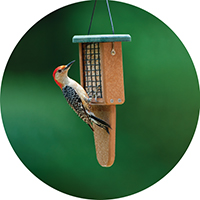
Ornithologists and evolutionary biologists attribute this remarkable resilience to a specialized skeletal and muscular framework. The woodpecker skull is an evolutionary masterpiece, consisting of lightweight, spongy, and air-filled bone that maintains immense structural integrity through a reinforcing meshwork of internal bony support struts. Crucially, the bird’s braincase is exceptionally compact relative to the size of the brain itself. This tight anatomical fit minimizes the internal space available for the brain to shift or rattle around during high-velocity impacts, effectively mitigating the risk of traumatic injury.
Furthermore, specialized muscles surrounding the skull act as a shock-absorbing harness, transferring and dissipating the kinetic energy of each blow away from the delicate neural tissues and toward the broader structure of the bird’s body.
Self-Sharpening Bills and Built-In Protective Gear
The physics of hammering dense timber thousands of times a day raises an obvious physiological question: why does the woodpecker’s chisel-like bill not wear down to a useless stub over time?

Research into avian keratin structures reveals that woodpeckers possess specialized epidermal cells at the tip of the bill that undergo continuous growth, rapidly replacing material lost to friction and impact. This dynamic regeneration ensures that the bill remains persistently strong, resilient, and structurally sound. Intriguingly, the micro-structure of the bill is arranged in such a way that it actually self-sharpens with every successive blow against the wood, maintaining an optimal chisel edge for drilling through bark and heartwood.
In addition to managing structural wear, woodpeckers must contend with the immediate environmental hazards of their trade, namely a constant blizzard of fast-flying wood chips, sawdust, and debris. To safeguard their sensory organs, these birds have evolved specialized biological safety equipment. Their nostrils are shielded by dense tufts of stiff, specialized feathers that function as a natural dust mask, filtering out fine particles and preventing foreign matter from entering the respiratory tract. Meanwhile, their eyes are protected by a transparent or translucent third eyelid—known as a nictitating membrane—which snaps shut milliseconds before impact to shield the eyeball from flying debris while still allowing the bird to maintain a degree of visual awareness.
Attracting Woodpeckers to Backyard Habitats
As public interest in backyard conservation continues to grow, organizations such as Wild Birds Unlimited (WBU) have emphasized the ecological value of supporting native bird populations through specialized feeding strategies. Wildlife experts note that because woodpeckers play a vital role in forest health—primarily by controlling wood-boring insect populations and creating cavities subsequently used by secondary cavity-nesters like bluebirds and owls—encouraging them in residential areas contributes positively to local biodiversity.

Homeowners seeking to observe these resilient creatures up close can effectively attract a variety of woodpecker species, including downy, hairy, red-bellied, and pileated woodpeckers, by providing targeted high-energy foods. Ornithological suppliers recommend utilizing specialized offerings such as high-fat suet cakes, no-melt suet doughs, specialized bark butter products, out-of-shell peanuts, and dense seed cylinders formulated specifically for clinging birds. These nutrient-dense foods replicate the high-protein, high-lipid diet that woodpeckers require to sustain their demanding metabolic and physical activities.
Broader Ecological Implications and Conservation Insights
The study of woodpecker biomechanics extends far beyond backyard ornithology, offering valuable data for human engineering and safety design. Biomedical researchers and aerospace engineers have frequently looked to the woodpecker’s shock-absorbing cranial structure for inspiration when designing protective headgear, athletic helmets, and vehicle impact-absorption systems. By analyzing how these birds effectively isolate delicate tissues from repetitive, high-g shockwaves, scientists hope to develop advanced materials that can better protect human athletes, industrial workers, and military personnel from traumatic brain injuries.
From an ecological standpoint, the presence of woodpeckers serves as a primary indicator of forest health. The abundance and diversity of woodpecker populations often correlate directly with the availability of mature trees, standing deadwood (snags), and robust insect populations. Environmental conservationists stress that leaving dead or dying trees standing in residential and rural landscapes, where safety permits, provides essential foraging and nesting sites that artificial feeders alone cannot fully replace.

As ongoing field research and educational initiatives—such as specialized nature podcasts and public outreach programs—continue to decode the complex biology of cavity-excavating birds, public appreciation for these resilient species deepens. Far from being mere backyard nuisances or simple garden visitors, woodpeckers stand out as finely tuned evolutionary marvels, embodying a masterclass in biological adaptation, physical toughness, and ecological endurance.
