
The Evolutionary Context of Avian Household Integration
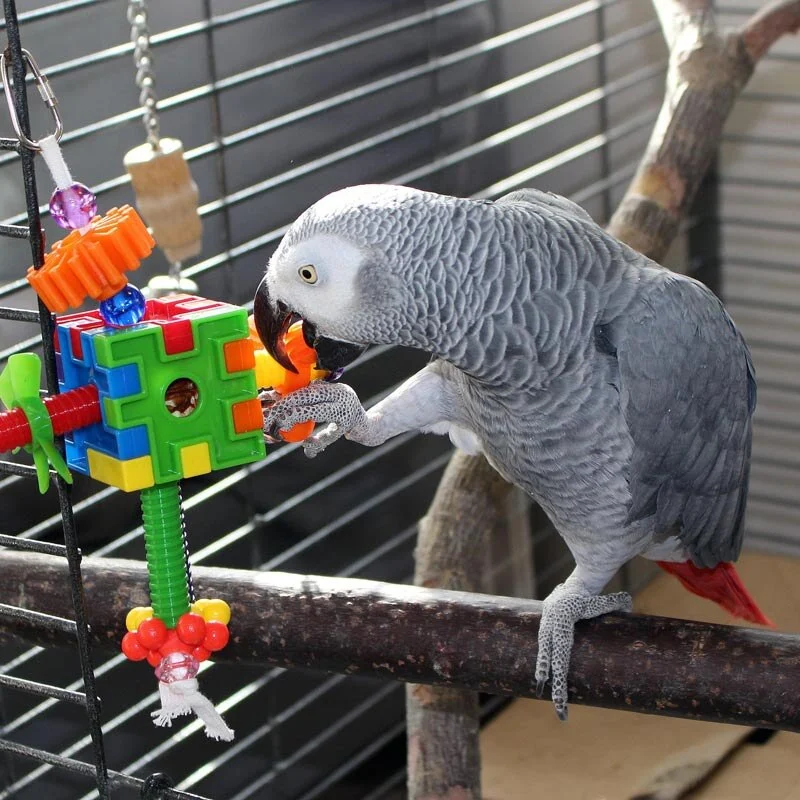
To understand why parrots exert such influence over their human counterparts, one must examine their evolutionary history. Psittacines are flock-oriented animals, biologically hardwired for constant social interaction, complex communication, and high-level problem solving. When placed in a human domestic setting, they do not perceive the household as a structure owned by humans; they perceive it as a territory to be managed by a flock. Consequently, the human, in the eyes of the parrot, is a fellow flock member whose behavior must be monitored, synchronized, and, when necessary, corrected to ensure the security and efficiency of the group. This biological predisposition explains the relentless nature of their participation in human affairs.
Chronology of the Modern Parrot-Owner Dynamic
The history of parrot domestication has shifted dramatically over the last half-century. In the late 20th century, the focus was primarily on conservation and the stabilization of captive populations. As the 21st century progressed, the role of the parrot transitioned from an ornamental subject to a primary companion.
- Early 1990s: Increased emphasis on avian welfare and the realization that parrots possess cognitive abilities comparable to those of primates.
- Early 2000s: The rise of online communities allowed owners to share anecdotal evidence regarding the "bossy" nature of their birds, leading to a broader recognition of species-specific behavioral traits.
- 2015–Present: Data-driven studies in avian psychology have confirmed that high-intelligence parrots require constant environmental stimulation, which has forced owners to restructure their homes into "enrichment zones," effectively ceding control of living spaces to the birds.
The Systematic Scheduling of Human Life
One of the most profound impacts of parrot ownership is the total disruption of human circadian rhythms. Research into avian metabolism indicates that most parrots are crepuscular or diurnal, relying on consistent light-dark cycles to maintain hormonal and physical health. Consequently, the parrot creates a rigid schedule for the household. Owners often report that their own sleep cycles are adjusted to align with the bird’s biological needs.
This is not merely a matter of convenience; it is a necessity for the bird’s well-being. A 2021 study by the Lafeber Company and various avian behaviorists suggested that irregular schedules in households with parrots lead to increased stress, behavioral issues, and localized feather plucking. By enforcing a strict wake-up and sleep cycle, the parrot acts as a biological regulator, compelling the owner to abandon late-night or early-morning activities that might disturb the flock’s equilibrium.
Household Quality-Control and Environmental Stewardship
Parrots are naturally observant creatures. In the wild, their survival depends on identifying changes in their environment—a predator’s approach, a change in foliage, or the availability of new food sources. When this instinct is brought indoors, it manifests as "quality-control" behavior.
When a human resident introduces a new piece of furniture, a change in lighting, or even a new painting, the parrot treats the item as a potential threat or a new asset. Their reaction is often a sustained period of observation. Behavioral analysts note that this is not "acting out," but rather a systematic assessment of the environment. The bird is effectively auditing the safety and utility of the space. This behavior forces the human to become a more conscientious interior decorator, as any object that does not meet the bird’s approval may become the subject of repeated, aggressive investigation.
The Economics of Recycling and Resource Allocation
Parrots have effectively turned millions of households into centers of creative recycling. The avian necessity for shredding and tactile stimulation has fundamentally altered the consumption patterns of their owners. Items that are typically classified as waste—cardboard boxes, paper rolls, and untreated wood—are repurposed as vital enrichment tools.
Data from sustainability reports in the pet industry show that parrot owners are significantly more likely to recycle paper products than the general population. This behavior is driven by the bird’s requirement for constant destruction of materials. Owners have learned that the "treasure" in the recycling bin is a cost-effective way to meet the bird’s cognitive needs. This creates an economic loop: the human consumes a product, the bird dismantles the packaging, and the cycle continues. This process highlights a reversal of typical consumer power, where the bird determines the value of materials based on their texture and durability rather than their commercial price.
Participation as a Core Tenet of Social Cohesion
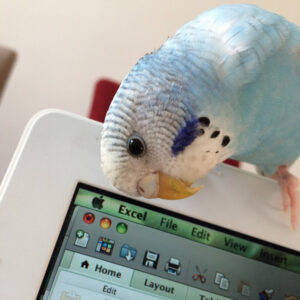
In the wild, parrots do not "watch" their flock; they act with them. This is why a parrot will attempt to participate in every human activity, from computer use to laundry. For the bird, a human performing a task in isolation is a social failure.
Experts in avian behavior argue that this "participation" is a crucial social bonding mechanism. When a bird attempts to "help" with a laptop keyboard or a book, it is attempting to engage in a shared activity. Ignoring this impulse can lead to isolation-related distress. Therefore, the "rule of the roost" dictates that the human must facilitate this participation. Modern households are often designed with "perch stations" or "distraction stations" located near the human workspace, allowing the bird to "work" alongside the owner. This physical manifestation of the flock dynamic is perhaps the most visible way that parrots exert control over human activity.
Valuing the Functional over the Monetary
Finally, the parrot’s approach to play challenges the human concept of value. While humans often equate the quality of a toy with its retail price, a parrot’s internal valuation is based entirely on the toy’s "destroyability" and the sensory feedback it provides.
Analysis of toy utilization in captive populations shows that high-cost, complex puzzles are frequently ignored in favor of simple, malleable, or destructible objects. This creates a recurring frustration for owners who invest in expensive equipment, only to see it discarded in favor of a cardboard tube. This dynamic forces the owner to abandon materialistic standards of pet care and instead adopt a more empirical, results-based approach to enrichment. The bird, by rejecting the expensive in favor of the functional, ultimately dictates the spending habits and procurement strategies of the household.
Conclusion: The Reality of Coexistence
The consensus among avian veterinarians and behaviorists is clear: the modern parrot is not a passive pet, but an active participant in the governance of the home. The household that accommodates a parrot is one that has been fundamentally reorganized to serve the bird’s biological and psychological requirements. While the human may technically hold the deed to the home and pay for the resources, the day-to-day operation is clearly directed by the avian occupants. This shift represents a unique intersection of nature and nurture, where the success of the household depends on the human’s ability to adapt to the rigorous demands of their feathered companions. In the final analysis, the "rule of the roost" is a reciprocal arrangement, one that fosters a deeper understanding of avian intelligence and a profound, albeit humbling, transformation of the human domestic experience.
