
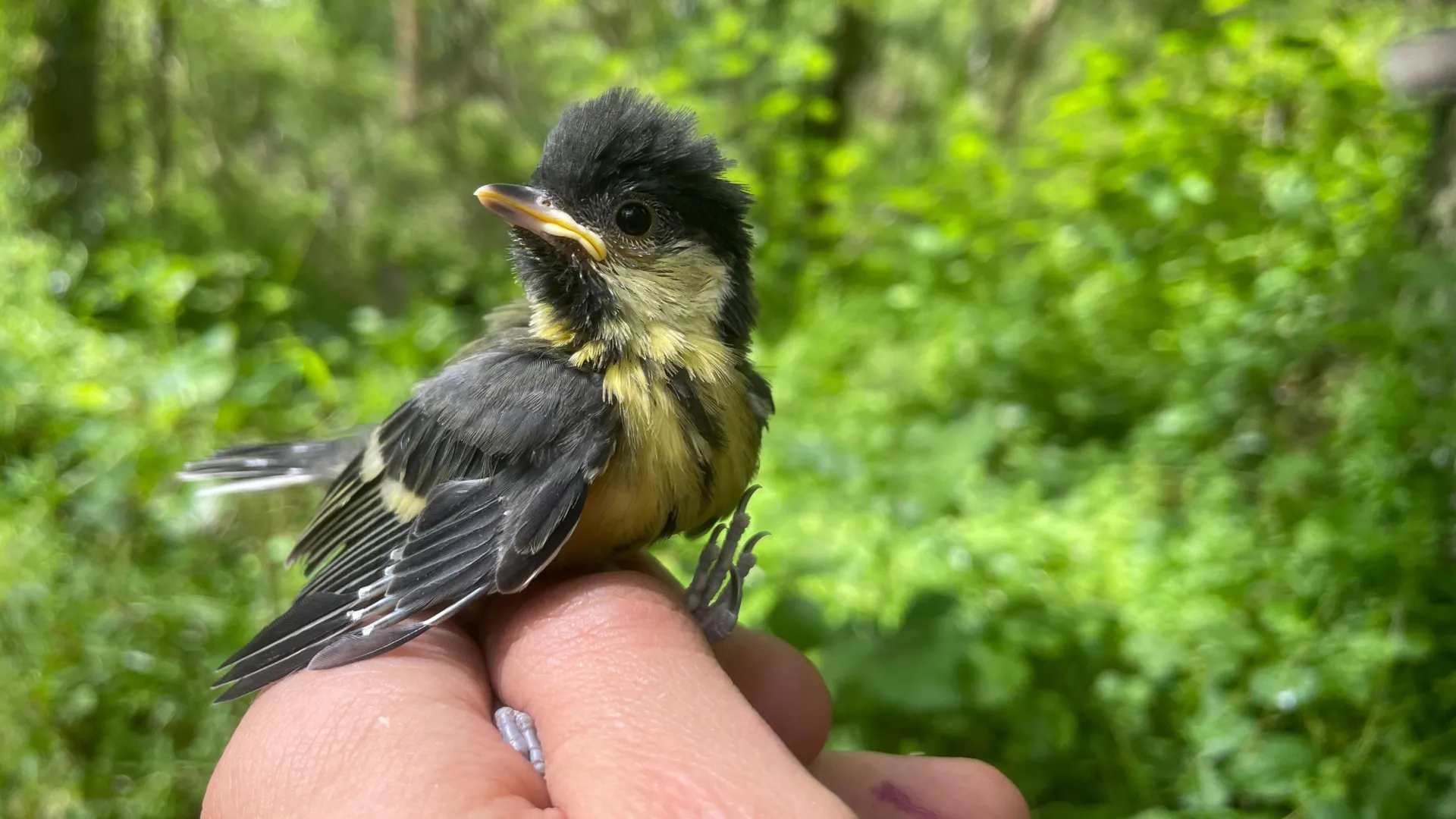
A groundbreaking study from the University of Oxford, published on March 11, has provided critical insights into the vulnerability of young great tits (Parus major) to increasingly volatile weather patterns in the UK. The research, leveraging an extraordinary six-decade dataset, establishes a direct link between sudden cold spells and heavy rainfall and a significant reduction in growth rates and survival probabilities for nestling great tits. Intriguingly, the findings also suggest that populations which have adjusted to begin their breeding season earlier may inadvertently shield their offspring from some of the most detrimental effects associated with these severe weather events, though not without introducing new challenges.
A Legacy of Longitudinal Research: The Wytham Woods Study
The robustness of these conclusions stems from an unusually extensive and meticulously maintained ecological record spanning 60 years. Scientists meticulously analyzed data encompassing over 80,000 individual wild great tits within the renowned Wytham Woods, a temperate woodland near Oxford that has served as a living laboratory for ecological research for decades. This unparalleled biological information, detailing breeding success, chick development, and survival rates, was then cross-referenced with equally detailed daily weather records for the region. By pinpointing the coldest, wettest, and hottest days occurring throughout each breeding season, researchers were able to quantify the frequency and intensity of these extreme conditions during the critical stages of chick development. The primary metric for assessing impact was the body mass of nestlings at the point of fledging – the moment they leave the nest – a well-established and powerful predictor of their subsequent survival into adulthood.
The Wytham Woods study site itself holds significant historical and scientific value. Managed by the University of Oxford, it has been a crucible for long-term ecological research since the 1940s, providing an unbroken chain of data that is exceedingly rare in ecological science. Such long-term datasets are indispensable for detecting subtle, gradual environmental shifts and their corresponding biological responses, which might otherwise be missed in shorter-term studies. The continuous monitoring of the great tit population, a common and widespread passerine bird, has made it a model species for understanding population dynamics, behavioral ecology, and the impacts of environmental change on avian life cycles.
Weather Extremes and Their Differential Impacts on Young Great Tits
The study meticulously delineated how different forms of extreme weather exert distinct pressures on developing great tit chicks, depending on their age and stage of development.
-
Early Life Vulnerabilities: The Cold Spell Threat: The research revealed that periods of severe cold are particularly devastating during the first week after hatching. Newly hatched great tit chicks are altricial, meaning they are born helpless, featherless, and highly dependent on parental care. Crucially, they lack the physiological capacity to effectively regulate their own body temperature (thermoregulation). During cold spells, a disproportionate amount of their limited metabolic energy, which would otherwise be directed towards growth and development, must be expended simply to stay warm. This diversion of energy results in stunted growth and a reduced body mass, making them more vulnerable to disease and less likely to survive their critical first weeks.
-
The Threat of Heavy Rainfall: As chicks mature beyond their initial week, heavy rainfall emerges as the predominant environmental threat. While older chicks may have developed some feathering, making them marginally better equipped to handle cold, torrential downpours present a different set of challenges. The study found that both severe cold and heavy rainfall could reduce fledging body mass by as much as 3%. This seemingly small percentage can translate into substantial survival disadvantages in a highly competitive natural environment, where every gram of body mass contributes to strength, flight capability, and resilience against predators and disease.
-
Compounding Factors: The Synergy of Heat and Rain: The most alarming finding related to conditions where intense heat coincided with heavy rainfall. Under these combined stresses, the impact on nestling health was far more severe, with fledging mass dropping by a staggering 27%. This drastic reduction was particularly pronounced for broods that hatched later in the breeding season. The confluence of high temperatures and precipitation likely creates a complex physiological challenge, potentially exacerbating heat stress while simultaneously disrupting foraging efficiency and food availability.
The Ecological Mechanics: Why Weather Matters for Nestlings
Understanding the precise mechanisms through which extreme weather affects young great tits is crucial for developing effective conservation strategies. The study highlighted several key ecological and physiological pathways:
-
Thermoregulation Challenges: The undeveloped state of newly hatched chicks is a primary factor. Without insulating feathers, they are highly susceptible to heat loss in cold conditions. Parents must spend more time brooding their young, reducing their foraging time. Conversely, in extreme heat, chicks can suffer from hyperthermia, though this was less of an issue in the Oxfordshire context, as discussed below.
-
Foraging Impediments and Food Scarcity: Extreme weather directly impacts the parents’ ability to provision their offspring. During cold spells and heavy rain, adult great tits are less likely to leave the nest to search for food, prioritizing the direct protection of their chicks. Simultaneously, the availability of their primary food source – caterpillars – is severely compromised. Heavy rainfall can dislodge caterpillars from foliage, making them less accessible or washing them away. Cold temperatures can also reduce caterpillar activity, making them harder for foraging parents to locate. Great tit chicks have exceptionally high energy demands during their rapid growth phase, requiring a constant supply of protein-rich insects. Any disruption to this supply chain has immediate and severe consequences for their development.
The great tit’s reliance on caterpillars for feeding its young is a classic example of a "trophic mismatch." Great tits time their breeding to coincide with the peak abundance of caterpillars in spring, which is dictated by the budding of oak leaves. If climate change causes caterpillars to hatch and develop earlier (a phenological shift) while great tits do not adjust their breeding schedule accordingly, the chicks hatch when food is scarce, leading to starvation.
An Adaptive Response: The Shift Towards Earlier Breeding
Lead researcher Devi Satarkar, from the Department of Biology at the University of Oxford, underscored the complex adaptive responses observed in the Wytham population. "In the Wytham population, great tits have adjusted to warmer springs by breeding earlier to track peak abundance of their main prey, caterpillars," Satarkar explained. This phenological shift, where an organism changes the timing of its biological events in response to environmental cues, represents a critical evolutionary adaptation.
This overall earlier laying is demonstrably beneficial, buffering great tits against many of the negative impacts of extreme weather that become more prevalent later in the spring. By bringing forward their breeding cycle, these birds can often complete the most vulnerable stages of chick development before the onset of the more intense and frequent extreme weather events characteristic of late spring and early summer. However, this adaptation is not without its trade-offs. Satarkar noted, "but it also exposes them to cold spells early in the season. Even small early-life deficits can have large implications for survival. It will only get tougher for birds to keep up as extreme weather increases in frequency and intensity with climate change." This highlights an ongoing "evolutionary race" where species must continuously adapt to a rapidly changing climate, often facing new challenges even as they overcome old ones.
The Nuance of Warmth: Not All Heat Is Harmful
One of the more unexpected and nuanced findings of the study concerned the effects of warmer extremes. Counterintuitively, these periods were linked to heavier fledging weights during the nestling stage. While high temperatures are globally associated with heat stress and its detrimental effects on avian populations, the warmer periods experienced in Oxfordshire during the study appeared to be relatively mild when compared with the more extreme heatwaves regularly observed in southern Europe.
Devi Satarkar further elaborated on this surprising benefit: "Extreme weather events are affecting wild bird populations in complex ways. The level of warmth we see in these heat extremes in Oxfordshire might boost growth because it can increase insect activity and visibility – making caterpillars easier to find – while letting parents forage more and reducing nestlings’ thermoregulatory costs. The high water content in caterpillars also helps against dehydration." This contrasts sharply with hotter regions like the Mediterranean, where similar events can exceed 35°C and cause severe heat stress, dehydration, and mortality in nestlings. The threshold at which warmth transitions from beneficial to detrimental is a crucial area for further investigation, especially as global temperatures continue to rise. For the great tits in Wytham Woods, temperatures around 16-17°C during these "warm extremes" appeared to be within a beneficial range.
Long-Term Survival Implications and Population Dynamics
The immediate effects of weather on fledging mass have cascading consequences for the long-term survival of individual birds and the overall health of the great tit population. Broods that hatch earlier in spring tend to capitalize on the periods of occasional warm spells, when caterpillars are abundant and temperatures remain within safe, even beneficial, limits. Conversely, birds that breed later in the season face demonstrably tougher conditions. Their fledglings were found to be approximately one-third lighter on average, even when the warmest days they experienced reached similar temperatures of about 16-17°C. This suggests that the cumulative effects of less favorable conditions throughout their development, rather than just peak temperatures, played a significant role.
Over longer periods, the study indicated that extreme cold and heavy rainfall slightly reduce the odds that young birds will survive to adulthood. This slight but consistent reduction, when aggregated across thousands of individuals over decades, can have a substantial impact on population stability and recruitment. In contrast, warm extremes, when they remained within a moderate range, were observed to have small but positive effects on survival. Overall, the consistent finding was that breeding earlier within a season appears to function as a crucial adaptive strategy, shielding many birds from the worst consequences of increasingly unpredictable weather patterns.
Climate Change and the Future of Avian Populations
The findings from Wytham Woods offer a microcosm of the broader challenges facing wildlife populations globally as climate change intensifies the frequency and intensity of weather extremes. The study underscores the urgent need for a more granular understanding of environmental conditions. Scientists advocate for increased monitoring of small-scale environmental factors, such as microclimates and subtle habitat differences within woodlands. Microclimates – localized atmospheric conditions that differ from the surrounding area – can offer refugia for species during extreme events. For instance, dense canopy cover might mitigate the impact of heavy rain or provide shade during heatwaves.
This type of detailed research is invaluable for guiding targeted conservation strategies. Practical applications could include strategic nestbox placement in areas less exposed to extreme weather, or woodland management practices that enhance habitat resilience, such as maintaining diverse forest structures that offer varied microclimates. Such interventions could better protect vulnerable chicks during critical stages of development, providing a buffer against the escalating impacts of climate change. The great tit, being a cavity nester, often relies on natural tree holes or nestboxes. Optimizing the placement and design of these nestboxes based on microclimatic data could significantly improve fledging success.
The Road Ahead: Future Research Directions
The researchers at Oxford University plan to continue their long-term monitoring of the great tit population in Wytham Woods. This ongoing vigilance is essential to understand how these observed weather effects may evolve and shift in the future. A key question that remains is whether heatwaves, which currently manifest as moderate and even beneficial in Oxfordshire, could eventually become harmful as global temperatures continue their upward trajectory. Identifying this critical tipping point will be vital for predicting the future resilience of great tit populations and countless other species facing similar climate pressures. The Wytham Woods project serves as a beacon, illustrating the power of sustained scientific inquiry in unraveling the intricate dance between life and a changing planet, providing data that is indispensable for effective conservation in the Anthropocene.
