
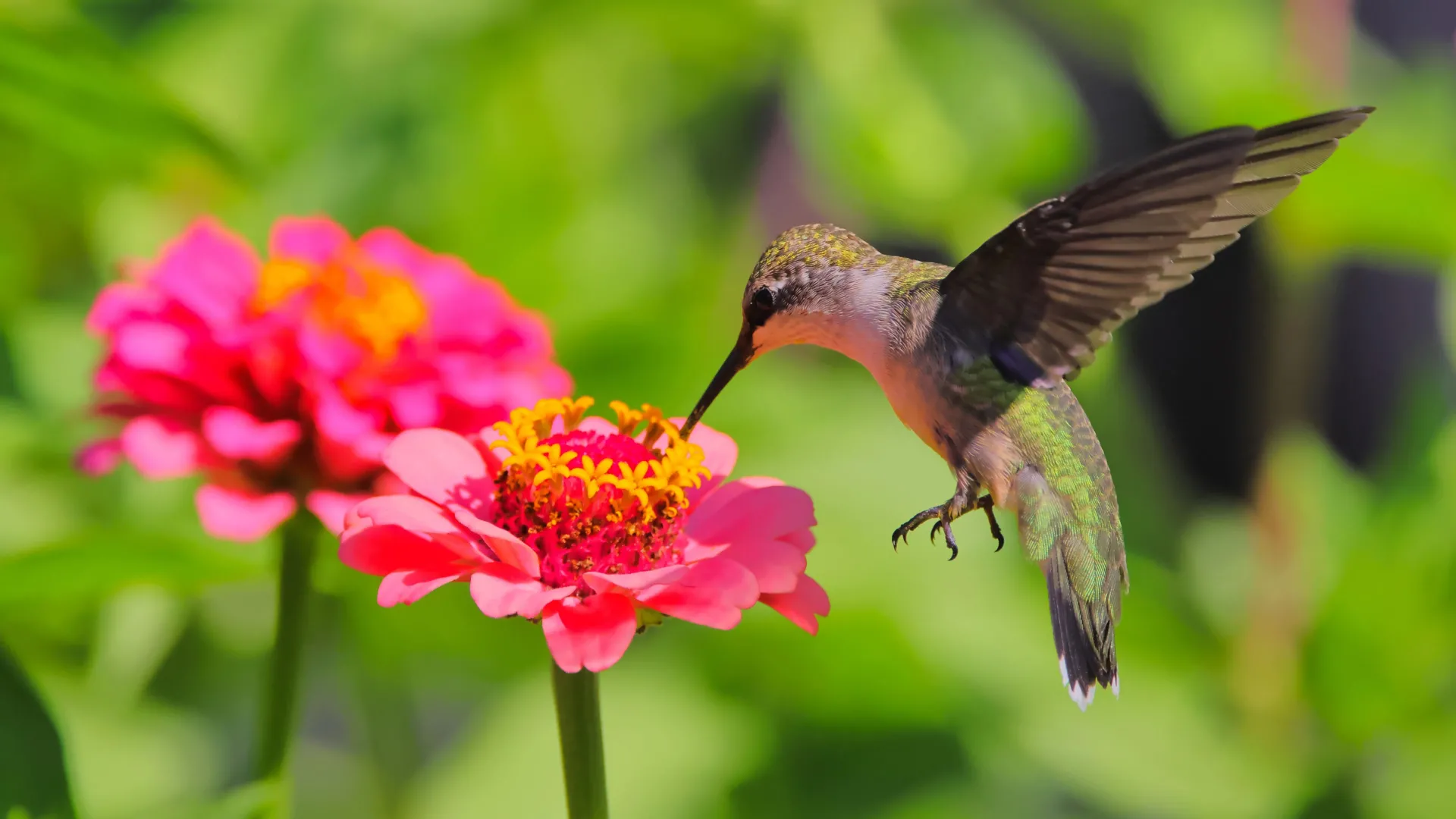
As bees, hummingbirds, and other vital pollinators perform their ecological dance, flitting from one blossom to another to feed on life-sustaining nectar and facilitate plant reproduction, they are also inadvertently ingesting a surprising dietary component: small, yet consistent, amounts of alcohol. A groundbreaking survey, the first of its kind to extensively investigate alcohol content in floral nectar, conducted by a team of biologists at the University of California, Berkeley, has unveiled the widespread presence of ethanol across numerous plant species, challenging previous assumptions about the pristine nature of this critical food source.
The comprehensive study detected ethanol in at least one sample drawn from 26 of the 29 distinct plant species examined. While the majority of these nectar samples contained only trace quantities, likely a byproduct of yeast fermenting the natural sugars present in the nectar, some exhibited more significant concentrations. Notably, one particular sample registered an ethanol content of 0.056% by weight, a concentration roughly equivalent to 1/10 proof. This discovery not only adds a new layer of complexity to the understanding of pollinator diets but also opens avenues for exploring the evolutionary and physiological adaptations animals may have developed in response to chronic, low-level alcohol exposure.
The Ubiquity of Nectar Ethanol Unveiled
For decades, scientists have recognized nectar as a sugary solution primarily designed by flowering plants to attract pollinators. Its composition, rich in glucose, fructose, and sucrose, serves as a high-energy fuel source essential for the vigorous activities of these creatures. The presence of ethanol, even in minute amounts, introduces a new variable into this well-established ecological equation. The fermentation process, which naturally occurs when yeast metabolizes sugars in the absence of oxygen, is a common phenomenon in various natural environments, particularly where sugar-rich substrates are present, such as ripening fruits or decaying plant matter. This research suggests that floral nectar, often exposed to environmental microbes, is no exception.
The UC Berkeley team, led by doctoral student Aleksey Maro and postdoctoral fellow Ammon Corl, under the guidance of Professor Robert Dudley and fellow integrative biology professors Rauri Bowie and Jimmy McGuire, meticulously analyzed nectar samples using an enzymatic assay. This sophisticated biochemical method allowed for precise quantification of ethanol levels, even at very low concentrations. The findings, published on March 25 in Royal Society Open Science, provide compelling empirical evidence for a previously underestimated aspect of pollinator nutrition.
Quantifying Pollinators’ Daily Alcohol Intake
While the detected ethanol levels might seem negligible in isolation, their cumulative effect on pollinators is significant, given their unique feeding habits and high metabolic rates. Nectar constitutes the primary energy source for many species, and their daily consumption can be staggering relative to their body size. Hummingbirds, for instance, are known to consume between 50% and 150% of their own body weight in nectar each day to fuel their incredibly fast metabolism and constant flight.
Based on these intense feeding patterns, the researchers were able to estimate the daily ethanol intake for specific species. An Anna’s hummingbird (Calypte anna), a common sight along the Pacific coast of North America, is estimated to consume approximately 0.2 grams of ethanol per kilogram of body weight on a daily basis. To put this into a human context, this intake is comparable to a human consuming roughly one standard alcoholic drink over the course of a day. However, a crucial distinction lies in the manner of consumption: pollinators ingest this alcohol gradually throughout their foraging activities, spread across many hours, rather than in a concentrated dose. This continuous, low-level intake, coupled with their rapid metabolism, explains why these animals do not typically exhibit overt signs of intoxication.
Beyond the Buzz: Subtle Physiological and Behavioral Effects
The absence of obvious inebriation does not, however, negate the potential for ethanol to exert more subtle physiological and behavioral influences. Scientists have long known that nectar can contain other bioactive compounds, such as nicotine and caffeine, which are known to modulate animal behavior, sometimes even to the benefit of the plant (e.g., making pollinators more loyal to a particular flower). Ethanol could similarly play an unappreciated role.
"Hummingbirds are like little furnaces. They burn through everything really quick, so you don’t expect anything to accumulate in their bloodstream," explained Aleksey Maro, highlighting the birds’ impressive metabolic efficiency. "But we don’t know what kind of signaling or appetitive properties the alcohol has. There are other things that the ethanol could be doing aside from creating a buzz, like with humans." This perspective suggests that the effects of dietary ethanol could extend beyond simple intoxication, potentially influencing foraging strategies, energy expenditure, or even communication.
Professor Robert Dudley further elaborated on this nuanced view, stating, "There may be other kinds of effects specific to the foraging biology of the species in question that could be beneficial." He added, "They’re burning it so fast, I’m guessing that they probably aren’t suffering inebriating effects. But it may also have other consequences for their behavior." These "other consequences" could include altered risk perception, modified flight patterns, or even subtle impacts on memory and learning related to flower visitation.
A Chronology of Discovery: Building Towards a Broader Understanding
This recent survey is not an isolated finding but rather the culmination of a series of investigations by Dudley’s team into animal alcohol consumption. Their research trajectory has progressively unveiled the complex relationship between animals and dietary ethanol.
Earlier experiments conducted at a feeder positioned outside Professor Dudley’s office provided initial clues regarding hummingbird alcohol tolerance. These studies demonstrated that Anna’s hummingbirds generally showed indifference to low concentrations of alcohol in sugar water, specifically below 1% by volume. This suggests a natural threshold for acceptance. However, a noticeable shift occurred when the concentration reached 2%; at this level, the hummingbirds’ visits to the feeder dropped by approximately half. This behavioral change indicates a capacity for these birds to "meter their intake," as Dudley noted, suggesting they can detect and potentially avoid higher, less desirable alcohol concentrations. This implies that the typical concentrations found in wild nectar (likely between 0% and 1%) are within their tolerable and even preferred range.
Further corroborating the ingestion and processing of alcohol, another pivotal study led by former graduate student Cynthia Wang-Claypool identified ethyl glucuronide in the feathers of birds, including Anna’s hummingbirds. Ethyl glucuronide is a well-known byproduct of ethanol metabolism, serving as a biomarker for alcohol consumption in mammals, including humans. Its presence in bird feathers unequivocally demonstrated that these avian species not only ingest alcohol but actively metabolize it through pathways similar to those found in other vertebrates.
Ammon Corl summarized the interconnectedness of these findings: "The laboratory experiment was showing that yes, they will drink ethanol in their nectar, though they have some aversion to it if it gets too high. The feathers are saying that, yes, they will metabolize it. And then this study is saying that ethanol is actually pretty widespread in the nectar they consume." This progression of research has thus painted a comprehensive picture: alcohol is present in nectar, pollinators consume it, and they possess the physiological machinery to process it.
Comparative Alcohol Intake Across the Animal Kingdom
To provide a broader context for their findings, the UC Berkeley team extended their analysis beyond hummingbirds, estimating daily alcohol intake for several other nectar-feeding species based on their specific caloric needs and feeding behaviors. Due to limitations in detailed feeding data for all species, they concentrated on two hummingbird species (including the Anna’s hummingbird) and three species of sunbirds. Sunbirds, found predominantly in Africa, play an ecological role analogous to hummingbirds in the Americas, feeding on plants such as honeybush (Melianthus major).
The researchers then compared these estimated intakes with those of other animals known to consume alcohol, offering a fascinating cross-species perspective. These included the European honeybee (Apis mellifera), the pen-tailed tree shrew (Ptilocercus lowii), fruit-eating chimpanzees (Pan troglodytes), and humans consuming one standard drink per day (defined as 0.14 grams of ethanol per kilogram of body weight per day).
The comparison yielded intriguing results. The pen-tailed tree shrew, known for its diet rich in naturally fermented palm nectar, exhibited the highest daily intake, averaging a remarkable 1.4 g/kg/day. At the other end of the spectrum, the European honeybee registered the lowest intake at 0.05 g/kg/day. Nectar-feeding birds, including hummingbirds and sunbirds, fell within a similar range to humans, consuming approximately 0.19 to 0.27 g/kg/day when foraging on native flowers. Interestingly, the feeder experiments suggested that Anna’s hummingbirds might actually ingest slightly more alcohol (0.30 g/kg/day) from fermented sugar water provided in artificial feeders than they do from natural nectar, perhaps due to different concentrations or easier access. This comparative analysis underscores the pervasive nature of dietary ethanol across diverse animal taxa and highlights the varied adaptations animals have developed to cope with it.
Evolutionary Adaptations and Broader Implications
This extensive research forms a vital component of a larger, five-year project funded by the National Science Foundation (NSF). The overarching goal of this NSF initiative is to collect and analyze genetic data from hummingbirds and sunbirds to unravel the intricate mechanisms of how these avian groups adapt to a myriad of environmental challenges and specialized food sources. This includes adaptations to high-altitude living, diets rich in sugar, and, significantly, nectar that is frequently fermented. The discovery of widespread alcohol in nectar provides a crucial ecological context for understanding the evolutionary pressures that may have shaped the physiology and behavior of these pollinators.
Professor Dudley emphasized the profound implications of these findings for evolutionary biology: "These studies suggest that there may be a broad range of physiological adaptations across the animal kingdom to the ubiquity of dietary ethanol, and that the responses we see in humans may not be representative of all primates or of all animals generally." This statement challenges anthropocentric views of alcohol consumption and metabolism, suggesting that other species may possess entirely different, and perhaps more efficient, detoxification pathways or unique nutritional benefits from ethanol.
The continuous, low-level exposure to alcohol throughout an animal’s life, from post-weaning onward, presents a scenario of chronic ingestion that differs significantly from typical human consumption patterns. "Maybe there are other physiological detoxification pathways or other kinds of nutritional effects of ethanol for animals that are consuming it every day of their lives," Dudley pondered. "That’s the interesting thing — this is chronic through the course of the day, but that’s a lifetime exposure post-weaning. It just means that the comparative biology of ethanol ingestion deserves further study."
The implications of this research extend beyond academic curiosity. Understanding how pollinators interact with and metabolize naturally occurring alcohol can inform conservation efforts, particularly in a world where pollinator populations are under increasing stress from habitat loss, pesticide use, and climate change. Any subtle behavioral or physiological shifts induced by dietary ethanol could have cascading effects on foraging efficiency, reproductive success of plants, and overall ecosystem health. This study serves as a powerful reminder of the intricate and often surprising complexities within natural ecosystems and underscores the critical need for continued, multidisciplinary research into the diets and adaptations of Earth’s diverse fauna. The invisible presence of alcohol in the sweet elixir of flowers adds another fascinating chapter to the ongoing story of life’s endless adaptations.
