
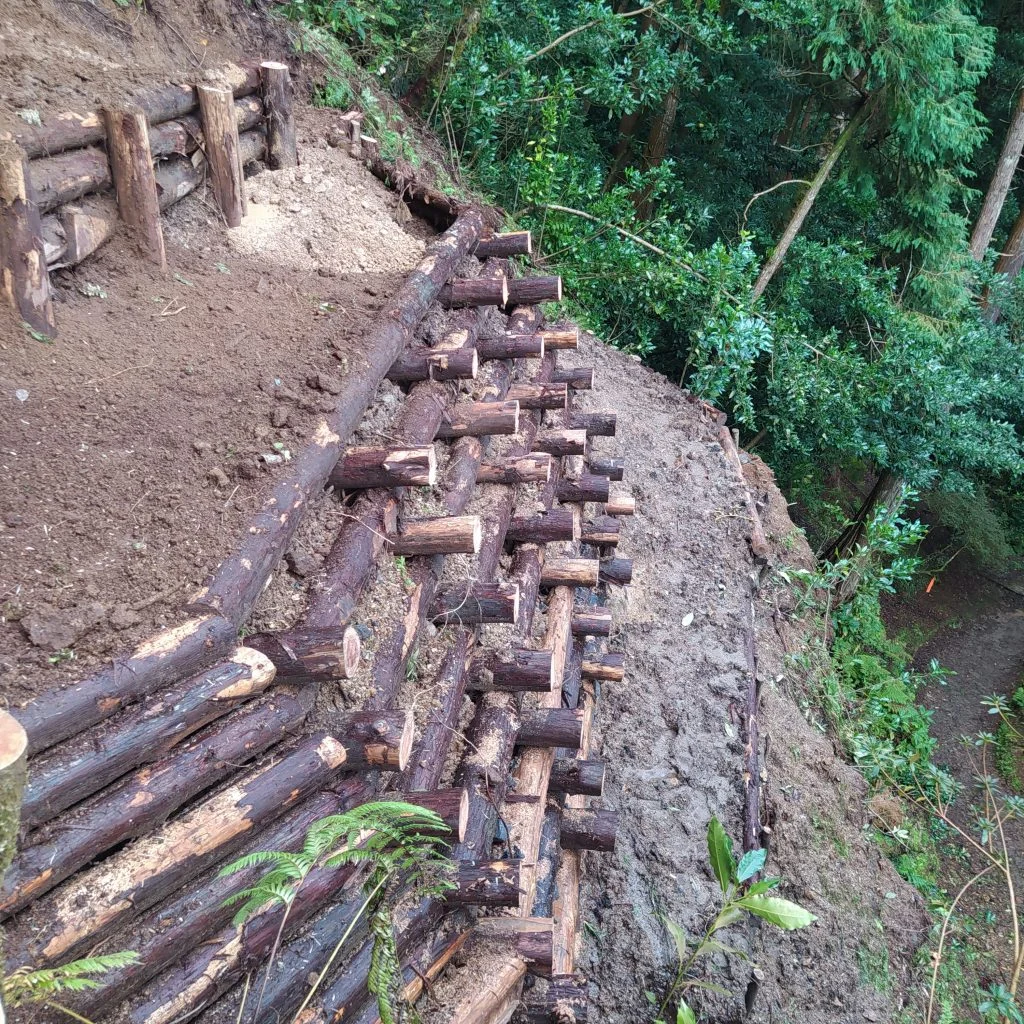
In the rugged, volcanic terrain of the Azores archipelago, a quiet revolution in civil engineering is taking place. For decades, the default response to soil erosion, landslides, and flooding in challenging environments has been the application of rigid, concrete-based infrastructure. However, a growing movement toward "natural engineering"—the practice of utilizing biological materials such as timber, stone, and native vegetation to create resilient structures—is challenging this status quo. Spearheaded in the region by the Portuguese Society for the Study of Birds (SPEA), this approach demonstrates that in many cases, nature is a more effective engineer than concrete, offering solutions that do not merely resist the elements, but integrate with them.
The Origins of a Natural Paradigm
The shift toward natural engineering in the Azores began in 2012, born from a necessity to address the degradation of the native Laurissilva forest. As conservationists worked to restore these fragile habitats, they encountered the volatile reality of volcanic geography: steep, unstable slopes, frequent landslides, and watercourses ravaged by intense Atlantic storms.
Conventional civil engineering techniques, which rely on heavy, impermeable concrete structures, often proved counterproductive in these dynamic landscapes. Concrete is rigid; it creates a barrier that stops water, leading to hydrostatic pressure buildup that can cause structural failure, especially in seismic zones. Furthermore, such structures often disrupt local hydrology and wildlife movement. SPEA recognized that to successfully restore the Laurissilva, they needed a construction methodology that mimicked the stabilizing effects of a healthy ecosystem.

Chronology of Innovation: From Mata dos Bispos to Regional Restoration
The adoption of natural engineering techniques in Portugal has followed a structured timeline of experimentation and scaling:
- 2012: SPEA initiates pilot programs to address slope instability using wood-based drainage and retention systems, moving away from traditional masonry.
- 2014–2018: The "living laboratory" concept is formalized at Mata dos Bispos. The team tests timber-based terrace systems on slopes exceeding 200 meters in height, successfully mitigating flash flood risks to lower-lying roads.
- 2019–2021: The LIFE IP Azores Natura project marks a scaling phase, where natural engineering techniques are applied to over 3 kilometers of stream restoration. Banks are renaturalized, moving from grey infrastructure to green, stable riparian zones.
- 2022–Present: Recognition of these techniques leads to government and municipal commissions, including the restoration of water springs for the Vila Franca do Campo public water supply and critical access routes to Lagoa do Congro.
The Mechanics of Resilient Infrastructure
At the heart of these projects is the largest natural retaining wall in the Iberian Peninsula. Measuring nine meters in height and thirty meters in length, the structure has a retention capacity exceeding 270 tonnes. Unlike a concrete wall, which requires deep, disruptive foundations that can compromise unstable volcanic soil, this structure utilizes a sophisticated arrangement of logs and native vegetation.
The engineering principle is simple yet profound: permeability. In a concrete wall, water accumulation behind the structure is a primary cause of collapse. In a "living wall," water is allowed to seep through, reducing pore pressure and maintaining the soil’s natural moisture levels. If seismic activity occurs—a common risk in the Azores—the living components of the wall, such as root systems, have the inherent capacity to regenerate and reinforce the structure over time. This creates a feedback loop of increasing stability as the vegetation matures.
International Context and Scientific Validity
While the Azores represents a modern success story for this approach, the practice is rooted in long-standing global traditions. For over 40 years, countries such as Switzerland have utilized bioengineering to prevent catastrophic landslides and avalanches in the Alps. Similarly, restoration projects on Mount Etna in Italy have utilized volcanic stone and local forestry products to stabilize slopes that are constantly reshaped by volcanic activity.

The effectiveness of these methods is supported by a synthesis of ancestral knowledge and modern geotechnical data. Engineers, biologists, and agronomists now collaborate to calculate the tensile strength of root systems and the hydraulic load capacity of woody debris, ensuring that natural structures meet modern safety standards.
Addressing Human Impact on Fragile Trails
Beyond large-scale slope stabilization, natural engineering is addressing the "human footprint" in protected areas. In the Azores, high volumes of tourism often lead to trail degradation. When peat or clay soils become waterlogged, visitors often skirt the path, trampling native vegetation and widening the impact zone.
SPEA’s approach involves "trail engineering" that prioritizes drainage. By installing raised walkways or using natural drainage channels that follow the topography, they ensure that the path remains the most attractive, dry route for hikers. This keeps foot traffic contained, allowing the surrounding fragile ecosystems to recover without human interference.
Expert Perspectives and Official Stance
The shift toward these solutions is increasingly supported by those at the forefront of environmental management. Rui Botelho, coordinator of SPEA Azores, emphasizes the long-term viability of these systems: "In living walls, water seeps through and drains away, rather than accumulating as it does in concrete. And even if an earthquake breaks the roots, they regenerate on their own."

Tarso Costa, Senior Conservation Officer at SPEA, provides a broader historical context for this resurgence in bio-based design: "Humans were already creating nature-based solutions long before they started building with concrete. We are not reinventing the wheel; we are refining it with the tools of 21st-century science."
Broader Implications and Future Outlook
Natural engineering is not a panacea for all construction challenges. Experts caution that it cannot replace high-capacity infrastructure, such as large-scale dams or high-load-bearing arterial bridges. However, its role in ecological restoration and slope stabilization is becoming indispensable in an era of climate change, where extreme weather events are testing the limits of traditional infrastructure.
The implications for public policy are significant. By integrating natural engineering into civil works, municipalities can potentially reduce maintenance costs over the long term. Concrete structures degrade and require costly repairs or complete demolition; natural structures, by contrast, become more integrated into the landscape as they age.
As the Azores continues to lead by example, the success of these projects serves as a blueprint for other regions struggling with the intersection of environmental conservation and human infrastructure. The work of SPEA proves that the most resilient structures are not those that stand against nature, but those that work in concert with it. The ultimate measure of success is not just the stability of a wall, but the flourishing of the ecosystem that surrounds it—a testament to the power of combining modern engineering precision with the timeless intelligence of the natural world.
