
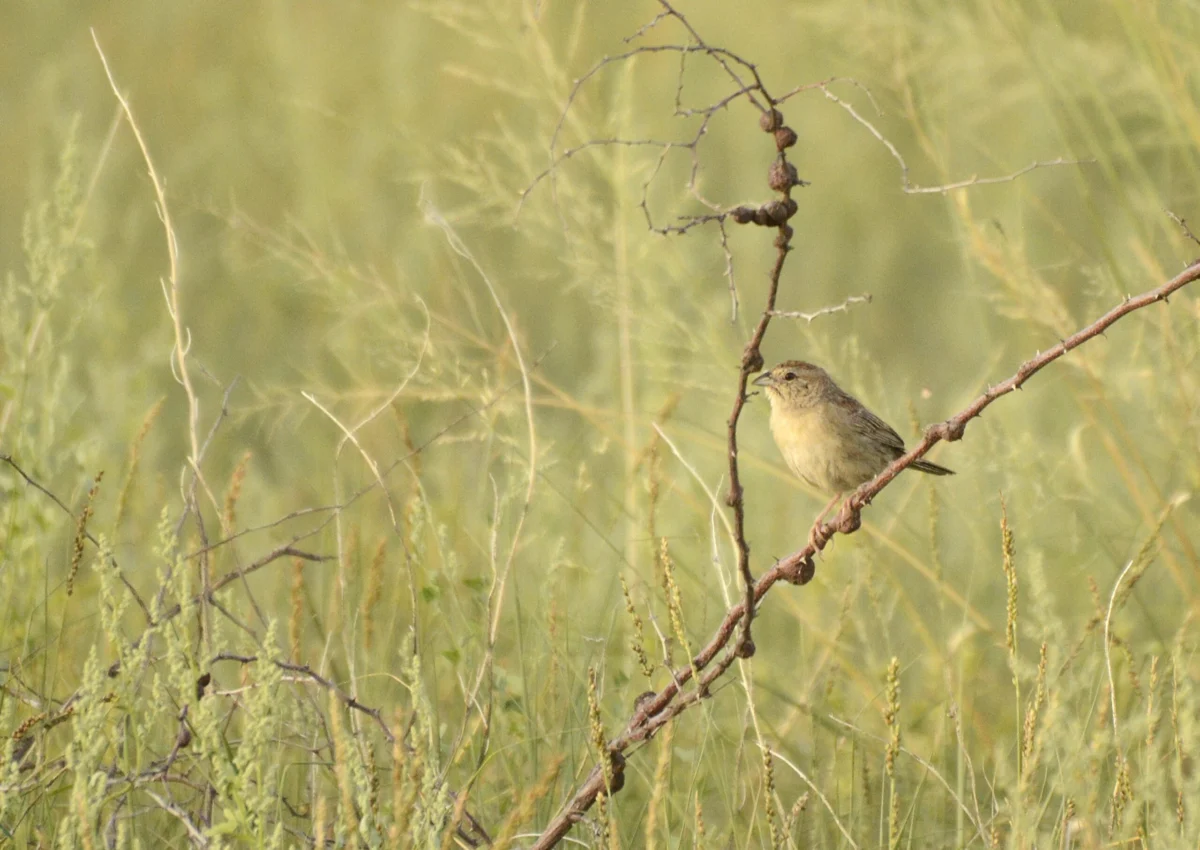
The grasslands of southeastern Arizona, specifically within the expansive acreage of the Appleton-Whittell Research Ranch, serve as a vital laboratory for understanding the life cycles of three iconic avian species: the Cassin’s, Botteri’s, and Grasshopper sparrows. While these birds have long been considered fixtures of the region, traditional observation methods have failed to capture the nuances of their seasonal movements. For decades, ornithologists have wrestled with a fundamental question: are these grassland specialists permanent residents, or are they elusive migratory travelers whose movements are masked by their cryptic behavior? Recent advancements in radio-telemetry technology, specifically the implementation of the Motus Wildlife Tracking System, are finally beginning to provide empirical data to address these long-standing ecological inquiries.
The Seasonal Enigma of Grassland Specialists
The ecological role of these sparrows is significant; they act as primary insectivores, consuming vast quantities of grasshoppers that would otherwise impact the native vegetation of the ranch. However, observing them is a notorious challenge. The Botteri’s Sparrow, for instance, arrives with the onset of the summer rains and announces its presence with a distinct, bubbling song. By mid-September, the ranch falls silent, leaving researchers to speculate whether the birds have migrated or simply become impossible to detect as they retreat into the dense, tall grasses that characterize the habitat.
Cassin’s Sparrows present an even more erratic pattern. Their arrival is not dictated by a calendar date but by the environmental trigger of the first significant monsoon storm. In years with robust rainfall, their population density spikes, creating a soundscape dominated by their repetitive songs. Conversely, during periods of drought, the species may be entirely absent. This biological phenomenon—the ability of a bird to "materialize" in response to localized climate conditions—remains one of the most compelling mysteries in North American ornithology.
The Grasshopper Sparrow adds another layer of complexity. While they are present year-round, the birds observed in the summer may not be the same individuals present in the winter. Current research suggests a "relay" migration pattern where the breeding population departs for southern climates, only to be replaced by northern cohorts seeking the milder winters of the high desert. This species-level residency, contrasted with individual migratory behavior, highlights the necessity for precise, individual-level tracking.
A Technological Leap: The Motus Network Integration
To move beyond the limitations of human observation, the Research Ranch initiated a partnership with the Bird Conservancy of the Rockies in 2022. This collaboration integrated the ranch into the Great Plains-Chihuahuan Desert Motus Network. The Motus (Latin for "movement") system utilizes an array of automated radio-telemetry stations that detect signals from lightweight, nano-scale radio transmitters affixed to birds, bats, and large insects.
The deployment of this technology at the Research Ranch represents a significant shift in research capability. As part of a global network encompassing over 2,000 stations across 34 countries, the ranch’s local station provides a critical link in tracking migratory corridors. The project, officially titled the Research Ranch Grassland Sparrow Motus Project, reached a major operational milestone in 2024. Through a collaborative effort involving the Arizona Game and Fish Department, the Sonoran Joint Venture, Arizona State University, and the Tucson Bird Alliance, the first cohort of sparrows was successfully tagged. To date, more than 25 individuals have been equipped with transmitters, providing the foundation for a longitudinal study on survival, site fidelity, and migration timing.
Chronology of Research and Field Implementation
The development of this research framework follows a clear, multi-year progression:
- 2022: Installation of the primary Motus receiving station at the Research Ranch to establish baseline monitoring capabilities.
- 2023: Validation phase, during which researchers tested the efficacy of the station against the challenging topography of the ranch, which features rolling hills that can impede signal transmission.
- 2024: Commencement of the tagging project. The first birds were fitted with radio transmitters to monitor movement patterns during the monsoon season.
- 2025: Expansion of the research scope, incorporating fellows from the Appleton-Whittell Research Ranch Fellowship Program and students from Prescott College to assist in the capture and tagging of birds.
Analytical Insights and Topographical Challenges
The implementation of Motus technology has not been without its logistical hurdles. Researchers have noted that the effectiveness of the tracking system is highly dependent on both geography and behavior. The rolling terrain of the Research Ranch can create "signal shadows," where radio waves are blocked by elevation changes. Furthermore, the behavioral differences between species—such as the ground-hugging habits of the Botteri’s Sparrow compared to the higher-altitude flight patterns of migratory species—necessitate specific adjustments in how receivers are positioned.
These findings are proving invaluable for the broader scientific community. By determining the limitations and ideal conditions for Motus deployment in high-desert grasslands, the research team is contributing to a standardized best-practices guide for future conservation efforts. This work is not merely about tracking birds; it is about refining the tools used for global wildlife monitoring.
Implications for Conservation Policy
The implications of this research extend far beyond the borders of the Research Ranch. Grassland birds are among the most threatened avian guilds in North America, with populations experiencing precipitous declines due to habitat loss, climate change, and the degradation of native prairie ecosystems. Understanding whether these populations are truly migratory or sedentary determines how conservationists approach land management.
If, as suspected, the ranch acts as a critical "stopover" point for birds traveling between breeding and wintering grounds, the focus must shift toward protecting migratory corridors. If the birds are year-round residents, the focus remains on habitat restoration and the preservation of native grass species. By clarifying these life histories, the Motus project provides the data necessary to lobby for targeted conservation policies and land-use protections that are evidence-based rather than speculative.
Educational and Collaborative Impact
A primary goal of the Research Ranch is to serve as a training ground for the next generation of conservation biologists. The involvement of Arizona State University and Prescott College students provides these early-career scientists with hands-on experience in modern ornithological techniques. By participating in the tagging process, students learn to handle sensitive wildlife, manage large datasets, and analyze signal telemetry—skills that are increasingly essential in the modern environmental sector.
Reaction from the academic community has been overwhelmingly positive. Observers note that by bridging the gap between high-level technological research and student-led field work, the project ensures the longevity of conservation science. The data collected by these students, once peer-reviewed and published, will serve as a definitive record of how these sparrow populations respond to the rapidly shifting climate of the American Southwest.
Future Outlook
As the project moves into its next phase, the focus will broaden to include the integration of data from other Motus stations within the regional network. This will allow researchers to track individual birds as they exit the ranch’s range and move toward their wintering grounds in Mexico or other parts of the United States.
The Research Ranch Grassland Sparrow Motus Project stands as a testament to the power of collaborative, technology-driven ecological research. While the mysteries of the Cassin’s, Botteri’s, and Grasshopper sparrows have not yet been fully solved, the path toward understanding is clearer than it has ever been. As more birds are tagged and more data is gathered, the scientific community anticipates the publication of results that will fundamentally alter our understanding of grassland bird ecology. For now, the dashboard remains active, a digital heartbeat representing the movement of some of the most elusive inhabitants of the Arizona grasslands, signaling to the world that even the smallest creatures can be tracked, understood, and ultimately, protected.
