
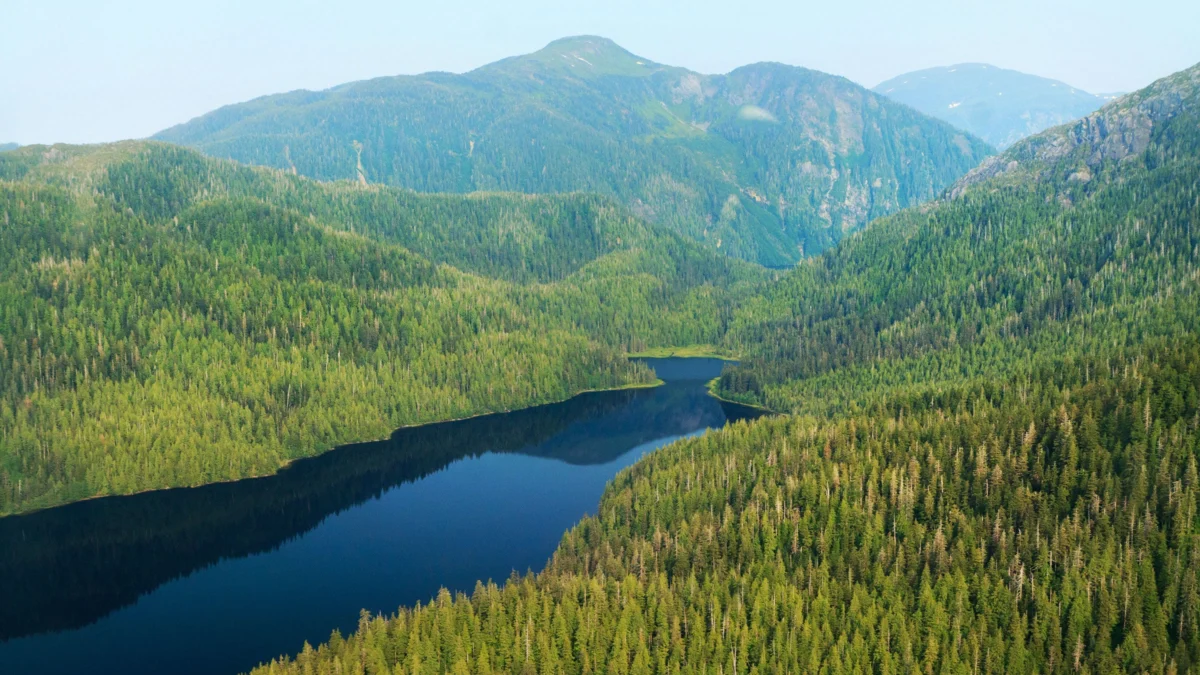
Spanning nearly 17 million acres across the rugged archipelago of Southeast Alaska, the Tongass National Forest stands as the largest intact temperate rainforest on the planet. As the ancestral homeland of the Tlingit, Haida, and Tsimshian peoples, the forest is a complex tapestry of fjords, ancient old-growth stands, and vital waterways. However, the future of this ecological bastion is currently at a critical juncture. A proposed repeal of the Roadless Rule—a policy that has served as a cornerstone of federal forest conservation for over two decades—threatens to open millions of acres of previously protected, undeveloped land to road construction and commercial timber harvesting.
The Genesis and Evolution of the Roadless Rule
The Roadless Rule, formally known as the Roadless Area Conservation Rule, was established in 2001 after years of extensive public discourse and scientific review. Designed to protect the last remaining wild expanses of the National Forest System, the rule generally prohibits road construction and commercial timber harvest within designated inventoried roadless areas. These prohibitions were intended to preserve the ecological integrity of the forests while still allowing for necessary management activities, such as wildfire mitigation, community safety projects, and the maintenance of essential habitats.
For over 20 years, the rule has acted as a bulwark against the fragmentation of forest ecosystems. By limiting the expansion of logging roads—which are frequently the precursors to industrial-scale resource extraction—the rule has successfully shielded vast tracts of land from the adverse effects of permanent infrastructure development. However, the policy has been a subject of persistent legal and political contention, particularly in Alaska, where stakeholders have long argued over the balance between economic development and environmental stewardship.
A Chronology of Policy Shifts
The current proposal to repeal the Roadless Rule is the latest chapter in a decades-long saga. To understand the gravity of the situation, one must look at the timeline of the Tongass’s regulatory history:
- 2001: The Roadless Area Conservation Rule is finalized, providing federal protection to nearly 58.5 million acres of National Forest land.
- 2003: The administration of the time grants a temporary exemption for the Tongass, leading to years of litigation.
- 2011: A federal court reinstates Roadless Rule protections for the Tongass, affirming its necessity for ecosystem preservation.
- 2020: The U.S. Forest Service adopts a full exemption for the Tongass, effectively removing the Roadless Rule from the region.
- 2023: The federal government announces a return to the 2001 protections, signaling a major policy reversal.
- August 20, 2026: The U.S. Forest Service releases a new Draft Environmental Impact Statement and a Proposed Rule that seeks to repeal the policy once again, initiating a 30-day public comment period.
- October 6, 2026: The deadline for public comment on the current proposal.
The Tongass as a Global Ecological Stronghold
The Tongass is not merely a collection of trees; it is a biological powerhouse. It serves as a refuge for approximately 350 bird species, representing roughly 40% of all avian species found in North America. The forest’s structural diversity—ranging from muskegs to massive, centuries-old Sitka spruce and western hemlock—provides essential nesting sites for the world’s highest density of Bald Eagles and Marbled Murrelets.
Beyond birds, the forest is a critical corridor for unique subspecies, including the Queen Charlotte Goshawk and the Prince of Wales Spruce Grouse. These species require the undisturbed, mature forest canopy to survive. The connectivity of these habitats is essential for gene flow and resilience against environmental stressors, making the "intactness" of the Tongass its most valuable biological asset.
America’s Climate Forest: Carbon Sequestration and Storage
The term "America’s Climate Forest" has gained significant traction in recent years, reflecting the scientific consensus on the Tongass’s role in global carbon cycling. According to data from the U.S. Forest Service, the forest holds an estimated 70 tons of above-ground carbon per acre. In total, the Tongass stores approximately 20% of all carbon sequestered in the entire U.S. National Forest System.
Dr. John Schoen, a former senior scientist at Audubon Alaska, emphasizes that the forest’s ability to store carbon is tied directly to its old-growth character. "The largest trees store more above-ground carbon than other forests," Schoen notes. "When these forests are intact, they act as a long-term carbon sink. When they are disturbed or harvested, that sequestered carbon is released back into the atmosphere, exacerbating the very climate challenges we are trying to mitigate."
The Economic Implications of Intact Ecosystems
While the debate over the Roadless Rule often frames conservation as being at odds with economic growth, the regional economy of Southeast Alaska tells a more nuanced story. The health of the forest is intrinsically linked to the health of the local economy, particularly the salmon industry.
The Tongass supports some of the most productive wild salmon runs in the world. These salmon, which depend on the clean, cool water provided by intact, forested watersheds, generate approximately $1 billion annually for the Southeast Alaska economy. Furthermore, the tourism and recreation sectors—which rely on the pristine, "wild" nature of the forest—account for a significant portion of the regional workforce. Combined, the seafood and tourism industries support roughly 25% of the total labor force in Southeast Alaska.
Proponents of the repeal argue that opening these lands to development could spur local timber industries and infrastructure projects. However, critics point out that the timber industry in the region has been in a long-term decline, and that relying on the extraction of old-growth timber may undermine the sustainable, long-term industries that currently define the region’s economic identity.
Analysis: The Risk of Fragmentation
The primary concern among ecologists is the "fragmentation effect." Roads do more than just provide access for logging; they introduce invasive species, facilitate wildlife poaching, and alter the hydrology of the forest floor. When a road is carved through a previously roadless area, it disrupts the "complete ecosystem" that Dr. Schoen describes.
The interconnectedness of the Tongass is its defining feature. Salmon feed the bears, and bears, in turn, transport nutrient-rich salmon remains into the forest, fertilizing the soil that feeds the ancient trees. These trees then provide shade and stabilize the stream banks, ensuring the cycle continues. Disrupting any part of this loop through industrial development risks weakening the entire system.
The Path Forward: Public Engagement and Management
The U.S. Forest Service is currently managing the Tongass under the Tongass Land and Resource Management Plan, a document that has undergone several amendments since 1997. As the agency moves forward with its proposal to repeal the Roadless Rule, it is simultaneously working on a broader revision of the management plan, with public input expected to be solicited in early 2027.
The 30-day comment period for the current proposal, ending October 6, 2026, represents a critical window for stakeholders, scientists, and the public to weigh in on the future of the forest. The Forest Service is required by law to review and respond to substantive comments submitted during this time, making this phase of the process essential for transparency and accountability.
As the nation grapples with the dual challenges of economic sustainability and climate change, the Tongass stands as a microcosm of the global dilemma: how to manage finite natural resources in a way that respects both the needs of current generations and the ecological imperatives of the future. Whether the Roadless Rule remains in place or is dismantled, the decision made in Washington will have lasting consequences for the landscape, the climate, and the communities of Southeast Alaska for generations to come.
