
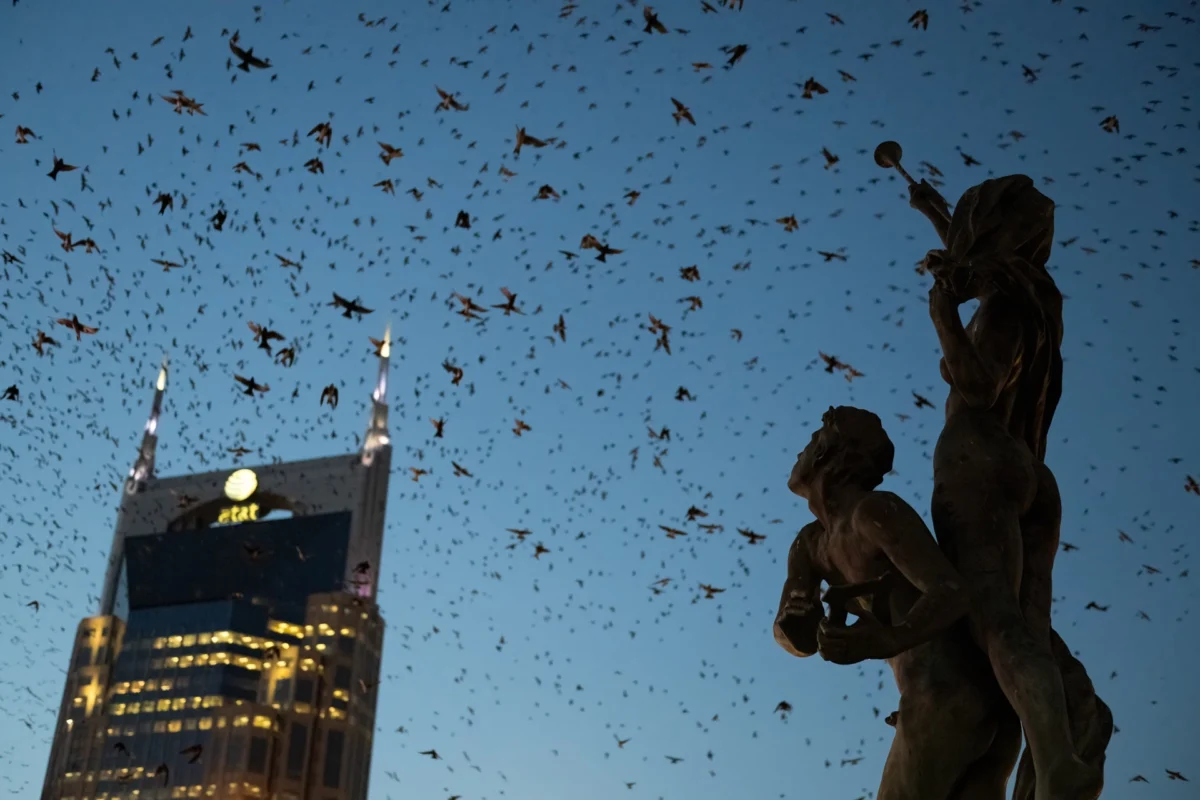
For decades, the prevailing narrative in conservation biology suggested that the rapid expansion of metropolitan areas was an unmitigated disaster for migratory birds. Cities were viewed as biological deserts—landscapes defined by concrete, glass, and artificial light, offering little to no value for avian travelers navigating the vast continental flyways. However, a groundbreaking study published recently in the journal Nature has upended this conventional wisdom. Researchers led by Miguel Jimenez, formerly of Colorado State University, have discovered that millions of birds are not merely passing over our cities; they are actively utilizing them as vital stopover habitats to rest and refuel during their arduous journeys.
The findings indicate that urban environments are disproportionately significant to the survival of migratory species. Despite occupying a relatively small fraction of the total land area in the United States, metropolitan regions host nearly half of all migratory bird "hotspots." This discovery shifts the burden of conservation responsibility, placing the power to protect these travelers directly into the hands of urban residents and city planners.
A Paradigm Shift in Avian Migration Research
The study, which leveraged extensive weather radar data, analyzed bird migration stopover patterns across the contiguous United States. By observing radar signatures—which reflect large-scale movements of birds rather than individual species—the researchers identified that 48 percent of spring migratory hotspots and 44 percent of fall hotspots are located within metropolitan areas. These areas are defined by the U.S. Census Bureau as urban cores with at least 50,000 residents and their surrounding communities.
Historically, ornithologists focused their research on protected wilderness areas, national parks, and rural wetlands, assuming that birds would naturally avoid the chaotic environment of a city. The reliance on community-based observation platforms, such as eBird or iNaturalist, further skewed this data. Because these platforms rely on human contributors who are often concentrated in affluent neighborhoods, the resulting maps of "biodiversity" frequently mirrored human population density and socioeconomic status rather than the actual presence of wildlife. By utilizing radar, Jimenez and his team were able to achieve a more impartial, bird’s-eye view of where these travelers are actually congregating, regardless of human accessibility or presence.
The Role of Infrastructure: Light and Water
The question of why birds—many of which rely on dark, quiet habitats—would choose to descend into the heart of a metropolitan area has puzzled experts for years. According to the research, the answer lies in a combination of sensory traps and necessary resources.
Artificial light at night (ALAN) acts as a powerful beacon for migrating birds. While this attraction often leads to lethal collisions with windows and glass facades—a phenomenon that kills an estimated one billion birds annually in the United States—it also draws birds into the urban fabric in the first place. Once they arrive, they are met with a complex, often unintentional, network of resources.
Many major American cities were historically established along riverbanks, coastlines, or lakefronts to facilitate trade and human settlement. These same waterways serve as natural conduits for migratory birds. Furthermore, the deliberate engineering of urban green spaces—parks, golf courses, and landscaped corporate campuses—creates artificial oases. In the western United States, where the natural landscape is often arid and unforgiving, these urban "islands" provide essential water and food sources that are otherwise unavailable. This helps explain the study’s finding that urban hotspots are more prevalent in the West than in the East, as the urban environment in arid regions provides a comparative advantage to birds that would otherwise struggle to find moisture in the surrounding desert.
The Luxury Effect and Environmental Equity
A particularly compelling aspect of the study is the correlation between socioeconomic status and avian abundance in arid climates. In cities like Los Angeles, Phoenix, and San Diego, migratory birds were significantly more likely to be found in affluent, "wetter" neighborhoods. This phenomenon, known as the "luxury effect," suggests that the distribution of biodiversity in urban environments is heavily influenced by human management of resources.
Wealthier neighborhoods typically feature more tree canopy, larger gardens, and more frequent irrigation, all of which create a micro-climate capable of supporting a larger variety of insects and plants. For a warbler or sparrow that has flown hundreds of miles, a well-watered residential garden in a wealthy suburb is not just an aesthetic amenity; it is a critical survival habitat. This finding highlights a systemic issue in urban ecology: the way we design our cities directly determines which species can survive there, and current patterns of development may be inadvertently creating "habitat deserts" in lower-income areas.
Chronology of Urban Conservation Awareness
- Early 20th Century: Conservation efforts focus exclusively on the preservation of remote, pristine wilderness, with little consideration for urban ecology.
- 1990s–2000s: The rise of community science platforms like eBird begins to change the landscape, though researchers later realize these tools carry a socioeconomic bias.
- 2010s: Increased documentation of window-strike fatalities brings national attention to the danger cities pose to birds, leading to the "Lights Out" movement.
- 2024: The publication of the Nature study provides the first comprehensive, radar-based evidence that cities are, in fact, essential stopover sites, not just death traps.
Implications for Policy and Future Development
The realization that cities are essential components of the migratory flyway necessitates a fundamental change in how urban areas are managed. If 86 percent of the American population resides in these metropolitan hotspots, the potential for a massive, distributed conservation effort is unprecedented.
Policy experts argue that the solution must be multifaceted. The "Bird-Safe Building Act," a piece of proposed federal legislation, represents one of the most significant potential policy shifts. If enacted, it would mandate bird-safe design standards for new federal buildings, setting a precedent for private construction. At the municipal level, cities like New York and Minneapolis have already begun adopting bird-friendly zoning codes, requiring the use of non-reflective glass and the reduction of unnecessary exterior lighting during peak migration months.
Beyond legislation, the concept of "urban rewilding" is gaining traction. This involves the strategic planting of native species to create corridors that connect isolated pockets of green space, allowing birds to move through the city with less risk of exposure to traffic or building collisions. Programs like Audubon’s "Lights Out" are also proving effective; by simply dimming the lights of skyscrapers during peak migration, cities can significantly reduce the disorientation that draws birds into hazardous urban environments.
The Human Responsibility
The scientific community is clear: the urbanization of the United States is not slowing down. As concrete continues to replace natural landscapes, the survival of migratory species will increasingly depend on our willingness to share our cities with them.
"We are seeing a high-stakes scenario where the urban environment is both a primary threat and a primary resource," says one independent ecologist reviewing the findings. "The birds are telling us where they need to be. It is up to us to make those places safer."
The evidence provided by the latest research suggests that we no longer have the luxury of ignoring the ecological impact of our cities. Whether through the installation of native plant micro-forests, the retrofitting of existing high-rises with anti-collision film, or the support of municipal policies that prioritize ecological connectivity, the path forward is one of integration. For millions of birds, the difference between a successful journey and a fatal exhaustion lies in the choices made by the humans living in these metropolitan hubs. As we continue to build and expand, the integration of bird-friendly infrastructure is not merely an optional act of environmentalism; it is a critical requirement for maintaining the biodiversity of the continent.
