
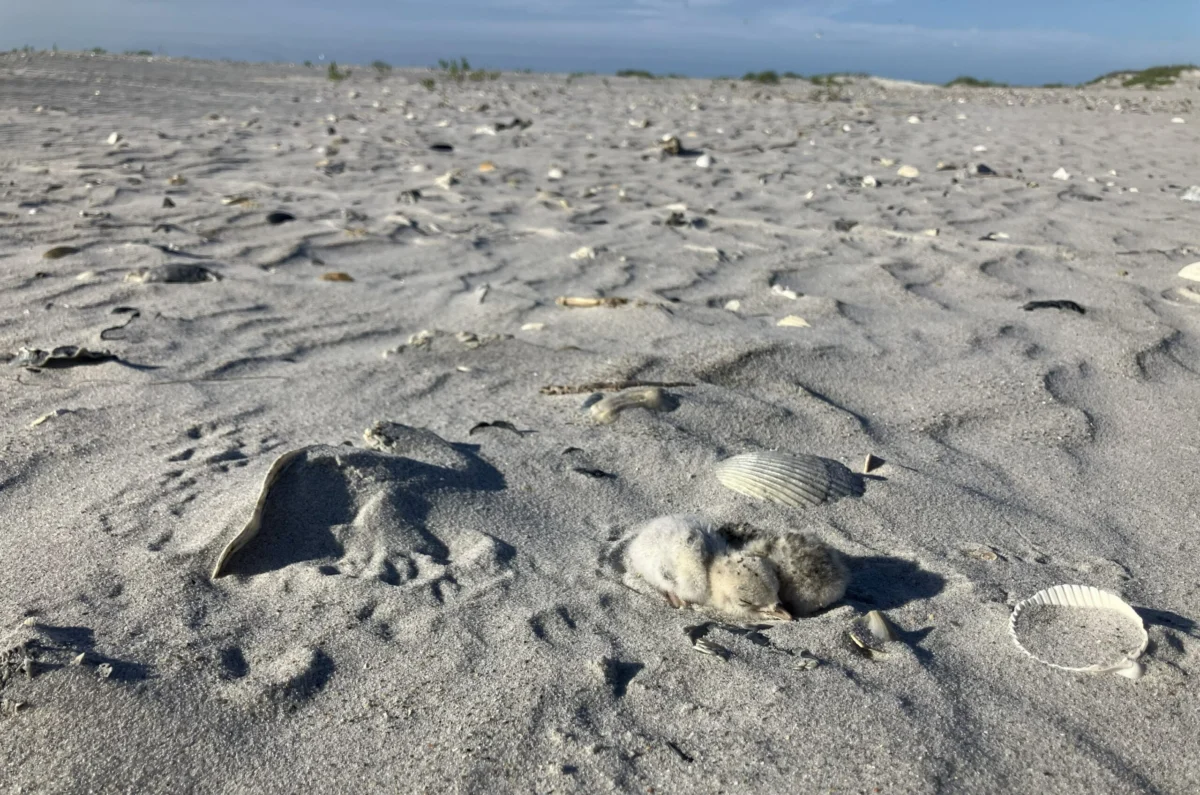
The 2024 coastal bird nesting season has concluded as a watershed moment for North Carolina’s avian populations, characterized by unprecedented reproductive success on Lea-Hutaff Island and adaptive management strategies across the state’s barrier island network. The 5,600-acre undeveloped barrier island, situated south of Topsail Beach, emerged as a critical stronghold for colonial waterbirds, hosting record-breaking populations of Least Terns and witnessing the successful return of Black Skimmer colonies for the first time since 2022.
The success of the season is attributed to a combination of favorable environmental conditions, minimal predator pressure, and rigorous conservation efforts implemented by Audubon North Carolina, the North Carolina Wildlife Resources Commission (NCWRC), and regional partners. While the season presented logistical challenges—including unexpected predator encroachment on the Cape Fear River and shifting nesting patterns—the data suggests a robust year for regional biodiversity.
A Historic Resurgence on Lea-Hutaff Island
Lea-Hutaff Island, formed by the natural closure of an inlet in the 1990s, serves as an ideal sanctuary due to its lack of human infrastructure and extensive, open sandy habitats. This year, the island provided a vital refuge for Least Terns (Sternula antillarum). Conservationists observed three large colonies totaling 1,146 nesting pairs. Given that the statewide population typically fluctuates around 3,500 pairs, this single site accounted for nearly one-third of North Carolina’s nesting population.
The success of the Least Terns was mirrored by the resurgence of Black Skimmers (Rynchops niger). After a two-year hiatus in successful nesting, 19 pairs established a colony on the island and successfully fledged chicks. Biologists noted that the absence of coyotes—which have plagued the island in previous seasons and required intensive intervention—was a primary factor in the elevated survival rates. By avoiding the “egg buffet” scenario of prior years, the island’s colonies were able to fledge hundreds of juvenile birds, bolstering the local population count significantly.
Beyond avian success, the island served as a critical nursery for loggerhead sea turtles (Caretta caretta). Monitoring teams recorded 29 nests, a record for the site. As of late autumn, conservationists continue to track the emergence of these hatchlings, marking a banner year for both terrestrial and marine conservation on the island.
Adaptive Management in the Cape Fear River
While Lea-Hutaff enjoyed a season of relative stability, the Cape Fear River estuary presented a more dynamic environment. For the first time in documented history, a coyote was identified via trail camera footage on South Pelican Island. The presence of a terrestrial predator in such a sensitive environment caused immediate behavioral shifts among the resident Royal and Sandwich Terns.
The birds, sensing the threat, abandoned their initial nesting site on South Pelican Island and relocated to Ferry Slip Island. This rapid relocation highlights the necessity of maintaining multiple protected nesting habitats within the region. Despite the disruption, the terns successfully established colonies at the new site, reaching normal population levels of over 3,000 pairs and successfully fledging hundreds of offspring.
Audubon biologists capitalized on the presence of these colonies to advance ongoing scientific research. The team banded 58 Royal Terns and 47 Sandwich Terns to aid in long-term migration tracking. Additionally, they continued a longitudinal diet study, utilizing DNA analysis from fecal samples to identify the specific prey species upon which these birds rely. This data is vital for understanding how changes in fish populations and ocean temperatures might impact the long-term viability of these tern colonies.
Strengthening Oystercatcher Populations
The American Oystercatcher (Haematopus palliatus) remains a high-priority species for North Carolina conservationists due to its status as an imperiled coastal breeder. This summer, the coordination of statewide banding efforts reached a new level of sophistication. Through a collaborative effort between Audubon, the NCWRC, and North Carolina State Parks, two new biological technicians were certified as official banders, expanding the state’s capacity to track individual birds.
Statewide, 173 oystercatchers were fitted with unique identification bands, providing researchers with data on survival rates and site fidelity. Monitoring efforts were concentrated across key locations: 97 pairs on the Lower Cape Fear River, 25 pairs on Lea-Hutaff Island, and 30 pairs on Masonboro Island. The Masonboro effort was conducted in direct partnership with the North Carolina Coastal Reserve, illustrating the success of cross-agency cooperation.
Ecological Shifts and the Colonial Waterbird Census
The 2024 season also provided an opportunity for the Colonial Waterbird Census, an essential inventory taken every three years to track population trends across state sanctuaries. While Audubon staff usually manage these counts, the scale of the 2024 nesting sites required an expanded effort, drawing on the expertise of volunteers and citizen scientists.
Data from Battery Island and Beacon Island revealed notable shifts in colony composition. Brown Pelicans had highly successful nesting seasons at both locations; however, White Ibis populations were markedly lower than in previous years. Researchers hypothesize that increased competition for nesting space, particularly from the larger and more aggressive Brown Pelicans, may have displaced the Ibis. This underscores the delicate balance of habitat availability and the necessity of ongoing restoration projects.
Specifically, at Battery Island, the shoreline is currently experiencing significant erosion. Audubon has concluded the first phase of a restoration design project. The organization is now moving toward the selection of a final design and the subsequent initiation of the environmental permitting process, which will be critical to preserving the island’s viability for future nesting cycles.
The Role of Public Stewardship
The survival of coastal birds is intrinsically linked to human behavior. As nesting habitats shrink due to sea-level rise and human development, the role of “stewards”—both professional and public—becomes more pronounced. Biologists emphasize that the success of species like Wilson’s Plovers, Common Nighthawks, and Piping Plovers is a direct reflection of the public’s willingness to respect fenced-off sanctuaries and adhere to leash laws for pets.
“The overall health and success of our nesting birds depends on people respecting posted nesting sanctuaries, keeping their dogs away from nesting sites and on a leash, and being a good steward of the environment,” stated one lead biologist involved in the project.
The season also served as a reminder of the hazards of nesting in high-traffic areas. At the south end of Wrightsville Beach, a late-arriving colony of Least Terns failed to produce viable offspring due to avian predation and the logistical constraints of the site. This failure serves as a baseline for why designated, managed sanctuaries like Lea-Hutaff are not just preferred but essential for the survival of these species.
Implications for Future Conservation
The 2024 season provides a comprehensive dataset that will inform management policies for the next decade. By documenting the successful fledging of 53 Black Skimmer chicks—which have been banded and registered with the USGS Bird Banding Laboratory—conservationists have created a cohort of birds that will provide data for years to come. Members of the public who spot these birds are encouraged to report the black bands with white lettering to the USGS, as these reports are vital for understanding wintering grounds and migratory routes.
Looking ahead, the conservation community is shifting its focus toward long-term habitat resilience. As climate change accelerates, the ability of barrier islands to shift, erode, and reform is being hampered by static coastal management practices. The success observed on Lea-Hutaff proves that when birds are given the space to nest without human interference or predator-heavy environments, they are capable of rebounding quickly.
The successful implementation of banding, marking, and sampling—all performed under federally authorized permits—has provided the scientific community with a clearer picture of the North Carolina coast’s role in the Atlantic Flyway. As the state moves into the winter months, the focus shifts to analyzing the dietary data and mapping the survival rates of the newly fledged birds. For now, the 2024 season stands as a testament to the effectiveness of active habitat management and the power of inter-agency cooperation in protecting the state’s most vulnerable coastal inhabitants.
