
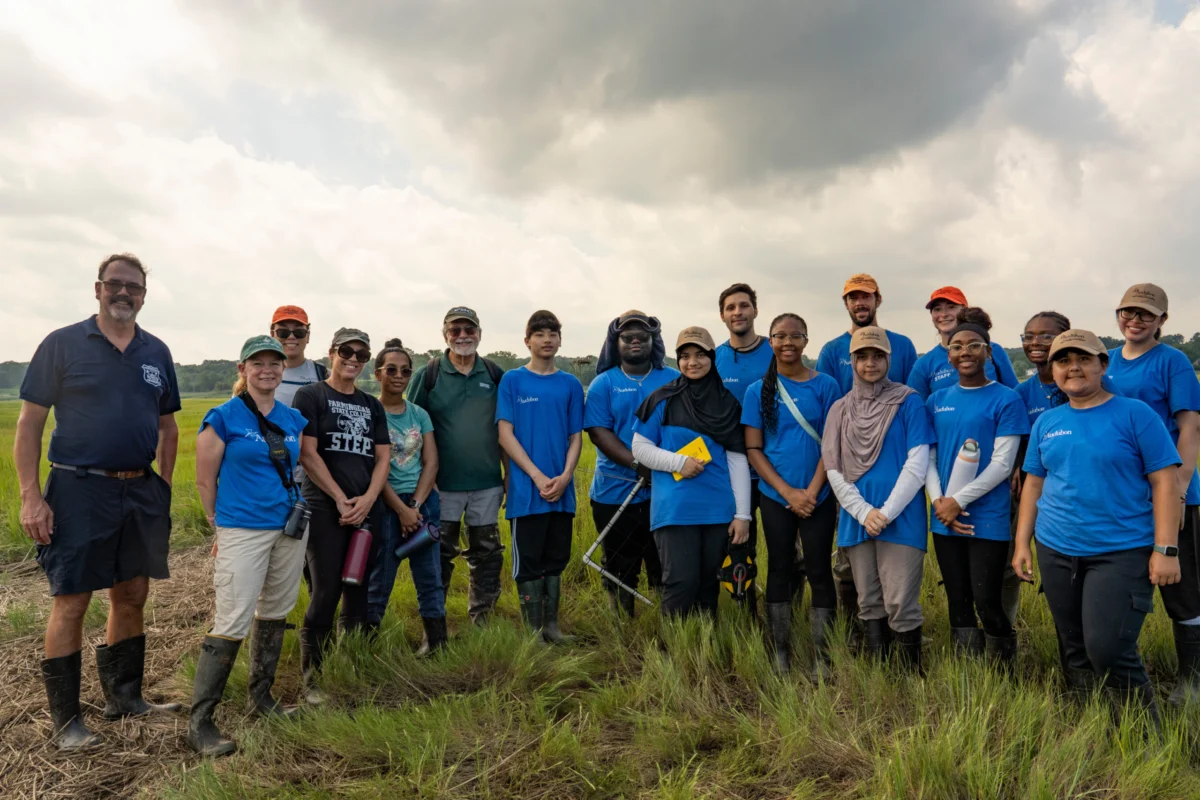
This summer, the expansive landscape of Crab Meadow Marsh became the epicenter of a multifaceted environmental revival, as a coalition of scientists, municipal partners, and community volunteers converged to initiate a comprehensive restoration of this vital coastal habitat. The project, which seeks to revitalize approximately 250 acres of saltmarsh, represents a critical intervention against the dual threats of habitat degradation and sea-level rise. By integrating rigorous scientific monitoring, innovative hydrological engineering, and broad-based community engagement, stakeholders are attempting to secure the future of a marsh that has long served as a buffer for the local coastline.
A Beacon of Hope for the Saltmarsh Sparrow
The most significant biological indicator of the project’s early success occurred mid-summer when representatives from the U.S. Fish and Wildlife Service (USFWS) identified a nesting site for the Saltmarsh Sparrow. This discovery is of profound conservation importance, as the species has been largely absent from the Crab Meadow area for several years. The Saltmarsh Sparrow is currently listed as a species of high conservation concern due to its extremely restricted breeding range and the rapid degradation of high-marsh nesting habitats.
A licensed ornithologist on the project team successfully identified two distinct nests, one of which contained a clutch of chicks near the fledgling stage. In accordance with regional monitoring protocols, the researchers performed a brief, non-invasive banding procedure, affixing small identification tags to the nestlings. This data collection is vital for tracking the survival rates and migratory patterns of the population. Observers noted that the parent birds returned to the nests almost immediately following the procedure, confirming that the methodology employed caused minimal physiological stress to the birds.
Ecologists involved in the study emphasize that the return of these sparrows is not merely an anecdotal victory; it provides empirical evidence that the current environment, while under stress, retains the necessary components to support sensitive species. This finding has galvanized the planning team, providing a tangible goal for the broader 250-acre restoration effort: creating a landscape that is both resilient to tidal fluctuations and structurally diverse enough to support avian reproduction.
Historical Context and the Challenge of Mosquito Ditches
To understand the scope of the restoration, one must look back to the 1930s, when public works programs across the United States implemented large-scale "mosquito ditching." At the time, these narrow, grid-like channels were dug with the intention of draining standing water to curb mosquito populations. However, decades of hindsight have revealed that these interventions fundamentally altered the hydrology of coastal marshes.
Over the last ninety years, many of these ditches have widened due to tidal erosion, effectively draining the marsh of the water it needs to maintain its natural equilibrium. This process has resulted in the loss of essential habitat and has diminished the marsh’s capacity to accumulate sediment, leaving it increasingly vulnerable to sea-level rise.
This summer, the project team introduced a pilot program involving the "Salt Marsh Stewards"—a group of high-school-aged interns—to test a sustainable remediation strategy. Instead of traditional dredging or filling, which can be carbon-intensive and disruptive, the stewards are utilizing organic materials, such as bio-logs and natural vegetation bundles, to trap sediment within the ditches. By gradually slowing the water flow, these materials encourage the natural accretion of sediment. If this pilot project proves successful in restoring natural marsh connectivity, it will be scaled up across the entire 250-acre site. This shift from artificial modification to nature-based engineering represents a significant evolution in coastal management philosophy.
Community Stewardship and Collaborative Governance
The restoration of Crab Meadow is not strictly a top-down scientific endeavor; it is deeply rooted in local community participation. A notable event occurred this summer involving the AWARE Drug and Alcohol Community Coalition and the Theodore Roosevelt Sanctuary and Audubon Center. Over 20 volunteers mobilized to address a persistent, localized issue: the accumulation of stray golf balls from the adjacent Crab Meadow Golf Course.
Utilizing equipment provided by the golf course management, the volunteers systematically combed the marsh borders. This partnership serves as a model for how municipal infrastructure and conservation efforts can coexist. The recovered golf balls were returned to the course for cleaning and reuse, preventing plastics and chemical coatings from breaking down within the sensitive marine environment.
This cleanup was the first in a series of planned stewardship events, designed to cultivate a sense of ownership among local residents. By engaging volunteers, the project team ensures that the marsh remains a protected public asset. The collaboration between the Audubon Center and the AWARE coalition also highlights the intersection of public health and environmental health, suggesting that access to clean, natural spaces is a key component of community well-being.
Scientific Foundations and Engineering Design
Behind the visible fieldwork, a massive data-gathering operation has been underway. EA Engineering and Sovereign Consulting have been tasked with the foundational research required for the long-term restoration design. The team has been conducting rigorous elevation surveys and habitat assessments to create a high-resolution map of the marsh’s current state.
These field investigations are critical because the restoration of a saltmarsh is a delicate balancing act. The project team must ensure that any changes to the topography do not inadvertently damage existing healthy segments of the marsh. By gathering precise data on current tidal flow, soil salinity, and vegetation distribution, the engineers are refining their designs to maximize the ecological impact of the restoration. The team is looking to identify "high-opportunity" areas where minor adjustments can lead to significant improvements in ecosystem function, such as carbon sequestration and storm surge protection.
Educating the Next Generation
Recognizing that the long-term success of the project relies on public support, the Audubon staff implemented an aggressive educational outreach program. Over the course of the summer, 140 children from local camp programs participated in full-day sessions at the marsh. These sessions were designed to move beyond passive observation, involving the children in hands-on activities that demonstrate the complexity of marsh ecosystems.
By teaching students about the specific dependencies of the Saltmarsh Sparrow and the historical impact of human infrastructure on the landscape, the program is cultivating a new generation of environmental stewards. Educators hope that by fostering an early connection to the marsh, the local community will be more inclined to advocate for its continued protection in the face of future environmental challenges.
Implications and Future Outlook
As the summer concludes, the project stands at a critical juncture. The restoration planning is advancing, with the recent data collection and the successful pilot studies providing a robust framework for future work. The broader implications of this project are significant: if the Crab Meadow restoration succeeds, it could serve as a template for other coastal regions dealing with the legacy of mid-20th-century water management and the modern realities of climate change.
The primary objective remains the creation of a resilient, self-sustaining ecosystem. While the challenges are substantial—ranging from rising sea levels to the complexities of land-use management—the progress made this summer offers a clear path forward. The combination of high-level scientific expertise and community-driven action ensures that the Crab Meadow Marsh will remain a valuable natural resource. As the team moves into the next phase of design and implementation, the emphasis will continue to be on data-driven decision-making and the preservation of biodiversity. For the community members who have walked the marsh and witnessed the return of the Saltmarsh Sparrow, the message is clear: when given the chance, nature is capable of remarkable recovery. The work at Crab Meadow is a testament to the fact that when scientific rigor meets community dedication, a more sustainable future for our coastlines is within reach.
