
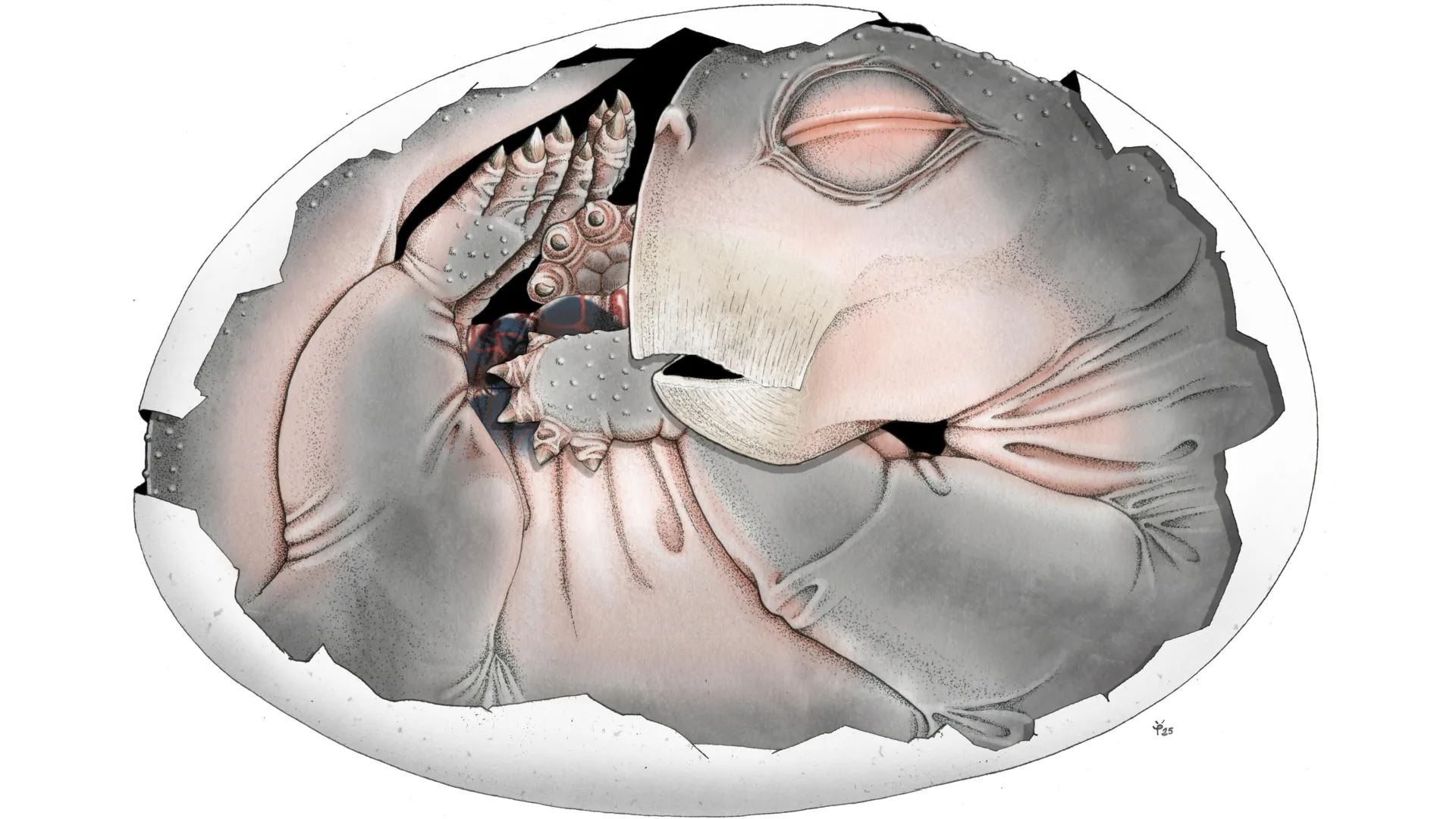
The history of life on Earth is punctuated by catastrophic events that reset the evolutionary clock, wiping out vast segments of biodiversity while clearing the stage for entirely new groups of organisms to dominate. Among the most severe of these planetary crises was the End-Permian Mass Extinction, which occurred approximately 252 million years ago. Often referred to as the Great Dying, this cataclysmic event eradicated an estimated 70 percent of terrestrial vertebrate species and up to 96 percent of all marine species. Yet, from the ashes of this unprecedented global devastation emerged a remarkably resilient survivor: Lystrosaurus, a robust, herbivorous therapsid and an ancestral cousin to modern mammals. For decades, paleontologists have marveled at how this barrel-chested animal managed not only to endure the toxic, hyperthermal, and arid conditions of the early Triassic period, but to become the most globally widespread and abundant vertebrate of its time.
Now, a groundbreaking scientific discovery has shed unprecedented light on the biological secrets underlying this extraordinary survival story. Published in the peer-reviewed journal PLOS ONE, new research details the identification of a 250-million-year-old fossilized egg containing a perfectly preserved Lystrosaurus embryo. Led by an international team of paleontologists—including Professor Julien Benoit and Professor Jennifer Botha of the Evolutionary Studies Institute at the University of the Witwatersrand in South Africa, alongside Dr. Vincent Fernandez of the European Synchrotron Radiation Facility (ESRF) in France—this discovery marks the first confirmed egg ever found from a non-mammalian therapsid. By finally resolving a decades-long debate over whether the ancient precursors to mammals laid eggs, the findings provide vital clues regarding how reproductive strategies can dictate resilience in the face of abrupt and extreme climate change.
The Chronology of a Decades-Long Scientific Journey
The story of this monumental discovery spans nearly two decades, illustrating the slow, meticulous nature of paleontological research combined with the rapid advancements of modern analytical technology. The journey began in 2008 during a routine field excursion in the Karoo Basin of South Africa—a region globally renowned for its exceptionally rich repository of Permian and Triassic fossils. The expedition was led by Professor Botha, who was accompanied by her exceptionally skilled fossil preparator and finder, John Nyaphuli.
During the survey, Nyaphuli identified a small, unassuming geological nodule that initially displayed only minute, ambiguous flecks of bone. Recognizing that the rock might contain something of interest, Botha collected the specimen and brought it back to the laboratory for mechanical preparation. As Nyaphuli painstakingly chipped away the surrounding matrix, a remarkable sight emerged: a tiny, intricately curled-up Lystrosaurus skeleton.
Even at the time of its initial discovery seventeen years ago, Botha suspected that the miniature skeleton represented a hatchling or a pre-hatchling that had perished inside an egg. However, the specimen presented a major scientific hurdle: there was no visible, preserved eggshell surrounding the bones to definitively prove the hypothesis. In 2008, the available imaging technology lacked the resolution and penetration power required to inspect the microscopic composition of the nodule without destroying the delicate fossil enclosed within. Consequently, the specimen was archived, remaining an intriguing anatomical puzzle while waiting for technology to catch up with the researchers’ ambitions.
That technological leap arrived through the application of advanced synchrotron x-ray computed tomography (CT) scanning. Utilizing the intensely bright, high-energy X-rays generated by the particle accelerator at the ESRF in Grenoble, France, Dr. Vincent Fernandez and the research team were able to virtually dissect the fossilized nodule in microscopic detail. This non-destructive imaging technique allowed the scientists to peer through layers of dense mineral matrix, revealing the hidden architecture of the specimen and confirming the presence of an egg structure that had eluded detection for generations.
Unlocking the Anatomy of a Pre-Hatchling
The high-resolution synchrotron scans did much more than merely confirm the presence of an eggshell; they provided a wealth of anatomical data concerning the developmental stage of the enclosed embryo. When Professor Benoit examined the virtual 3D reconstructions of the skull and jaw, a particularly illuminating feature came to light: the incomplete mandibular symphysis.
In vertebrate biology, the lower jaw—or mandible—is formed by two distinct halves that must eventually fuse together into a solid bone before the animal is capable of independently biting, chewing, and processing food. The synchrotron scans revealed that in this specific Lystrosaurus embryo, the mandibular halves had not yet fused. This crucial piece of morphological evidence demonstrated definitively that the individual was still in a pre-hatchling stage and would have been entirely incapable of feeding itself at the time of death.
Furthermore, comparative analysis of the fossil revealed that Lystrosaurus produced eggs that were exceptionally large relative to the overall body size of the adult animal. In modern comparative biology, egg size correlates directly with yolk content. Larger eggs possess a higher volume of nutrient-rich yolk, which fuels the physiological development of the embryo over a prolonged incubation period. This high yolk investment bypasses the necessity for extended parental care, such as the lactation strategies characteristic of modern mammals, immediately after birth.
Insights into Evolutionary Reproductive Strategies
The revelation that Lystrosaurus laid large, yolk-rich eggs provides a profound window into the evolutionary history of mammalian reproduction. For more than a century, evolutionary biologists have debated the reproductive modes of the earliest mammal ancestors, known scientifically as cynodonts and non-cynodont therapsids. While modern monotremes (such as the platypus and echidna) lay eggs, all other living mammals give birth to live young or produce altricial offspring that require intensive maternal care and milk. Finding the first direct fossil evidence of a therapsid egg confirms that egg-laying was the ancestral condition for the lineage that eventually gave rise to mammals, bridging a massive evolutionary gap.
Beyond tracing lineage, the physical characteristics of the eggs offered distinct ecological advantages during the tumultuous aftermath of the End-Permian extinction. Following the mass extinction event, global temperatures skyrocketed, and continental interiors experienced prolonged, severe droughts alongside widespread environmental instability. Soft-shelled eggs, while notoriously difficult to preserve in the fossil record—largely because they tend to decay long before mineralizing—possessed specific physical properties that suited the climate.
The researchers deduce that Lystrosaurus hatchlings were likely precocial, meaning they hatched at an advanced stage of anatomical development. Equipped with large yolk reserves and robust skeletal structures, these young animals would have been immediately capable of foraging, evading the sparse predators of the early Triassic, and growing rapidly toward sexual maturity. By growing fast and reproducing early through large, resilient clutches, Lystrosaurus established a foolproof demographic strategy for survival in a depopulated and hostile world.
The Significance of Soft-Shelled Fossil Preservation
The extreme rarity of this discovery highlights the exceptional circumstances required for soft-shelled eggs to enter the geological record. Unlike the hard, calcium-carbonate-infused shells of dinosaur and bird eggs, which readily absorb minerals from surrounding sediments and fossilize intact, soft-shelled eggs—similar to those laid by modern lizards, snakes, and primitive egg-laying mammals—are composed primarily of pliable proteinaceous membranes that decompose rapidly upon contact with oxygen and bacteria.
For this specific Lystrosaurus egg to survive for 250 million years, a precise sequence of events must have occurred. The nest or egg had to be buried rapidly in fine-grained sediment shortly before or after the embryo’s death, cutting off oxygen supplies and halting decomposition. Over millions of years, mineral-rich groundwater percolated through the sediment, replacing the organic tissues with rock minerals grain by grain through a process known as permineralization. Without the convergence of John Nyaphuli’s keen observational skills in the field and the cutting-edge capabilities of modern synchrotron radiation, this microscopic window into deep-time biology would have remained locked forever within an ordinary-looking rock.
Broader Impacts and Implications for Modern Climate Science
While the discovery represents a major milestone in theoretical paleontology—solving a 150-year-old mystery regarding South African therapsids—the researchers emphasize that the implications of the study extend far beyond historical curiosity. In an era marked by rapid anthropogenic climate change, widespread habitat destruction, and an ongoing biodiversity crisis, understanding how ancient ecosystems responded to global upheaval offers critical context for contemporary conservation biology.
The End-Permian Mass Extinction stands as the most severe biotic crisis in Earth’s history, driven largely by massive volcanic eruptions in the Siberian Traps that released catastrophic volumes of greenhouse gases into the atmosphere. The resulting global warming, ocean acidification, and desertification mirror, in many ways, the environmental pressures facing modern ecosystems today. By investigating how Lystrosaurus utilized a combination of adaptability, rapid life history strategies, and resilient reproductive mechanisms to navigate extreme global trauma, scientists gain a deeper understanding of the biological traits that promote resilience against ecological collapse.
As paleontology continues to evolve hand-in-hand with technological innovation, discoveries like the Lystrosaurus embryo demonstrate that museums and archives still hold vast, unmined treasures. Specimens collected decades ago are finding new life beneath the intense beams of modern particle accelerators, rewriting textbooks and proving that even the most ancient fossils still have vital stories to tell about the enduring tenacity of life on Earth.
