
As the transition from the vibrant hues of late summer to the crisp, cooling air of September settles over Vermont, the landscape begins its seasonal descent into dormancy. For the staff at Audubon Vermont, this period of environmental shift serves as a natural milestone to evaluate the success of intensive conservation efforts undertaken earlier this year. Among these efforts, the restoration of riparian buffers along the Huntington River stands out as a primary achievement, representing a multi-phase commitment to ecological resilience, habitat connectivity, and long-term climate adaptation within the Green Mountain Audubon Center’s jurisdiction.
The Genesis of a Restoration Project
The roots of the current project trace back to April, a month characterized by the unpredictable meteorological volatility common to Northern New England. Despite an unseasonable late-spring storm that delivered freezing rain and slush, a coalition of Conservation Biologists, participants from the Youth Conservation Leadership Program, and a dedicated cadre of volunteers convened to initiate a significant planting event. The objective was to install 339 native trees and shrubs along the riverbank, an area identified as critical for maintaining water quality and providing essential wildlife habitat.
Riparian buffers—the vegetated areas adjacent to waterways—are foundational to the health of Vermont’s aquatic and terrestrial ecosystems. By stabilizing soil and mitigating erosion, these plantings protect the Huntington River from sediment runoff while simultaneously creating a thermal refuge for avian species and pollinators. The April event, while physically demanding due to the frigid conditions, successfully established the structural framework for what is intended to become a self-sustaining shrubland ecosystem.
Monitoring and Performance Metrics
The success of any restoration project is rarely guaranteed upon initial planting. Biologists acknowledge that the establishment phase—the first one to three years—is the most precarious for young vegetation. Factors such as soil moisture levels, competition from invasive flora, and herbivory by local wildlife, particularly white-tailed deer, pose constant threats to survival rates.
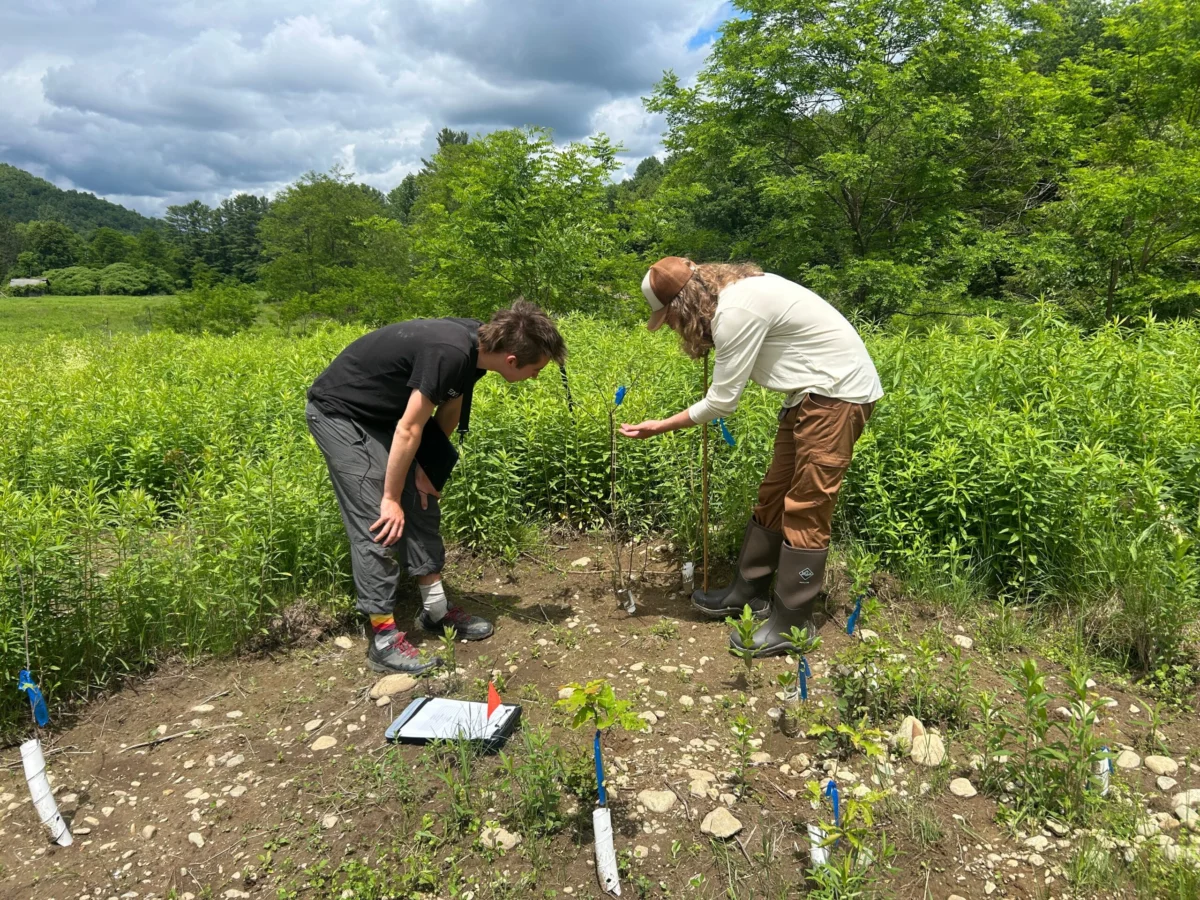
In June, Audubon Vermont transitioned from the implementation phase to an active monitoring and maintenance cycle. In collaboration with an intern from the University of Vermont (UVM) Extension, staff members conducted a comprehensive health assessment of the 339 plantings. This assessment utilized standardized survey protocols, with staff recording data on plant height, overall vitality, and species-specific survival rates. These metrics are essential for understanding which native species are best adapted to the specific micro-climates of the Huntington River corridor and provide a data-driven basis for future adaptive management decisions.
The involvement of UVM Extension interns underscores a broader commitment to scientific education and community engagement. By bridging academic inquiry with field-based conservation, the project ensures that the data gathered is not only actionable but also contributes to a larger repository of regional environmental knowledge.
Mid-Season Maintenance and Ecological Management
Throughout the summer months, the project entered a period of intensive physical maintenance. In August, Audubon staff executed a strategic vegetation management plan designed to give the young plantings a competitive advantage. The strategy focused on addressing the encroachment of aggressive herbaceous plants, such as goldenrod and various dense grasses, which often outcompete saplings for sunlight and soil nutrients.
Using a combination of tractor-mounted brush cutters and precision-focused weedwhackers, teams cleared the areas surrounding the clusters. This was followed by a meticulous manual pass with scythes. The use of manual tools allowed for a nuanced approach to land management; staff were able to selectively preserve native pollinator-friendly species like milkweed while removing harmful competition. This balanced approach acknowledges that a healthy ecosystem requires more than just trees; it requires a complex understory that supports insect populations, which in turn sustain the local bird populations.
Furthermore, the addition of a native wildflower seed mix in select plots marks an investment in future biodiversity. By diversifying the plant community, the project aims to attract a wider array of beneficial pollinators to the meadow, accelerating the development of the area’s ecological function.
Long-Term Objectives and Avian Impact
The overarching goal of the riparian restoration is the creation of a habitat complex capable of supporting a diverse range of bird species. Once the shrubs and trees mature, the site is expected to provide essential breeding, nesting, and foraging grounds for species such as the Field Sparrow, Yellow Warbler, Common Yellowthroat, and Tree Swallow.
The selection of these specific species is not incidental. Many of these birds are indicator species, meaning their presence or absence provides a direct window into the health of the broader ecosystem. For instance, the Field Sparrow relies heavily on the shrub-grassland interface, a habitat type that has seen significant decline in the Northeast due to forest maturation and land-use changes. By intentionally cultivating this landscape, Audubon Vermont is directly addressing the regional loss of critical avian nesting grounds.
Facing the Winter Challenge
As the project moves into the autumn, the immediate priority is preparing the young plantings for their first Vermont winter. The stresses of the season—including heavy snowpack, ice storms, and the persistent pressure of hungry wildlife—require proactive measures.
The restoration team is currently in the process of reinforcing existing wildlife exclosure fencing. These structures are vital; without them, deer can decimate a newly planted site in a single season. Beyond physical barriers, the staff is continuing to synthesize the data collected throughout the summer to refine the management plan for the coming year. This includes identifying plots that may require supplemental planting or soil enrichment to ensure uniform success across the restoration site.
Broader Implications of Riparian Restoration
The work performed at the Green Mountain Audubon Center serves as a microcosm for broader environmental efforts across Vermont. As climate change alters the timing of seasonal transitions and shifts the distribution of both native and invasive species, the ability to effectively manage riparian buffers becomes increasingly vital.
The implications of this work are twofold. First, there is the direct ecological benefit: improved water quality, reduced stream-bank erosion, and the creation of a carbon-sequestering landscape. Second, there is the social and educational impact. By involving volunteers and students in the process, the organization fosters a culture of stewardship. The "intrepid volunteers" who braved the April storm demonstrate a growing public interest in climate-resilient landscapes and a willingness to participate in the labor-intensive reality of conservation.
Furthermore, the data-driven methodology employed by the Audubon team provides a replicable model for other land trusts and environmental organizations. By documenting both the successes and the challenges—such as the struggle against invasive goldenrod or the necessity of fencing—the project contributes to a growing body of "lessons learned" in the field of ecological restoration.
Conclusion: A Foundation for the Future
While the current phase of the project is complete, the development of the Huntington River riparian buffer is an ongoing, long-term commitment. The transition from a managed planting site to a fully functioning shrubland ecosystem will take several years, and the progress will be measured by the slow but steady maturation of the 339 plants currently taking root.
As Audubon Vermont continues to monitor, maintain, and adapt its strategy, the project remains a testament to the importance of persistence in conservation. The journey from a frigid April day to the current, thriving meadow highlights the necessity of combining scientific rigor with hands-on labor. As the plants enter their winter dormancy, they carry with them the promise of a revitalized landscape, one that will eventually stand as a vital sanctuary for the region’s diverse bird populations and a permanent fixture of the Huntington River watershed’s ecological health. The organization remains committed to transparency, pledging to share future developments as these young plants grow, evolve, and ultimately begin to fulfill their role in the complex, interconnected web of the Vermont wilderness.
