
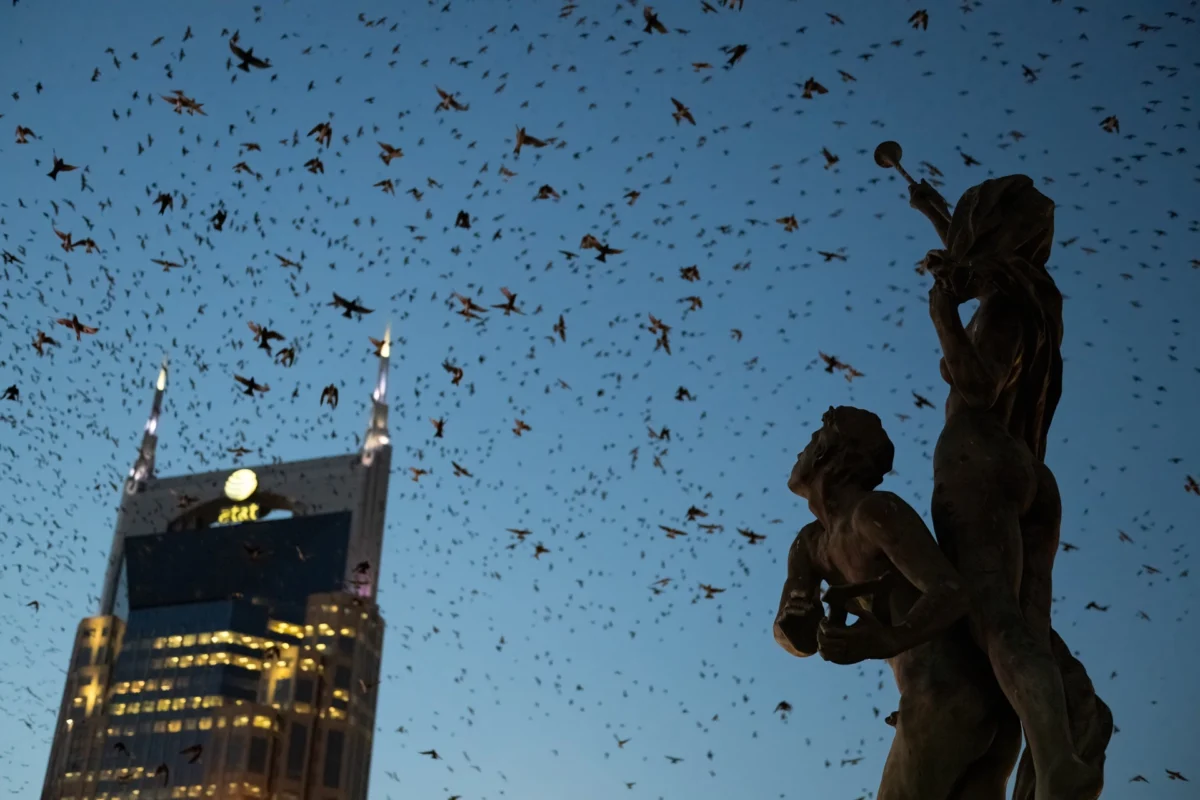
For decades, the prevailing narrative in conservation biology held that cities were ecological deserts, hostile environments where the concrete sprawl of human development served only as an obstacle to the ancient, instinctual rhythm of avian migration. However, groundbreaking research conducted by Miguel Jimenez and his team at Colorado State University has fundamentally dismantled this assumption. By utilizing sophisticated weather radar technology, researchers have discovered that metropolitan areas are not merely incidental stopovers for migrating birds; they are vital, high-density hubs where millions of birds rest, refuel, and regroup during their biannual journeys across the North American continent.
This study, published earlier this year in the journal Nature, indicates that nearly half of all critical bird migration "hotspots"—defined as areas with disproportionately high concentrations of migratory traffic—are located within metropolitan boundaries. Specifically, the data reveals that 48 percent of these hotspots occur during the spring migration and 44 percent during the fall. These figures are particularly striking given that metropolitan regions occupy a relatively small fraction of the total landmass of the United States.
A Technological Shift in Ecological Observation
The methodology behind these findings marks a departure from traditional bird-counting techniques. Historically, ornithological data has relied heavily on community science initiatives such as eBird or iNaturalist. While these platforms have revolutionized our understanding of bird distribution, they are inherently susceptible to "observer bias." Because volunteer birdwatchers are statistically more likely to reside in or visit affluent, accessible, and well-maintained urban parks, the resulting data often reflects human socio-economic patterns rather than the true biological distribution of avian species.
To circumvent these limitations, the research team leveraged weather radar, a tool traditionally used by meteorologists to track precipitation patterns. Modern radar systems are sensitive enough to detect the mass movement of avian biomass through the atmosphere. By processing these signals, researchers can generate large-scale, impartial estimates of where birds are congregating, regardless of whether a human observer is present to document them. This technological application provides a bird’s-eye view of the continent, revealing that urban centers are functioning as essential infrastructure for wildlife in ways previously underestimated by the scientific community.
The Dynamics of Urban Attraction
The concentration of birds in cities is not accidental; it is driven by specific environmental and anthropogenic factors. Jimenez’s research highlights two primary drivers: artificial light and water availability.
Artificial light at night (ALAN) is a well-documented hazard for migratory birds, which often navigate by celestial cues. However, it also acts as a potent attractant. Many migratory species, disoriented by the glow of city centers, are drawn into metropolitan areas, where they are then forced to descend to refuel. Once they land, the quality of the urban environment determines their survival.
Water, in particular, acts as a primary determinant for these stopover hotspots. In the arid western United States, cities often function as "oases" within a desert landscape. Because urban infrastructure is engineered to manage and retain water for human use, these cities provide more consistent hydration and insect-rich vegetation than the surrounding natural, yet parched, terrain. This phenomenon explains why the study identified a higher density of urban migration hotspots in the West compared to the East, where water is more evenly distributed across the landscape.
Socio-Economic Disparities and the Luxury Effect
The study also provides empirical evidence for the "luxury effect"—a sociological concept in ecology suggesting that biodiversity is often higher in wealthier neighborhoods. In cities like Los Angeles, Phoenix, and San Diego, the researchers found that migratory birds disproportionately favored affluent districts.
This is not a matter of birds preferring "wealth" itself, but rather the environmental amenities that accompany it. High-income areas often feature more extensive canopy cover, larger private gardens, more reliable irrigation systems, and better-maintained public green spaces. These features create micro-habitats that provide the shelter and nutrition birds require to survive the next leg of their journey. Consequently, urban green space is not merely a recreational amenity for human residents; it is a critical life-support system for migratory species.
The Growing Threat of Urbanization
The implications of this research are significant when viewed against the backdrop of rapid, ongoing urbanization. As more of the American landscape is converted into high-density housing and commercial infrastructure, the "natural" stopovers that birds have used for millennia are being lost. If cities are to become the new pillars of avian conservation, the current model of urban development must be radically re-evaluated.
The threats to birds in these environments are well-established and lethal. Each year, over one billion birds die in the United States due to collisions with glass windows. These structures, often invisible to birds, are particularly deadly when located near the artificial light sources that lure them into cities in the first place. Furthermore, the fragmentation of green space—where parks are reduced to small, isolated islands—makes it increasingly difficult for birds to find the food and protection they need to recover from their flights.
A Roadmap for Urban Conservation
The research provides a clear, actionable roadmap for municipal governments and private citizens to mitigate these risks. Conservationists argue that the "Lights Out" movement, which encourages building managers and residents to dim non-essential lighting during peak migration months, is one of the most effective ways to reduce bird mortality.
Beyond light management, the implementation of "bird-safe" building codes is essential. This includes the use of ultraviolet-reflective or patterned glass that allows birds to perceive windows as solid objects. At the municipal level, policymakers are being urged to adopt standards similar to those already in place in cities like New York and Minneapolis, which mandate bird-friendly design in new construction.
For individual citizens, the research suggests that "urban rewilding" is a powerful tool. By replacing ornamental, non-native lawns with native plants, residents can create "micro-forests" that provide high-protein insect food sources for migrating birds. Additionally, the responsible management of domestic cats—keeping them indoors, especially during peak migration weeks—is cited by experts as a simple yet vital step in reducing the pressure on exhausted avian travelers.
Future Implications and Policy Directions
The findings by Jimenez and his colleagues represent a paradigm shift in how we view the urban ecosystem. If 48 percent of migration hotspots exist within our cities, then the future of North American bird conservation will be won or lost in the boardrooms of city planners, the backyards of suburban homeowners, and the design standards of urban architects.
Looking ahead, the integration of radar-based monitoring with community-based conservation programs offers a hybrid model for protecting these populations. By combining the "big picture" data provided by radar with the granular, species-specific data provided by platforms like eBird, scientists can create dynamic, real-time maps of bird movement. This would allow cities to implement temporary conservation measures, such as "dark hours" or the temporary closure of certain park areas, during the precise windows when peak migration activity is detected.
The study concludes that as the United States continues to urbanize, the distinction between "wilderness" and "city" must be blurred in our conservation policy. Migratory birds have already adapted to our cities; now, it is incumbent upon human societies to adapt their infrastructure to accommodate their guests. Every small intervention—a dimmed light, a native plant, or a piece of bird-safe glass—serves as a critical buffer against the growing challenges of urban life. As the data shows, these interventions are not merely aesthetic improvements; they are the difference between a successful migration and a potential population collapse. The city, once considered a void in the map of avian migration, must now be recognized as the heart of its future protection.
