
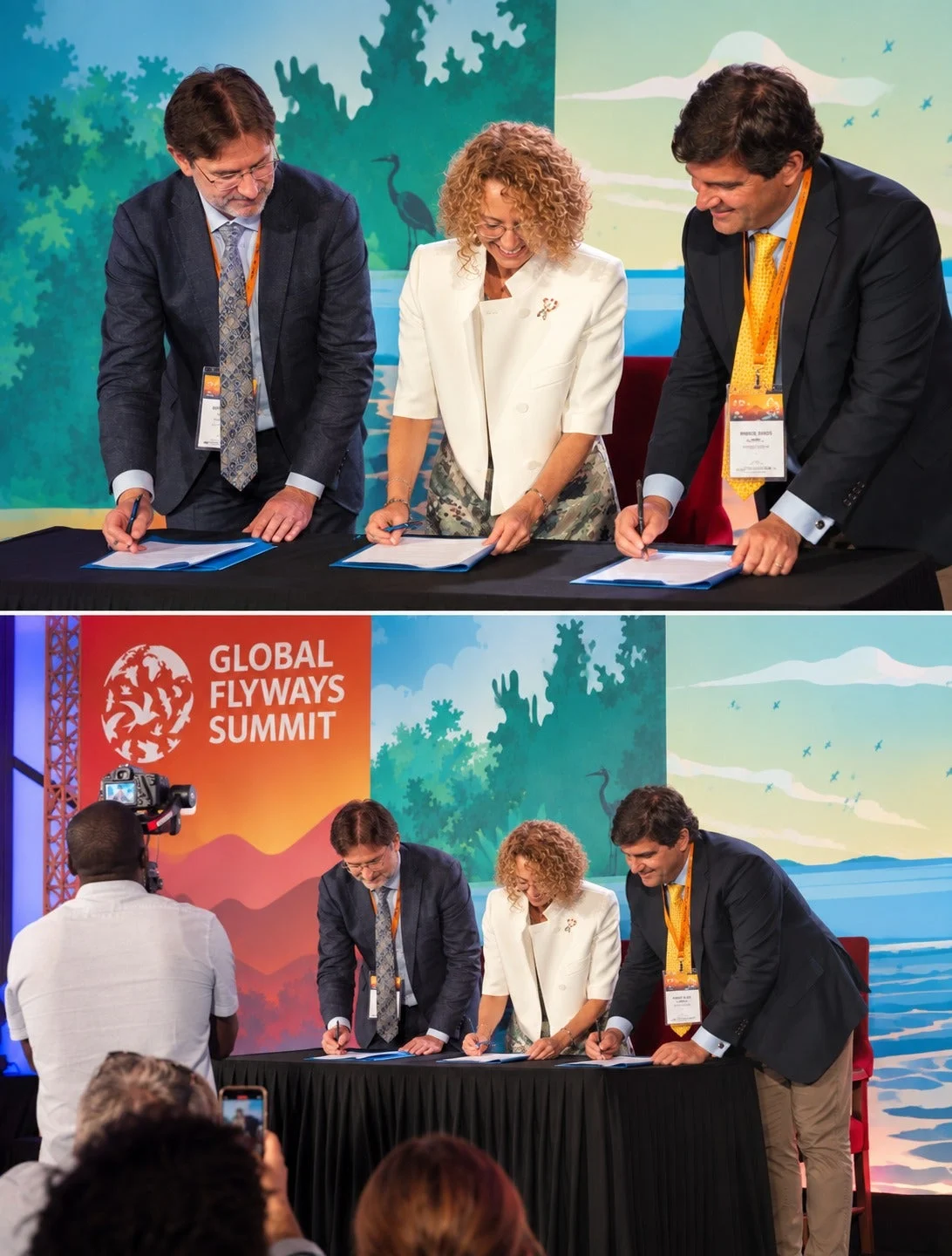
Nairobi, Kenya, September 11, 2026. In a landmark development for hemispheric conservation, BirdLife International, the National Audubon Society, and CAF – Development Bank of Latin America and the Caribbean have officially launched the Flyways Nature Bond Framework. This innovative financial instrument provides a standardized, science-based methodology to evaluate and select projects dedicated to the preservation of migratory bird species and their critical habitats across the Americas. The launch, announced in Nairobi, marks a significant shift in how international development institutions integrate biodiversity metrics into large-scale financial planning.
The framework is a cornerstone of the Americas Flyways Initiative (AFI), a strategic alliance formed to bridge the gap between conservation science and sustainable economic development. By creating a rigorous evaluation system, the AFI aims to mobilize capital toward projects that offer measurable ecological benefits, targeting the ambitious goal of protecting 10% of representative migratory bird populations by 2050.
The Ecological Urgency: A Hemisphere in Decline
The necessity for the Flyways Nature Bond Framework is underscored by alarming trends in avian biodiversity. Current data reveals that 289 species—nearly 50% of all migratory birds in the Western Hemisphere—are experiencing population declines. The scale of this loss is profound; since 1970, North America alone has seen a net loss of approximately 2.5 billion breeding birds. Furthermore, an additional 460 species face varying degrees of threat across Latin America and the Caribbean.
Migratory birds act as "ecological indicators," reflecting the health of the vast, interconnected landscapes they traverse. Their decline is rarely the result of a single localized event; rather, it is the cumulative impact of habitat fragmentation, climate change, and human encroachment occurring across thousands of miles of migratory routes. Because these birds rely on a chain of stopover sites, the degradation of a single wetland in South America can ripple through the ecosystem, affecting breeding success in the Arctic or the boreal forests of Canada.
Chronology of the Americas Flyways Initiative
The path to the Flyways Nature Bond Framework has been a multi-year collaborative effort aimed at aligning financial flows with biological needs:
- 2022: Initial conceptualization of the Americas Flyways Initiative (AFI) during the UN Biodiversity Conference (COP15), identifying the need for a financial bridge to support migratory corridors.
- 2023: Establishment of the partnership between CAF, BirdLife International, and the National Audubon Society to integrate conservation data into development finance.
- 2024–2025: Development phase involving technical teams from all three organizations, focusing on mapping high-priority flyways and creating the "scientific eligibility criteria" for future bonds.
- September 2026: Official launch of the Flyways Nature Bond Framework, providing the mechanism for CAF to begin evaluating pilot projects for potential funding.
Technical Architecture of the Framework
The Framework is not merely a funding mechanism but a sophisticated diagnostic tool. It requires that any project seeking financing under its umbrella must satisfy specific, science-based criteria, including:
- Strategic Geographic Placement: Projects must be situated in locations identified by migratory mapping as critical stopovers or breeding grounds.
- Nature-Based Solutions (NbS): Emphasis is placed on restoring wetlands, forests, and grasslands, which provide dual benefits for biodiversity and climate mitigation.
- Bird-Friendly Infrastructure: The framework mandates that any development project—such as renewable energy grids or urban expansion—must incorporate specific designs to prevent avian mortality (e.g., bird-safe glass or collision-mitigation technology).
- Integrated Monitoring: Borrowers are required to implement long-term, data-driven monitoring programs to quantify the survival rates and habitat usage of the target bird species.
Institutional Perspectives and Strategic Alignment
The leadership behind the initiative emphasizes that the framework is designed to provide "co-benefits" that extend beyond ornithology. By protecting the ecosystems that birds rely on, these projects inherently safeguard human communities against natural disasters.
Sergio Díaz-Granados, executive president of CAF, highlighted the institution’s commitment to the new standard. "The development of the Flyways Nature Bond Framework represents a significant step in our efforts to integrate biodiversity considerations into development finance," Díaz-Granados stated. He noted that the framework provides a "coherent base" for identifying projects that foster resilience, ensuring that environmental health is treated as an economic asset rather than an externality.
Martin Harper, CEO of BirdLife International, emphasized the hemispheric connectivity of these corridors. "Flyways are not just routes for birds; they connect critical sites, biodiversity, and the people who depend on them," Harper said. By bringing BirdLife’s extensive network of national partners into the evaluation process, the initiative ensures that local knowledge is combined with high-level financial oversight.
Elizabeth Gray, CEO of the National Audubon Society, framed the initiative as a model for future investment. "The birds show us where nature needs the most investment," Gray observed. "This is conservation driven by avian data, creating a new and promising model for sustainable development across the Americas."
Implications for Global Development Finance
The introduction of this framework signals a broader trend in the financial sector: the "mainstreaming" of nature-positive investments. By creating a template that uses birds as the primary metric for ecological health, CAF and its partners are providing a replicable model for other development banks.
The economic implications are significant. Many of the regions identified as critical for migratory birds are also those most vulnerable to climate-related economic shocks. For instance, the protection of mangroves and coastal wetlands—vital for migratory shorebirds—is also the most cost-effective method for coastal communities to mitigate storm surges and rising sea levels. By linking bonds to these habitats, the framework creates a financial incentive for governments and private developers to prioritize natural defenses over traditional, high-maintenance gray infrastructure.
Furthermore, the initiative addresses the growing demand for "Nature-Related Financial Disclosures" (TNFD). As investors become more conscious of the risks associated with biodiversity loss, the Flyways Nature Bond Framework offers a transparent, verifiable, and science-backed method for allocating capital. It transforms conservation from a philanthropic endeavor into a structural component of infrastructure development.
Challenges and Future Outlook
While the framework provides a robust foundation, success will depend on the rigorous implementation and the willingness of regional stakeholders to adopt these standards. Monitoring the success of these bonds will require persistent investment in scientific capacity and longitudinal studies to ensure that the ecological outcomes match the financial projections.
Looking ahead, the collaboration between BirdLife International, the National Audubon Society, and CAF is expected to serve as a pilot for similar initiatives in other flyways globally, such as the East Asian-Australasian Flyway or the African-Eurasian Flyway. By 2050, if the AFI achieves its target of protecting 10% of migratory bird populations, the project will have secured millions of hectares of critical habitat, potentially setting a new global benchmark for how human economic activity can exist in harmony with the natural world.
The launch in Nairobi serves as a definitive statement: the future of international development must be as migratory and interconnected as the species it seeks to protect. With the Flyways Nature Bond Framework, the Americas have taken a decisive step toward ensuring that their economic growth does not come at the cost of the continent’s most vulnerable travelers.
