

Woodpeckers are among the most recognizable and resilient avian species frequenting North American backyards, captivating ornithologists and casual bird-watchers alike with their high-energy foraging habits and striking plumage. Behind their entertaining antics lies a marvel of evolutionary biology. These birds endure a daily routine of physical impact that would prove fatal or severely debilitating to nearly any other vertebrate. As backyard bird feeding continues to grow in popularity across the United States and Canada, understanding the unique physiological adaptations of woodpeckers provides deeper insight into how these remarkable creatures thrive in environments heavily influenced by human development.
The Physics of Impact: Surviving 13-MPH Strikes
The defining characteristic of the woodpecker family—encompassing species ranging from the diminutive Downy Woodpecker to the larger Pileated Woodpecker—is its method of excavating wood for nesting, drumming for territorial communication, and extracting insects. This behavior requires striking hard tree surfaces at speeds reaching up to 13 miles per hour.
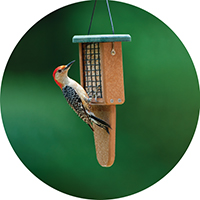
When a woodpecker strikes a tree, the impact generates a deceleration force of approximately 100 Gs (often cited in comparative studies alongside human concussive thresholds). For context, human brains are exponentially more susceptible to concussions at a fraction of that force; automotive crashes or contact sports resulting in a fraction of a 100-G impact frequently yield traumatic brain injuries. Yet, woodpeckers execute thousands of these strikes daily without exhibiting neurological impairment.
Ornithologists and biomechanical engineers studying avian morphology have identified a suite of structural adaptations that safeguard the woodpecker’s central nervous system. Unlike human skulls, which feature a relatively large cranial cavity allowing the brain room to shift and collide with bone during blunt-force trauma, the woodpecker’s skull tightly encases a proportionally small brain. This minimal intracranial space virtually eliminates the destructive momentum shift that causes concussions in mammals.
Anatomical Innovations: Spongy Bone and Self-Sharpening Bills
Beyond cranial sizing, the material composition of the woodpecker’s skeletal structure plays a critical role in shock absorption. The upper mandible and cranium are connected not by rigid, solid bone, but by a specialized apparatus featuring lightweight, spongy, air-filled bone reinforced by a dense meshwork of bony struts. This porous matrix acts as a natural crumple zone, dissipating kinetic energy before it reaches the brain tissue. Additionally, the hyoid bone—a complex structure supporting the tongue—wraps completely around the back of the skull, effectively functioning as a safety harness that buffers the braincase during repetitive concussive events.

The tool used for this heavy labor, the bill, faces continuous friction and physical stress that would rapidly disintegrate standard organic material. However, evolutionary pressures have endowed woodpeckers with specialized epidermal cells at the tip of the bill. These cells undergo continuous mitosis, replacing lost keratin at a rate that matches the wear-and-tear of excavation. This biological self-sharpening mechanism ensures that the chisel-like tip remains perpetually hardened and efficient, preventing structural failure over the bird’s lifespan.
Evolutionary Safeguards Against Debris and Dust
Excavating dead or decaying wood at high velocities produces a continuous storm of wood chips, sawdust, and microscopic particulate matter. Without protective anatomical features, this debris would routinely blind or suffocate the foraging bird.
To mitigate these occupational hazards, woodpeckers have evolved specialized sensory protections. Their nostrils are shielded by dense tufts of stiff, modified feathers that function analogously to industrial dust masks, filtering out particulate matter while allowing normal respiration. Concurrently, the birds possess a nictitating membrane—often referred to as a "third eyelid." This translucent, lubricated membrane snaps across the eyeball milliseconds before each strike, clearing away wood fragments and protecting the cornea from physical trauma without completely obstructing vision.

Backyard Habitat Integration and Conservation Implications
As natural forest habitats face ongoing fragmentation due to urban expansion and agricultural conversion, residential backyards have assumed an increasingly vital role in supporting local avian populations. Suburban landscapes equipped with specialized feeding stations provide critical supplemental nutrition, particularly during harsh winter months or periods of breeding stress when natural insect and sap resources fluctuate.
Avian conservation organizations and backyard bird-feeding specialists emphasize that attracting woodpeckers requires targeted nutritional offerings. Standard mixed seed blends often fail to meet the high-protein and high-fat dietary demands of these muscular birds. Experts recommend incorporating specialized suet cakes, no-melt suet doughs, specialized bark-butter formulations, shelled peanuts, and engineered seed cylinders designed specifically for cavity-nesting species. Providing these high-energy foods allows homeowners to observe intricate foraging behaviors up close while contributing to the sustenance of local wildlife populations.
Ongoing research into avian biomechanics continues to yield technological applications beyond ornithology. Engineers and materials scientists frequently look to the woodpecker’s skull structure and beak morphology for inspiration in designing better protective athletic gear, impact-resistant helmets, and high-efficiency drilling tools. By bridging the gap between natural history and modern biomechanical research, the woodpecker remains not only a backyard favorite but a key subject in the ongoing study of evolutionary resilience.
