
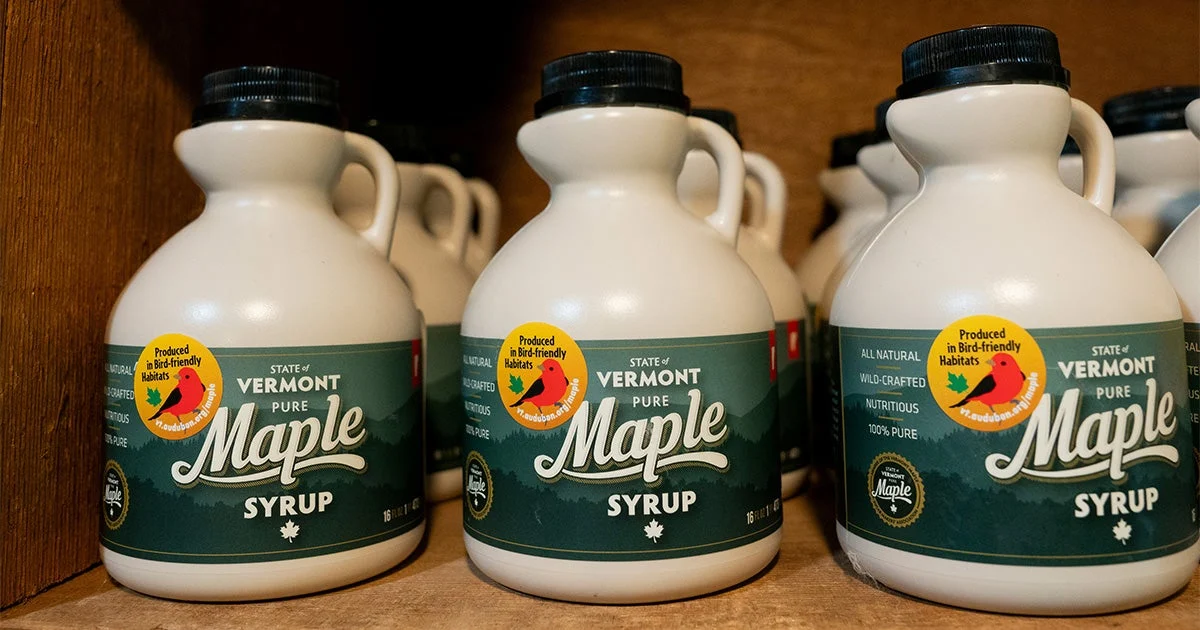
The production of maple syrup, a quintessential North American tradition, is undergoing a quiet but significant environmental transformation. Across the Northeast and the Great Lakes regions, a growing cohort of forest owners is transitioning from traditional, intensive timber management to a more ecologically nuanced approach. Spearheaded by the National Audubon Society, the Bird-Friendly Maple program is redefining the relationship between commercial syrup production and forest stewardship, proving that high-quality agricultural output can exist in harmony with the critical needs of migratory and nesting songbirds.
The Ecological Nexus of the Sugarbush
The sugarbush—the specific stand of maple trees tapped for sap—is more than just a source of breakfast sweetness; it is a vital biological reservoir. In the United States, these forests serve as primary breeding grounds for dozens of avian species. According to Audubon Vermont’s senior forests program manager, Steve Hagenbuch, the health of these forests directly dictates the survival of more than 70 species that rely on the structural complexity of the woods to raise their young.
From the understory, where the Black-throated Blue Warbler constructs its nest, to the upper canopy, where the Yellow-bellied Sapsucker maintains its feeding territories, the forest must provide a diverse architecture to support avian life. Traditionally, commercial operations often favored a simplified "monoculture" approach, removing underbrush and "undesirable" tree species to maximize sap yield. The Bird-Friendly Maple program challenges this paradigm, encouraging producers to cultivate a mosaic of oaks, birches, and native shrubs, alongside the maples. This shift is not merely aesthetic; it is a fundamental requirement for habitat restoration.
A Chronology of Environmental Stewardship
The roots of the Bird-Friendly Maple program can be traced back to 2014, when conservationists in Vermont began formalizing best management practices for syrup producers. Recognizing that private landowners hold the keys to forest health, Audubon sought to bridge the gap between commercial efficiency and biological necessity.
- 2014: The program is launched in Vermont, establishing initial guidelines for bird-friendly sap harvesting.
- 2018–2020: Expansion efforts target broader Northeast states, with initial pilot programs in New York and Massachusetts.
- 2024: The program sees its most significant surge in enrollment, moving into the Great Lakes region, including Wisconsin, where producers like Christopher Petron of Nature’ly Sweet farm have joined the effort.
- 2026: The program encompasses approximately 150 businesses and over 20,000 acres, marking a milestone in private forest conservation.
This growth trajectory reflects a broader trend in agricultural consumerism, where buyers are increasingly seeking products with documented sustainability credentials. By the end of 2026, Audubon expects to reach new milestones in total acreage, further cementing the program’s influence on regional forestry standards.
Data-Driven Conservation
The necessity for such programs is underscored by grim population statistics. Scientific reports, including data from the State of the Birds, indicate that breeding bird populations in Eastern forests have plummeted by an estimated 27 percent between 1970 and 2025. Habitat loss and degradation are consistently cited as the primary drivers of this decline.
The Bird-Friendly Maple program operates on the premise that 310,800 acres of forest are currently dedicated to maple syrup production in the United States. While 20,000 acres—the current footprint of the program—may represent a fraction of the total, it constitutes a "high-quality" buffer zone. These managed forests offer more than just nesting sites; they provide climate resilience and carbon sequestration. By retaining dead standing trees—known as "snags"—producers provide essential nesting cavities for birds and homes for the insects that form the base of the avian food chain.
Implementing the Bird-Friendly Mandate
The standards for certification are rigorous. Producers who join the program must adhere to a management plan that emphasizes:
- Structural Diversity: Maintaining a multi-layered forest with various tree ages and species to prevent the "park-like" uniformity that discourages nesting.
- Invasive Species Management: Actively removing non-native plants that outcompete the native flora upon which local birds depend.
- Retention of Deadwood: Leaving fallen logs and standing dead trees to support nutrient cycling and insect populations, which in turn benefits species like the Ovenbird, which hunts in the leaf litter.
For producers, the transition requires a shift in perspective. Instead of viewing the forest solely as a sugar factory, they begin to view it as a living ecosystem. "My natural go-to instinct when managing the forest is thinking about the birds," says Christopher Petron, the first Wisconsin-based participant in the program. This philosophy allows the forest to function as a natural system, which often yields benefits beyond the birds, such as improved soil health and natural pest control.
Market Implications and Consumer Awareness
The program utilizes a market-based incentive: the Bird-Friendly Maple label. Featuring the distinct, vibrant red of the Scarlet Tanager, the logo serves as an immediate visual marker for consumers. In a marketplace saturated with generic branding, this certification acts as a bridge between the producer and the eco-conscious consumer.
"People ask, ‘What does that mean?’ and it’s a pretty easy conversation to have," notes Craig Myers, co-owner of Tails & Trails Farm in New York. This interaction is the cornerstone of the program’s success. When consumers purchase a bottle of syrup with the Audubon seal, they are effectively subsidizing the extra labor required for sustainable forest management. This creates a feedback loop: consumer demand for ethical products justifies the costs for farmers, while farmers, in turn, protect the habitat that secures the future of the species.
The Broader Impact: A Model for Agriculture
The success of the Bird-Friendly Maple program suggests a scalable model for other agricultural sectors. As climate change continues to stress forest ecosystems, the focus on "climate resilience" becomes paramount. Forests managed for birds are, by definition, more resilient to extreme weather events, as the biodiversity inherent in these systems allows them to recover more effectively from storms, pests, and prolonged droughts.
Furthermore, the program highlights the role of the private landowner in the modern conservation movement. With a significant portion of American forests held in private hands, the federal government and state agencies cannot reach every acre. Voluntary programs like this one empower the very people who live and work on the land to become the primary stewards of biological diversity.
Sharon Myers, co-owner of Tails & Trails Farm, articulates the sentiment of many participating producers: "We’re being very strategic in using what Mother Nature gives us without destroying it for the commercial use." This balance—commercial viability coupled with an ethos of preservation—is perhaps the most significant contribution the program makes.
Future Outlook and Challenges
As the program looks toward the future, the primary challenge remains the scale of adoption. While 20,000 acres is a notable achievement, the remaining hundreds of thousands of acres of syrup-producing forest continue to operate under traditional methods. Audubon’s strategy for the coming years involves increasing outreach to forestry cooperatives and state agriculture departments to further incentivize these practices.
Additionally, the program faces the ongoing hurdle of climate-driven range shifts. As temperatures rise, the range of the sugar maple itself may move northward, potentially altering the traditional geography of the syrup industry. The Bird-Friendly Maple program is uniquely positioned to help these forests adapt, as the management practices that support bird diversity also foster stronger, more adaptable forest stands capable of withstanding shifting environmental conditions.
Ultimately, the initiative is a testament to the fact that sustainability is not a static goal but a continuous practice of observation and adjustment. By linking the breakfast table to the treetop, the Audubon Society and its network of maple producers are crafting a future where the sweet yield of the forest does not come at the expense of the creatures that inhabit it. As the program continues to expand, it remains a hopeful example of how private enterprise and environmental conservation can move in lockstep, ensuring that the songbirds of the North American woods continue to have a place to thrive for generations to come.
