
RUDOLPH, WISC. — In a significant development for regional ecological restoration, the Flaig Family Farm, located near Junction City, Wisconsin, has officially been awarded the Audubon Bird-Friendly Land Certification. This recognition, bestowed by the National Audubon Society through its prestigious Audubon Conservation Ranching (ACR) program, marks a milestone in the effort to stabilize the declining populations of grassland-dependent avian species in the American Midwest. By integrating intensive rotational grazing with rigorous conservation protocols, the Flaig family has transformed 600 acres of working land into a sanctuary for some of North America’s most vulnerable birds.
A Legacy of Stewardship and Agricultural Evolution
The history of the Flaig Family Farm is deeply rooted in the agricultural fabric of central Wisconsin. Established in 1952 by Carl Flaig’s parents, the property initially functioned as a traditional dairy operation. However, the agricultural landscape of the late 20th century necessitated adaptation. In the 1980s, Carl Flaig initiated a strategic transition, moving away from conventional dairy to focus on grass-based livestock production.
This pivot was not merely a business decision but a philosophical shift toward land management. Over the past four decades, the operation has expanded from its original 350-acre footprint to approximately 600 acres of contiguous, managed grasslands. Today, the family’s diversified business model includes a cow-calf operation and the Prairie Pastured Beef brand, which connects the farm’s conservation-minded production directly to local consumers at regional farmers’ markets. The addition of an aquaponics operation further demonstrates the family’s commitment to sustainable, circular food systems.
The Science of Conservation Ranching
The Audubon Conservation Ranching program is built upon the premise that working lands—when managed with ecological sensitivity—can provide the necessary habitat for grassland birds that have otherwise been pushed to the brink by habitat loss. Data from the North American Breeding Bird Survey indicates that grassland birds have suffered more severe population declines over the last half-century than any other terrestrial avian group in North America. This decline is largely attributed to the conversion of native prairies into industrial monocultures, urban sprawl, and the encroachment of woody vegetation on former grazing lands.
To reverse these trends, the ACR program utilizes a science-based approach that requires producers to adhere to specific land-management standards. For the Flaig Family Farm, this involved a collaborative effort with Audubon ecologists to optimize grazing regimes. The goal is to create a "mosaic" of habitat types, which allows for a higher density and diversity of bird species.
Managing for Biodiversity: The Role of Adaptive Grazing
The management strategies employed by the Flaig family are centered on high-intensity, short-duration grazing followed by extended recovery periods. This mimicry of historic bison grazing patterns prevents overgrazing while ensuring that different areas of the farm offer varying vegetation heights.
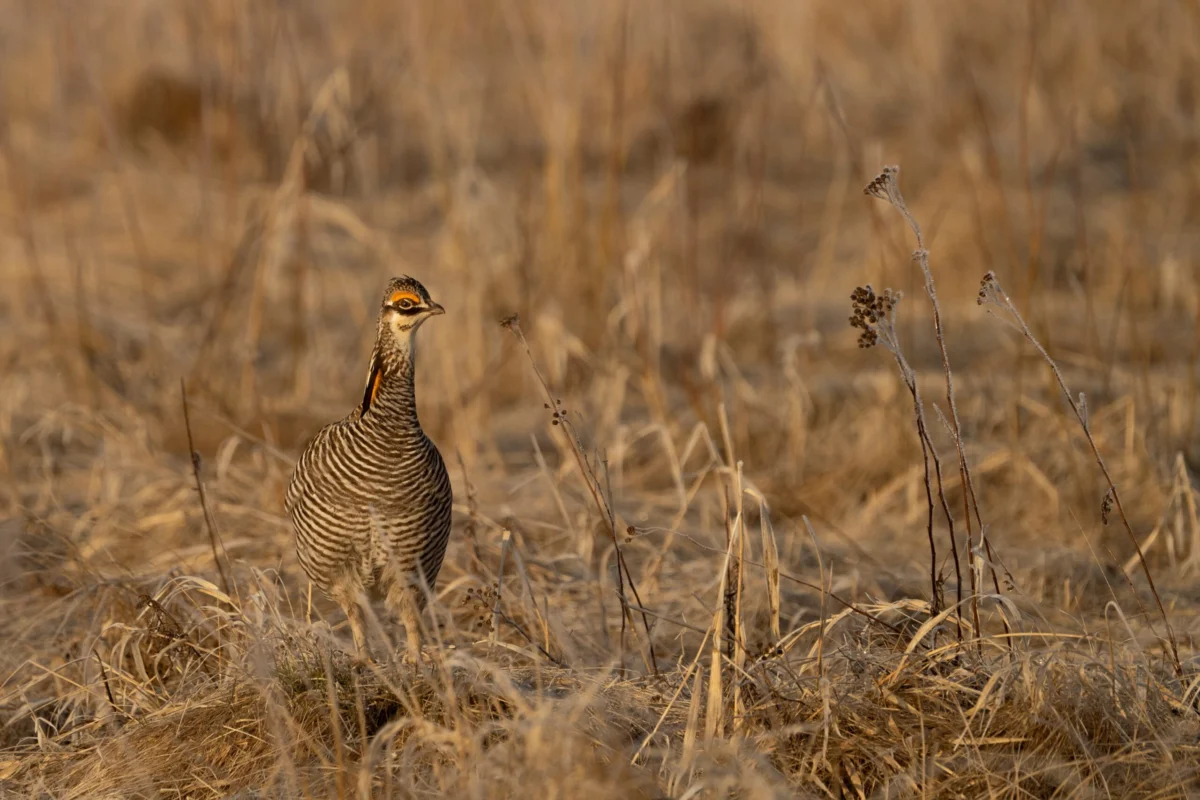
"Carl is the consummate grazer who thinks about the entire grassland ecosystem with every move of his cattle," says Ashly Steinke, a Grassland Ecologist for the Audubon Conservation Ranching program in the Great Lakes region. According to Steinke, the transformation of the property involved several specific interventions, including the removal of invasive tree rows and the implementation of two large-scale prescribed burns. These actions were critical in mitigating woody encroachment—the process by which shrubs and trees invade open grasslands, effectively destroying the open-sky habitat required by species like the Greater Prairie-Chicken.
The resulting landscape supports a wide array of species. Upland Sandpipers and Greater Prairie-Chickens favor the shorter, recently grazed patches, while Bobolinks, Eastern Meadowlarks, and Savannah Sparrows utilize the longer, rested grass for nesting. Furthermore, the farm employs "bird-friendly haying," which mandates that specific blocks of land remain undisturbed during the critical spring and summer nesting months.
The Greater Prairie-Chicken: A Symbol of the Grassland Struggle
The certification of the Flaig Family Farm carries profound regional significance due to its location within the Central Wisconsin Grassland Conservation Area. This region remains one of the last bastions for the Greater Prairie-Chicken, a species that has seen its range contract significantly due to fragmentation.
The Flaig property sits in the vicinity of the Paul J. Olson Wildlife Area, a site specifically managed by the Wisconsin Department of Natural Resources to preserve prairie-chicken habitat. The historical presence of two leks (traditional courtship display sites) on the Flaig property underscores the land’s inherent value. While one of these leks remains active just across the county road from the farm, Carl Flaig is actively working to restore the site on his own land. By managing cattle on adjacent state-owned lands in addition to his own, Flaig is helping to create a larger, more stable buffer zone that is vital for the survival of the species.
"Our biggest fight right now is trying to save the Greater Prairie-Chicken," Flaig remarked during the certification announcement. "I’d hate to see the day when I don’t get to hear them booming in April. Without grazing and this work with Audubon, we’d be much closer to losing this species."
Broader Implications for Wisconsin Agriculture
The Flaig Family Farm is the seventh operation in Wisconsin to achieve this certification, contributing to a total of 2,000 certified bird-friendly acres in the state. Since the launch of the Wisconsin chapter of the Audubon Conservation Ranching program in 2024, the initiative has sought to demonstrate that environmental stewardship and economic viability are not mutually exclusive.
From a market perspective, the certification provides a clear signal to consumers. As public awareness of the "biodiversity crisis" grows, shoppers are increasingly looking for ways to align their purchasing power with their values. Products bearing the "Audubon Certified" seal allow consumers to support farmers who prioritize soil health, water quality, and the protection of threatened bird populations.
Future Challenges and Ecological Outlook
The long-term success of the Flaig Family Farm and similar initiatives depends on a combination of continued ecological monitoring and policy support. Experts note that while individual farms provide essential "stepping stone" habitats, the connectivity of these lands is paramount. The concentration of seven certified farms in Wisconsin suggests that a regional network of bird-friendly habitats is beginning to take shape.
However, the threat of climate change and further agricultural intensification remains a constant challenge. Increased frequency of extreme weather events, such as drought or unseasonable rainfall, can complicate prescribed burn schedules and grazing recovery timelines. Nonetheless, the approach taken by the Flaig family—which emphasizes flexibility and responsiveness to the land’s needs—is considered the most resilient strategy for adapting to these shifting conditions.
As the program moves forward, the National Audubon Society expects to expand its footprint in the Great Lakes region. The success of the Flaig farm serves as a pilot model for how private landowners, acting as voluntary stewards, can play a pivotal role in national conservation efforts. By maintaining the integrity of the soil and the complexity of the grassland biome, producers like the Flaigs are not just raising livestock; they are actively curating the future of Wisconsin’s native prairies.
Conclusion: A New Standard for Land Management
The certification of the Flaig Family Farm is more than a formal recognition; it is a testament to the potential for private land to serve the public good. Through the careful management of his 600 acres, Carl Flaig has demonstrated that the needs of a modern livestock operation can be harmonized with the requirements of the most sensitive grassland birds. As the "booming" of the Greater Prairie-Chicken continues to echo across the Wisconsin landscape, it serves as a resonant reminder that conservation, when integrated into the heart of agricultural production, remains one of the most effective tools for preserving the natural heritage of the Great Lakes.
