
Every spring and fall, the night skies above North America transform into a massive aerial highway, hosting a spectacular biological phenomenon as billions of birds undertake their seasonal migrations. For hundreds of millions of these avian travelers, the path leads directly over the Southwestern United States, a region characterized by diverse ecosystems ranging from the Sonoran Desert to the high-altitude forests of the Southern Rockies. However, the rapid urbanization of major population centers like Phoenix and Albuquerque has introduced an increasingly hazardous obstacle: light pollution. As these metropolitan areas expand, the glow of artificial light at night (ALAN) is fundamentally altering the environment for migratory species, leading to exhaustion, disorientation, and fatal collisions.
The Science of Avian Navigation and the Urban Threat
For millennia, migratory birds have relied on celestial cues—specifically the stars and the moon—to navigate thousands of miles between their breeding and wintering grounds. Their internal biological compasses are finely tuned to the patterns of the night sky. When birds encounter the intense, scattered light of an urban center, their navigation systems can become overwhelmed. Research indicates that brightly lit structures act as a vacuum, drawing birds into urban cores where they become trapped in a "light bubble." Once inside these zones, birds are prone to circling until they collapse from fatigue or collide with glass surfaces, which are often invisible at night.
The impact is most severe during peak migration windows. In the Southwest, the spring migration typically spans from March through May, while the fall movement occurs between August and November. During these months, the sheer volume of birds in the air is staggering. Data from the Cornell Lab of Ornithology suggests that on peak nights, over 500 million birds can be in flight across the United States. When this surge of biodiversity passes over urbanized landscapes, the cumulative effect of billions of individual light fixtures—from residential porches to commercial streetlights—creates a lethal gauntlet.
Chronology of the Crisis and Growing Awareness
The intersection of urban development and migratory disruption has been documented by ornithologists for decades, but the issue has gained significant traction in public policy and environmental science only recently. In the late 20th century, the focus was primarily on high-rise buildings and skyscraper lighting. However, the last decade has seen a shift toward the "sum of all parts" approach, recognizing that residential and small-scale commercial lighting contribute significantly to the total sky glow over cities.
In 2017, the scientific community began utilizing advanced weather radar data to map "birdcast" projections, which visualize the intensity of nocturnal migration. These maps provided hard evidence that migration density is highest over densely populated areas. By 2020, conservation organizations such as the National Audubon Society and the International Dark-Sky Association began coordinating with municipal governments in the Southwest to advocate for "Lights Out" initiatives, encouraging property owners to dim or extinguish non-essential lighting during peak migration nights.
The Mechanics of Light Pollution: Why Fixtures Matter
The problem is not merely the presence of light, but the quality and directionality of the illumination. Traditional outdoor lighting is often unshielded, meaning light is emitted in all directions—including upward and horizontally. This light scatters off moisture and dust particles in the atmosphere, creating the phenomenon known as "sky glow," which masks the stars and disorients birds.
The transition to LED technology has, in some instances, exacerbated the issue. While LEDs are more energy-efficient, the early generation of "cool-white" LEDs emits a high concentration of blue-spectrum light. Research published in journals like Nature indicates that blue-rich light travels further through the atmosphere and has a more profound effect on the circadian rhythms of wildlife. For migratory birds, this specific wavelength appears to be particularly distracting, causing them to deviate from their established flight paths.
Strategies for Mitigation: A Three-Tiered Approach
To address this challenge, experts recommend a strategy focused on three technical interventions: shielding, spectrum adjustment, and total output reduction.
1. The Role of Shielding
The most effective way to minimize impact is the installation of fully shielded fixtures. A shielded fixture ensures that 100% of the light is directed downward onto the task area—such as a walkway or driveway—rather than escaping into the sky. By eliminating horizontal glare, homeowners can reduce their light footprint without sacrificing safety or utility. The International Dark-Sky Association provides a rigorous certification program for luminaires that meet these criteria, offering a roadmap for consumers looking to retrofit their properties.
2. Optimizing Lumens and Color Temperature
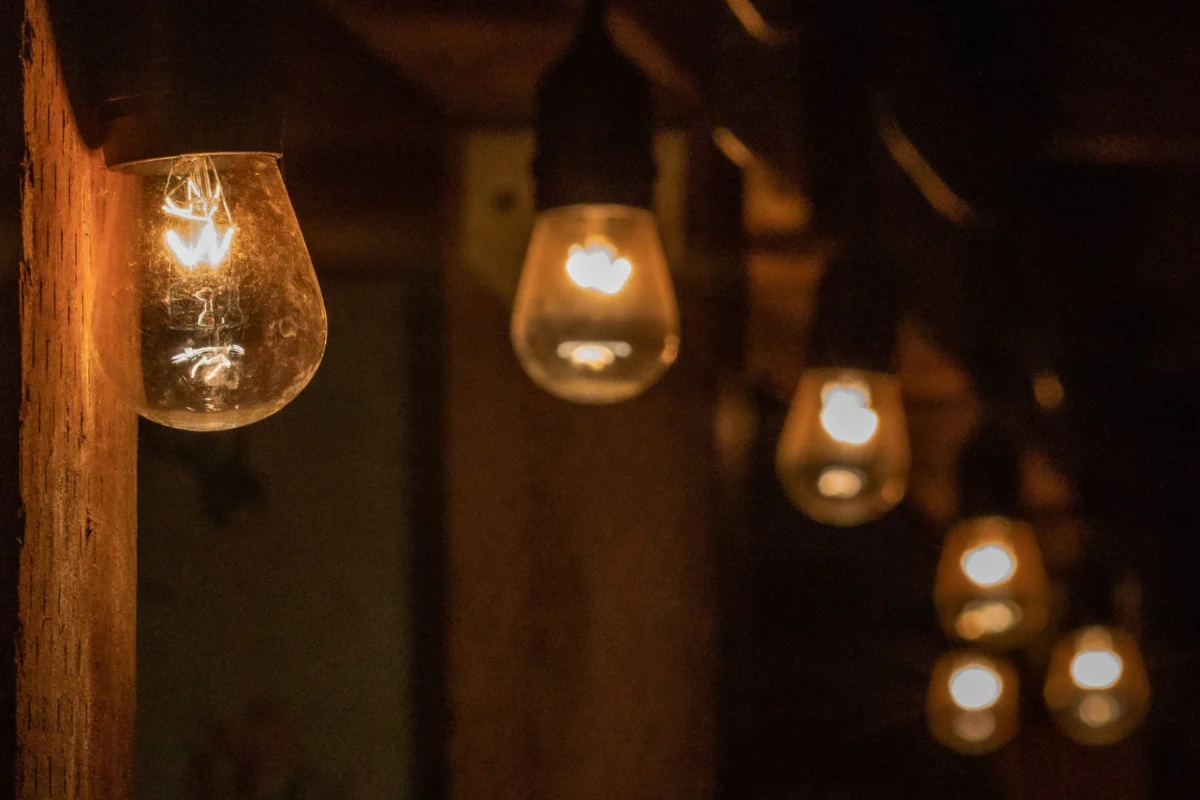
Beyond the fixture, the bulb itself is a critical variable. Homeowners are encouraged to prioritize "warm" light. Bulbs with a color temperature of 2200 Kelvin or lower produce a soft, amber-toned light that is significantly less disruptive to nocturnal wildlife. Furthermore, homeowners often fall into the trap of "over-lighting" their spaces. By choosing bulbs with lower lumen counts—the measurement of actual brightness—residents can achieve adequate visibility without creating a halo of light that contributes to regional sky glow.
3. Strategic Control Systems
The simplest solution, according to conservationists, is the removal of light altogether when it serves no human purpose. Implementing timers, motion sensors, and dimmers ensures that light is only active when a human presence is detected. A motion-sensor light that is off for 90% of the night is infinitely safer for migrating birds than a porch light that remains burning from dusk until dawn.
Broader Implications and Official Perspectives
The movement toward bird-friendly lighting is gaining support from municipal leaders who see it as a dual-purpose initiative: protecting biodiversity while also reducing energy costs for the city and its residents. In cities like Phoenix, local Audubon chapters have been instrumental in launching campaigns that educate homeowners on the "Every Light Matters" philosophy. These initiatives argue that the aggregate effort of individual households can meaningfully alter the urban light profile.
From an ecological standpoint, the implications of these changes go beyond bird protection. Reducing light pollution also benefits local nocturnal insects, bats, and even human health, as excessive nighttime light has been linked to the disruption of human circadian cycles. The environmental community views these lighting adjustments as "low-hanging fruit" in the broader effort to restore ecological balance in rapidly urbanizing regions.
Data-Driven Analysis of Future Risks
While individual actions are necessary, experts emphasize that the long-term health of migratory populations depends on systemic changes. With urban populations in the Southwest projected to continue their upward trajectory, the "migration window" will become increasingly perilous. A report by the U.S. Fish and Wildlife Service suggests that hundreds of millions of birds die annually due to collisions with man-made structures. If current lighting trends continue unabated, these numbers are likely to rise as light footprints expand into previously dark, rural corridors.
However, the recent trend toward "smart city" lighting—which allows for the real-time adjustment of brightness based on traffic and human activity—offers a glimpse of a more sustainable future. If cities adopt these technologies alongside individual residential efforts, the impact on migratory corridors could be mitigated significantly.
Conclusion: A Collective Responsibility
The protection of migratory birds is a shared responsibility that transcends property lines. As the Southwest continues to grow, the choices made by homeowners regarding their outdoor lighting become a critical component of regional conservation strategy. By adopting shielded fixtures, choosing warm-spectrum, low-lumen bulbs, and utilizing motion sensors, residents can play a direct role in safeguarding the millions of lives passing through the night sky.
The history of these birds is etched into the landscape of the Southwest, defined by their resilience and their reliance on the natural rhythms of the stars. Ensuring those stars remain visible against the urban glow is not only an act of environmental stewardship but a commitment to maintaining the integrity of one of nature’s most magnificent displays. As the next migration season approaches, the focus remains on the cumulative power of individual, informed decisions to keep the skies of the American Southwest welcoming for all.
