
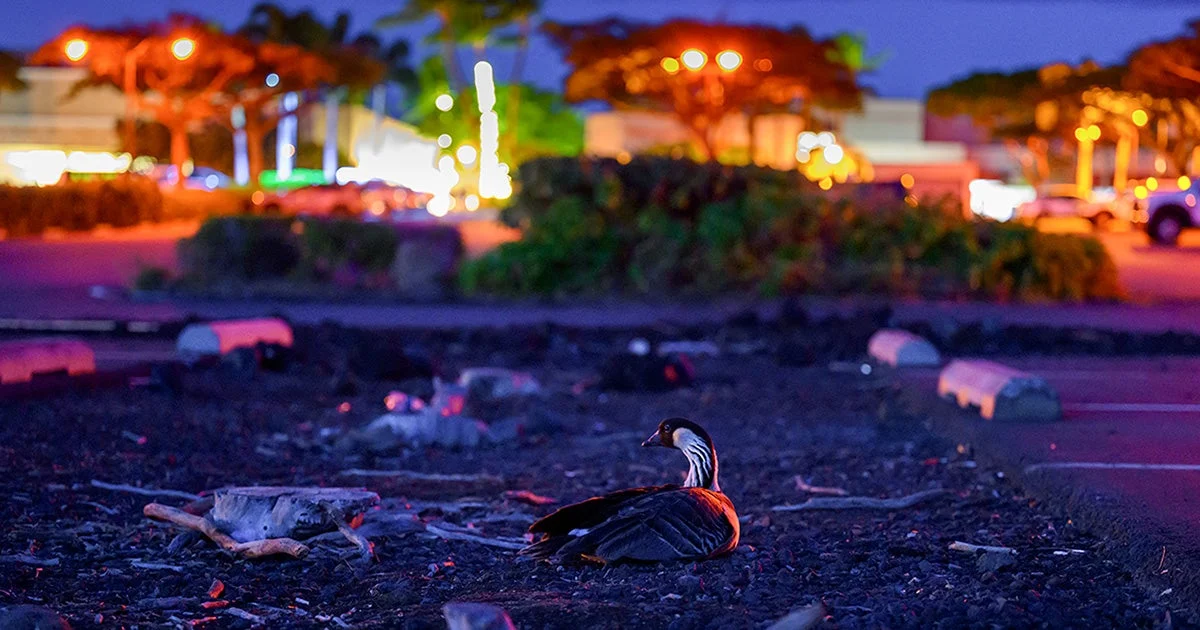
The nene (Branta sandvicensis), Hawaii’s endemic state bird and the rarest goose species on the planet, stands at a critical juncture in its evolutionary history. Once teetering on the precipice of extinction with a wild population of only 30 individuals in 1949, the species has achieved a remarkable, albeit fragile, comeback. Today, as these iconic birds navigate a landscape increasingly dominated by human infrastructure, urban development, and invasive species, a new generation of conservationists is leveraging artificial intelligence, community science, and data-driven advocacy to ensure the species does not suffer a second, more permanent decline.
The struggle for survival is most visible on the Island of Hawaiʻi, where the intersection of luxury tourism, manicured landscapes, and non-native predators creates a perilous environment for the geese. In December 2023, a poignant incident at the Mauna Lani resort—where two of three hatched goslings perished within 72 hours—highlighted the volatility of the nene’s habitat. The losses, attributed to mongoose predation and the environmental hazards inherent in resort-style landscaping, serve as a microcosm of the challenges facing the population across the archipelago.
A Historical Context of Peril and Persistence
The nene’s decline is deeply rooted in the history of human migration and colonization in the Pacific. Following the arrival of settlers, the species faced a multi-front assault: intense hunting, the wholesale destruction of lowland nesting habitats, and the introduction of apex predators such as the small Indian mongoose (Urva auropunctata), feral cats, and pigs.
By the mid-20th century, the nene was considered a relic of the past. The subsequent recovery, characterized by intensive captive breeding programs and reintroduction efforts, is widely cited as a triumph of modern wildlife management. By 2019, the U.S. Fish and Wildlife Service reclassified the nene from endangered to threatened, reflecting a growing population that had expanded to over 4,000 individuals by 2025. However, this statistical recovery masks an uneven distribution. While the island of Kauaʻi, notably free of mongooses, hosts 61 percent of the total population, other islands—such as Maui and Molokaʻi—have seen concerning declines, and Oʻahu’s population has been extirpated.
The Technological Frontier of Conservation
Recognizing that traditional monitoring methods are insufficient for a species that has adapted to human-altered landscapes like golf courses and parking lots, Jordan Lerma, a Native Hawaiian marine biologist and founder of the nonprofit nene.org, has pioneered a digital-first approach to avian protection.
The strategy relies on a sophisticated integration of artificial intelligence and community-sourced data. With approximately 70 percent of the wild nene population already banded by state and federal biologists, Lerma developed an AI-driven application that identifies individual birds via high-resolution photos of their leg bands. This tool allows researchers to instantly access a comprehensive life history for each bird, including its original banding location, clinical history, and previous behavioral patterns.
This digital infrastructure is complemented by an extensive network of remote, real-time cameras deployed across key nesting sites on the Island of Hawaiʻi. These cameras serve as an early warning system, allowing biologists to monitor nesting progress and identify immediate threats without disrupting the birds. The synergy between public participation—whereby residents and tourists report sightings—and professional surveillance has created a dynamic, responsive management framework that is significantly more effective than historical, sporadic monitoring.
Data-Driven Advocacy and Infrastructure Reform
The efficacy of this technology was proven in 2023 when Lerma utilized data to address the high mortality rate of nene from vehicle strikes near Hilo. By installing six custom speed monitors along a critical transit corridor, Lerma’s team gathered empirical evidence showing that 81 percent of the 5,000 vehicles recorded were exceeding the 35 mph speed limit.
This data provided the necessary leverage for local advocates to successfully petition for a reduction in the speed limit to 25 mph. Following the installation of traffic-calming measures, such as raised crosswalks and speed tables, zero nene fatalities have been reported in that high-risk zone. This success demonstrates that conservation in the 21st century requires not just ecological intervention, but active engagement with civil engineering and municipal policy.
The Controversy of Feral Predators
Perhaps the most complex challenge facing the nene is the proliferation of feral cat colonies. These colonies, often maintained by well-intentioned but misguided members of the public, create "ecological sinks" that draw nene away from safe nesting grounds. The presence of cat food—typically left in open containers—is a powerful attractant that brings the geese into proximity with cat waste, which can harbor the parasite responsible for toxoplasmosis. This disease is not only fatal but has been linked to increased risk-taking behavior in infected birds, further complicating their survival.
The political landscape surrounding this issue is fraught. In response to the unchecked expansion of these colonies, the County of Hawaiʻi enacted a landmark law in late 2025 prohibiting the feeding of feral cats on county property. To support the enforcement and monitoring of this regulation, Lerma launched FeralMap, a public platform that tracks the distribution of invasive species including cats, mongooses, and pigs. By decentralizing the collection of ecological data, the project empowers the community to participate directly in the stewardship of their local environment.
Mongoose Management: Learning from the Past
The mongoose remains a primary threat to the ground-nesting nene. Brought to the islands in the late 19th century to control rat populations in sugarcane fields, the mongoose failed to account for the nocturnal nature of rats, instead turning its attention to the diurnal, vulnerable eggs and goslings of native birds.
To mitigate this, conservationists have moved away from outdated, floor-level traps, which often caught non-target species. Modern, elevated traps imported from New Zealand utilize specialized scent attractants to specifically target mongooses. The impact of this targeted approach was immediate: successful nesting seasons at the Mauna Lani resort in 2024 and 2025 provide a blueprint for how luxury, multi-use environments can coexist with endangered species through diligent, science-based management.
Looking Ahead: The Sustainability of Recovery
The future of the nene is inextricably linked to the ability of agencies and the public to manage the birds’ increasingly urban existence. While the overall population count suggests stability, the localized nature of these threats—predation, disease, and road accidents—means that the recovery is only as strong as the community-level protections in place.
Biologist Raymond McGuire of the Hawaiʻi Department of Land and Natural Resources emphasizes that the proximity of nene to humans is the single greatest challenge to their long-term viability. When birds lose their natural wariness, they become vulnerable to the myriad dangers of human society. The work of groups like nene.org, therefore, is not merely about tracking populations; it is about managing the human-wildlife interface.
As the nene continues to navigate the complexities of a changing Hawaiʻi, the synthesis of high-tech monitoring and grassroots activism offers a template for species recovery in the Anthropocene. The success of this model suggests that while human action has been the primary driver of the nene’s decline, it also possesses the unique, latent capacity to reverse those effects. The goal for 2026 and beyond is to scale these interventions, ensuring that the state bird remains a symbol of resilience rather than a cautionary tale of environmental loss. The work, as Lerma aptly puts it, "never ends"—but for the first time in decades, it is characterized by measurable progress rather than a slow retreat into the past.
