
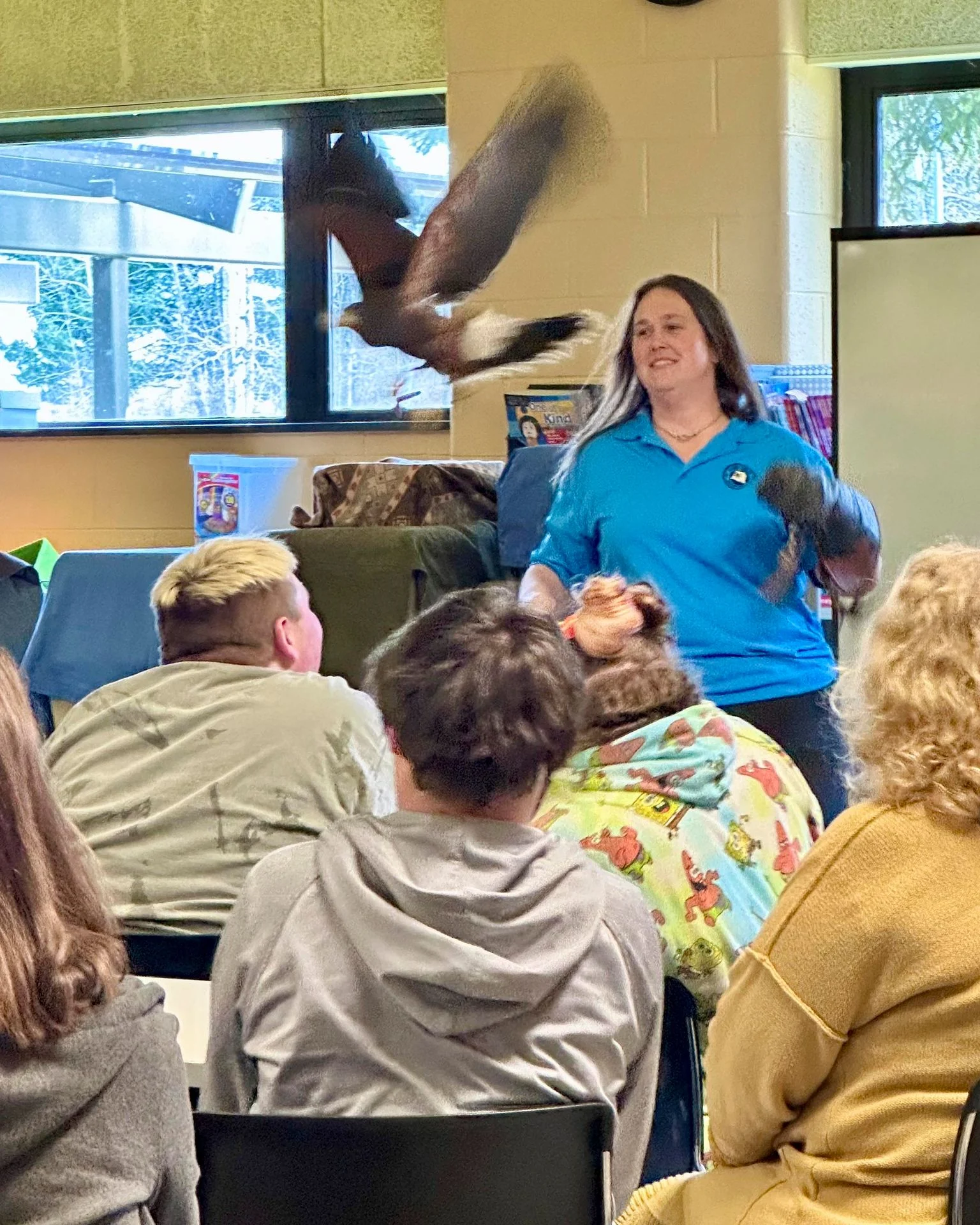
The Hewes Educational Center recently played host to an immersive biological exhibition as representatives from the Hawk Creek Wildlife Center arrived to facilitate a hands-on learning experience. The event, which integrated live animal encounters with structured academic curriculum, provided students with a rare opportunity to observe raptors, mammals, and reptiles within a controlled educational environment. This partnership between the wildlife rehabilitation organization and the academic institution underscores a growing trend in experiential learning, where direct interaction with non-releasable wildlife serves as a catalyst for deeper ecological understanding.
Chronology of the Wildlife Outreach Program
The day’s proceedings commenced early in the morning as the Hawk Creek team arrived to finalize the logistics of the mobile exhibition. Safety is the primary concern for any such outreach, necessitating a series of rigorous checks regarding the environment, the audience capacity, and the behavioral health of the animals involved. Two professional wildlife naturalists led the presentation, which was divided into segments focusing on specific biological classifications.
The first phase of the session involved an introduction to the mammalian participants, focusing on behavioral adaptations and the role these species play in regional ecosystems. This was followed by a comprehensive lecture on reptilian physiology, during which the naturalists dismantled common myths regarding snake behavior and habitat requirements. The climax of the presentation featured the avian component, during which a raptor was permitted to soar across the instructional space. This specific demonstration was designed to showcase the aerodynamics and wing-loading capabilities of the species, offering students a perspective on predatory avian mechanics that is impossible to replicate through digital media or textbooks.
The Mission of Hawk Creek Wildlife Center
Founded on the principles of fostering compassion, saving species, and restoring ecological balance, the Hawk Creek Wildlife Center functions as more than a mere sanctuary. It serves as a vital rehabilitation facility for injured and orphaned wildlife. Many of the animals presented during the outreach program are permanent residents of the center, categorized as non-releasable due to permanent injuries or behavioral imprinting that prevents them from surviving in the wild.
The educational outreach arm of the organization is designed to bridge the gap between human urban environments and the natural world. By bringing these animals into the classroom, the center aims to replace fear and apathy with curiosity and respect. The naturalists who facilitated the session at Hewes Educational Center are trained in both animal husbandry and public education, ensuring that every interaction serves a pedagogical purpose aligned with state science standards.

Supporting Data and Ecological Context
Biological education is increasingly shifting toward "place-based" learning. According to recent educational studies, students who engage in direct interaction with live specimens exhibit higher retention rates regarding complex ecological concepts such as trophic cascades, predator-prey dynamics, and the necessity of biodiversity.
The inclusion of raptors—birds of prey that sit at the apex of the food chain—provides a unique lens through which to discuss environmental health. Raptors are considered bio-indicators; their presence or absence in a given ecosystem often reflects the health of the entire local environment, including water quality, prey availability, and the presence of environmental toxins. By teaching students how to identify these birds and understand their flight patterns, the Hawk Creek naturalists provide the audience with the tools to become citizen scientists who can better monitor their local environments.
Implications of Animal-Assisted Education
The collaboration between Hewes Educational Center and Hawk Creek is reflective of a broader national initiative to prioritize STEM (Science, Technology, Engineering, and Mathematics) education through real-world applications. Integrating wildlife conservation into the classroom provides students with tangible examples of the consequences of habitat loss, climate change, and human-wildlife conflict.
Furthermore, the social and emotional impact of these encounters cannot be overlooked. Research in child psychology suggests that interaction with animals can reduce student stress levels and improve engagement in subjects that might otherwise be perceived as dry or overly theoretical. By witnessing the flight of a raptor or observing the unique defensive mechanisms of a snake, students develop a sense of empathy that extends beyond the classroom walls. This emotional connection is a cornerstone of long-term conservation efforts, as it fosters a generation of citizens who are more likely to support environmental legislation and sustainable living practices.
Professional Perspectives and Program Standards
While such events appear seamless to the observer, they are governed by strict regulations. Wildlife outreach programs must adhere to rigorous permitting processes at both the state and federal levels. These regulations ensure that the animals are treated with the highest standard of care and that the public is shielded from unnecessary risks.
Naturalists at the Hawk Creek Wildlife Center undergo extensive training to read animal body language. Before a raptor is allowed to fly, the naturalists assess the bird’s stress levels and environmental comfort. If the bird displays signs of discomfort, the program is adjusted immediately. This transparency in animal management is vital to maintaining public trust and demonstrating that education does not come at the expense of the animal’s well-being.

The Role of Community Support
The sustainability of the Hawk Creek Wildlife Center is largely dependent on public interest and philanthropic support. As a facility that provides medical care to thousands of animals annually, the costs associated with specialized nutrition, veterinary medicine, and housing are significant. Programs like the one held at the Hewes Educational Center are not only educational opportunities but also serve to raise awareness regarding the financial requirements of conservation efforts.
The inclusion of a donation-based model in their operations allows the organization to continue its work, which includes both the rehabilitation of injured creatures and the educational outreach that helps prevent future harm to wildlife. By engaging with schools, the center ensures that the next generation of students is informed about the specific challenges facing local fauna, such as the dangers of roadside litter, the impact of vehicle strikes, and the importance of preserving contiguous forest tracks.
Future Outlook for Collaborative Learning
As schools continue to look for ways to make abstract scientific principles more concrete, the demand for high-quality, live-animal educational programming is expected to rise. The success of the visit to the Hewes Educational Center suggests a robust future for this model of instruction. By moving beyond the static images of a textbook, programs like these provide a dynamic, multisensory experience that remains etched in the memory of the students long after the naturalists have departed.
The educational implications of this visit are profound. By exposing students to the realities of wildlife conservation, the Hawk Creek Wildlife Center is effectively planting the seeds for future biologists, veterinarians, and environmental stewards. The program at Hewes Educational Center serves as a blueprint for how academic institutions can leverage external community expertise to enhance their curriculum, proving that when education meets the natural world, the result is a more informed, empathetic, and proactive student body. As the center continues to expand its reach, the ripple effects of these classroom encounters will likely contribute to a broader culture of conservation, ensuring that the message of restoring balance is passed on to those who will eventually inherit the stewardship of the environment.
