
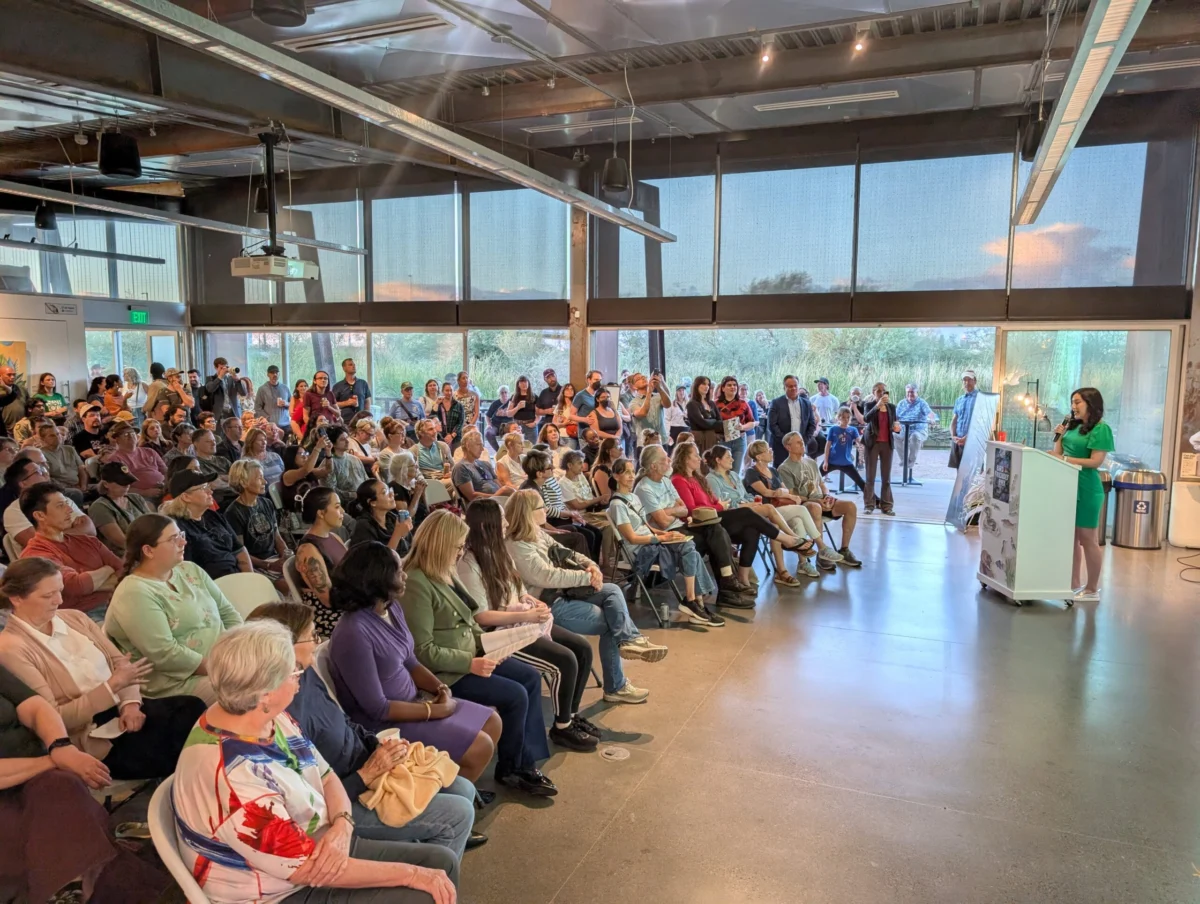
Audubon Southwest and the City of Phoenix have officially launched the Bird-Friendly PHX initiative, a collaborative project aimed at mitigating the environmental stressors that urban development imposes on local and migratory bird populations. By encouraging residents to adopt habitat-conscious behaviors, the program seeks to harmonize the expansion of the fifth-largest city in the United States with the ecological requirements of desert wildlife. The partnership, which highlights the correlation between urban biodiversity and human quality of life, marks a significant shift in municipal environmental policy, focusing on small-scale, community-driven conservation efforts.
The Genesis of the Initiative and the September 29 Launch
The formal introduction of Bird-Friendly PHX took place on September 29, 2026, at the Nina Mason Pulliam Rio Salado Audubon Center in South Phoenix. The location was strategically chosen for its proximity to the Rio Salado Habitat Restoration Area, a critical riparian corridor that serves as a vital stopover for birds traversing the Pacific Flyway.
The event featured a screening of the documentary "Birds on the Move: Desert Rivers," which illustrates the precarious nature of avian migration across the arid Southwest. Following the screening, key stakeholders provided a framework for the initiative’s goals. Phoenix Mayor Kate Gallego emphasized the importance of biodiversity in urban planning, noting that the health of the city’s ecosystems is intrinsically linked to the resilience of its infrastructure. Tricia Balluff, Environmental Program Manager for the City of Phoenix, and Haley Paul, Senior Policy Director for Audubon Southwest, elaborated on the technical aspects of the program, framing the initiative as a scalable model for other desert metropolises facing similar rapid growth pressures.
The Urban Ecological Challenge: Why Phoenix Matters
Phoenix sits at a unique ecological crossroads. As a major desert city, it serves as a critical oasis for species moving between the mountains and the coastal regions of the Pacific. According to data provided by Audubon Southwest, the region supports over 100 bird species on a year-round basis, with hundreds more passing through during spring and autumn migrations.
However, the rapid urbanization of the Salt River Valley has introduced significant anthropogenic threats to these populations. Ornithologists have identified two primary hazards: light pollution and structural collisions. Artificial light at night (ALAN) is particularly disruptive to nocturnal migrants, who rely on celestial cues for navigation. When birds are drawn into urban centers by the "glow" of city lights, they frequently become trapped in a cycle of disorientation, exhausting their energy reserves—vital fuel intended for their long-distance journey.
Furthermore, the prevalence of large-scale glass surfaces in modern Phoenix architecture poses a significant collision risk. Estimates from the American Bird Conservancy suggest that up to one billion birds perish annually in the United States due to window strikes. By encouraging residents to implement mitigation strategies—such as applying UV-reflective window films or utilizing bird-safe lighting—the Bird-Friendly PHX initiative addresses these threats at the residential level, where the cumulative impact of thousands of homes can be profound.
Chronology of Conservation Efforts in the Valley
The launch of Bird-Friendly PHX is not an isolated event but rather the latest milestone in a long-term strategy to preserve desert biodiversity. The following timeline outlines the evolution of these efforts:
- 2000s: Initial development of the Nina Mason Pulliam Rio Salado Audubon Center, focusing on the rehabilitation of the degraded Salt River ecosystem.
- 2015-2020: Increased advocacy for "Dark Skies" policies in the Phoenix metropolitan area, highlighting the intersection of human light pollution and wildlife behavior.
- 2023: City of Phoenix initiates updated climate action planning, incorporating urban heat island mitigation and green space expansion.
- 2026 (September): Official launch of the Bird-Friendly PHX pledge and community engagement platform, signaling a move toward decentralized, citizen-led conservation.
Data-Driven Conservation: The Role of Native Flora
A core tenet of the Bird-Friendly PHX initiative is the promotion of native plant gardening. Research conducted by Audubon’s "Plants for Birds" program indicates that native plants support significantly more caterpillar biomass than non-native ornamental plants. This is crucial, as caterpillars are the primary food source for many nesting bird species.
In the arid climate of Phoenix, water conservation and habitat creation often appear to be in conflict. However, the initiative promotes xeriscaping—landscaping that requires little to no irrigation—that utilizes native succulents, shrubs, and trees like the Palo Verde and Ironwood. These plants provide both the nectar required by hummingbirds and the nesting cover necessary for resident species like the Gila Woodpecker and the Curve-billed Thrasher. By transitioning residential landscapes to native-heavy designs, residents are essentially creating "stepping stone" habitats that allow birds to traverse the urban landscape safely.
Official Perspectives and Stakeholder Reactions
The collaboration between municipal government and non-profit conservation groups is designed to bypass the limitations of top-down regulation. By focusing on a voluntary pledge, the City of Phoenix and Audubon Southwest are fostering a culture of stewardship.
"When we look at the city as a living, breathing ecosystem, we realize that every homeowner has a part to play," noted Haley Paul during the launch event. "The Bird-Friendly PHX pledge is not merely a symbolic gesture; it is a commitment to modifying the very environment that surrounds our daily lives to ensure it is hospitable for more than just humans."
Local environmental groups have praised the focus on individual agency. By providing a clear, actionable list of steps—such as keeping domestic cats indoors, reducing window reflections, and planting native vegetation—the initiative lowers the barrier to entry for residents who may be concerned about the environment but unsure of how to contribute effectively.
Broader Implications for Urban Development
The implications of Bird-Friendly PHX extend beyond bird conservation. Urban heat mitigation, one of the primary goals of the City of Phoenix, is highly compatible with bird-friendly landscaping. Increased tree canopy and native vegetation cover not only provide cooling shade for birds but also help to lower the ambient temperatures of residential neighborhoods, reducing energy consumption for residents.
This initiative also highlights the importance of environmental justice. By promoting green spaces in all neighborhoods—not just affluent areas—the program aims to ensure that the ecological and psychological benefits of bird-rich environments are distributed equitably across the city. Studies have shown that access to urban nature is linked to improved mental health, lower stress levels, and increased physical activity among urban populations.
Future Trajectory: Monitoring and Expansion
As the Bird-Friendly PHX initiative gains momentum, Audubon Southwest intends to track progress through community-based science programs. Residents are encouraged to participate in platforms like eBird, where they can log sightings of bird species in their neighborhoods. This data will provide researchers with a clearer picture of how urban habitats are being utilized and which conservation strategies are yielding the most significant results.
The city is also exploring the possibility of incorporating bird-safe design standards into future municipal building codes. If successful, these voluntary actions could eventually become the baseline for sustainable urban development in the Southwest. As climate change continues to alter the distribution of species and the availability of water in the region, initiatives like Bird-Friendly PHX will become increasingly vital. By building a city that functions as a habitat rather than an obstacle, Phoenix is setting a precedent for how desert cities can adapt to the ecological realities of the 21st century.
For residents interested in participating, the Bird-Friendly PHX pledge serves as an entry point into a larger community of practice. By committing to small, incremental changes at home, citizens are effectively participating in a large-scale experiment in urban resilience—one that recognizes the fundamental, and often overlooked, truth that the survival of migratory and resident birds is a bellwether for the long-term sustainability of the city itself.
