

Woodpeckers are among the most dynamic and resilient avian species observed in North American ecosystems, frequently capturing the attention of ornithologists and backyard bird enthusiasts alike. Renowned for their vibrant plumage, distinctive vocalizations, and relentless foraging behavior, these birds engage in a physically demanding lifestyle that challenges the conventional biological understanding of impact mechanics. While avian species generally avoid high-velocity collisions to prevent cranial trauma, woodpeckers have evolved a sophisticated suite of anatomical and physiological adaptations that allow them to strike hard surfaces repeatedly without suffering neurological injury. This specialized existence not only defines their daily survival strategies but also offers valuable insights into biomechanics and natural selection.
Biomechanical Marvels: Surviving High-Velocity Impacts
The physical demands placed upon a woodpecker during excavation are extreme. Scientific observations indicate that while drilling into timber to uncover insects or construct nesting cavities, a woodpecker’s head can strike a tree’s surface at velocities reaching up to 13 miles per hour. The resulting impact generates a deceleration force of approximately 10 times the force of gravity (10Gs). For comparative context, human brains are estimated to be three times more susceptible to concussions at equivalent speeds, and similar forces inflicted upon most other bird species would result in immediate and catastrophic brain trauma.
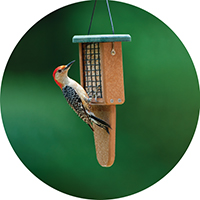
To withstand this continuous physical punishment, evolutionary biologists and anatomists have identified several critical structural fortifications within the woodpecker’s skeletal and muscular systems. Foremost among these is the specialized architecture of the cranium. Unlike the dense, uniform bone structure found in many other vertebrates, the woodpecker skull incorporates a lightweight, spongy, and air-filled matrix of bone. This network of microscopic bony support struts acts as a shock absorber, diffusing kinetic energy away from the brain before it can cause localized tissue damage.
Furthermore, the anatomical proportions of the bird play a protective role. The physical volume of a woodpecker’s brain is exceptionally small relative to the overall size of its skull. This tight fit minimizes intracranial free space, drastically reducing the potential for the brain to rattle against the inner walls of the bone casing during high-frequency deceleration events. Surrounding the brain is also a specialized hyoid bone apparatus—a structure resembling a long, elastic tongue bone that wraps around the back of the skull, effectively functioning as a biological seatbelt that helps stabilize the upper skull and lower mandible during strikes.
Self-Sharpening Bills and Natural Protective Gear
The relentless striking required for foraging and nesting introduces another physiological challenge: the preservation of the beak. If a human were to strike a hard wooden surface repeatedly with a tool of similar composition, the material would quickly fracture, dull, or wear down. Woodpeckers, however, avoid this outcome through continuous cellular regeneration. Specialized epithelial cells located at the tip of the beak actively divide and replace lost keratin material. This continuous growth ensures that the chisel-pointed bill remains structurally robust, resilient, and sharp. In fact, the physical interaction with rough timber functions as a natural sharpening mechanism, continuously micro-chipping the beak into an optimal cutting edge.

Beyond cranial and dental resilience, woodpeckers must contend with the immediate environmental hazards generated by their excavation work, primarily wood dust, splinter debris, and flying particulates. To safeguard their sensory organs, these birds have developed integrated respiratory and ocular protection mechanisms.
The respiratory defense system consists of dense tufts of specialized, stiff feathers that grow directly over both external nares (nostrils). These feathers act as a functional dust mask, filtering out fine particulate matter and preventing wood chips from entering the nasal cavity and respiratory tract during heavy drilling. Concurrently, ocular safety is maintained through the rapid deployment of a nictitating membrane—often referred to as a protective third eyelid. This translucent membrane snaps shut fractions of a second before impact, shielding the eyeball from flying debris while still allowing the bird to maintain visual awareness of its immediate surroundings.
Ecological Context and Backyard Habitats
From an ecological perspective, woodpeckers play a vital keystone role in forested habitats. By excavating cavities in dead or dying trees—a process known as primary excavation—they create vital shelter not only for themselves but also for a secondary web of wildlife, including various species of owls, small mammals, and reptiles that rely on abandoned tree cavities for nesting and roosting. Their foraging habits also provide natural pest control, keeping populations of wood-boring insects, bark beetles, and carpenter ants in check.

Despite their specialized adaptations for deep wilderness survival, many woodpecker species have successfully adapted to human-altered landscapes, becoming frequent and welcome visitors to suburban backyards. Homeowners and ornithological researchers frequently deploy specialized feeding stations to observe these birds up close. Because woodpeckers possess unique dietary requirements focused heavily on high-energy lipids and proteins, traditional seed blends are often supplemented with nutrient-dense alternatives.
Wildlife conservation organizations and backyard bird-feeding specialists recommend specific food sources to attract a diverse array of woodpeckers. High-fat offerings such as formulated suet cakes, no-melt suet doughs, specialized bark-butter products, and shelled peanuts provide the necessary caloric intake required to fuel their demanding daily activities. Additionally, specialized seed cylinders and custom-blended nut mixtures, such as tree-nutty formulations, allow backyard observers to study the distinct foraging behaviors of species ranging from the diminutive Downy Woodpecker to the larger Red-bellied and Pileated Woodpeckers.
Broader Implications and Ongoing Research
The unique physiological mechanisms that protect woodpeckers from traumatic brain injury have long captured the interest of researchers outside the field of ornithology. Biomechanists, aerospace engineers, and medical professionals frequently study woodpecker anatomy to inform human design and safety innovations. Insights gleaned from the spongy cranial bone structure and the shock-dissipating orientation of the beak and hyoid apparatus have influenced the development of advanced protective headwear, including improved athletic helmets, industrial hard hats, and military combat gear designed to mitigate the effects of blast waves and sudden impacts.

As research into avian biomechanics continues to advance, the woodpecker remains a prime example of evolutionary specialization. Its ability to thrive in a high-impact environment highlights the remarkable adaptability of nature, bridging the gap between fundamental wildlife biology and practical human engineering applications. Whether viewed through the lens of forest ecology, backyard observation, or advanced biomechanical research, the woodpecker continues to stand out as a marvel of natural engineering.
