
Every year on the fourth Sunday in September, the international community observes World Rivers Day, an occasion dedicated to highlighting the environmental, cultural, and recreational value of the world’s waterways. As global awareness regarding water security and habitat preservation intensifies, the Magpie River, situated in the remote reaches of northern Quebec, has emerged as a focal point for modern conservation strategies. Known traditionally as Mutehekau Shipu, this 280-kilometer (174-mile) waterway represents a unique intersection of Indigenous sovereignty, legal precedent, and cutting-edge ornithological research. By blending the wisdom of the Innu people with sophisticated autonomous recording technology, researchers are working to secure the future of a watershed that serves as a critical artery for North American biodiversity.
The Significance of Mutehekau Shipu
The Magpie River flows through the rugged landscapes of the Côte-Nord region, carving its way through the Nitassinan—the ancestral territory of the Innu communities of Ekuanitshit and Uashat mak Mani-utenam. Beyond its profound cultural significance to the Innu, the river is globally renowned for its hydrological intensity and raw wilderness, frequently cited by adventure tourism organizations as one of the top ten whitewater destinations on the planet.
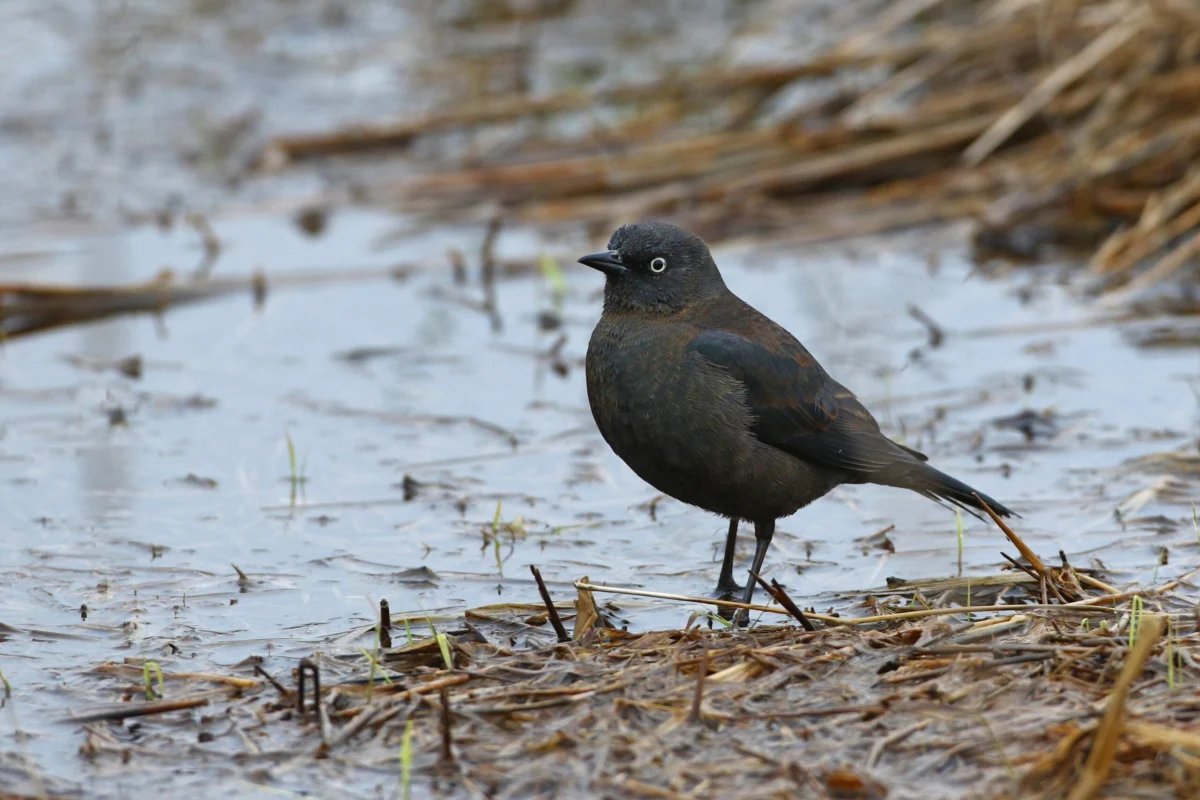
However, the river’s importance transcends recreational appeal. The Magpie acts as a vital biological corridor. The watershed provides essential nesting and foraging grounds for a wide array of migratory birds, including the Common Merganser and the increasingly vulnerable Rusty Blackbird. These species rely on the river’s ecosystem to sustain them during long-distance migrations, making the protection of the river’s water quality and surrounding forest cover a matter of continental conservation importance.
A Landmark in Legal History
In February 2021, the Magpie River made history by becoming the first river in Canada to be granted legal personhood. This landmark designation, spearheaded by the Innu Council of Ekuanitshit and the Minganie Regional County Municipality, established nine specific legal rights for the river. These include the right to flow, the right to maintain its natural biodiversity, and the right to be free from pollution.
This move mirrors a growing global movement—often referred to as the "Rights of Nature"—that has seen similar legal frameworks adopted for the Whanganui River in New Zealand and the Atrato River in Colombia. By shifting the legal status of the Magpie from "property" to "legal entity," the Innu and their partners have created a robust framework to challenge industrial development projects that might threaten the ecological integrity of the watershed. This legal shift ensures that the river has standing in court, with designated guardians tasked with representing its interests in legal and regulatory proceedings.
Chronology of Conservation Efforts
The protection of the Magpie River is not a recent development but the culmination of years of advocacy and collaborative research.
- 2017–2019: Increasing pressure from hydroelectric interests leads to a renewed push by the Innu and local environmental groups to secure permanent protection for the river’s wild status.
- February 2021: The Innu Council of Ekuanitshit and the Minganie Regional County Municipality pass resolutions granting the Magpie River legal personhood, effectively ending the possibility of new dam construction.
- 2022: Audubon and SNAP Quebec (Société pour la nature et les parcs du Canada) initiate formal partnerships with the Ekuanitshit and Uashat mak Mani-utenam communities.
- 2023–2024: Deployment of Autonomous Recording Units (ARUs) begins along the Magpie and the adjacent Moisie River to build a comprehensive data set regarding avian presence and migratory patterns.
Utilizing Technology to Map Biodiversity
To bolster the legal protections afforded to the river, conservationists are utilizing data-driven methodologies to prove the river’s ecological necessity. The partnership between Audubon, SNAP Quebec, and the Innu communities involves the strategic placement of Autonomous Recording Units (ARUs) throughout the river systems.
These devices, which are weatherproof and capable of operating independently for months at a time, are programmed to record ambient soundscapes at peak activity hours during the spring and autumn migration seasons. The data collected provides an acoustic inventory of the region, allowing scientists to identify the presence of specific species without the logistical difficulty and environmental disturbance of manual field surveys in remote, roadless wilderness.
This acoustic monitoring is particularly vital for the Rusty Blackbird, a species that has experienced a population decline of approximately 85% since the mid-1960s. By identifying exactly where and when these birds utilize the Magpie and Moisie watersheds, the research team can provide empirical evidence to regulators regarding the necessity of maintaining buffer zones and preventing habitat fragmentation in these specific corridors.
Official Perspectives and Institutional Collaboration
The collaboration between Audubon and the Innu communities represents a shift in how conservation organizations operate within Indigenous territories. Rather than applying top-down environmental management, the project relies on the principle of "two-eyed seeing"—integrating Western scientific methodologies with Indigenous traditional ecological knowledge (TEK).
Spokespersons for the participating Innu communities have repeatedly emphasized that their guardianship of the river is a continuation of a multi-generational responsibility. By leveraging the legal personhood status and backing it with modern bio-acoustic data, the communities are effectively future-proofing their land against the fluctuations of political and industrial interests. For Audubon and SNAP Quebec, the project serves as a template for how climate-resilient conservation can be achieved by prioritizing the sovereignty of First Nations while addressing global biodiversity targets.
Broader Implications for Watershed Management
The implications of the work currently being conducted on the Magpie River extend well beyond the borders of Quebec. As climate change alters migration routes and shifts the ranges of various avian species, the protection of intact watersheds becomes increasingly critical. The Magpie provides a baseline of a relatively undisturbed ecosystem, which serves as a control group against which other, more degraded watersheds can be compared.
Furthermore, the legal precedent set by the Magpie River is being closely watched by environmental lawyers and activists across Canada. The success of this legal framework suggests that "nature rights" could be a viable tool for protecting other vital resources, such as the St. Lawrence River or various Arctic watersheds facing the pressures of mining and resource extraction.
The data gathered through the ARU program will ultimately be compiled into a comprehensive report intended for federal and provincial environmental agencies. This documentation will serve as a definitive argument for the continued restriction of industrial activity within the watershed, ensuring that the Magpie remains a sanctuary for migratory birds.
Conclusion: A Legacy of Stewardship
As World Rivers Day draws attention to the state of global water systems, the Magpie River stands as a beacon of what is possible when community-led initiatives, legal innovation, and scientific rigor converge. The river is no longer just a site of potential resource extraction; it is a legally recognized subject with a right to exist, thrive, and fulfill its role in the biosphere.
The ongoing research into the avian life of the Magpie and Moisie rivers is more than just a data-gathering exercise—it is an act of defense. By cataloging the songs of the Common Merganser and the Rusty Blackbird, the researchers are ensuring that the voices of the natural world are heard in the halls of government. As the project moves into its next phase of analysis, the collaboration between the Innu communities and conservationists remains a testament to the fact that protecting our rivers is synonymous with protecting our own future. The Magpie River, in all its wild, legal, and biological complexity, offers a roadmap for a new era of environmental stewardship in Canada.
