
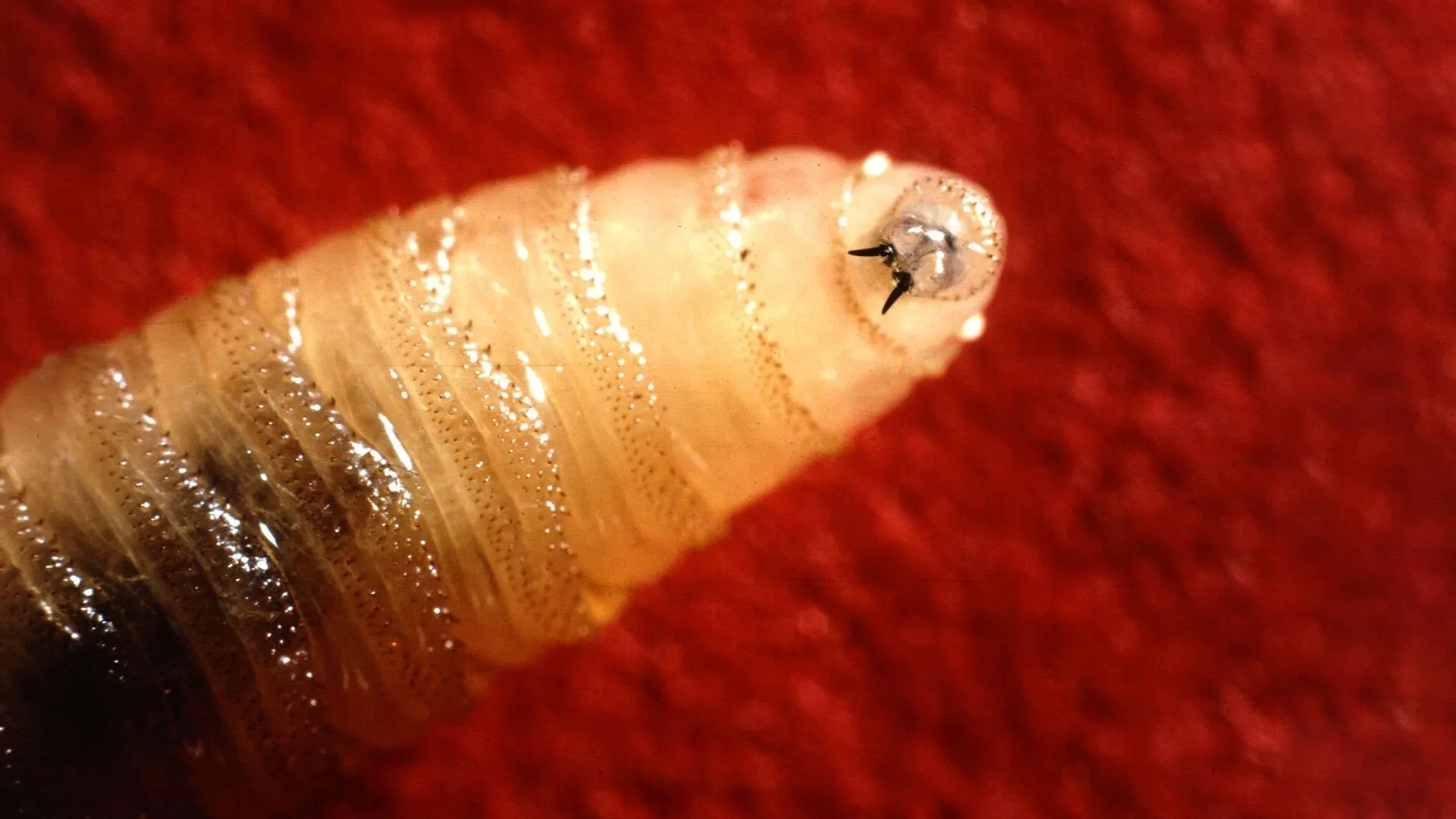
Decades after a monumental biological eradication campaign successfully pushed the pest south of the Panama Canal, the New World screwworm has once again established a foothold within the United States. Recent detections in Texas and New Mexico have ignited serious concerns among agricultural producers, wildlife managers, and public health officials alike. Unlike typical flies whose larvae feed on decaying matter, the New World screwworm (Cochliomyia hominivorax) targets living tissue, posing a direct and aggressive threat to livestock, domestic pets, native wildlife populations, and, in rare instances, human beings.
To confront this rapid northward expansion, a collaborative team of researchers at the University of California San Diego (UC San Diego) and the County of San Diego Health and Human Services Agency (HHSA) Public Health Services has developed a sophisticated, real-time tracking tool. This technological intervention aims to bridge the critical gap between emerging environmental threats and official public health reporting, providing officials with the predictive data necessary to anticipate where the parasitic fly might strike next.
Historical Context and the Resurgence of a Historic Pest
In the mid-20th century, the New World screwworm was an agricultural nightmare for United States livestock producers. Particularly devastating in the American Southwest, the parasitic insect inflicted immense economic damage, costing the industry between $50 million and $100 million annually during the 1950s—figures that would translate to hundreds of millions of dollars today.
The crisis prompted one of the most remarkable biological control efforts in agricultural history. Scientists and government agencies implemented the sterile insect technique (SIT), mass-producing male screwworm flies and sterilizing them using radiation before releasing millions of them into the wild. Because female screwworms mate only once in their lifetime, mating with sterile males yielded no viable offspring. Over time, this biological attrition drove the wild population toward collapse, eventually eradicating the pest from the United States and rolling its geographic range all the way down to Panama.
For decades, the barrier held. However, epidemiological monitoring indicates that changing climate patterns, shifting wildlife corridors, and the movement of domesticated animals have facilitated the parasite’s northward creep. While the exact vector for the recent re-emergence in Texas and New Mexico remains under ongoing investigation by federal authorities, the presence of the pest is undeniable. Public health experts note that once the fly re-enters regions where it historically thrived, its ability to re-establish a local population is exceptionally high.
Anatomy of a Threat: Why the Screwworm Is Uniquely Dangerous
The biological mechanism that makes the New World screwworm so destructive also makes it uniquely terrifying to livestock and wildlife managers. Female adult flies are attracted to warm-blooded animals, seeking out open wounds, cuts, abrasions, or natural body openings to deposit their eggs.
Once the eggs hatch within hours, the emerging larvae—or maggots—do not consume dead tissue like common flies. Instead, they burrow directly into healthy, living flesh, using mouthparts and spines to tear away at muscle and tissue. As the larvae feed collectively, they deepen and widen the wound, creating a cavernous cavity that attracts more female flies. This process severely damages the host animal, impairs mobility, causes systemic infections, and can result in death within days if left untreated.
While livestock and wildlife are the primary victims, humans can also become accidental hosts. Human myiasis caused by the New World screwworm is rare and is not transmitted contagiously from person to person like viral pathogens. Instead, human infections occur when a fly deposits eggs into an untreated wound or exposed mucous membrane. Although treatable through the prompt manual removal of larvae and proper wound care, human cases demand immediate medical intervention to prevent extensive localized tissue destruction.
Innovating Public Health Surveillance: The New Screwworm Dashboard
Recognizing the speed at which the parasite has moved since its reappearance, regional health authorities realized that traditional disease surveillance methods—which often rely on laboratory confirmations that can take days or weeks—were simply too slow to keep pace with an airborne, mobile parasite.
To solve this, UC San Diego experts collaborated with San Diego County public health officials to design a specialized regional risk-profiling dashboard. Developed under the umbrella of Resilient Shield, a CDC-funded center dedicated to outbreak modeling and threat response, the tool aggregates diverse streams of data to forecast screwworm vulnerability down to the county level across the United States.
Dr. Eliah Aronoff-Spencer, professor of medicine at UC San Diego School of Medicine and an affiliate of the UC San Diego Design Lab and Qualcomm Institute, emphasized that the dashboard represents a direct response to real-world operational needs. "Our County public health partners alerted us to the need for better situational awareness of New World screwworm," Dr. Aronoff-Spencer explained, likening the model’s collaborative success to previous initiatives like the Tijuana River Crisis Environmental Dashboard.
A standout feature of the new tracking tool is its integration of news media reports alongside confirmed detections and environmental indicators. According to Dr. Seema Shah, medical director of the Epidemiology and Immunization Services Branch for the County of San Diego, incorporating media intelligence allows officials to gain early warning signals before formal bureaucratic mechanisms catch up.
"Traditional reporting mechanisms for public health are often delayed," Dr. Shah noted. "Lab confirmation can take days or weeks. By incorporating media reports, we can identify potential threats sooner and stay one step ahead."
Dr. Mark Beatty, assistant medical director for the County’s Epidemiology and Immunization Services Branch, added that the tool fundamentally changes tactical planning. "The tool gives you a sense of where you might expect to see cases next," Dr. Beatty said. "That’s helpful in determining how we should be preparing. Is the threat imminent, or do we have six months? We’re in a very concerning phase right now, and the tool backs that up."
Currently, access to the dashboard is restricted to public health officials, veterinarians, and authorized project partners. However, developers hope to release a scaled public-facing version in the future as the platform matures.
Modernizing Eradication Strategies
Federal and state agricultural agencies are not relying on monitoring alone; they are actively mobilizing a multi-pronged eradication framework reminiscent of the historic 1950s campaign.
Led by the U.S. Department of Agriculture (USDA), current containment protocols combine targeted sterile insect releases with rigorous animal quarantines and the strategic application of insecticides. Furthermore, authorities are evaluating advanced biological controls, seeking approval from the U.S. Environmental Protection Agency (EPA) to test a genetically modified, all-male strain of the fly designed to accelerate population collapse. Simultaneously, academic researchers at institutions like UC San Diego are developing next-generation genetic technologies to fortify future eradication pipelines.
On the ground, local integration is vital. Dr. Emily Trumbull, a veterinarian and lead for the Epidemiology Unit’s One Health Program within the California Department of Food and Agriculture, stressed the importance of cross-disciplinary vigilance.
"We are working closely with the California Department of Food and Agriculture to connect local veterinarians with screwworm resources for surveillance in our region," Dr. Trumbull stated. "The flies can affect any warm-blooded animal, so working together with veterinarians serving livestock, pets and wildlife is critical for identifying suspect cases and preventing cases in people. The dashboard takes into account environmental factors that can help us understand how the risk to our local region is changing before the fly arrives. That’s why the dashboard is valuable."
A New Paradigm in Academic and Public Health Collaboration
The creation of the screwworm tracking dashboard highlights a broader paradigm shift in how public health agencies and academic research centers cooperate during biological crises. The project is part of Insight Net, a national network established by the Centers for Disease Control and Prevention (CDC) to enhance predictive modeling and outbreak response. Resilient Shield functions as one of thirteen core facilities within this network, operating on a demand-driven model: public health departments articulate their most urgent, unmet technological needs, and researchers engineer the corresponding solutions.
This reverse-engineering approach ensures that academic institutions do not waste resources building theoretical models in a vacuum. Instead, tools are tailored precisely to the operational realities faced by frontline epidemiologists.
"In public health, we always know our most urgent priorities, but too often we don’t have the immediate resources or in-house technical solutions to achieve them," Dr. Shah observed. "The screwworm is a perfect example. It is a critical threat, but it is an issue our academic partners might never have prioritized without our direct ticket. This partnership solves our immediate problem while providing shareable, open reference designs that demonstrate exactly how public health, academia, and industry can successfully work together."
Resilient Shield utilizes a modular, scalable architecture developed in partnership with major technology entities such as Google and MITRE. This technological framework allows researchers to rapidly assemble custom digital toolkits—spanning public-facing websites, secure computing environments, advanced simulation engines, and AI-driven data scrapers—whenever a new health threat emerges.
"Our central innovation is the true convergence of partner priorities with scalable engineering," Dr. Aronoff-Spencer concluded. "We do not build in a vacuum. Our infrastructure is built directly on the priorities dictated by our partners. In addition, because our platform is built on an open, modular architecture, every solution we develop strengthens the system and makes it more adaptable for the next public health challenge."
As the New World screwworm continues its tentative push northward, the combination of historical eradication techniques, modern genetic research, and real-time data integration tools like the San Diego screwworm dashboard will serve as America’s primary defense in protecting agricultural economies, animal health, and human safety from an old enemy returning in a modern era.
