
The modern zoological park has evolved far beyond the concrete-and-iron menageries of the nineteenth and twentieth centuries. Today, progressive institutions worldwide prioritize behavioral enrichment, psychological well-being, and habitat designs that mirror natural ecosystems as closely as possible. Yet, despite monumental leaps forward in veterinary medicine and enclosure design, one fundamental aspect of captive animal management has largely remained tethered to human convenience: the daily feeding schedule.
Unlike their wild counterparts, which must navigate the uncertain landscape of the savanna—experiencing erratic cycles of scarcity and abundance determined by the fortunes of the hunt—zoo-housed carnivores traditionally receive uniform, pre-portioned meals at the exact same hour every single day. This predictability, while efficient for animal care staff, strips away a vital evolutionary driver that has shaped the feline psyche for millions of years.
Now, groundbreaking research conducted jointly by the University of Adelaide and Monarto Safari Park in South Australia has shed new light on this dilemma. Published in the peer-reviewed journal Applied Animal Behaviour Science, the study demonstrates that altering the dietary routine of captive African lions to include whole animal carcasses on a feast-and-fast schedule profoundly shifts their behavior, aligning it much more closely with the natural rhythms observed in the wild.
The findings offer a compelling blueprint for modern wildlife management, suggesting that modifying how and when apex predators are fed can be just as important as the nutritional content of the diet itself. By granting lions the opportunity to tear, pull, and invest substantial physical effort into consuming whole prey, zoos can unlock natural behavioral repertoires that standard feeding regimes inadvertently suppress.
Setting the Stage: The Behavioral Gap Between Wild and Captive Lions
To understand the significance of the South Australian study, one must first examine the stark dichotomy between the daily existence of a wild African lion (Panthera leo) and that of a lion living in a zoological institution. In nature, lions are opportunistic apex predators living in complex social structures known as prides. Their survival is intrinsically tied to the mechanics of the hunt. A successful kill yields a massive influx of calories, resulting in a dramatic "feast" where pride members gorge themselves until they are physically sated.
Following this consumption peak, wild lions typically enter an extended period of profound lethargy and digestion, resting for days as their bodies process the heavy meal. As energy stores deplete and days pass without a successful hunt, their ranging behavior and activity levels gradually increase once more as they begin actively searching for their next meal. This cyclical oscillation between intense physical exertion, massive caloric intake, prolonged digestion, and escalating foraging drive constitutes the core behavioral ecology of the species.
In contrast, traditional zoo management replaces this dynamic, unpredictable cycle with rigid uniformity. Captive lions are typically fed predictable quantities of commercially prepared meat—often ground mixtures, chunks of beef, or pre-cut bone-in portions—delivered at the stroke of a predetermined hour. While nutritionally balanced, this sanitized approach eliminates the physical labor of processing a carcass. More importantly, it robs the animals of the anticipation, persistence, and physical exertion required to break down large bones, hide, and sinew.
Over time, researchers and animal welfare scientists have grown increasingly concerned that this routine predictability contributes to sedentary lifestyles, abnormal repetitive behaviors such as pacing, and a generalized disconnect from evolutionary adaptations. The Adelaide University research team sought to determine whether reintroducing a semblance of natural unpredictability and whole-prey consumption could bridge this behavioral divide.
Methodology and Chronology: Tracking the Lions Around the Clock
The research project centered on a coalition of three adult male African lions residing at Monarto Safari Park, one of the largest open-range zoos in the world, located in South Australia. The study was structured as a multi-phase observational trial designed to capture baseline behaviors before, during, and after the introduction of a modified feeding protocol.
Prior to the experimental phase, the research team established a baseline of the lions’ normal daily activities under their standard management routine. This foundational phase allowed scientists to quantify typical resting, pacing, social interaction, and feeding metrics.
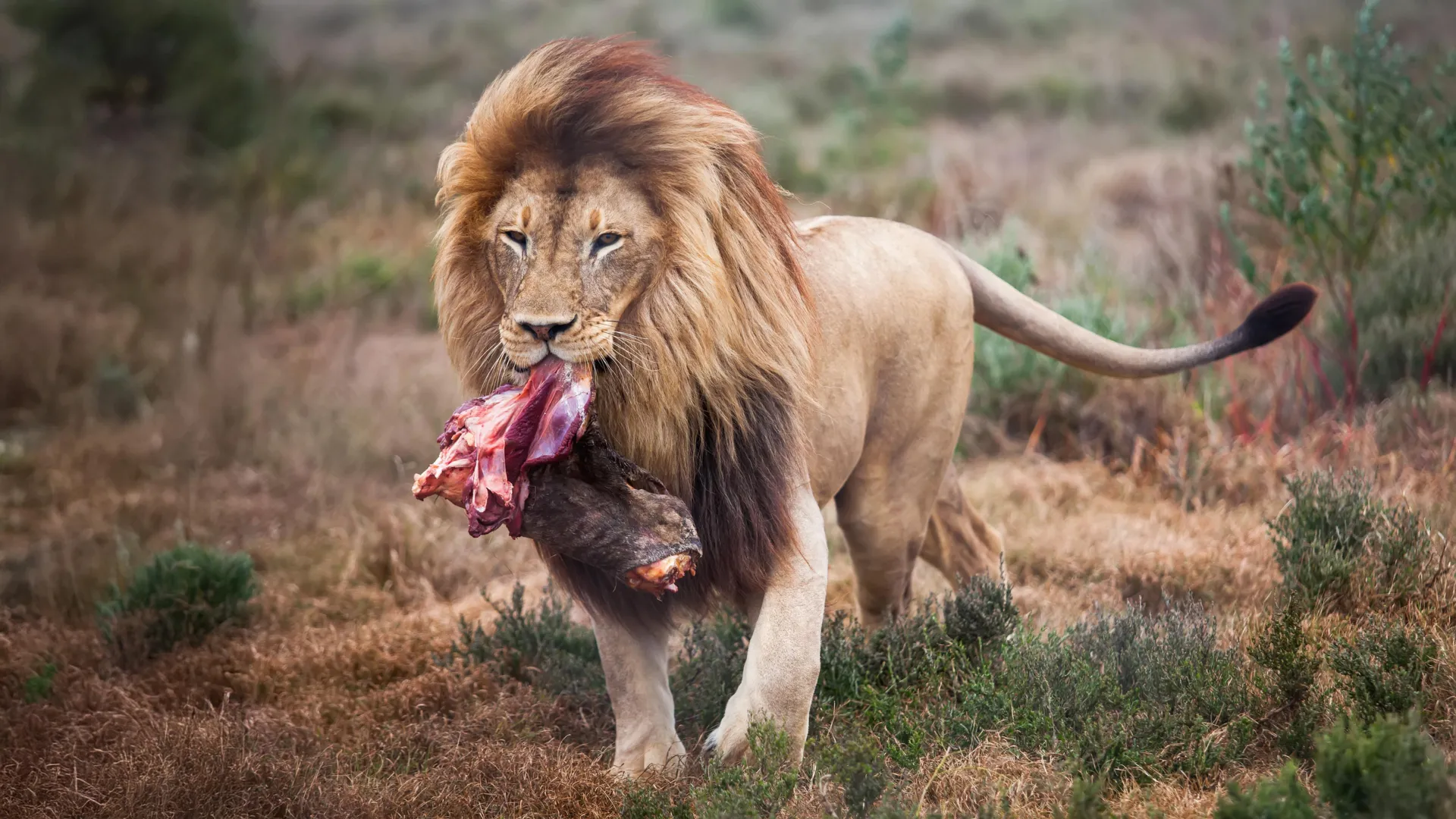
The experimental intervention involved the introduction of whole animal carcasses—totalling approximately 200 kilograms over the course of the trial—into the lions’ enclosure every nine days. This newly instituted protocol was integrated into an overarching feast-and-fast schedule. Unlike their standard daily rations, the whole carcasses were left available within the habitat for extended periods of up to three days, after which the lions naturally transitioned into a post-prandial resting and digestion phase.
To ensure unprecedented accuracy and depth of data, the research team deployed a sophisticated surveillance apparatus consisting of eight high-resolution infrared cameras strategically positioned around the lions’ habitat. This camera array provided continuous, 24-hour-a-day monitoring for three consecutive months, yielding one of the most comprehensive and detailed datasets ever assembled regarding the behavioral ecology of captive African lions under a carcass-feeding regime.
The international scope of the project was bolstered by the inclusion of visiting Master’s student Florence Demoulin from the University of Liege in Belgium, who worked alongside lead author Lesia Hryhorenko and senior academic supervisors from the University of Adelaide’s School of Animal and Veterinary Sciences.
Quantitative Findings: A Dramatic Shift in Feeding and Resting Dynamics
When the data from the infrared monitoring system were compiled and analyzed, the differences between standard feeding days and whole-carcass delivery days were striking.
On days when whole carcasses were introduced, the three male lions spent nearly three times as long engaged in feeding behaviors compared to their baseline routines. Rather than quickly consuming a pre-cut portion of meat, the animals had to actively manipulate, tug, pull, and tear at the carcasses. This physical interaction required sustained muscular effort across the jaw, neck, and forelimbs—musculoskeletal engagements that closely replicate the demands of processing wild prey.
Furthermore, the temporal distribution of their energy changed dramatically. Once the intense feeding bouts concluded, the lions entered a prolonged period of deep rest, lying motionless for significantly longer stretches than usual. As the nine-day cycle progressed and the fasting period continued, the cameras recorded a steady, incremental rise in the lions’ overall movement and activity levels, culminating just as the next feeding event approached.
This synchronized rhythm—intense feasting, extended resting, and gradually accelerating activity driven by fasting—mirrored the natural behavioral loops documented in free-ranging lion populations across the African continent.
Lead author Lesia Hryhorenko emphasized that the benefits extended far beyond mere physical exercise or nutritional variation. "Providing whole carcasses changes much more than the nutritional content of the diet," Hryhorenko noted. "It gives lions the opportunity to engage in behaviors such as tearing, pulling and manipulating food over extended periods, which are important components of their natural feeding ecology."
Pacing Paradigms: Unraveling the Mystery of Stereotypic Behaviors
One of the most critical metrics evaluated in zoo-based animal welfare research is stereotypic behavior—specifically pacing, a repetitive, invariant locomotor pattern often exhibited by captive carnivores. Pacing is widely understood by behavioral scientists to be an indicator of underlying frustration, chronic stress, or unfulfilled behavioral motivations, frequently linked to the anticipation of feeding time.
To determine how the feast-and-fast schedule influenced this phenomenon, the research team closely tracked the lions’ pacing habits throughout the three-month trial. Interestingly, while pacing showed minor fluctuations over the course of the study period, it did not follow the expected trajectory of steadily increasing as the days of the fast accumulated. The lions did not become progressively more distressed or frantic as hunger theoretically increased during the fasting intervals.
Instead, the most pronounced spikes in pacing behavior occurred around highly predictable, routine-driven events managed by human staff. Specifically, pacing increased markedly in anticipation of keeper arrivals and during times when the animals were routinely shifted between different sectors of their enclosure.
This empirical finding suggests that, in this specific cohort, pacing was less a direct manifestation of physiological hunger and more strongly connected to familiar daily routines and the psychological anticipation of human-controlled events. By demonstrating that hunger intervals did not exacerbate stereotypic pacing, the study alleviates a common concern among zoo administrators who might otherwise hesitate to implement fasting schedules due to fears of increasing animal stress or anxiety.
Additionally, the researchers closely monitored social stability among the male coalition. In wild prides and captive groups alike, feeding events can often trigger intense resource competition and aggressive confrontations. However, throughout the entire course of the whole-carcass feeding trials, observers noted no escalation in aggression or disruption to the social harmony among the three male lions, proving that such enrichment can be safely administered within established group dynamics.
The Long-Term View: Broad Implications for Zoological Management
The insights yielded by the Adelaide University and Monarto Safari Park study carry profound implications for the future of professional zoo management and animal welfare science.
Associate Professor Alexandra Whittaker, co-author of the study, pointed out that the research highlights a critical methodological flaw in many historical evaluations of captive animal enrichment. Too often, behavioral assessments focus myopically on the immediate window following an environmental or dietary modification, failing to measure the downstream effects that ripple across subsequent days.
"Many zoo studies focus only on what happens immediately after food is provided," Associate Professor Whittaker stated. "Our results show that feeding schedules can influence behavior for days afterwards, making it essential to look at behavioral patterns across the entire feeding cycle rather than a single feeding event."
This long-range perspective transforms how animal welfare scientists must evaluate husbandry practices. By tracking behavior over multi-day cycles, institutions can gain a holistic understanding of how management decisions impact psychological and physical well-being over time.
As modern zoos increasingly position themselves as centers for conservation, education, and animal advocacy, ensuring that captive species can express their full behavioral repertoire is paramount. When animals are given the opportunity to interact with their environment in ways shaped by millions of years of evolution, their quality of life improves measurably.
Looking forward, the research team suggests that future investigations could build upon these findings by integrating continuous behavioral monitoring with physiological measurements—such as analyzing stress hormone metabolites in fecal samples or tracking metabolic rates. Such interdisciplinary approaches would provide a comprehensive, multi-layered picture of how variable feeding strategies influence the internal health, stress resilience, and overall welfare of apex predators in human care.
Ultimately, this Australian study demonstrates that by relinquishing rigid human schedules and embracing the natural rhythms of the wild—even within the confines of a safari park—we can offer captive carnivores a richer, more authentic existence, bridging the gap between the concrete sanctuary of the zoo and the open expanses of the African savanna.
