
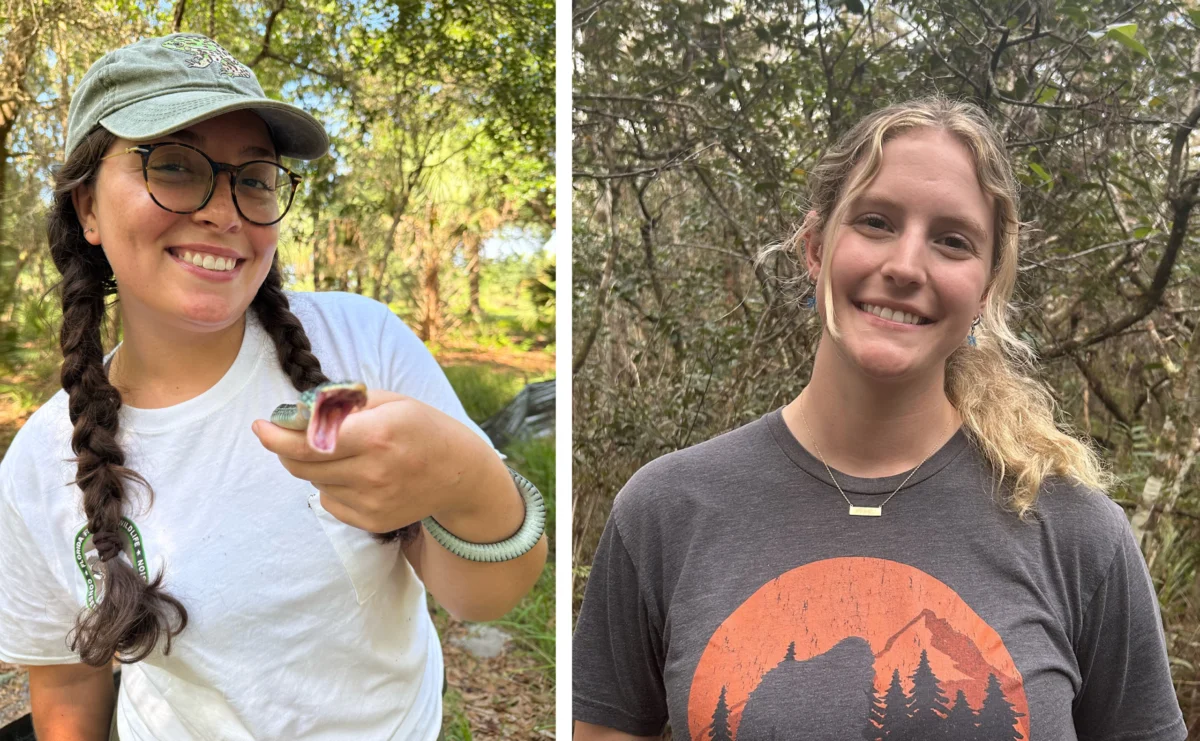
The Corkscrew Swamp Sanctuary, a critical ecological stronghold within the Western Everglades, has officially welcomed two new Conservation Assistants to its ranks for the upcoming field season. Supported by a generous endowment from Dr. Allyn Golub, these specialized staff members arrive at a pivotal time for the sanctuary’s science-based land stewardship program. Michaela Argana and Caroline Baxter have been appointed to provide essential support for the Western Everglades Research Center, ensuring the continuity of long-term biological monitoring programs that have defined the Sanctuary’s legacy for decades. Their tenure, which spans from late autumn through early March, encompasses a high-intensity period of field data collection, laboratory analysis, and proactive habitat management, including participation in the upcoming prescribed fire season.
The Critical Role of Seasonal Research Support
The integration of temporary conservation staff is a strategic necessity for the Corkscrew Swamp Sanctuary. Given the sheer scale of the 13,000-acre site—which encompasses the largest remaining old-growth bald cypress forest in North America—the capacity for manual monitoring is a logistical challenge. By dedicating two full-time assistants to the Western Everglades Research Center, the Sanctuary ensures that critical datasets regarding indicator species remain robust.
The Western Everglades is a landscape defined by seasonal hydroperiods, where water levels dictate the movement and reproductive success of countless species. During the winter months, as water levels recede, the biological activity in the wetlands shifts, necessitating rigorous monitoring of aquatic fauna, including small fish and crayfish populations that serve as the foundation of the Everglades food web. The assistants will be responsible for the systematic collection of these samples, providing the data necessary to track the health of the watershed.
Scope of Field Duties and Scientific Monitoring
The responsibilities assigned to Argana and Baxter represent a comprehensive cross-section of conservation biology. Their daily activities are dictated by the rigorous demands of multi-taxa monitoring. This includes:
- Avian Surveys: The monitoring of wading birds, specifically the Wood Stork (Mycteria americana). As a federally threatened species, the Wood Stork serves as an indicator of Everglades health; their nesting success is directly tied to the timing and duration of the seasonal water recession.
- Herpetological and Mammalian Monitoring: Utilizing camera trap technology, the assistants will process thousands of images to track the presence and behavior of elusive mammals and reptiles throughout the sanctuary.
- Aquatic Fauna Analysis: Beyond field collection, the assistants are tasked with laboratory processing, a critical step in translating raw field captures into quantitative data that can be analyzed for long-term trends.
- Prescribed Fire Operations: Perhaps the most rigorous aspect of their appointment is the transition into the Sanctuary’s Prescribed Fire Team. Beginning in December, the team will begin a series of controlled burns designed to mimic natural lightning-strike fire cycles, which are essential for maintaining the pine flatwood ecosystems that border the swamp.
Profiles of the Incoming Conservationists
The selection of Argana and Baxter highlights a commitment to recruiting highly trained professionals who possess both academic credentials and practical, boots-on-the-ground experience.
Michaela Argana joins the team as a recent graduate of the University of Florida, where she earned a Bachelor of Science in Wildlife Ecology and Conservation. Her background is marked by a deep interest in herpetofauna—a specialized field that is particularly relevant to the Everglades’ high diversity of amphibians and reptiles. Her prior engagement with the Florida Fish and Wildlife Conservation Commission provides her with a strong foundation in regulatory and management-focused conservation, which is directly applicable to the Sanctuary’s stewardship goals.
Caroline Baxter brings a diverse, multi-regional perspective to the team. A graduate of Northern Michigan University with a degree in Biology, Baxter’s professional trajectory has taken her across the United States. Her experience as a Fisheries Technician for the U.S. Geological Survey and her work with the Loon Preservation Committee in New Hampshire demonstrate a versatility in handling both aquatic and avian research methodologies. Her expertise in vegetation surveys, gained while working at Isle Royale National Park, will be instrumental as the Sanctuary manages the encroachment of invasive plant species and monitors native flora health.
Chronology of the 2024-2025 Winter Season
The arrival of the new assistants aligns with a carefully orchestrated seasonal calendar at Corkscrew Swamp:
- Late Autumn (November): Onboarding and integration into the existing research team. Initial training on safety protocols and specific monitoring methodologies for current aquatic studies.
- Early December: Formal certification and preparation for the prescribed fire season. This involves physical readiness training and equipment familiarization.
- December through February: Peak field season. The team conducts intensive wading bird nesting surveys and manages the bulk of the aquatic fauna sampling.
- March: Final data synthesis, wrap-up of seasonal reports, and transition of information to the permanent research staff.
Broader Implications for Everglades Conservation
The financial support provided by Dr. Allyn Golub acts as a force multiplier for the Sanctuary’s mission. In an era where climate change and urban encroachment threaten the stability of the Western Everglades, the ability to maintain consistent, high-quality ecological monitoring is of paramount importance.
Fact-based analysis suggests that the data collected by these assistants does more than just track individual species; it provides the empirical evidence necessary for regional policy decisions. For instance, understanding the relationship between aquatic fauna density and wood stork reproductive success informs water management decisions by local authorities, such as the South Florida Water Management District. When water delivery schedules are adjusted based on these findings, the entire ecosystem benefits.
Furthermore, the participation of these assistants in the Prescribed Fire Team addresses the growing need for fire-adapted management. Without human-facilitated controlled burns, the sanctuary would be susceptible to catastrophic, high-intensity wildfires caused by the accumulation of fuel loads over time. By training new staff in these specialized techniques, the Sanctuary ensures the continuity of its wildfire mitigation strategy.
Institutional Commitment to Science
The Sanctuary’s investment in these positions reflects an institutional belief that conservation must be rooted in data. By hosting early-career scientists, Corkscrew Swamp also serves as a vital training ground. The skills acquired by Argana and Baxter—ranging from data management and geospatial analysis to fire management and specialized species identification—are highly sought after in the conservation sector.
As they navigate the wetlands, record data, and manage the delicate balance of the fire-dependent landscape, their work provides the baseline information that will inform the Sanctuary’s management strategies for years to come. The collaboration between private philanthropy, represented by the Golub fund, and professional scientific execution remains the cornerstone of the Sanctuary’s long-term success.
In summary, the addition of two highly qualified Conservation Assistants serves to reinforce the Sanctuary’s capacity to face the complex challenges of the 21st-century Everglades. Through their combined expertise in herpetology, fisheries, and forest management, Michaela Argana and Caroline Baxter will play a fundamental role in preserving the biological integrity of the Corkscrew Swamp during a critical period of the ecological calendar. Their work will continue to illuminate the complex interdependencies of one of Florida’s most precious landscapes, ensuring that the research conducted within the Western Everglades Research Center remains a beacon of scientific excellence.
