
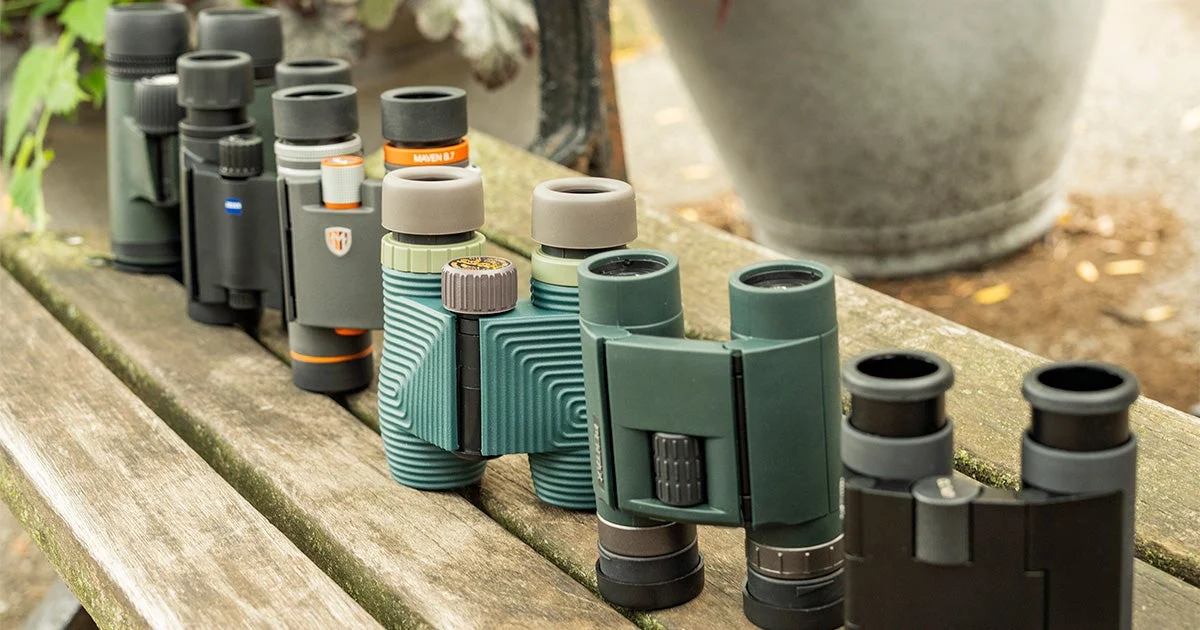
The evolution of optical engineering has fundamentally shifted the landscape for birders, wildlife enthusiasts, and outdoor adventurers. While traditional full-size binoculars, typically featuring 42mm objective lenses, remain the industry standard for low-light performance and steady viewing, a new generation of high-performance compact and pocket-sized optics is challenging the status quo. These smaller instruments, designed for portability and convenience, ensure that users are never caught without the ability to observe the natural world, bridging the gap between convenience and professional-grade clarity.
Defining the Compact and Pocket Category
In the optical industry, the categorization of binoculars is primarily determined by the diameter of the objective lenses—the front lenses furthest from the eye. Compact binoculars generally fall into the 30mm to 32mm range, providing a balanced compromise between light gathering and physical size. Pocket binoculars, conversely, feature objective lenses of 25mm or smaller.
By these metrics, the modern market offers a diverse array of tools. While the weight and size reduction inherent in these models often come at the expense of light transmission—a critical factor during dawn and dusk birding—the trade-off is often justified by the increased probability of the equipment being deployed. As the adage in photography goes, "the best camera is the one you have with you"; the same principle applies to optics. A high-end, heavy pair of binoculars left in a hotel room or a vehicle provides zero utility compared to a lighter pair carried in a jacket pocket.
A Chronology of Optical Portability
The development of the modern compact binocular can be traced back to the mid-20th century, though it was not until the 1980s and 90s that glass quality caught up with the demand for miniaturization. Early pocket binoculars were often plagued by poor light transmission and narrow fields of view, relegated to the category of "toy" optics.
The 2000s marked a turning point. Advancements in lens coatings—specifically multi-layer anti-reflective coatings—allowed smaller lenses to transmit a significantly higher percentage of light. By 2010, the integration of high-definition (HD) and extra-low dispersion (ED) glass into smaller chassis signaled a shift in professional perception. Today, the focus has moved toward ruggedization and ergonomics, with manufacturers like Vortex, Zeiss, and Swarovski competing to offer "unconditional" lifetime warranties, reflecting increased confidence in the durability of these compact devices.
Top Performers: Market Overview and Technical Specifications
Selecting the right pair of binoculars requires balancing budget, intended use, and optical requirements. The following models represent the current benchmark for quality in the sub-15-ounce category.
The Vortex Bantam HD 6.5×32
Priced at approximately $100, the Vortex Bantam is an outlier in the "compact" category. Weighing 14.4 ounces and measuring 4.9 by 4.8 inches, it is the largest on this list but offers a distinct advantage for younger birders or those who prefer a wider, steadier field of view. Its 6.5x magnification is lower than the standard 8x, which translates to less image shake and a more forgiving viewing experience. Backed by Vortex’s famous unlimited, unconditional lifetime warranty, it serves as a robust entry point into serious birding.
Nocs Standard Issue 8×25
The Nocs Standard Issue has gained significant market share due to its aesthetic appeal and accessible $100 price point. At 11.85 ounces, it is designed for the casual explorer. The unit features a grippy, waterproof exterior and is available in multiple colors, making it a popular choice for younger audiences or as a secondary "beater" pair for rugged travel.
Pentax AD 8×25 WP
For those prioritizing true pocketability, the Pentax AD 8×25 WP is a consistent performer. Weighing only 10.6 ounces, this model is frequently cited by professional ornithologists and travelers for its ease of use. With a 25-year limited warranty and a compact 4.3-inch frame, it fits easily into a standard coat pocket or small daypack without sacrificing weatherproofing or fog-proofing.
Zeiss Terra ED Pocket 8×25
The Zeiss Terra ED Pocket represents a significant step up in optical engineering. Priced at $400, it provides a high-contrast, bright image that challenges many full-size models. Its ability to focus at close range—a critical feature for identifying butterflies, flowers, or nearby songbirds—is a hallmark of the Zeiss design philosophy. It serves as an ideal bridge for the serious birder who demands professional clarity in a portable package.
Maven B.7 8×25
Maven has carved out a niche by offering direct-to-consumer premium optics. The B.7, priced at $600, offers superior color fidelity and sharpness. While slightly heavier than other pocket models at 12.4 ounces, the ergonomic design and high-quality eyecups provide a level of viewing comfort often lacking in smaller binoculars.
Swarovski CL Curio 7×21
The pinnacle of miniaturization is the Swarovski CL Curio. Priced at $999, it is the lightest model on the market, weighing in at just 8.9 ounces. Its 3.6-inch length is an engineering feat, made possible by the company’s proprietary glass formulations. While the price is prohibitive for many, the Curio is regarded as the gold standard for long-term travel where every ounce of weight saved in a pack is critical.
Technical Analysis: The Impact of Lens Size
The implications of using smaller binoculars center on the "exit pupil"—the beam of light that exits the eyepiece and enters the user’s eye. A standard 8×42 binocular has an exit pupil of 5.25mm, which is more than sufficient for the human eye, even in low-light conditions. An 8×25 binocular, however, produces an exit pupil of only 3.125mm.
This technical limitation means that during twilight or under dense forest canopies, the image will appear dimmer than that of a full-size binocular. Furthermore, smaller exit pupils require the user to align their eyes more precisely with the center of the ocular lens, a phenomenon known as "eye placement sensitivity." Consequently, while compact binoculars are technological marvels, they require a higher degree of user proficiency to achieve a perfectly clear image compared to larger, more forgiving optics.
Broader Implications for Conservation and Ornithology
The rise of high-quality compact binoculars has broader implications for conservation and public engagement with wildlife. By lowering the barrier to entry—both in terms of cost and physical burden—these tools encourage participation in "citizen science." When individuals are equipped with effective tools, they are more likely to participate in bird counts, eBird data entry, and community-led conservation efforts.
Industry experts observe that as optical manufacturers continue to refine these models, the gap between "travel" optics and "professional" optics is narrowing. This convergence benefits the entire ecosystem of birding. Whether it is a student embarking on their first field trip or a veteran birder traveling light for an international excursion, the democratization of high-quality, portable optics is fundamentally changing how the public interacts with the avian world.
Ultimately, the choice of binocular remains a personal one. However, the data suggests that for most users, the benefits of carrying a lighter, more portable device far outweigh the marginal losses in low-light performance. As long as the optics provide a clear, waterproof, and durable view, they fulfill their primary purpose: to help the user connect with the natural world in an immediate and meaningful way.
