
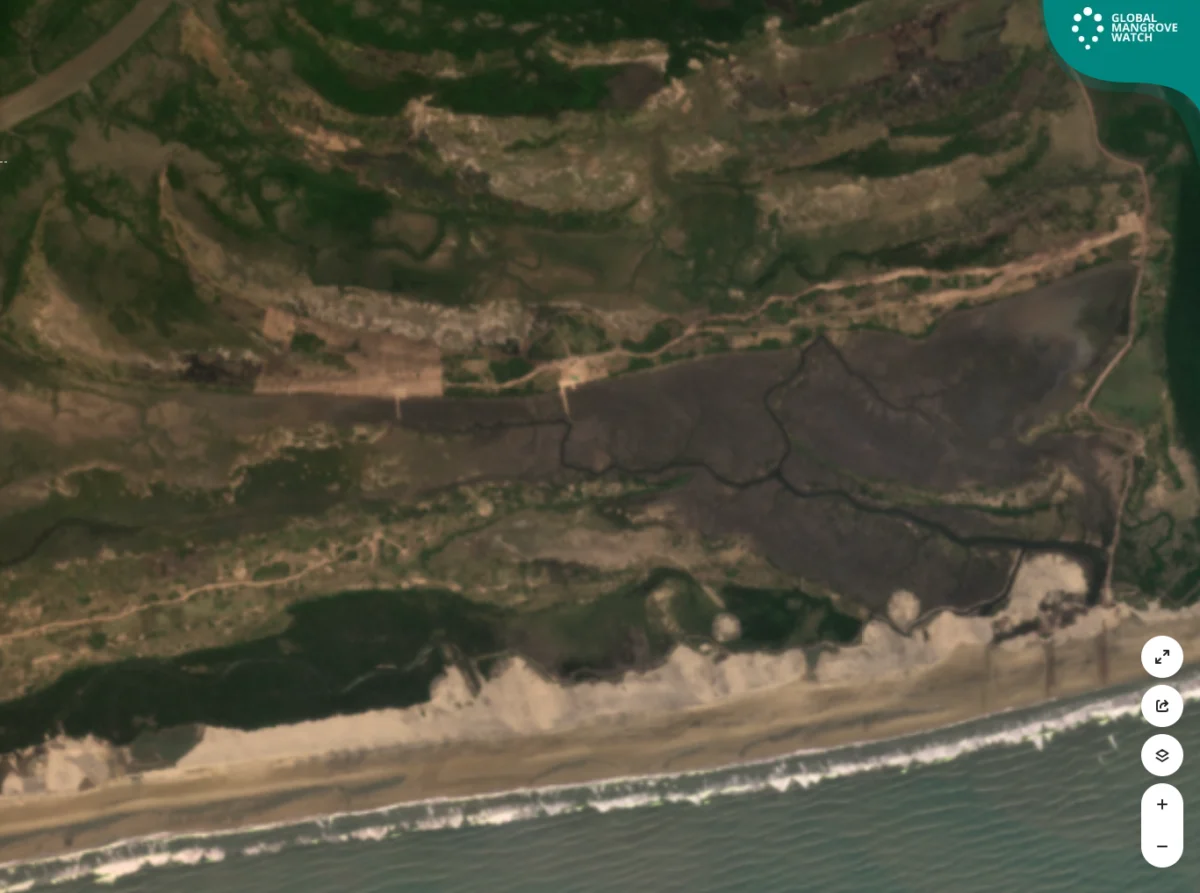
Recent satellite analysis and environmental investigations have uncovered a critical loss of mangrove habitats within the Zambezi Delta of Mozambique, highlighting an intensifying clash between industrial resource extraction and vital ecological preservation in East Africa. The degradation, first flagged through high-resolution alerts on the Global Mangrove Watch (GMW) platform and detailed extensively in investigative reporting by Mongabay, has been directly linked to heavy sand mining operations conducted by a leading Chinese mining firm operating within the region. This alarming development threatens one of the continent’s most expansive and ecologically rich delta systems, raising urgent concerns among conservationists, climate scientists, and local communities who depend on the wetlands for their daily survival and economic stability.
The Zambezi Delta, situated along the central coast of Mozambique, is universally recognized for its extraordinary biodiversity and vital ecosystem services. Spanning a vast network of channels, mudflats, and tidal forests, the delta was formally designated as a Wetland of International Importance under the Ramsar Convention in 2004. Out of more than 2,500 Ramsar sites globally, Mozambique hosts only two, making the Zambezi Delta an irreplaceable cornerstone of the nation’s natural heritage. Historically, Mozambique’s mangroves have faced cumulative pressures from resource exploitation, including the harvesting of wood for fuel, urban expansion, agricultural clearing, port infrastructure development, and increasingly frequent extreme weather events such as intense flooding and devastating tropical cyclones. However, the rapid acceleration of industrial heavy sand mining has introduced a severe, localized threat that has outpaced traditional degradation patterns.
The broader context of this environmental crisis is rooted in the global explosion of sand consumption. Globally, sand stands as the second-most exploited natural resource after water, driven largely by rapid urbanization and heavy demand for marine and coastal aggregates in the construction sector. Unlike timber or minerals, marine sand reserves are being depleted at unprecedented rates, while international governance frameworks remain largely absent. Environmental watchdogs and United Nations bodies have repeatedly warned that the lack of global standards for sand extraction leaves developing nations vulnerable to unchecked industrial exploitation. In Mozambique, this global commodity demand has manifested locally as heavy sand mining operations, which disrupt delicate hydrological networks, strip away protective vegetative buffers, and inflict irreversible damage on sensitive coastal habitats.
The ecological stakes for Mozambique are exceptionally high. The nation holds the largest extent of mangroves in the Western Indian Ocean region, boasting roughly 10 percent of the entire African continent’s mangrove coverage. Within Mozambique, the Zambezi Delta accounts for approximately 16 percent of the country’s total mangrove expanse, representing its largest continuous tract of these vital coastal forests. These ecosystems function as extraordinary carbon sinks, capable of sequestering carbon at rates significantly higher than terrestrial tropical rainforests. Current estimates indicate that Mozambique’s mangroves absorb well over one-third—specifically 39 percent—of the nation’s annual fossil fuel emissions, positioning the Zambezi Delta as a globally significant blue carbon hotspot defined by immense above- and below-ground biomass and rich sediment carbon stores.

Beyond climate regulation, the delta serves as a frontline natural defense against the compounding impacts of global climate change, including rising sea levels and increasingly severe storm surges. These protective functions are projected to become even more critical as East Africa experiences more frequent and intense meteorological anomalies. Furthermore, the socio-economic value of the delta cannot be overstated. Approximately 400,000 coastal residents in Mozambique rely directly on mangrove-associated fisheries and forest resources for their livelihoods and food security. Economic valuations suggest that the nation’s mangroves contribute an estimated $7 billion in annual net benefits to the national economy, reinforcing the reality that their long-term preservation carries profound economic imperatives alongside environmental ones.
The biodiversity sheltered within the Zambezi Delta further magnifies the tragedy of its degradation. The region supports substantial populations of iconic large African mammals, including African elephants, hippopotamuses, lions, leopards, and herds of African buffalo. Additionally, the delta provides a sanctuary for vast concentrations of waterbirds, ranging from pink-backed and white-backed pelicans to herons, flamingos, and the globally endangered grey crowned crane. Aquatic and marine ecosystems within the delta are equally prolific, recording frequent sightings of bottlenose and humpback dolphins alongside a diverse array of freshwater and marine fish and shellfish species that form the backbone of local artisanal fisheries.
To track and quantify these environmental losses, researchers and conservation practitioners increasingly rely on advanced technological frameworks such as Global Mangrove Watch (GMW). Launched as an online platform providing open-access remote sensing data and near-real-time monitoring tools, GMW empowers coastal managers, scientists, and policymakers with high-resolution insights into changes in global mangrove cover. By integrating topographic, hydrological, and soil data, the platform allows stakeholders to rapidly identify the drivers of mangrove loss, evaluate the extent of habitat degradation, and measure the efficacy of ecological restoration initiatives. Without such transparent, satellite-backed verification, localized environmental destruction in remote regions like the Zambezi Delta might otherwise proceed unnoticed by the international community.
In response to these findings, conservation organizations such as Wetlands International have emphasized that the destruction of irreplaceable ecosystems for short-term commercial gain is fundamentally unsustainable. Environmental experts argue that disturbing these natural buffers not only accelerates regional biodiversity loss but actively undermines national climate adaptation goals and international commitments under the Paris Agreement. While acknowledging that resource extraction and industrial development may sometimes be legally sanctioned or economically prioritized, conservation advocates contend that industry operators must be held to strict environmental accountability.
When heavy sand mining or similar disruptive activities are deemed unavoidable, experts recommend close consultation with local environmental specialists to identify and implement the least invasive extraction methodologies. In the specific context of the Zambezi Delta, environmental analysts suggest that simple hydrological interventions—such as unblocking natural tidal channels, clearing sediment blockages, or engineering alternative feeder canals—could potentially restore natural water flows and stimulate the natural regeneration of degraded mangrove stands. Such targeted remediation strategies demonstrate that economic development and ecological stewardship are not mutually exclusive, provided that regulatory enforcement, corporate responsibility, and scientific oversight are rigorously applied to protect the world’s most vulnerable coastal ecosystems.
