
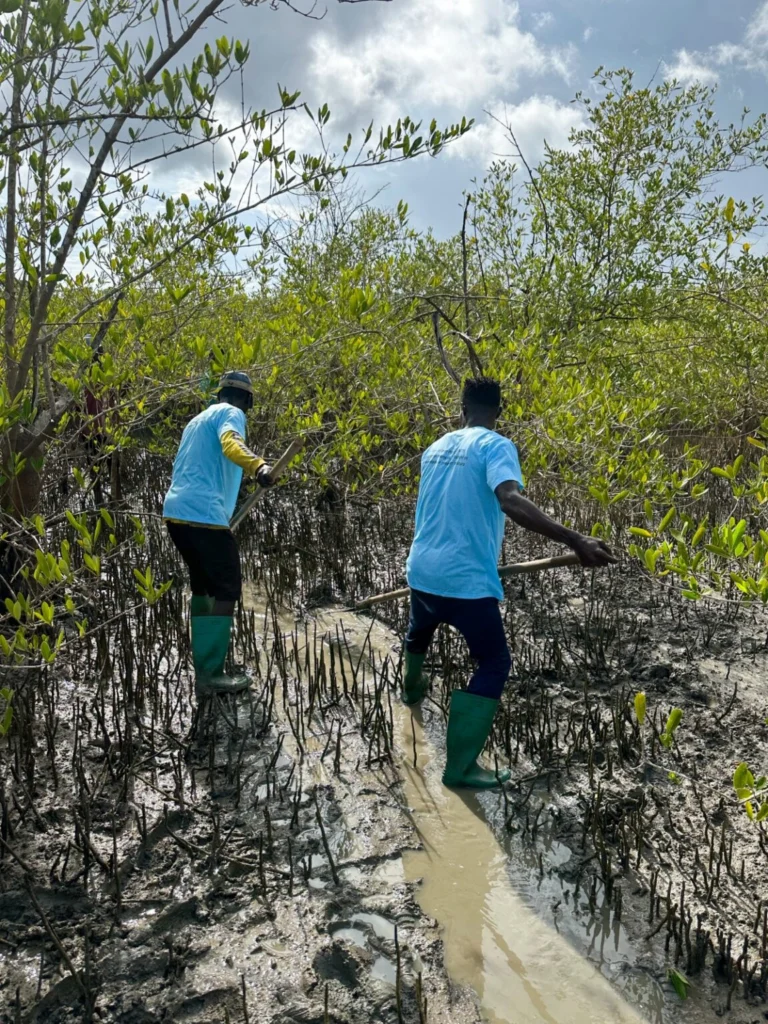
The coastal landscapes of Guinea-Bissau are once again witnessing a concerted ecological revival as Wetlands International, in close collaboration with national authorities and local populations, officially launches its 2026 mangrove restoration campaign. Running from August 27 to September 10, the initiative targets 270 hectares across 18 carefully selected sites within the Cantanhez National Park and its surrounding peripheries. This intensive fortnight of field interventions marks a critical milestone in a broader, long-term national strategy aimed at healing degraded tidal wetlands, bolstering coastal defenses, and securing the livelihoods of communities whose daily survival is inextricably linked to the health of marine and terrestrial ecosystems.
The Ecological Significance and Vulnerability of West African Mangroves
Mangroves serve as the ecological backbone of Guinea-Bissau’s extensive coastal zone. These robust, salt-tolerant forests provide irreplaceable habitats for a diverse array of West African wildlife, act as essential nurseries for regional fisheries, and function as natural breakwaters that shield fragile shorelines from severe erosion, storm surges, and the intensifying impacts of global climate change. Furthermore, mangroves are exceptionally efficient carbon sinks—often referred to as "blue carbon" ecosystems—storing vast quantities of carbon in their biomass and underlying anaerobic soils far more effectively than most terrestrial tropical rainforests.
Despite their immense value, these coastal forests have faced severe degradation over recent decades. Human pressures, including historical conversions of tidal wetlands into marginal rice fields, timber harvesting, and infrastructural development, have drastically altered the natural topography and hydrology of the region. When tidal flows and freshwater pathways are blocked or disrupted, mangrove ecosystems lose their resilience. Without targeted interventions, natural regeneration often stalls entirely, leaving vast expanses of land barren, hypersaline, or colonized solely by low-value succulent vegetation such as Sesuvium.

A Paradigm Shift: Embracing Community-Based Ecological Mangrove Restoration
Departing from traditional, simplistic tree-planting campaigns—which historically suffered from high mortality rates due to unaddressed environmental stressors—the 2026 campaign relies on a scientifically rigorous methodology known as Community-Based Ecological Mangrove Restoration (CBEMR) or Assisted Natural Regeneration (ANR). Rather than forcing new seedlings into hostile environments, this approach focuses on diagnosing and rectifying the root causes of ecosystem failure, with a primary emphasis on restoring natural hydrological flows.
Project teams meticulously analyze topographical features to identify obstacles preventing tidal exchange. By clearing blocked channels, leveling earth berms from abandoned agricultural plots, and reestablishing the natural ebb and flow of tidal waters, the intervention creates an environment where mangrove propagules can settle and pioneer species—such as Avicennia—can flourish independently. This process leverages the inherent regenerative capacity of the mangroves themselves, ensuring higher survival rates and more resilient, self-sustaining forests over the long term.
Rigorous Site Selection and Collaborative Community Engagement
To maximize the efficacy and sustainability of the campaign, Wetlands International enforces strict ecological and social criteria for site selection. Eligible areas are restricted to former tidal rice fields or deforested zones that have been abandoned from agricultural use for a minimum of two years. Furthermore, target locations must suffer from disrupted hydrology that impedes natural recovery, must not overlap with competing conservation initiatives, and must be entirely free from ongoing land tenure or resource-use disputes.
Crucially, no restoration work proceeds without the explicit, informed consent of local landowners and resource users. Community integration forms the bedrock of the entire program. The 2026 campaign was inaugurated through high-profile community launch events held across three pivotal settlements: Cassumba in Cacine, Kauntchintchi in Yemberem, and Weldekeia Wangha. These gatherings served as interactive platforms where local stakeholders, traditional leaders, and technical experts collaborated in the field. Residents observed firsthand demonstrations of hydrological restoration techniques, engaged in open dialogues regarding the historical drivers of mangrove loss, and established frameworks for ongoing participation.

Following these launch events, community members—empowered by continuous training—have taken active roles alongside local non-governmental organizations (NGOs) and National Park personnel. From identifying prospective restoration zones and executing physical earthworks to monitoring post-restoration recovery, local stakeholders act as primary stewards of their natural heritage.
Comprehensive Monitoring, Adaptive Management, and Broad Implications
To ensure accountability and continuous scientific learning, Wetlands International implements a robust, multi-variable monitoring framework across all restored localities. Field teams regularly assess indicators such as soil salinity, hydrological connectivity, vegetation coverage, and the density of natural seedling recruitment. This empirical data allows conservationists to evaluate the performance of specific techniques, identify areas requiring supplementary hydrological adjustments, and adapt management strategies dynamically over time.
Beyond immediate environmental recovery, the socio-economic implications of the campaign are profound. By restoring mangrove habitats, the initiative directly revitalizes local fisheries, ensuring sustainable protein sources and income generation for artisanal fishers. It secures agricultural lands from saltwater intrusion and fortifies villages against extreme weather events. Moreover, the deep involvement of local women and youth groups fosters a profound sense of ownership and environmental stewardship, ensuring that the benefits of the restoration endure long after the initial campaign concludes.
Collaborative Governance, Strategic Partnerships, and Funding
The sheer scale of Guinea-Bissau’s mangrove restoration vision—which targets an aggregate recovery of 1,000 hectares and aims to push total program-restored areas to approximately 3,500 hectares—requires unprecedented institutional coordination and multi-stakeholder partnerships.

The 2026 campaign is implemented in close partnership with the Government of Guinea-Bissau, specifically through the Ministry of the Environment, Biodiversity and Climate Action, and the Institute for Biodiversity and Protected Areas (IBAP). Implementation is further strengthened by dedicated civil society organizations and national networks, including Proativos, REDE AGIR, AJUTS, and the national mangrove platform PLANTA. Strategic alignment is additionally maintained with regional and international bodies such as the BioGuinea Conservation Trust Fund, the International Union for Conservation of Nature (IUCN), the Regional Partnership for Coastal and Marine Conservation (PRCM), and the World Bank’s West Africa Coastal Areas Management Program (WACA), alongside conservation partner Face the Future.
Financial backing for these critical ecological interventions is generously provided by core philanthropic donors Greenchoice and DOB Ecology, whose sustained investments enable the translation of ambitious conservation blueprints into tangible, landscape-scale achievements on the ground.
As the 2026 campaign progresses toward its September 10 conclusion, Guinea-Bissau stands as a beacon of progressive environmental management in West Africa. By harmonizing ancestral community ties with cutting-edge ecological science, the nation is not merely replanting trees; it is successfully rebuilding the ecological and economic foundations required to withstand the uncertainties of a changing global climate.
