
For much of evolutionary history, the dominant reproductive strategy across the animal kingdom was straightforward and detached: organisms produced offspring, released them into the environment, and left them to fend for themselves. Yet, over millions of years, complex caregiving emerged independently in diverse lineages, from mammals nourishing their young with milk to birds constructing elaborate nests and insects tending to vulnerable larvae. How evolution managed to bridge the vast behavioral gap between complete neglect and intensive parental care has long remained one of biology’s most compelling mysteries. Now, a landmark study published in the journal Nature offers a profound breakthrough, revealing that parental behavior may have originated not from newly invented brain structures, but from the clever evolutionary repurposing of ancient neural pathways originally dedicated to hunger and feeding.
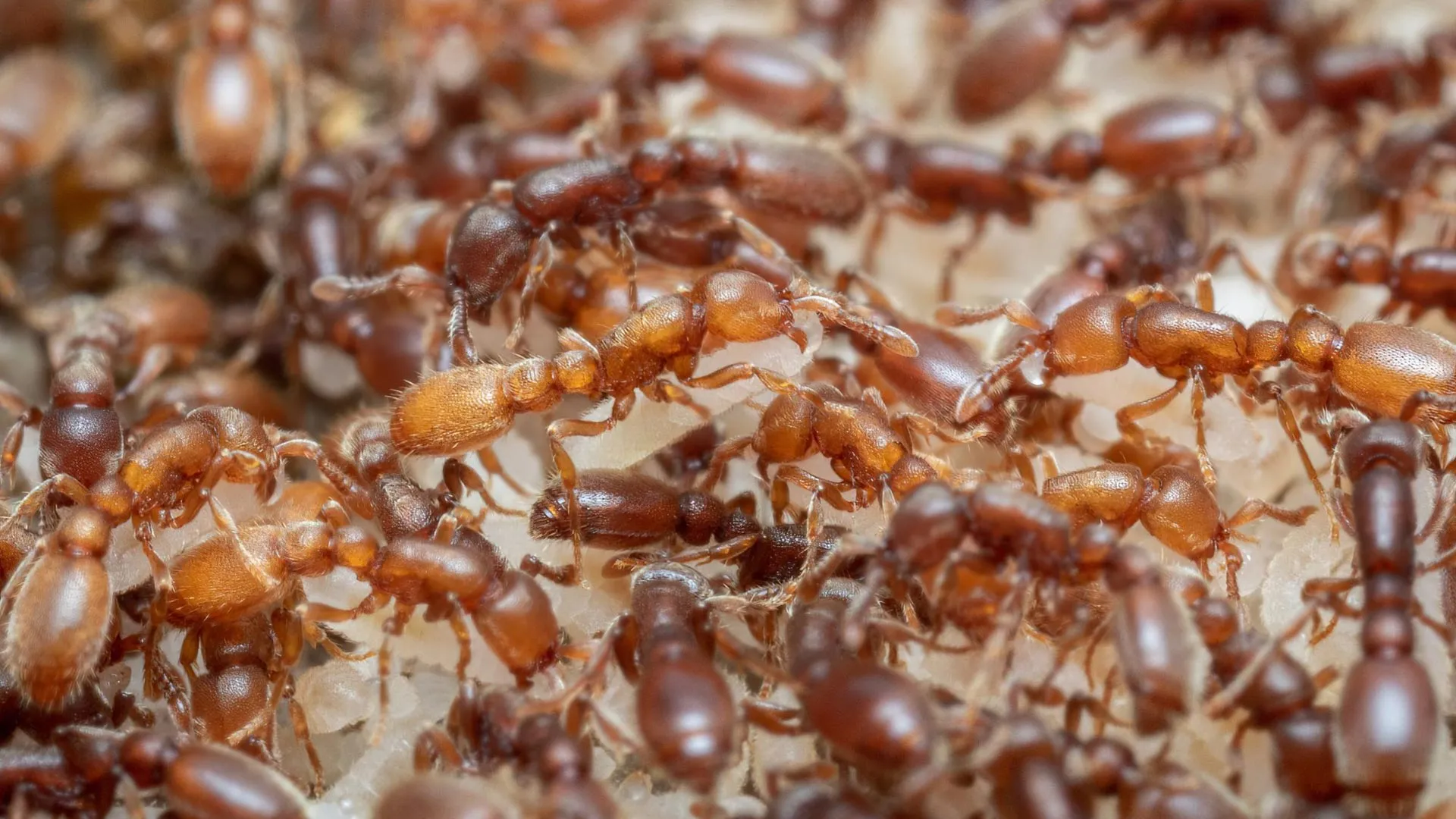
The research, spearheaded by scientists at The Rockefeller University, focuses on the clonal raider ant (Oerapheidole or more specifically Cerapachys biroi, known commonly as clonal raider ants). By taking advantage of this unique insect model, the research team discovered that the chemical signaling systems controlling whether an ant feeds itself or tends to its young are deeply intertwined. These findings suggest a remarkably conservative evolutionary strategy: rather than building entirely new cognitive machinery from scratch, nature frequently adapts pre-existing biological toolkits to solve novel behavioral challenges.
The Mechanics of Behavioral Evolution: Unlocking the Ant Model
To understand how complex social behaviors evolve, scientists have traditionally faced significant hurdles. Major model organisms in neuroscience each present distinct limitations. Fruit flies (Drosophila melanogaster) and roundworms (Caenorhabditis elegans), while invaluable for genetic and neural mapping, do not exhibit parental care. Conversely, mice provide extensive and sophisticated caregiving, making them ideal for studying the neurobiology of parenting; however, the mammalian brain is immensely complex, boasting roughly 100 million neurons. This staggering cellular density makes it exceptionally difficult to isolate precise neural circuits and manipulate individual chemical messengers in real time.
Ants, by contrast, offer an optimal middle ground. The brain of an adult clonal raider ant contains approximately 60,000 cells. This compact neural architecture allows researchers to map underlying circuits with unprecedented detail and speed, while still observing sophisticated social interactions. Furthermore, ant colonies operate on a strict, age-dependent division of labor. Younger ants invariably remain inside the nest to nurse and protect developing larvae, whereas older ants transition into foragers, leaving the nest to hunt and gather food. This natural behavioral shift provides a living laboratory for observing how brain chemistry changes over an individual’s lifetime to reshape social roles—a process that mirrors, in some fundamental ways, the changing demands of human development and aging.
Tracing the Chronology of Discovery: A Step-by-Step Methodology
The path to this discovery required a rigorous, multi-step experimental design executed over several years. The research team began by constructing an automated behavioral monitoring system capable of tracking hundreds of individual caregiving interactions simultaneously. By placing single ants in controlled environments alongside individual larvae, the scientists could quantify the exact duration and intensity of nursing behavior.
Next, the researchers mapped the complete set of neuropeptides—the small chemical molecules utilized by the brain to communicate—within the clonal raider ant. Out of this comprehensive neuropeptidome, the team successfully identified 70 distinct chemical messengers. Each candidate molecule was synthetically manufactured and tested to determine whether its introduction or suppression altered the ants’ caregiving tendencies.
To determine whether these candidate molecules were remnants of ancient feeding circuits, the team compared the brain chemistry of well-fed ants with those subjected to nutritional deprivation. This allowed them to cross-reference caregiving motivation with metabolic state. By analyzing where these molecules were produced in the brain, tracking how their concentrations shifted across the ants’ lifespans, and artificially manipulating their activity levels, the researchers established a direct causal link between internal neurochemistry and external social behavior.
Two Master Molecules: Neuropeptide F and Allatostatin A
The core of the discovery hinges on two specific signaling molecules that act as opposing rheostats, driving ant behavior in opposite directions depending on age and physiological condition: Neuropeptide F (NPF) and Allatostatin A (AstA).
Neuropeptide F was found to actively encourage caregiving behavior. In young ants, concentrations of NPF were naturally elevated in key regions of the brain, correlating with their primary role as nest-bound nurses. Conversely, Allatostatin A promoted foraging, driving ants away from the larvae and out into the wider environment. Older ants naturally displayed higher levels of AstA and lower levels of NPF, perfectly matching their life-stage transition from nursing to foraging.
When researchers experimentally manipulated the activity of either molecule, the behavioral consequences were immediate and dramatic. Enhancing NPF signaling compelled older, foraging-age ants to return to the nest and tend to larvae, while boosting AstA caused young nurses to abandon their brood and seek food. These interventions proved that NPF and AstA were not merely passive biomarkers associated with age, but active regulatory switches controlling behavioral output.
Furthermore, these molecules remained exquisitely sensitive to hunger. When ants were starved, their brains underwent a chemical shift: NPF levels rose, while AstA levels dropped. This metabolic deficit effectively tricked the ants’ brains into a caregiving state, making them behave more like nurses. Once fed, the chemical balance inverted, redirecting the ants’ priorities away from the brood and toward resource acquisition.
Expert Perspectives and Official Insights
Reflecting on the broader significance of the study, senior author Daniel Kronauer, head of the Laboratory of Social Evolution and Behavior at Rockefeller University, emphasized the thriftiness of evolutionary processes.
"Our work is a prime example of how evolution seldom invents things from scratch," Kronauer noted. "Evolution takes what it has and works with that, sometimes in very surprising ways."
Kronauer pointed out that the connection between feeding circuits and parenting makes inherent logical sense when viewed through an evolutionary lens. At its core, parental care is fundamentally about nourishment—extending the mechanisms designed to sustain the self so that they encompass dependent offspring.
Co-researcher and study contributor Kay expressed astonishment at how deeply conserved these pathways appear to be across the animal kingdom. "It amazes me that similar parenting behaviors have evolved so many times in so many distinct animal lineages," Kay observed. "Our paper suggests that the evolutionary routes to these sorts of behaviors are far more constrained than we may have naively imagined. That’s very exciting, because it may eventually lead to a blueprint of how these complex social behaviors evolve."
Broader Implications for Mammalian Neurobiology and Human Health
While the research was conducted entirely on insects, the implications extend far beyond myrmecology. Mammals—including humans—rely on closely related neuropeptide signaling systems to regulate social bonding, maternal care, and feeding behavior. For decades, neurobiologists have hypothesized that mammalian parental care evolved through the co-option of feeding pathways, but direct empirical evidence linking specific neuropeptides to this evolutionary transition has been exceptionally difficult to isolate in complex mammalian brains.
By demonstrating the functional bridge between hunger circuits and caregiving in a tractable insect model, the Rockefeller team has provided a conceptual framework that comparative neurobiologists can now test in vertebrates. Future research will aim to map the precise downstream neural circuits activated by NPF and AstA in ants, then determine whether homologous circuits in mice and other mammals play a parallel role in maternal and paternal care. Uncovering this shared biological strategy could illuminate the fundamental neurochemical rules governing mammalian social behavior.
Shedding Light on Healthy Brain Aging
Beyond parenting, the study opens a promising new avenue for aging research. Contemporary neuroscience heavily invests in investigating late-stage neurodegenerative conditions such as Alzheimer’s disease and other forms of dementia. However, relatively little is known about the subtle, cumulative chemical shifts that occur within a healthy brain across a normal lifespan.
Because clonal raider ants undergo a predictable, age-driven transformation in behavior and neurochemistry as part of their normal colony lifecycle, they provide an ideal natural system for studying healthy cognitive aging. The researchers suspect that the same neuromodulatory mechanisms dictating the shift from nursing to foraging in ants may also influence age-dependent behavioral and psychological shifts in other complex organisms, including humans.
"There’s a lot of research and funding invested in studying late-stage neurodegenerative diseases, but we actually know very little about how the brain changes throughout the normal healthspan of an individual," Kronauer remarked. "In ant colonies, these dynamics are central to the organization of the society. Our discovery provides a striking demonstration that neuromodulators can produce age-dependent changes in behavioral proclivities in ants, and I suspect that that’s the case in other animals as well, including in humans."
Conclusion and Future Outlook
By uncovering how ancient hunger circuits were successfully co-opted to give rise to parental care, this study bridges a critical gap in evolutionary biology. It transforms our understanding of how complex social structures arise from solitary origins, proving that nature’s most sophisticated innovations often stem from the reinvention of its oldest and most fundamental mechanisms. As researchers continue to map the precise neural pathways connecting metabolism to social care, science moves one step closer to establishing a universal blueprint for the evolution of the brain, behavior, and the life span.
