
Finland has concluded a significant overhaul of its Important Bird Areas (IBA) network, a critical move to safeguard its avian biodiversity against the backdrop of rapidly changing climatic conditions and evolving ecological landscapes. This comprehensive assessment, which meticulously tracks shifts in bird distributions, migration patterns, and habitat utilization, has resulted in the designation of nine new IBAs and the revision of numerous existing sites, expanding Finland’s total network to 91 internationally recognized areas crucial for bird conservation. This proactive measure underscores Finland’s commitment to adapting its environmental strategies to the observable impacts of global warming and human activity.
Understanding Important Bird Areas: A Global Framework
Important Bird Areas (IBAs) represent a global initiative spearheaded by BirdLife International, identifying sites that are critical for the conservation of bird populations worldwide. These sites are selected using a rigorous, science-based set of criteria, focusing on the presence of threatened species, species with restricted ranges, biome-restricted species, and sites holding significant congregations of birds. The IBA program, established in the late 1980s, serves as a cornerstone for global conservation efforts, providing a standardized framework for identifying and protecting the most vital habitats for birds. In Europe, IBAs often overlap with Natura 2000 sites, specifically Special Protection Areas (SPAs), which are legally protected under the EU Birds Directive. This synergy ensures that sites identified for their avian importance receive formal legal protection and management within the European Union’s comprehensive ecological network.
Finland’s previous IBA assessment played a pivotal role in the establishment of its SPA network, integrating national bird data into the broader European conservation strategy. The current update, however, marks a crucial evolution, recognizing that static conservation frameworks cannot adequately address dynamic environmental changes. It is a testament to the ongoing scientific efforts by organizations like BirdLife Finland to continuously monitor and adapt conservation strategies to real-time ecological shifts.
The Drivers of Change: Climate and Species Dynamics
The impetus for this extensive update is multifaceted, primarily driven by the undeniable impacts of climate change on avian ecology. Finland, situated in the boreal and subarctic regions, is experiencing climate warming at a rate faster than the global average, leading to profound alterations in its ecosystems. Milder winters, reduced snow cover, and earlier springs are reshaping the seasonal distribution of numerous bird species, prompting many to alter their traditional migration routes and wintering grounds.
One of the most striking outcomes of this assessment is Finland’s emergence as an increasingly vital wintering destination for various waterbird species. Historically, the harsh Finnish winters rendered many of its waterways inhospitable for non-resident birds. However, progressively milder winters and changing ice conditions in the Baltic Sea and inland waters have created new opportunities. Species such as the Tufted Duck (Aythya fuligula), Long-tailed Duck (Clangula hyemalis), and Smew (Mergellus albellus) are now observed wintering in Finnish waters in significant numbers, leading to the designation of previously unrecognized wintering sites. For instance, the southern coast of the Åland Islands, a strategically important archipelago, has been identified as a new IBA due to its exceptional numbers of wintering Tufted Ducks, a species known for its adaptability to changing aquatic environments.

Beyond wintering grounds, Finland is also witnessing a transformation in its role as a staging area for migrating birds. Arctic geese, including the Barnacle Goose (Branta leucopsis), Taiga Bean Goose (Anser fabalis), Pink-footed Goose (Anser brachyrhynchus), and Tundra Bean Goose (Anser serrirostris), now rely heavily on Finnish sites as primary stopover locations during their arduous spring and autumn migrations. The Barnacle Goose, in particular, has found Finland to be its most important staging area, with agricultural landscapes in southern Finland becoming critical feeding grounds. Sites like Elimäenjärvi, a newly added IBA, have recorded staggering numbers of Barnacle Geese, with estimates ranging between 150,000 to 300,000 individuals in passage during peak migration periods. This represents a significant ecological shift, with agricultural areas, once primarily managed for food production, now playing an internationally crucial role in supporting avian migratory pathways.
Northern Waders: Sentinels of a Warming World
The updated IBA network also highlights the precarious situation of northern waders, many of which are facing severe declines across Europe and are now classified as threatened. Finland is increasingly becoming a critical stronghold for species like the Red-necked Phalarope (Phalaropus lobatus) and Spotted Redshank (Tringa erythropus), whose breeding ranges are retreating northwards in response to intensifying climate pressures. These species, adapted to specific wetland and mire habitats, are particularly vulnerable to habitat degradation and changes in hydrological regimes caused by climate change.
A prime example of Finland’s disproportionate responsibility for Arctic waders is the Broad-billed Sandpiper (Calidris falcinellus). An estimated nearly 70% of the European population of this species breeds in Finland’s vast open mires of the north. The species is listed as Near Threatened globally by the IUCN, and its reliance on Finnish breeding grounds places an immense conservation burden and opportunity on the nation. The ongoing decline of such species across their traditional European ranges makes the preservation of Finland’s northern mire ecosystems an international conservation imperative. The update of the IBA network ensures that these critical breeding grounds are recognized and prioritized for protection.
Detailed Species Focus: A Panorama of Avian Importance
Finland’s IBA network protects a diverse array of species, reflecting its unique geographical position and varied habitats.
-
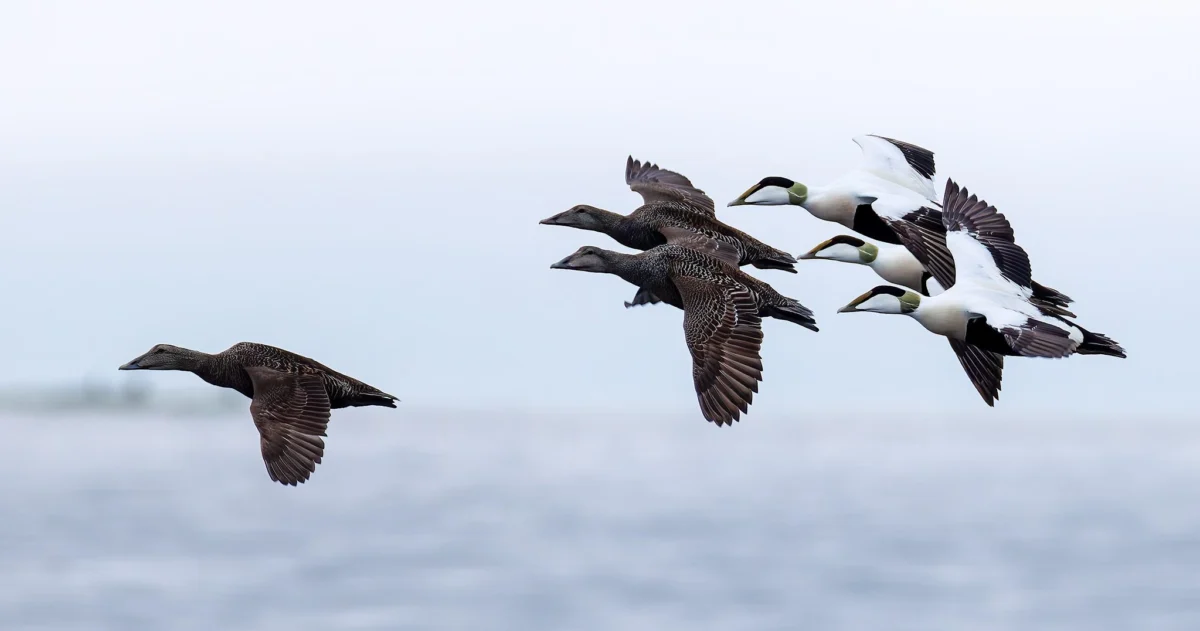
Coastal Specialists: The Baltic Sea archipelago remains crucial for seabirds and waders such as the Caspian Tern (Hydroprogne caspia), a majestic species known for its impressive fishing skills; the Common Eider (Somateria mollissima), a large sea duck whose down is historically prized; the Black Guillemot (Cepphus grylle), a distinctive black-and-white seabird; and the Ruddy Turnstone (Arenaria interpres), a migratory wader known for its foraging habits of turning over stones and shells. These species are intrinsically linked to the health of the Baltic Sea, making them key indicators of marine ecosystem vitality. Their continued presence underscores the need for robust marine conservation policies, including sustainable fishing practices and pollution control.
-
Arctic Waders: Beyond the Broad-billed Sandpiper, species like the Red-necked Phalarope and Spotted Redshank exemplify the northern wader community. The Red-necked Phalarope, a small, elegant wader, exhibits reversed sexual dimorphism, with females being more brightly colored and initiating courtship. Its breeding success is highly dependent on pristine arctic wetland habitats. The Spotted Redshank, a long-legged wader, uses northern bogs and mires for breeding before migrating to warmer climes. The northward retreat of their breeding ranges highlights the rapid environmental shifts occurring in lower latitudes and the increasing importance of Finland’s relatively cooler, more intact northern wilderness.

-
Waterfowl and Geese: The increasing importance of Finnish waters for wintering waterfowl like the Tufted Duck, Long-tailed Duck, and Smew is a direct consequence of climate change. The Tufted Duck, a widespread diving duck, benefits from milder ice conditions. The Long-tailed Duck, a sea duck, prefers coastal waters, and its wintering patterns are strongly influenced by the extent of sea ice. The Smew, a small merganser, is another indicator of changing winter conditions, preferring sheltered freshwater and brackish habitats. The large congregations of geese, including the Barnacle Goose, Taiga Bean Goose, Pink-footed Goose, and Tundra Bean Goose, staging in agricultural fields represent a significant ecological development. These birds require extensive, nutrient-rich feeding grounds to fuel their long migrations, making the protection of these agricultural areas alongside natural habitats critical.
New Habitats and the Challenge of Integration
The recognition of new habitats within the IBA network marks a critical evolution in conservation thinking. The growing importance of Finland’s coastal waters as wintering grounds for waterfowl due to milder winters and changing ice conditions, exemplified by the Åland Islands, necessitates integrated coastal zone management. These areas are often subject to competing human interests, including shipping, tourism, and renewable energy development, making their protection complex.
Equally significant is the emergence of agricultural landscapes in southern Finland as key habitats for staging geese and other waterbirds. Changes in migration routes have transformed fields and coastal farmlands into internationally important concentration areas. The inclusion of sites like Elimäenjärvi, which supports hundreds of thousands of staging Barnacle Geese, into the IBA network highlights a growing intersection between agricultural policy and biodiversity conservation. This paradigm shift requires innovative approaches to land management, where farming practices can be harmonized with the needs of migrating bird populations. Support mechanisms under policies like the Common Agricultural Policy (CAP) of the European Union become crucial tools to incentivize bird-friendly farming.
Growing Threats and Systemic Challenges
While the updated IBA network offers a clearer picture of Finland’s conservation responsibilities, it also starkly illuminates the growing threats to its birdlife. Climate change is identified as the paramount challenge, driving rapid northward retreats of many species. Countering these trends demands urgent and adaptive conservation and restoration efforts, particularly in the southern footholds for Arctic waterbirds that are experiencing the most pronounced shifts.
A significant challenge highlighted by the assessment is the lack of formal legal protection for many of the newly identified IBAs. As migration patterns and wintering areas shift, birds are increasingly relying on sites that are vulnerable to anthropogenic pressures. Renewable energy developments, for instance, often planned without comprehensive sensitivity maps or adequate consideration for ecological values, pose a substantial threat. The need for robust environmental impact assessments and strategic land-use planning that integrates biodiversity considerations from the outset is more critical than ever.
Furthermore, wetland degradation due to eutrophication continues to threaten the ecological quality of many Finnish IBAs. Eutrophication, the process where a body of water becomes excessively rich in nutrients, primarily from agricultural runoff and wastewater discharge, leads to excessive algae growth, oxygen depletion, and a decline in aquatic biodiversity. This phenomenon directly impacts the food sources and habitat quality for waterbirds, necessitating active management and extensive restoration efforts to maintain these ecosystems as suitable havens for target species.

The Indispensable Role of IBA Data in Policy and Planning
The updated IBA data serve as an indispensable tool for informed decision-making across various sectors. They provide essential guidance for land management and development planning, particularly in areas that currently lack formal legal protection. By pinpointing critical habitats, the data empower policymakers to make evidence-based decisions that balance economic development with ecological preservation.
While the long-term future of Arctic breeding birds hinges significantly on global climate policy and efforts to mitigate greenhouse gas emissions, Finland holds a decisive national role in safeguarding staging and wintering habitats. This involves integrating IBA data into national land-use planning frameworks, shaping agricultural practices to be more biodiversity-friendly, and strategically allocating funding, particularly through mechanisms like the EU’s Common Agricultural Policy (CAP). By leveraging these tools, Finland can ensure that its landscapes are managed in a way that sustains its rich avian heritage.
A Collaborative Triumph for Conservation
The successful completion of this comprehensive IBA assessment is a testament to extensive collaboration and a shared commitment to conservation. BirdLife Finland spearheaded the effort, coordinating systematic bird counts conducted by dedicated staff and a vast network of volunteers. This monumental task was significantly augmented by thousands of bird observations submitted to the Tiira database, a national platform that now boasts over 30 million bird records. This citizen science initiative underscores the power of public engagement in environmental monitoring.
Crucially, the assessment benefited from invaluable data contributions from key institutional partners, including Metsähallitus Parks and Wildlife Finland, responsible for managing state-owned lands; the Finnish Environment Institute (SYKE), a leading research and expert organization; and the Finnish Museum of Natural History (Luomus), which houses extensive biological collections and expertise. To ensure the relevance and accuracy of the update, only data from the past decade were utilized, providing a contemporary snapshot of avian distributions and trends.
Tero Toivanen, Conservation Officer at BirdLife Finland, aptly summarized the urgency and significance of this work: “The bird distributions are ever-changing. While the previous IBA assessments were crucial in establishing the SPA network, keeping the network up to date is needed to identify the current conservation needs and to protect the new hotspots.” His statement encapsulates the dynamic nature of conservation in the Anthropocene, where continuous monitoring and adaptive strategies are paramount.
The updated IBA network unequivocally confirms Finland’s growing responsibility for waterbird conservation in a rapidly changing world. It serves as a powerful call to action, highlighting the urgent need for adaptive, forward-looking conservation policies that can respond effectively to the ecological transformations brought about by climate change and human pressures. The meticulous work behind this update provides a robust foundation for Finland to champion avian biodiversity, both within its borders and as a crucial link in the global migratory flyways.
