
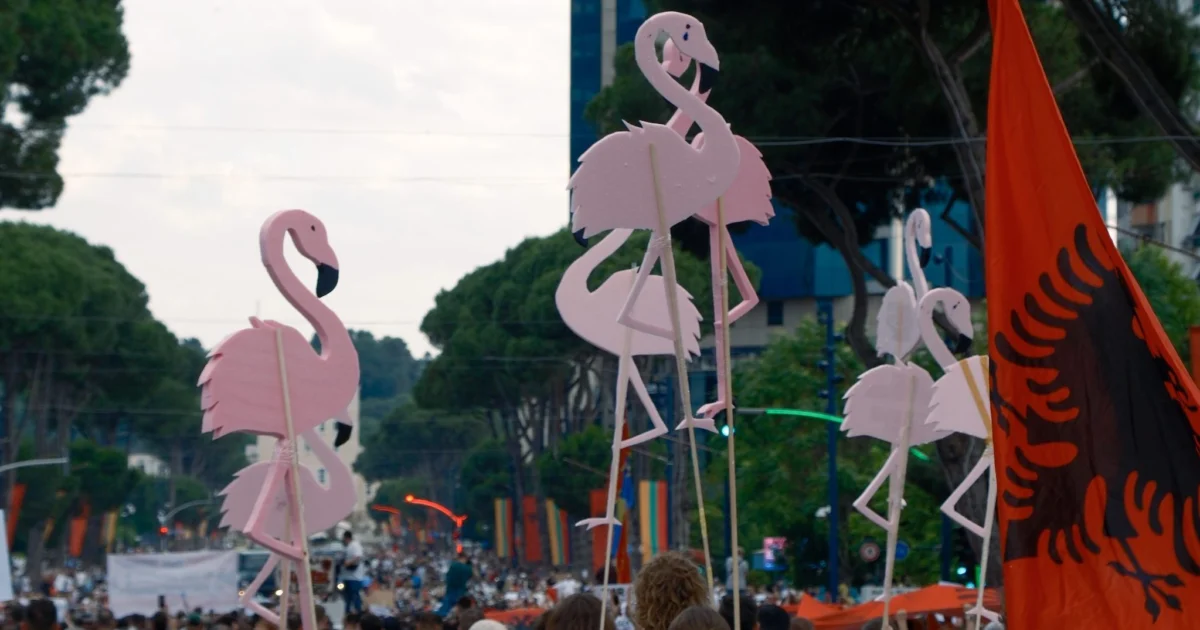
Thousands of citizens have converged on the streets of Tirana for four consecutive days, demonstrating against a proposed luxury tourism development that threatens the Vjosa Narta Protected Landscape. This critical coastal ecosystem, often lauded as one of the last intact stretches of the Mediterranean coastline, faces an existential threat from a vast project backed by foreign investors, notably including Jared Kushner. The protests, which have drawn significant national and international attention, underscore a deepening struggle over environmental preservation, democratic governance, and the future trajectory of Albania.
The Pristine Jewel: Vjosa Narta’s Ecological Significance
The Vjosa Narta Protected Landscape is an ecological treasure of immense value, not just for Albania but for the entire Mediterranean basin. Spanning approximately 19,000 hectares, this diverse mosaic of wetlands, lagoons, dunes, and coastal forests is a biodiversity hotspot. It is recognized under various international designations, including a Ramsar Site (Wetland of International Importance), an Important Bird Area (IBA), and a candidate for the Emerald Network, signaling its eligibility for inclusion in the European Union’s Natura 2000 network should Albania accede to the EU. The region’s unique geography, where the Vjosa River meets the Adriatic Sea, creates a dynamic environment that supports an extraordinary array of flora and fauna.
Its wetlands serve as a vital resting, feeding, and breeding ground for hundreds of bird species. Among the most iconic residents are thousands of Greater Flamingos (Phoenicopterus roseus), whose graceful presence has lent the protests the evocative moniker "Flamingo Revolution" in some media circles. Beyond flamingos, the area supports significant populations of Dalmatian Pelicans (Pelecanus crispus), a globally threatened species, along with various species of ducks, geese, and waders. Numerous raptors utilize the area during migratory seasons, highlighting its importance as a critical stopover point on the Adriatic Flyway. The rich ichthyofauna of the lagoons supports a robust traditional fishing industry for local communities and provides sustenance for these avian populations, contributing to the area’s ecological and economic balance.
Crucially, Vjosa Narta is also a sanctuary for several critically endangered species. The Mediterranean Monk Seal (Monachus monachus), one of the world’s rarest marine mammals, finds refuge along its untouched shores, with occasional sightings confirming its presence. The pristine sandy beaches are essential nesting sites for Loggerhead Sea Turtles (Caretta caretta), a globally endangered species, whose survival depends on undisturbed coastal habitats. Any significant alteration to this delicate ecosystem, particularly through large-scale construction, risks cascading, irreversible consequences for these species and the intricate web of life that depends on the landscape’s integrity. Unlike much of the overdeveloped Mediterranean coast, Vjosa Narta has remained remarkably untouched, preserving a unique example of natural coastal processes and offering a rare glimpse into what much of the region once looked like. The ecological services provided by this intact ecosystem, such as natural flood regulation, water purification, and climate resilience, are invaluable, far exceeding the short-term economic gains from unsustainable development.
The Proposed Development: Ambition Meets Environmental Concern
The genesis of the current conflict lies in a large-scale luxury tourism development plan. While specific details of the project have been subject to scrutiny and limited public disclosure, it is understood to involve extensive infrastructure, including high-end hotels, resorts, golf courses, and ancillary facilities, designed to attract affluent international tourists. The project’s proponents argue it will boost Albania’s economy, create thousands of jobs, and elevate the country’s profile as a premier tourist destination, aligning with the government’s broader strategy to enhance its tourism sector.
A significant point of contention and public concern has been the involvement of high-profile foreign investors, including Jared Kushner, former senior advisor to U.S. President Donald Trump. His reported investment, through his firm Affinity Partners, in collaboration with other entities, has amplified the international dimension of the dispute. Critics argue that such high-level backing puts immense pressure on Albanian authorities to approve the project, potentially overriding environmental regulations, undermining democratic processes, and circumventing public interest. The scale and nature of the proposed development are seen by many as fundamentally incompatible with the protected status of Vjosa Narta and the ecological sensitivities of the area, raising questions about whether the environmental impact assessments (EIAs) conducted were truly independent and comprehensive.

A Chronology of Conflict and Resistance
The struggle for Vjosa Narta is not a sudden eruption but the culmination of years of environmental advocacy and growing public apprehension.
- Early 2000s: The Vjosa Narta area began receiving increased recognition for its ecological importance, leading to its designation as a Protected Landscape under Albanian law (category V IUCN) and various international conventions, including the Ramsar Convention in 2005.
- Mid-2010s: Initial proposals for large-scale tourism developments in coastal areas of Albania began to emerge, often sparking concerns among environmental groups regarding their potential impact on pristine natural habitats.
- Late 2023/Early 2024: Reports surfaced detailing specific plans for the luxury resort in Vjosa Narta, including the involvement of foreign investors like Jared Kushner’s firm. These reports, often based on leaked documents or investigative journalism, triggered immediate alarm among local and international conservation organizations, who highlighted the site’s protected status.
- January-March 2024: Environmental NGOs, led by groups like PPNEA (Protection and Preservation of Natural Environment in Albania) and supported by international partners such as BirdLife Europe and Central Asia, intensified their advocacy efforts. They launched public awareness campaigns, organized petitions, and initiated legal challenges, highlighting the project’s potential environmental and legal breaches, including alleged violations of the Espoo Convention on transboundary environmental impact assessment.
- April 2024: The Albanian government’s apparent progression with the project, despite mounting opposition and pending legal reviews, galvanized public sentiment. Activists pointed to a perceived lack of transparency in the permitting process and insufficient public consultation.
- Early May 2024: The current wave of protests began in Tirana, attracting thousands daily for four consecutive days. These demonstrations have been characterized by their peaceful nature but firm resolve, uniting environmentalists, civil society activists, students, and concerned citizens from all walks of life. The protests have called for immediate cessation of development plans in protected areas, greater transparency in decision-making processes, and a commitment to genuine sustainable development that respects Albania’s natural heritage.
Throughout this timeline, legal challenges have been a recurring feature. Activists have repeatedly sought judicial intervention, arguing that the project violates existing environmental protection laws, fails to adhere to proper environmental impact assessment procedures, and contravenes Albania’s international commitments under conventions like Ramsar and the Bern Convention. While some legal battles are ongoing, the perceived lack of effective oversight from national courts and regulatory bodies has further fueled public distrust and the determination to protest, suggesting a systemic weakness in the rule of law regarding environmental matters.
Beyond Conservation: A Battle for Democratic Governance
While the immediate catalyst for the protests is ecological destruction, the underlying grievances extend far beyond environmental concerns. As protestors articulate, the conflict in Vjosa Narta is fundamentally about democratic governance and citizens’ fundamental rights. It challenges the conventional framing of such disputes as simple "conservation versus development" battles, a narrative often employed by proponents to dismiss environmental advocacy as an impediment to progress and economic prosperity. This false dichotomy, critics argue, obscures the deeper issues of power, transparency, and accountability that underpin the dispute.
The protests highlight crucial questions for Albania’s nascent democracy: Who truly determines how shared national resources, like pristine natural landscapes, are utilized? Whose interests are prioritized in large-scale development projects that promise economic growth but threaten ecological integrity? And, most importantly, whose voices genuinely count in these critical decisions, particularly when they pertain to publicly owned natural assets? When the practical answer, time and again, appears to be "not the citizens’," people inevitably organize and rise in opposition, seeking to reclaim their agency in governance.
Democratic governance rests on an implicit pact between citizens and their government: citizens grant authority in exchange for responsible stewardship of common heritage. Natural landscapes, biodiversity, and healthy ecosystems are an undeniable part of this common inheritance, providing not only ecological services but also cultural and spiritual value. When public assets are disposed of without adequate transparency, when environmental laws are repeatedly sidestepped or violated, and when judicial and regulatory institutions fail to provide effective, impartial oversight, this foundational pact begins to erode. The protests in Tirana are a stark manifestation of this breakdown, a direct response to what many perceive as a government prioritising private foreign investment over public good and environmental integrity, often through non-transparent processes.
Official Responses and Justifications
The Albanian government, while acknowledging the protests, has largely defended its development strategy. Officials typically emphasize the economic benefits of such projects, citing job creation, increased tourism revenue, and the overall modernization of the country’s infrastructure. Prime Minister Edi Rama’s administration has consistently championed foreign investment as a key driver for economic growth, positioning Albania as an attractive destination for capital. They often argue that Albania, as a developing nation with significant unemployment, needs such investments to catch up with its European counterparts and that sustainable development can be achieved even with large-scale projects through careful planning and mitigation measures.

Statements from government representatives have frequently sought to reassure the public that environmental safeguards are in place and that all legal procedures, including environmental impact assessments, are being followed strictly. However, these assurances often clash with the assessments of independent environmental experts and civil society organizations, who point to glaring deficiencies in environmental impact assessments, a perceived lack of genuine public consultation, and alleged circumvention of protective legislation through fast-tracking or special decrees. The perceived lack of transparency in the approval process, including the specific terms of agreements with foreign investors, remains a significant point of contention for activists and the broader public.
International Scrutiny and EU Aspirations
The implications of the Vjosa Narta dispute reach well beyond Albania’s borders, particularly concerning its long-standing aspiration for full European Union membership. Accession to the EU is predicated on a nation’s adherence to fundamental criteria, including the rule of law, democratic accountability, and the functioning of effective institutions. These are not merely administrative checkboxes but represent the core values upon which the European Union is built, reflecting a commitment to good governance, human rights, and environmental protection.
The events unfolding in Tirana raise legitimate and serious doubts about how genuinely these commitments are being embraced by the Albanian authorities. The EU places a high premium on environmental protection, with a robust body of legislation (the acquis communautaire) designed to safeguard biodiversity and natural habitats. The potential destruction of a site of such ecological importance as Vjosa Narta, particularly one that is a candidate for the Natura 2000 network, directly contravenes the spirit and letter of EU environmental policy. This conflict could significantly complicate Albania’s EU accession negotiations, especially chapters related to environment, rule of law, and fundamental rights.
International bodies and environmental organizations, including BirdLife Europe and Central Asia, have called upon the EU to closely monitor the situation. They argue that allowing such a project to proceed in a protected area without rigorous adherence to environmental laws and democratic processes would send a troubling signal regarding Albania’s readiness for EU integration. The "Flamingo Revolution" thus becomes a litmus test for Albania’s commitment to European values, demonstrating whether the nation is prepared to uphold the environmental and democratic standards expected of a future member state, or if economic expediency will override these foundational principles.
Voices from the Ground: Activists and Local Communities
The protests are largely spearheaded by a vibrant civil society, including organizations like PPNEA, who have been at the forefront of conservation efforts in Albania for decades. Their representatives emphasize the irreplaceable nature of Vjosa Narta and the profound impact its destruction would have on local livelihoods, cultural heritage, and the national identity.
"This is not just about a few birds or turtles; it’s about our right to a healthy environment, our right to participate in decisions that affect our future," stated a spokesperson for PPNEA during one of the recent rallies, highlighting the multi-faceted nature of their demands. "The government cannot simply hand over our most precious natural assets to foreign investors without public consent or respect for our laws. This is our home, our heritage, and our future."
Local communities, particularly those dependent on traditional activities such as fishing and salt production in the Narta area, express deep anxieties about the project. They fear displacement, loss of traditional livelihoods, and the degradation of the natural resources upon which their existence relies. The proposed luxury development often targets areas that have historically supported these communities, threatening to disrupt their way of life without adequate consultation or compensation. Their voices, often marginalized in grand development schemes, are now amplified through the protests, demanding to be heard and respected as primary stakeholders in the future of their land.

Broader Implications and the Future
The "Flamingo Revolution" in Tirana carries significant implications, both domestically and internationally. Domestically, it represents a powerful assertion of civic power against perceived governmental overreach and lack of transparency. It could inspire similar movements in other parts of Albania where environmental conflicts are simmering, particularly in other vulnerable coastal or mountainous regions facing similar development pressures. The outcome of this struggle will set a critical precedent for future development projects in protected areas across the country and test the resilience of Albania’s democratic institutions.
Regionally, it reinforces a broader European trend where environmental protections are increasingly viewed by some political and economic actors as "obstacles to growth." The protests in Tirana actively push back against this narrative, demonstrating that citizens across Europe are unwilling to quietly accept the degradation of their natural heritage for the sake of often short-sighted economic gains. This movement aligns with a growing global awareness of the climate and biodiversity crises, where local actions take on international significance.
The fight for Vjosa Narta is far from over. As flamingos continue to wade in its shallows, as Mediterranean monk seals haul out onto its beaches, and as loggerhead turtles seek their nesting sites intact, their continued existence hinges on the sustained pressure from the thousands of people in Tirana and beyond who are insisting that this precious coastline remains protected. Their resolve underscores a fundamental truth: the health of our planet and the strength of our democracies are inextricably linked, and citizens are increasingly prepared to defend both, recognizing that environmental justice is an integral part of social justice.
Conclusion
The ongoing protests in Tirana serve as a poignant reminder that environmental battles are often proxy wars for deeper societal issues concerning governance, transparency, and the equitable distribution of power. The future of Vjosa Narta, with its unparalleled biodiversity and pristine beauty, is undeniably at stake. But equally at stake are the principles of transparency, accountability, and the fundamental right of citizens to have a meaningful say in the decisions that shape their shared future and common inheritance. The "Flamingo Revolution" stands as a testament to the enduring power of collective action, demonstrating that even in the face of powerful economic interests and high-profile international backing, the voice of the people, demanding protection for their natural heritage and democratic rights, can resonate profoundly and shape the destiny of a nation.
Cover picture by PPNEA
Written by Anouk Puymartin, Head of Policy, and Honey Kohan, Head of Communications, BirdLife Europe and Central Asia
