
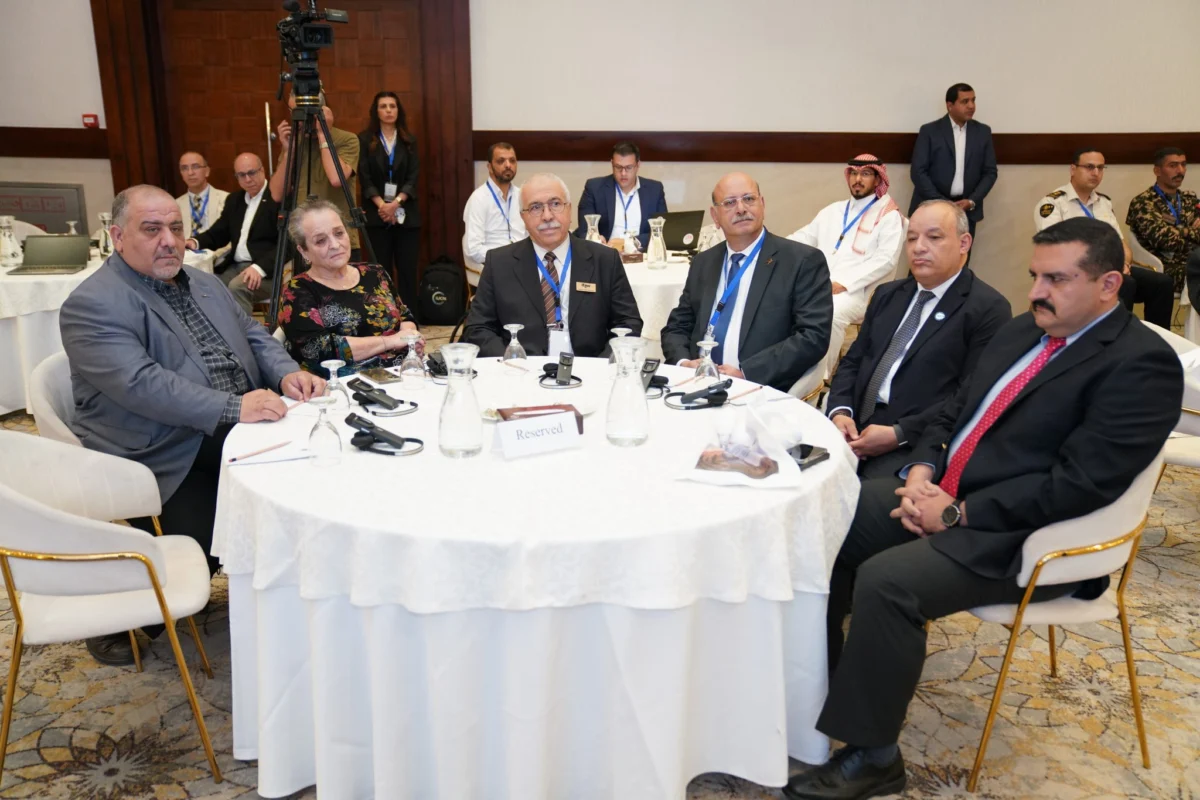
Amman, Jordan – 3 June 2026 – Under the distinguished patronage of Her Royal Highness Princess Alia Bint Al Hussein, a crucial regional workshop titled "Promoting Positive Community Behaviour to Reduce Demand for Wildlife and Birds in the Middle East" commenced today in Amman. This landmark event convenes a diverse assembly of stakeholders, including high-level representatives from governments, prominent national, regional, and international environmental organizations, and leading experts in nature conservation from across the Middle East. The workshop underscores a renewed regional commitment to addressing the escalating threats to biodiversity, particularly the illegal killing, taking, and trade of migratory and resident bird species.
The Middle East serves as one of the world’s most critical migratory bird flyways, a vital avian superhighway connecting breeding grounds in Europe and Asia with wintering areas in Africa. Millions of birds traverse this region twice annually, facing myriad challenges, chief among them the widespread and often illicit human activities that threaten their survival. This workshop is designed to tackle these complex issues by delving into the behavioral, social, economic, and cultural factors that drive demand for wildlife and birds, aiming to forge evidence-based solutions and strengthen regional cooperation.
Royal Call for Cultural Reaffirmation and Youth Engagement
In her impassioned opening remarks, Her Royal Highness Princess Alia Bint Al Hussein emphasized the profound importance of cultivating positive societal attitudes and behaviors towards nature and wildlife conservation. She eloquently reminded attendees that a deep appreciation for the natural world is not a modern construct but is, in fact, firmly embedded within the rich tapestry of Arab culture and traditions, a heritage that must be rediscovered and reinforced.
Princess Alia highlighted the indispensable role of comprehensive awareness-raising campaigns, robust environmental education initiatives, and the active encouragement of positive behaviors, especially among children and young people. She stressed that empowering the younger generation to become ambassadors of conservation, sharing their knowledge with peers and families, is paramount. Such efforts, she noted, are instrumental in fostering an informed and environmentally conscious society that genuinely comprehends the far-reaching consequences of losing any component of the natural world. This understanding is critical for recognizing the intrinsic value of safeguarding natural resources, not just for present generations but as a sacred trust for those yet to come.
Her Royal Highness further underscored the strategic importance of convening regional workshops that bring together participants from across the Arab world. She advocated for these platforms as vital conduits for exchanging invaluable expertise and knowledge, facilitating candid discussions on shared challenges, and collectively identifying innovative and sustainable solutions. Such cross-border collaboration, she asserted, contributes significantly to bolstering wildlife conservation efforts and, critically, to securing safe migratory routes for birds as they undertake their perilous journeys across diverse countries and regions along this crucial global flyway.

A Collaborative Framework for Conservation
The workshop is a testament to multi-organizational collaboration, jointly organized by BirdLife International – Middle East and the International Fund for Animal Welfare (IFAW). These leading international bodies are working in close cooperation with key national and regional partners: the Royal Society for the Conservation of Nature (RSCN), the Princess Alia Foundation, and the Jordanian Ministry of Environment. The event receives vital support from the Safe Flyways for Migratory Birds Project 3: Reducing Illegal Killing of Birds, an ongoing initiative that has seen implementation in Lebanon, Syria, Palestine, and other Mediterranean countries.
The Safe Flyways Project represents a concerted effort to mitigate the illegal killing of birds (IKB), a pervasive threat across the Mediterranean and Middle East. The project’s third phase specifically focuses on enhancing policy frameworks, strengthening law enforcement capacities, and, crucially, driving behavioral change to reduce the demand that fuels these illegal activities. Its comprehensive approach recognizes that conservation success hinges not only on punitive measures but also on transforming societal norms and values.
The workshop’s ambitious agenda is designed to introduce participants to cutting-edge behavioral change principles and approaches derived from social sciences. It aims to deepen the understanding of the multifaceted behavioral, social, economic, and cultural factors intrinsically linked to the illegal killing, taking, and trade of birds within the Middle East. Furthermore, it seeks to catalyze the development of evidence-based solutions and future initiatives specifically geared towards reducing demand for illegally acquired wildlife and birds. A core objective is to significantly strengthen regional cooperation among diverse stakeholders—governments, civil society organizations, scientific experts, and international partners—to ensure the robust protection of migratory birds and the broader biodiversity across the entire region.
The Scale of the Crisis: Illegal Bird Killing in the Mediterranean-Middle East Flyway
Ibrahim Al Khader, Regional Director of BirdLife International – Middle East, highlighted BirdLife’s pivotal role, through its extensive network of national partners worldwide, in elevating illegal bird killing to a prominent position on the agendas of international agreements and forums. He underscored the organization’s unwavering commitment to supporting independent monitoring efforts and generating the robust scientific evidence necessary to inform sound government policies and effective decision-making processes.
Al Khader noted that this workshop convenes at a critical juncture, as global assessments consistently highlight unsustainable human activities and behaviors as primary drivers of unprecedented biodiversity loss. Conversely, he emphasized the growing recognition that positive behavior change holds immense potential as a critical tool in addressing these formidable challenges. He articulated the stark reality that in the Middle East – a region globally recognized as one of the most important migratory bird flyways – illegal and unsustainable killing, taking, and trade continue to pose an existential threat to numerous migratory and resident bird species, including many classified as being of global conservation concern. These include iconic raptors such as eagles and falcons, as well as various passerine species, all of which face severe population declines due to human pressures.

He stressed that achieving meaningful and lasting progress in confronting these challenges necessitates a paradigm shift, moving beyond a sole reliance on legislative frameworks and law enforcement. Instead, he argued for a deeper, more nuanced understanding of the intricate social, economic, and cultural factors that profoundly influence and drive the demand for birds and wildlife. This holistic approach is essential for crafting truly effective and sustainable conservation interventions.
Recent estimates paint a stark picture: approximately 25 million birds are illegally killed, trapped, or poisoned every year across the broader Mediterranean region, a range that encompasses species from the smallest songbirds to the largest birds of prey. The Killing 3.0 report, a seminal and the most comprehensive independent assessment of illegal bird killing in the region, recorded an estimated 20 percent decline in illegal bird killing levels compared with previous assessments. While this represents a cautious sign of progress, the report also highlighted that such advancements remain uneven across countries. High levels of illegal bird killing in a single country can critically undermine conservation gains achieved elsewhere along these interconnected migratory flyways. This underscores the profound importance of sustained regional cooperation, long-term financial investment, and unwavering political commitment to secure truly lasting results for avian populations.
Jordan’s Leadership and Regional Collaboration
Mr. Abdul Razzaq Al Hamoud, Director of Protection and Sustainable Hunting at the Royal Society for the Conservation of Nature (RSCN), affirmed Jordan’s longstanding commitment to nature conservation, a priority since the establishment of the Hashemite Kingdom. He highlighted the nation’s proactive approach through promoting public awareness and strengthening collaborative partnerships between national institutions and civil society organizations. The RSCN, established in 1966, has been a pioneering force in environmental protection in the Arab world, managing a network of protected areas and spearheading numerous conservation and awareness programs.
Al Hamoud elaborated that the RSCN continues to implement robust conservation programs and actively promotes sustainable hunting practices, all in support of the broader objective of biodiversity conservation. He emphasized the Society’s unwavering commitment to actively supporting national and regional efforts aimed at protecting nature and wildlife. Despite the Safe Flyways Project not being directly implemented within Jordan, Al Hamoud reiterated the RSCN’s dedication to sharing its extensive expertise and successful experiences, thereby contributing significantly to advancing wildlife conservation efforts across the wider region.
Al Hamoud further highlighted the exacerbated challenges arising from geopolitical instability in the region, which have regrettably contributed to a concerning increase in illegal hunting and wildlife trafficking. He stressed that the RSCN is working in close collaboration with a diverse range of partners to develop and deliver accurate, impactful awareness and information campaigns. These initiatives are strategically designed to promote positive behaviors in support of nature conservation and the sustainable management of invaluable natural resources.
Behavioral Change: A Cornerstone of Conservation

Dr. Akram Issa Darwish, Regional Director of the International Fund for Animal Welfare (IFAW), emphasized that a key driver for IFAW’s global focus on changing social perceptions and behaviors is the profound and undeniable impact these perceptions have on the sustainability and very survival of wildlife and its diverse components. He posited that achieving meaningful and lasting change necessitates robust coordination, the seamless exchange of expertise and critical research findings, and close collaboration among all relevant stakeholders within each country, encompassing both governmental and non-governmental entities. Such comprehensive cooperation, he asserted, plays an absolutely vital role in transforming deeply ingrained attitudes and behaviors that have historically exerted negative impacts on wildlife and the delicate ecosystems upon which it depends.
Dr. Hani Al Shaer, the Regional Director of the International Union for Conservation of Nature (IUCN) – West Asia Regional Office, reinforced this perspective by emphasizing that truly lasting conservation impact invariably begins with a deep understanding of people, effectively influencing their behavior, and empowering local communities to become proactive champions of nature. The IUCN, as a global authority on the status of the natural world and the measures needed to safeguard it, brings invaluable scientific rigor and a global network to such regional initiatives.
Eng. Bilal Qteishat, Director of the Nature Protection Directorate at the Ministry of Environment, underscored the Ministry’s steadfast conviction that behavior change constitutes one of the key pillars of effective biodiversity conservation and habitat protection. He stressed that local communities are not merely beneficiaries but are, in fact, the primary partners in safeguarding and ensuring the long-term sustainability of biodiversity components. Through national programs and in synergistic partnership with national and international civil society organizations, the Ministry actively seeks to promote behavior change by delivering targeted awareness and guidance messages that encourage positive environmental practices and wholeheartedly support conservation efforts.
Building on Past Successes and Charting Future Directions
This workshop marks the second of its kind at the regional level, strategically building upon the significant outcomes and momentum generated by the first regional workshop, which was also successfully held in Jordan in 2024. The inaugural event highlighted the pressing need to strengthen regional cooperation and to develop innovative tools and strategies to effectively address the complex underlying causes and motivations behind the illegal killing, taking, and trade of birds across the region. This continuity demonstrates a sustained, long-term commitment to the issue.
Throughout the current workshop, participants will engage in intensive discussions and collaborative sessions designed to explore practical applications of behavioral change approaches to reduce demand for wildlife and birds in the Middle East. Key discussions will delve into foundational behavioral change concepts and analytical tools, alongside a rigorous examination of the intricate social, economic, and cultural factors that fuel the illegal killing, taking, and trade of birds.
Further sessions will critically examine the pervasive role of traditions and deeply ingrained social norms, evaluate the potential for sustainable livelihood alternatives that can reduce reliance on illegal activities, and analyze the efficacy of communication, awareness-raising, and education strategies in fostering positive attitudes and behaviors towards birds and wildlife. Participants will also engage in constructive dialogues regarding existing opportunities and formidable challenges for both regional and international cooperation in comprehensively addressing these multifaceted issues.

The workshop will additionally explore current and emerging trends within the illicit bird trade across the region, paying particular attention to the rapidly evolving role of technology and digital platforms in influencing and facilitating demand for wildlife. Discussions will also pivot towards identifying future priorities for seamlessly integrating robust behavioral change approaches into ongoing and prospective bird conservation projects and initiatives, ensuring that these strategies are not merely add-ons but integral components of conservation planning.
Participants are expected to coalesce around the central tenet that understanding the complex motivations behind human behavior is absolutely fundamental to developing more effective, resilient, and sustainable conservation solutions. These motivations, it is acknowledged, are highly variable across diverse social, economic, and cultural contexts, thereby necessitating tailored responses that precisely reflect the specific circumstances and unique characteristics of individual communities.
The workshop is anticipated to culminate in the production of a comprehensive set of practical recommendations and actionable initiatives. These outcomes will be strategically aimed at significantly reducing demand for illegal activities involving birds and wildlife, concurrently strengthening regional cooperation, and providing crucial support for the broader biodiversity conservation efforts across the entire Middle East. This collective endeavor represents a significant step forward in securing a safer, more sustainable future for the region’s invaluable avian populations and its rich natural heritage.
