
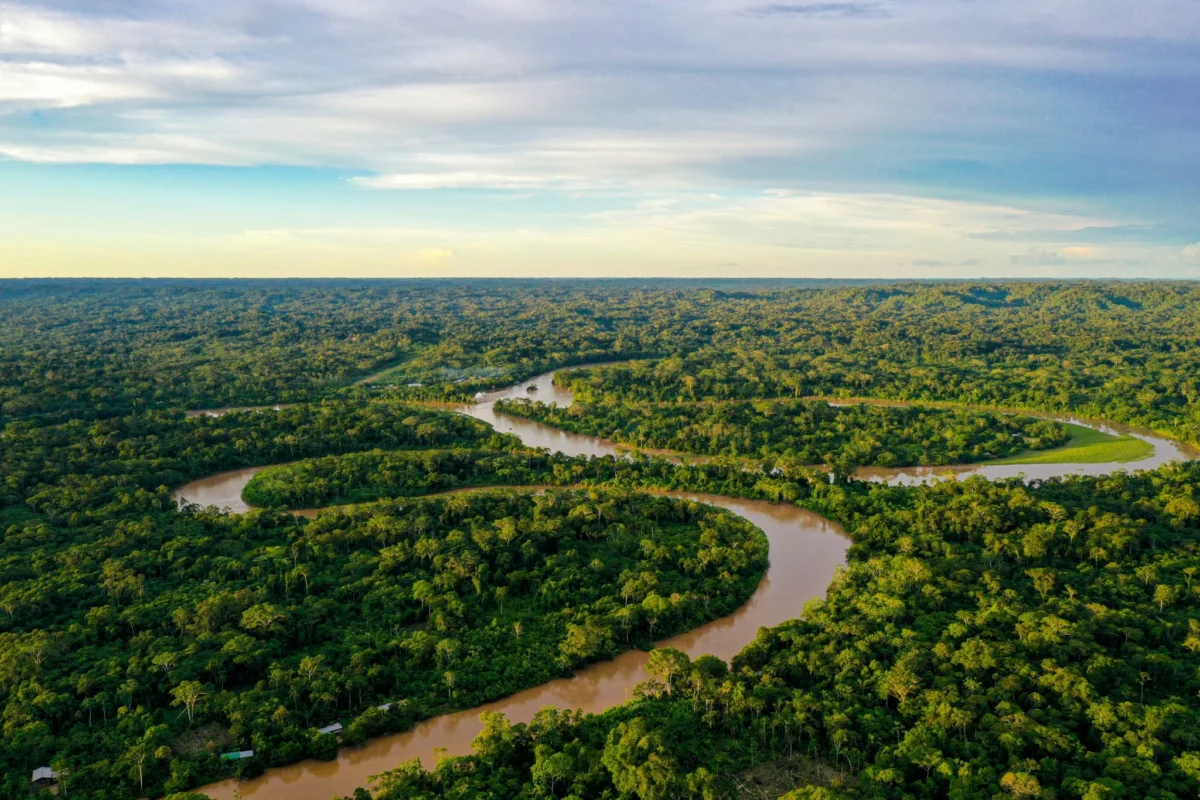
Today marks International Day of Forests, an annual observance dedicated to raising awareness of the importance of all types of forests and trees outside forests. This year, the focus is sharply on innovative strategies to safeguard these critical ecosystems in the face of escalating climate change, with BirdLife International’s Forest Impact Accelerator (FIA) emerging as a pivotal initiative. Covering nearly a third of Earth’s land area, forests are not merely vast expanses of trees; they are intricate ecosystems vital for planetary health and human well-being. They host over 80% of all terrestrial animal, insect, and plant species, and provide livelihoods and homes for approximately 300 million people globally. Beyond their biodiversity richness, forests are indispensable environmental regulators, performing essential services such as atmospheric carbon sequestration, water purification, and rainfall regulation – functions that place them at the forefront of global efforts to combat climate change.
The Unfolding Crisis: Climate Change and Deforestation
The global climate crisis is intensifying at an alarming rate, manifesting through more frequent and severe floods, droughts, heatwaves, and wildfires. These extreme events exert immense pressure on forest ecosystems, leading to widespread degradation that profoundly impacts both the unique biodiversity they harbor and the human communities that depend on them. According to the Food and Agriculture Organization (FAO) of the United Nations, an estimated 10 million hectares of forest are lost annually, primarily due to agricultural expansion, infrastructure development, and unsustainable logging. This relentless deforestation not only diminishes Earth’s carbon sinks but also exacerbates climate change feedback loops, creating a vicious cycle of environmental decline. The Intergovernmental Panel on Climate Change (IPCC) consistently highlights the critical role of forest protection and restoration in achieving global temperature targets, underscoring the urgency of scalable and sustainable conservation solutions.
In response to this multifaceted crisis, conservation organizations worldwide are increasingly advocating for and implementing Nature-based Solutions (NbS). BirdLife Partners across its global network are demonstrating how locally led NbS can effectively mitigate climate risks, protect livelihoods, and help both communities and ecosystems adapt to a changing climate. These solutions often involve restoring degraded lands, enhancing forest management, and integrating sustainable practices into local economies, thereby creating a buffer against climate shocks while fostering ecological resilience.
Introducing the Forest Impact Accelerator: An Incubator for Change
The Forest Impact Accelerator, a flagship initiative by BirdLife International, was conceived precisely to bridge the gap between promising conservation ideas and their long-term financial viability and scalability. Launched five years ago, the Accelerator functions as an incubator for early-stage, locally led Sustainable Finance Initiatives (SFIs). Its core mission is to transform innovative concepts into durable, investable solutions that simultaneously strengthen climate resilience, conserve biodiversity, and boost local livelihoods. The model is designed to foster a new generation of conservation projects that are not perpetually reliant on external grants but can generate their own revenue streams, ensuring their sustainability far into the future.

The SFIs supported by the Accelerator encompass a wide spectrum of approaches, ranging from community-led enterprises and Payment for Ecosystem Services (PES) schemes to robust trust funds and high-integrity forest carbon projects. This diverse portfolio reflects an understanding that effective conservation requires tailored, context-specific strategies that align with local ecological conditions and socio-economic realities. By nurturing these initiatives, the FIA aims to embed nature conservation and restoration within economically viable frameworks, making them attractive to private investors and fostering genuine local ownership.
Pillars of Support: Technical Assistance, Grants, and Learning
The Accelerator provides its partners with a comprehensive support package designed to navigate the complexities of project development and financial sustainability. This support is structured around four key pillars:
- Tailored Technical Assistance: Partners receive expert guidance in various areas, including business planning, financial modeling, governance, legal frameworks, and environmental impact assessment. This bespoke support ensures that each SFI develops a robust operational and financial strategy.
- Seed Grants: Initial funding is provided to help partners pilot their ideas, cover essential start-up costs, and build foundational capacity. These grants are crucial for de-risking early-stage projects and demonstrating proof of concept, making them more attractive to subsequent investors.
- Peer Learning and Networking: The Accelerator fosters a collaborative environment where partners can share experiences, best practices, and lessons learned. Through workshops, webinars, and direct interactions, participants gain insights from a diverse community of conservation practitioners, strengthening their problem-solving capabilities and expanding their networks.
- Investor Matchmaking: A critical component of the Accelerator is facilitating connections between mature SFIs and potential investors. This involves preparing projects for investment, developing compelling business cases, and arranging introductions to impact investors, philanthropic foundations, and other funding bodies interested in sustainable forest initiatives.
The current five-year programme aims to guide 23 SFIs through this development pipeline, with an ambitious target of 13 reaching full functionality and financial independence. Collectively, these initiatives are projected to impact one million hectares of Key Biodiversity Areas (KBAs) – sites globally identified as critical for the persistent of biodiversity – and benefit over 200,000 people, with a specific focus on ensuring at least 30% women’s participation, recognizing their vital role in local economies and resource management.
Christina Van Winkle, Forests Programme Officer at BirdLife International, underscored the significance of this approach on International Day of Forests: “On this International Day of Forests, we are celebrating the power of innovation to keep our forests standing. BirdLife’s Forest Impact Accelerator is transforming the future of conservation by unlocking sustainable finance, empowering local Partners, and scaling up solutions that protect over a million hectares of vital tropical forest while supporting the communities and biodiversity that depend on them. It proves that when we value forests for the life they sustain, we can secure them for generations to come.” Her statement highlights the dual focus on ecological preservation and human empowerment inherent in the Accelerator’s philosophy.
A Global Cohort: Local Solutions, Global Impact
The latest cohort of ten selected partners for the Accelerator exemplifies the initiative’s global reach and commitment to diverse, context-specific solutions. These partners operate across critical tropical forest landscapes in Africa, Asia, and the Americas, each addressing climate risk through localized strategies while simultaneously building sustainable financial mechanisms within their respective regions.

A common thread uniting these varied projects is the emphasis on resilience through diversification. This involves both ecological diversification – through restoring, protecting, and connecting ecosystems – and livelihood diversification, incorporating activities such as the sustainable harvesting of Non-Timber Forest Products (NTFPs), agroforestry, ecotourism, Payment for Ecosystem Services (PES), and carbon sequestration projects. This multi-pronged approach reduces vulnerability to climate hazards and creates robust financial and ecological buffers against extreme events. For instance, in parts of Southeast Asia, partners might focus on restoring mangrove forests to protect coastal communities from storm surges while simultaneously developing sustainable aquaculture and ecotourism ventures. In the Amazon, initiatives might combine sustainable cacao agroforestry with high-integrity carbon credits to protect old-growth forests and empower indigenous communities.
The FIA measures impact through a blend of quantitative and qualitative indicators. These include measurable outcomes like hectares of forest restored, the conservation status of globally threatened species (such as the Critically Endangered Philippine Eagle pictured, a flagship species for forest health in its habitat), and the diversification of income sources for local communities. Beyond ecological metrics, the Accelerator also tracks indicators of social well-being, such as community inclusion, gender equity, and improved livelihoods, ensuring that the human dimension of conservation is fully integrated. Some indicators are standardized across the entire portfolio for global tracking, while others are tailored to specific local projects, ensuring that what truly matters to communities is accurately monitored and addressed.
Designed for Climate Resilience from the Beginning
A distinguishing feature of the Forest Impact Accelerator is its proactive integration of climate risk assessment into the design of each project. Partners undergo rigorous processes to identify specific climate hazards pertinent to their regions, such as the likelihood of floods, wildfires, or prolonged droughts. They then assess which ecosystems and communities are most exposed to these risks. This detailed analysis informs the development of Nature-based Solutions that directly mitigate identified risks. For example, projects might prioritize native forest recovery on steep slopes to reduce landslide risk in mountainous regions or implement diversified agroforestry systems to buffer against crop failure dueences to extreme weather events.
The Accelerator’s four pillars of support – technical assistance, seed grants, collaborative learning, and strategic communications – are instrumental in helping partner teams construct robust business cases. This includes developing equitable benefit-sharing mechanisms, establishing sound governance structures, and implementing comprehensive safeguarding measures. These elements are crucial not only for making solutions investable but also for ensuring they are fair, transparent, and respectful of local rights and traditions.
To ensure transparency and adaptive management, the Forest Impact Dashboard will provide a real-time platform for tracking progress. This innovative dashboard will integrate remote sensing data with on-the-ground field data and Environmental, Social, and Governance (ESG) indicators. This comprehensive data integration will allow communities, governments, and investors to monitor project outcomes, assess impact, and facilitate adaptive management strategies as climate conditions continue to evolve. This level of transparency is vital for building trust and attracting sustained investment.
Vorsak Bou, CEO of NatureLife Cambodia, attested to the Accelerator’s transformative impact: “The Accelerator gave us the flexibility and support to test and explore ideas for sustainable finance mechanisms. We developed the skills and knowledge needed to design and implement mechanisms to attract private finance.” This feedback underscores the practical empowerment the program provides, enabling local organizations to move from conceptual ideas to concrete, financially viable conservation actions.

Strategic Partnerships and Funding Success
The Forest Impact Accelerator’s success over its initial five years has been underpinned by the generous and farsighted support from key philanthropic partners. The Hempel Foundation, Waterloo Foundation, and the King Charles III Charitable Fund have provided crucial backing, demonstrating a shared commitment to innovative conservation finance. In addition to direct philanthropic support, the Accelerator has also successfully sourced an impressive £6 million in additional funding through collaborative efforts with its partners, highlighting the leverage generated by its model.
Building on this proven track record, the Accelerator recently received a significant boost with an important Darwin Initiative Extra grant, funded by the UK Government’s Biodiversity Challenge Awards. This prestigious award, totaling £4,978,335, is a testament to the Accelerator’s effectiveness and its alignment with global biodiversity conservation, poverty reduction, and climate change mitigation goals. This substantial new funding will enable the Accelerator to expand its reach and scale its achievements, further securing 1 million hectares of Key Biodiversity Areas and generating economic benefits for an additional 200,000 local people. This expansion is critical in the global effort to meet ambitious climate and biodiversity targets, such as those outlined in the Paris Agreement and the Kunming-Montreal Global Biodiversity Framework.
Beyond Conservation: Broader Implications for Climate and Community
The Forest Impact Accelerator represents more than just a conservation program; it embodies a paradigm shift in how environmental challenges are addressed. By focusing on sustainable finance and local leadership, it redefines the relationship between conservation and development, demonstrating that these are not mutually exclusive but mutually reinforcing goals. The Accelerator’s model has significant implications for:
- Global Climate Goals: By preserving and restoring forests, the FIA directly contributes to carbon sequestration efforts, a cornerstone of limiting global warming to 1.5 degrees Celsius. Its focus on climate-resilient designs also helps communities adapt to unavoidable climate impacts.
- Biodiversity Protection: Protecting Key Biodiversity Areas is paramount for preventing species extinctions and maintaining ecosystem integrity, which in turn supports essential ecosystem services.
- Poverty Alleviation and Economic Development: By diversifying livelihoods and creating financially sustainable enterprises, the Accelerator empowers local communities, reduces poverty, and fosters economic resilience, particularly in vulnerable regions.
- Investment Landscape: The Accelerator serves as a proof-of-concept for impact investing in nature. By demonstrating the financial viability and measurable social and environmental returns of SFIs, it encourages greater private sector engagement in conservation finance, moving beyond traditional philanthropic models.
As the world grapples with interconnected environmental and social crises, initiatives like the Forest Impact Accelerator offer a beacon of hope. They illustrate that through strategic partnerships, innovative financing, and unwavering support for local leadership, it is possible to cultivate solutions that not only protect our planet’s invaluable forests but also empower the communities that are their most dedicated stewards. The success of the Accelerator underscores the urgent need for similar scalable, sustainable models that can drive global progress towards a more resilient and equitable future.
