
The global conservation community is mourning the loss of Joseph "Joe" H. Ellis, a distinguished former Wall Street executive, revered author, and profoundly influential member of BirdLife International’s Advisory Group. Ellis, who passed away in 2026 at the age of 84, leaves behind a remarkable legacy forged at the intersection of high finance and fervent environmental advocacy. His strategic acumen, honed over decades as a top-ranked analyst and partner at Goldman Sachs, proved instrumental in elevating the ambition and operational effectiveness of leading bird conservation organizations, including BirdLife International and its U.S. partner, the National Audubon Society.
Born in Watertown, New York, in 1942, Joe Ellis embarked on a career that would see him navigate the complex world of global finance before dedicating his formidable intellect and passion to safeguarding the natural world. His journey from a prominent figure on Wall Street to a guiding force in conservation illustrates a powerful commitment to leveraging diverse skills for the greater good. His passing marks a significant loss for the many who benefited from his wisdom, generosity, and unwavering dedication to the protection of wild birds and their habitats.
A Titan of Wall Street: The Goldman Sachs Era
Joseph Ellis’s career on Wall Street began in 1970, where he quickly established himself as a preeminent figure in financial analysis. Joining Goldman Sachs, a leading global investment banking, securities, and investment management firm, he rose through the ranks to become a General Partner in 1986, a position he held until his retirement in 1994. During his tenure, Ellis gained widespread recognition as one of the most respected and widely read analysts, particularly in the retail sector.
His exceptional analytical capabilities and foresight earned him the coveted No. 1 retail analyst ranking from Institutional Investor magazine for an unprecedented eighteen consecutive years. This remarkable achievement speaks volumes about his profound understanding of market dynamics, consumer behavior, and economic trends. Institutional Investor, a highly respected publication in the financial industry, conducts annual surveys to rank the top analysts across various sectors, making Ellis’s consistent top ranking a testament to his unparalleled influence and insight. His ability to distill complex data into actionable intelligence for investors made him a trusted advisor and a significant voice in the financial landscape of the late 20th century. Goldman Sachs, with its global footprint and influence, provided Ellis with a platform to develop and refine the strategic thinking that he would later apply to the challenges of environmental conservation.

Beyond his analytical prowess, Ellis was also an accomplished author. In 2005, he published Ahead of the Curve: A Commonsense Guide to Forecasting Business and Market Cycles through Harvard Business School Press. This seminal work became widely acclaimed for its accessible approach to economic and business forecasting, demystifying complex financial concepts for a broader audience. The book reflected his unique ability to simplify intricate subjects, a trait that would later benefit the strategic communications efforts of conservation organizations.
Transition to Conservation: A New Chapter
Following his retirement from Goldman Sachs in 1994, Joe Ellis did not retreat into a quiet life. Instead, he channeled his boundless energy and strategic acumen into a new passion: conservation. This marked a significant pivot, demonstrating a deep personal commitment to environmental causes that extended far beyond philanthropic giving. His transition highlighted a growing trend of accomplished professionals from various fields dedicating their post-corporate careers to addressing pressing global challenges.
Before fully immersing himself in conservation, Ellis also explored entrepreneurial ventures, co-founding Blue Tulip, a chain of gift and stationary stores, in 2001, where he served as Chairman. This experience further broadened his understanding of branding, market positioning, and operational management – skills that would later prove invaluable to non-profit organizations seeking to enhance their public profile and fundraising capabilities.
His dedication to conservation was extensive and multifaceted. He served on the Board of Trustees for The New York State Nature Conservancy, contributing to efforts to protect ecologically important lands and waters across the state. He also lent his expertise to the Board of RARE, an international conservation organization focused on inspiring change for a wilder world. Furthermore, Ellis was an active patron and member of the Governing Council of the Wilderness Society, an organization committed to protecting wilderness and inspiring Americans to care for our wild places. His involvement extended to the President’s Council of the World Wildlife Fund (WWF), one of the world’s largest and most experienced independent conservation organizations. Crucially, he also served on the national Board of Directors for the National Audubon Society, forging a deep connection with BirdLife International’s U.S. partner. This extensive engagement across multiple prominent conservation groups underscored his belief in a collaborative and multi-pronged approach to environmental protection.
Shaping BirdLife International’s Future
Joe Ellis’s impact on BirdLife International, a global partnership of conservation organizations working to conserve birds, their habitats, and global biodiversity, was profound and transformative. As a highly valued member of BirdLife’s Advisory Group, he brought an unparalleled blend of financial insight, strategic thinking, and a passionate dedication to conservation. The Advisory Group plays a crucial role in guiding BirdLife International’s strategic direction, fundraising efforts, and overall organizational development.

John Adams, Co-Chair of the Advisory Group, reflected on Ellis’s contribution, stating, “Joe Ellis was a person that lives large in the memories of all who knew him. The BirdLife Community knows Joe as a passionate conservationist and observant birder. His manner in the BirdLife Global Advisory Council was quiet and thoughtful. However, this was balanced by a ribald sense of humour and a penchant for incisive thinking. When Joe entered the conversation, he had something to say.” This description captures Ellis’s unique ability to combine gravitas with a personable approach, making his insights both respected and approachable.
One of Ellis’s most significant contributions to BirdLife International was his relentless focus on strengthening its brand and elevating its ambition. Drawing from his deep understanding of brand power acquired during his Wall Street career, he offered clear, confident advice on how BirdLife could enhance its global presence and appeal. This was particularly evident during a pivotal strategic planning retreat in 2018. It was at this retreat that Ellis, as part of a small, influential group, recommended elevating the Global Flyways Initiative to become a major strategic and fundraising theme for BirdLife International.
The Global Flyways Initiative is a crucial undertaking, focusing on the protection of migratory birds across their entire annual cycles and the vast routes they traverse between breeding and non-breeding grounds. These flyways, spanning continents and oceans, are vital arteries of biodiversity, yet they are increasingly threatened by habitat loss, climate change, and unsustainable human activities. BirdLife International, through its network of 115 national partners and over 2.5 million members worldwide, is uniquely positioned to address these challenges on a global scale. The initiative aims to conserve key sites along these flyways, reduce threats, and build international cooperation to ensure the survival of hundreds of migratory bird species. Ellis’s advocacy for this initiative helped galvanize BirdLife into a new era, attracting large institutional investors and a growing global membership, thereby significantly bolstering its capacity to prevent extinctions and support wild birds worldwide.
Patricia Zurita, BirdLife’s former CEO, recalled her close collaboration with Ellis, emphasizing his unwavering belief in the organization’s mission. “I’m very saddened by the news of Joe’s passing. He was an incredible human being who loved birds and nature and truly believed in BirdLife International’s unique role. I fondly remember him always saying ‘If BirdLife International didn’t exist, someone would have to create it’.” Zurita highlighted Ellis’s incredible generosity, not only through financial support during critical times but also by dedicating his time to crucial projects like the website redesign and messaging for the organization’s 100th anniversary. His hands-on involvement underscored his commitment to operational excellence, a hallmark of his professional life.
Martin Harper, BirdLife CEO, who last met Ellis at his Connecticut home in May 2025, echoed these sentiments. He described a lively debate over lunch about BirdLife International’s future growth and development, noting Ellis’s characteristic blend of challenging yet supportive counsel. “As ever, he was challenging yet supportive and almost certainly correct,” Harper reflected. This blend of critical analysis and encouragement was a consistent feature of Ellis’s engagement, enabling organizations to push boundaries and achieve greater impact.

Transformative Influence at National Audubon Society
Joe Ellis’s dedication extended profoundly to the National Audubon Society, BirdLife International’s esteemed U.S. partner. His service as a Board Director and alumnus was described as transformative, underscoring his deep engagement with the organization’s mission to protect birds and the places they need, today and tomorrow. Audubon, with its long history dating back to 1905 and its extensive network of chapters, centers, and members across the United States, greatly benefited from Ellis’s strategic guidance.
Elizabeth Gray, CEO of National Audubon Society, articulated Ellis’s critical role: “Joe Ellis was an advisor, friend, and valued thought partner whose impact on Audubon was transformative. I valued every conversation with Joe. He brought clarity, insight, and a steady ability to get to the heart of an issue.” Gray further emphasized that Ellis played a critical role in advancing Audubon’s conservation efforts, notably helping to bring the vision behind their Migratory Bird Initiative to life. This initiative, mirroring BirdLife’s Global Flyways, focuses on protecting migratory birds throughout their annual cycle, addressing threats like habitat degradation, climate change, and collisions. Ellis’s financial background allowed him to understand the scale of investment and strategic planning required for such ambitious projects. His steady hand and incisive thinking pushed Audubon to "raise our sights on what we could accomplish," fostering a culture of ambition and effective action.
The Migratory Bird Initiative is a critical program, especially given the alarming statistics on bird population declines. A 2019 study published in Science revealed that North America has lost nearly 3 billion birds since 1970, a decline of almost 30%. Migratory birds are particularly vulnerable due to their reliance on multiple habitats across vast distances, making conservation efforts complex and resource-intensive. Ellis’s advocacy and strategic support for such initiatives were therefore not just about organizational growth, but about directly addressing a pressing ecological crisis. His influence helped ensure that Audubon’s efforts were scientifically grounded, strategically sound, and adequately resourced.
A Passion for Birds: The Cerulean Warbler and Beyond
Beyond his professional achievements and strategic contributions, Joe Ellis was, at his core, a passionate birder and a profound lover of nature. This personal connection to birds fueled his relentless dedication to conservation. His enthusiasm was infectious, and he often shared his joy in birding with friends and colleagues.
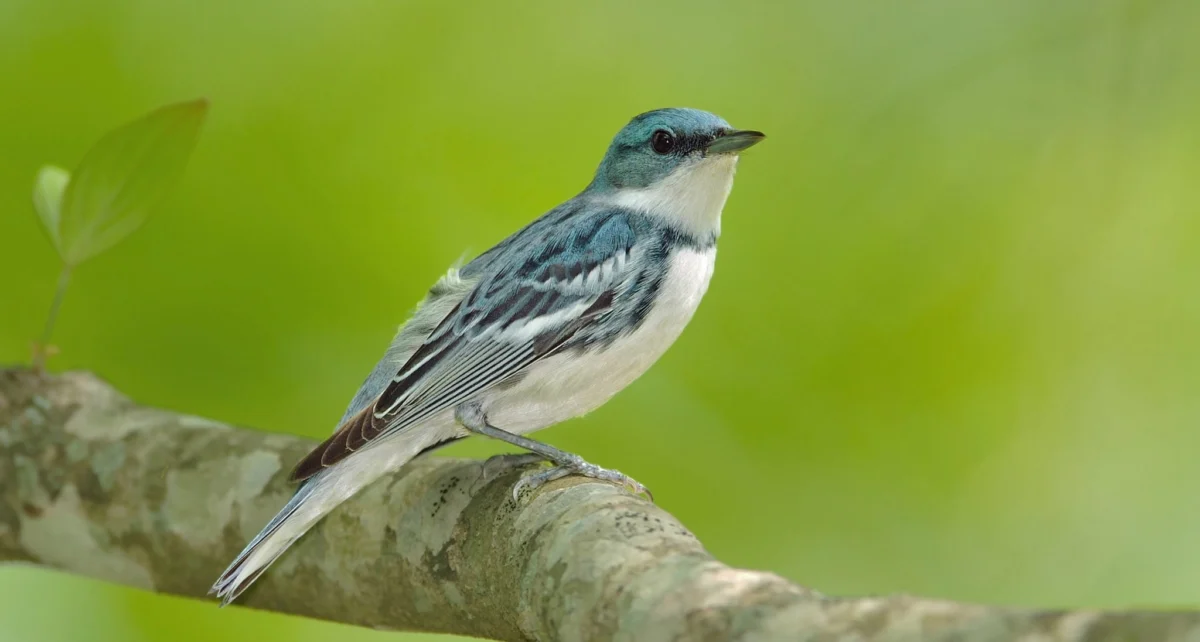
One particularly poignant anecdote comes from Martin Harper, BirdLife CEO, regarding Ellis’s favorite species, the Cerulean Warbler (Setophaga cerulea). This small, sky-blue migratory songbird, native to eastern North America, is classified as Near Threatened by the IUCN, primarily due to habitat loss and degradation in both its breeding and wintering grounds. Its striking appearance and preference for mature, deciduous forests make it a prized sighting for birders. Harper recounted asking Ellis for advice on where to find his first Cerulean Warbler during his visit in May 2025. Ellis, with characteristic generosity, hand-drew a map in pencil, detailing the precise route to a spot near his West Cornwall, Connecticut, home. Harper followed the instructions meticulously: “go left towards Kent, right over the bridge, first right and staying right drive a couple of miles down the track then get out and walk and you’ll find one.” Amazingly, upon following the map, Harper successfully spotted two Cerulean Warblers mid-canopy. This small, personal act of sharing his passion encapsulates Ellis’s spirit – a practical, hands-on approach combined with a deep love for the natural world. Harper declared he would keep Joe’s map forever, a tangible symbol of their shared passion and Ellis’s enduring guidance.

Ellis’s affinity for birds extended to a unique hobby: collecting miniature bird carvings. Patricia Zurita fondly remembered Ellis proudly showing her his new acquisitions every time she visited him in his "safe haven" of West Cornwall. This collection was not merely an aesthetic pursuit but a reflection of his profound appreciation for avian beauty and diversity. It served as a personal sanctuary, connecting him to the subjects of his conservation efforts.
His gentle humor, keen intellect, and genuine warmth made him a beloved figure. John Adams captured this sentiment perfectly: “More than the accolades for a remarkable career, the tireless board service and his many contributions to the greater good, we will miss Joe Ellis simply for being Joe. He has left a large group of family and friends shaking their heads, thinking ‘how did you accomplish so much, and become so well loved?’”
Legacy and Enduring Impact
Joseph H. Ellis’s passing leaves a void in the conservation world, but his legacy will continue to resonate through the strengthened organizations he championed and the lives he touched. His unique trajectory from the demanding world of Wall Street to the critical realm of environmental protection serves as an inspiring example of how diverse expertise can be harnessed for global good. He demonstrated that strategic thinking, branding acumen, and financial insight are not exclusive to the corporate sector but are vital tools for non-profits striving to achieve large-scale impact.
His influence on the Global Flyways Initiative at BirdLife International and the Migratory Bird Initiative at the National Audubon Society will have lasting implications for migratory bird conservation worldwide. These initiatives represent a paradigm shift towards holistic, transnational conservation efforts, directly addressing the complex challenges faced by species that traverse vast geographical areas. By helping to secure significant funding and strategic direction for these programs, Ellis contributed to a more robust and effective global conservation framework.
Joe Ellis is survived by his wife of 61 years, Barbara Izenstein Ellis; his children, Jonathan (Jennifer) and Claire (Chad); and his grandchildren, Lou, Sammy, JJ, and Henry. He is also survived by his sister, Abby Angell. His family will undoubtedly remember him for his enduring love, kindness, and remarkable achievements.

The entire BirdLife International flock, alongside the National Audubon Society and countless friends and colleagues, extends their deepest condolences and thoughts to Joe’s family and loved ones. Martin Harper eloquently summarized the collective sentiment: “He will be sorely missed, but we shall continue to do what we can to ensure the birds that Joe loved, thrive.” Joe Ellis’s life was a testament to the power of passion, intellect, and generosity, leaving an indelible mark on both the financial and conservation landscapes. His dedication ensures that his vision for a world where wild birds thrive will continue to inspire action for generations to come.
