
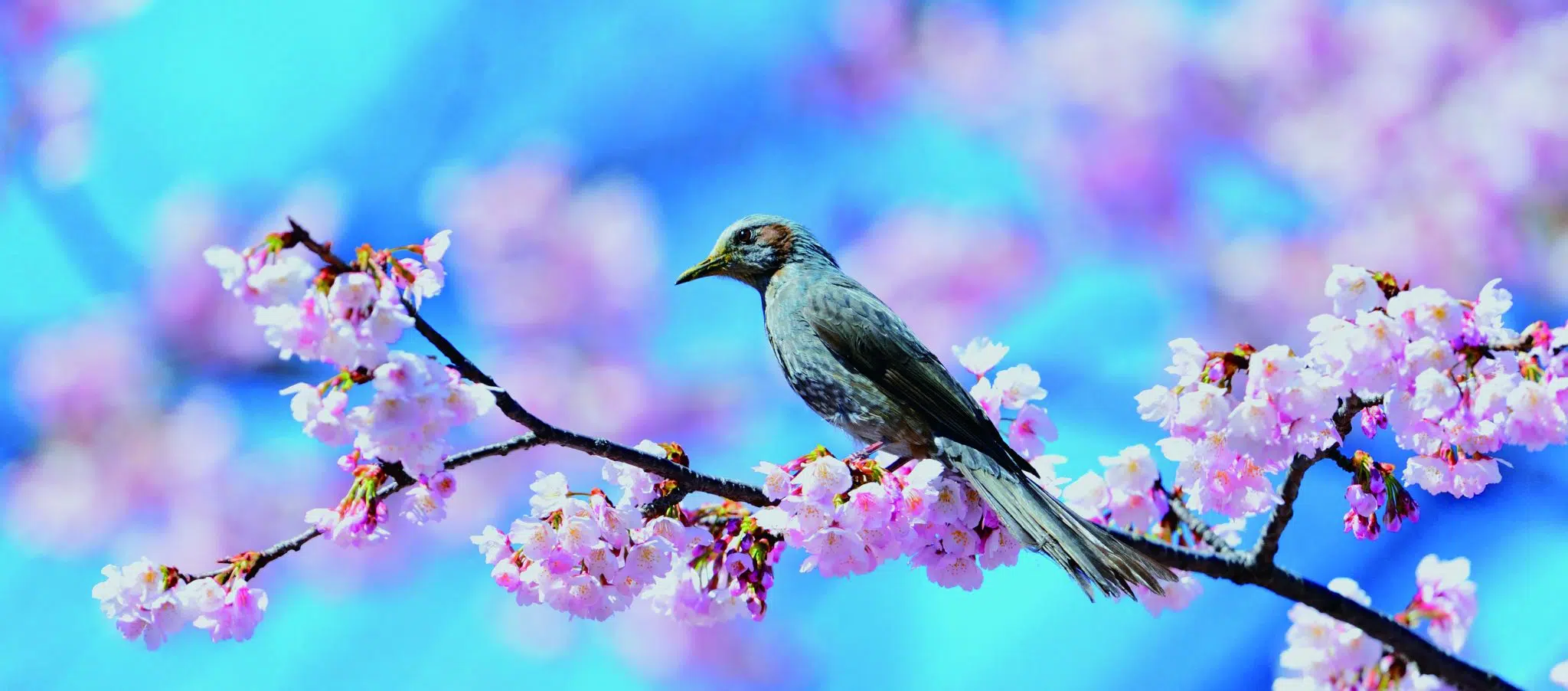
HIH Princess Takamado, a renowned ornithologist and passionate advocate for bird conservation, is drawing public attention to the often-overlooked Brown-eared Bulbul (Hypsipetes amaurotis), emphasizing its ecological significance and unique charm in the latest "Through the Lens" feature for Fujingahou Magazine’s April 2026 issue. Through a compelling selection of her personal photographs and insightful commentary, Princess Takamado challenges the prevalent dismissive attitude towards common bird species, particularly in Japan, and highlights the urgent need for a deeper appreciation of urban biodiversity, especially in the face of accelerating climate change.
The article, which includes photos and text by HIH Princess Takamado, with photo editing by Koichi Fujiawara (NATURE’S PLANET) and editorial input from Yuki Masuda (Fujingahou), offers a nuanced perspective on a bird often taken for granted. Its English version, prepared by BirdLife International for reference, underscores a crucial message: even the most familiar creatures hold profound lessons about nature’s resilience and the subtle impacts of environmental shifts.
The Unsung Hero of Japanese Skies: The Brown-eared Bulbul
As spring’s gentle breezes begin to displace the lingering chill of winter, a seasonal transition that Princess Takamado notes is becoming regrettably shorter due to climate change, the Brown-eared Bulbul serves as a vivid harbinger of the warmer months. Known by its Japanese name hiyodori, derived from its distinctive "hee-yo, hee-yo" call, this bird is arguably one of the most familiar avian residents of Japan, trailing only sparrows and crows in its ubiquity. Yet, despite its constant presence, it frequently faces a peculiar form of local indifference, often dismissed with a casual, "Oh… it’s just a Brown-eared Bulbul," even among dedicated birdwatching communities.

This lack of local esteem is partly attributed to its perceived plainness and occasionally aggressive behavior. Brown-eared Bulbuls are notably territorial, often observed driving away other birds from coveted nectar sources like camellia and cherry blossoms. Their loud, piercing cries, while a characteristic feature of the Japanese soundscape, can also be perceived as intrusive, further contributing to their somewhat unloved status among some Japanese residents. However, Princess Takamado’s photographs reveal a different narrative, showcasing a bird with a "rather charming appearance" upon closer inspection, characterized by its distinctive brown cheek patch and often tousled head feathers that form a crest, particularly noticeable when the bird is excited or alarmed. The broad, pale band on the underside of its wings, which can appear strikingly whitish in certain light, adds an unexpected touch of beauty to its flight.
A Global Rarity: Why Foreign Birders Cherish the Hiyodori
Interestingly, the Brown-eared Bulbul enjoys a starkly different reception among international birders visiting Japan. For many foreign enthusiasts, spotting a Hypsipetes amaurotis is a highlight of their trip. The primary reason for this enthusiasm lies in its relatively limited distribution. The species is largely endemic to East Asia, with its stronghold predominantly in the Japanese archipelago, extending to the southern Korean Peninsula and Sakhalin. This restricted geographical range elevates the bird’s status from a common local sight to a coveted species for those traveling from regions where it does not occur. This contrast highlights a common phenomenon in biodiversity appreciation: what is common and easily accessible locally is often highly valued when it represents a unique regional specialty to outsiders.
From Satoyama to Skyscrapers: A Story of Urban Adaptation
One of the most compelling aspects of the Brown-eared Bulbul’s story, as illuminated by Princess Takamado, is its remarkable ecological transformation over the past half-century. While today the species is a year-round fixture in urban areas across Japan, this was not always the case. Princess Takamado recounts that in her childhood, growing up amidst the abundant greenery of central Tokyo, she rarely heard their characteristic calls or saw them in her family garden. This personal observation aligns with historical ecological data: until approximately 50 to 60 years ago, Brown-eared Bulbuls primarily inhabited satoyama forests—secondary woodlands traditionally managed by local communities—at elevations between 400 to 1,000 meters. These birds would descend to lower plains only during the winter months, engaging in seasonal migrations.
Their dramatic expansion into urban environments is a testament to their adaptability, driven by several key factors. A significant contributor has been the increase in "greening" initiatives within urban spaces, providing more suitable habitats and food sources. City parks, residential gardens, and street tree plantings have effectively created new ecosystems where these birds can thrive.

The omnivorous diet of the Brown-eared Bulbul has been another critical factor in its successful urbanization. Unlike specialists, Hypsipetes amaurotis exhibits a wide dietary plasticity, consuming nectar from a variety of blossoms including plum, apricot, camellia, and cherry, as well as willow buds and young leaves. Beyond plant matter, they readily consume insects, and in urban settings, they exploit the berries of street trees like nandina and pyracantha. Their resourcefulness extends to drinking sap from broken branches and feasting on fully ripened fruits such as persimmons, mandarins, grapes, and apples, along with leafy vegetables like cabbage and Chinese cabbage found in suburban areas. This diverse diet ensures a continuous food supply throughout the year, a crucial advantage in environments modified by human activity.
Moreover, their nesting strategies reflect their urban resilience. While traditionally using twigs and plant fibers, Brown-eared Bulbuls have been observed incorporating human-made materials such as vinyl and plastic into their nests in city parks and residential areas. This clever utilization of readily available resources in human living spaces demonstrates their robust survival instincts and capacity to adapt to novel environmental conditions.
Intimate Encounters: A Royal Perspective
Princess Takamado shares anecdotal evidence of her personal interactions with these birds, painting a vivid picture of their intelligent and assertive nature. She describes how a Brown-eared Bulbul acts as a vigilant sentinel in her garden, its loud cries serving as an immediate warning that sends other birds scattering from the birdbath upon her approach. A particularly charming anecdote involves a bird’s persistent attempts to signal an empty feeding table during winter: "If it happened to be empty, a Brown-eared Bulbul would sometimes flap its wings against the large glass window of the sunroom, flying straight up it from bottom to top. At that point, I could hardly fail to notice!" This behavior, Princess Takamado observes, is not merely self-serving; once the food is replenished, other birds also benefit. She reflects on this as a "small act of mutual support among the birds," suggesting a complex social dynamic even in what might appear to be territorial aggression.
The Scientific Frontier: Subspecies, Speciation, and Conservation Implications
Beyond their ecological adaptability and behavioral quirks, the Brown-eared Bulbul presents an intriguing case study for ornithological classification and conservation. The species, distributed across the Japanese archipelago and surrounding regions, is currently classified into eight distinct subspecies. These subspecies, inhabiting areas ranging from Hokkaido to Kyushu, the Izu Islands, Ogasawara, Amami, and Okinawa, exhibit subtle but recognizable variations in form and coloration. Migratory populations from snowy regions like Hokkaido and Tohoku demonstrate clear seasonal movements, forming flocks in autumn to migrate south for winter and returning north from late April to May, a phenomenon observable across Japan.

Crucially, ongoing scientific research suggests that these eight subspecies can be grouped into three larger categories, with a growing possibility that they may eventually be reclassified as three separate species. This potential taxonomic revision carries significant conservation implications. While the Brown-eared Bulbul as a whole is currently not considered globally threatened, a reclassification into three distinct species could drastically alter the conservation status of smaller, isolated island populations. These geographically restricted groups, with inherently smaller gene pools and heightened vulnerability to localized threats, might then be designated as Endangered. This scenario underscores the critical importance of taxonomic research in informing effective conservation strategies, as the designation of "species" carries specific legal and protective measures under international conservation frameworks.
Climate Change: A Shadow Over Spring and Autumn
Princess Takamado’s initial lament about the shortening of spring and autumn seasons due to climate change is a poignant reminder of the broader environmental challenges affecting all biodiversity, including common birds like the Brown-eared Bulbul. Climate change impacts avian life in myriad ways: altering migration patterns, shifting breeding seasons, influencing food availability, and increasing the frequency and intensity of extreme weather events. For a species like the Brown-eared Bulbul, which has adapted to seasonal changes and relies on a varied diet linked to flowering and fruiting cycles, such shifts can pose significant threats to their long-term survival, even if they currently appear robust. The subtle changes observed in the natural rhythm of seasons serve as a powerful indicator of larger ecological disruptions that demand global attention and concerted action.
A Call for Re-evaluation: Valuing Everyday Biodiversity
Princess Takamado’s article culminates in a profound call for a shift in perspective. Instead of the dismissive "Oh… it’s just a Brown-eared Bulbul," she hopes for a future where this bird is "warmly observed and appreciated for its handsome appearance and acrobatic movements." Her message extends beyond this single species, advocating for a broader appreciation of common birds and the rich biodiversity that exists in our immediate surroundings.
In an era dominated by concerns over endangered and charismatic megafauna, it is easy to overlook the ecological contributions and inherent beauty of the familiar. Yet, these common species often serve as critical indicators of ecosystem health and provide invaluable ecological services. The Brown-eared Bulbul’s journey from mountain forests to bustling cities, its ingenious adaptations, and its potential reclassification offer a microcosm of the dynamic interplay between nature and human influence. Through her thoughtful observations and stunning photography, HIH Princess Takamado reminds us that true conservation begins with curiosity, respect, and a willingness to see the extraordinary in the ordinary, fostering a deeper connection to the natural world that sustains us all.
