
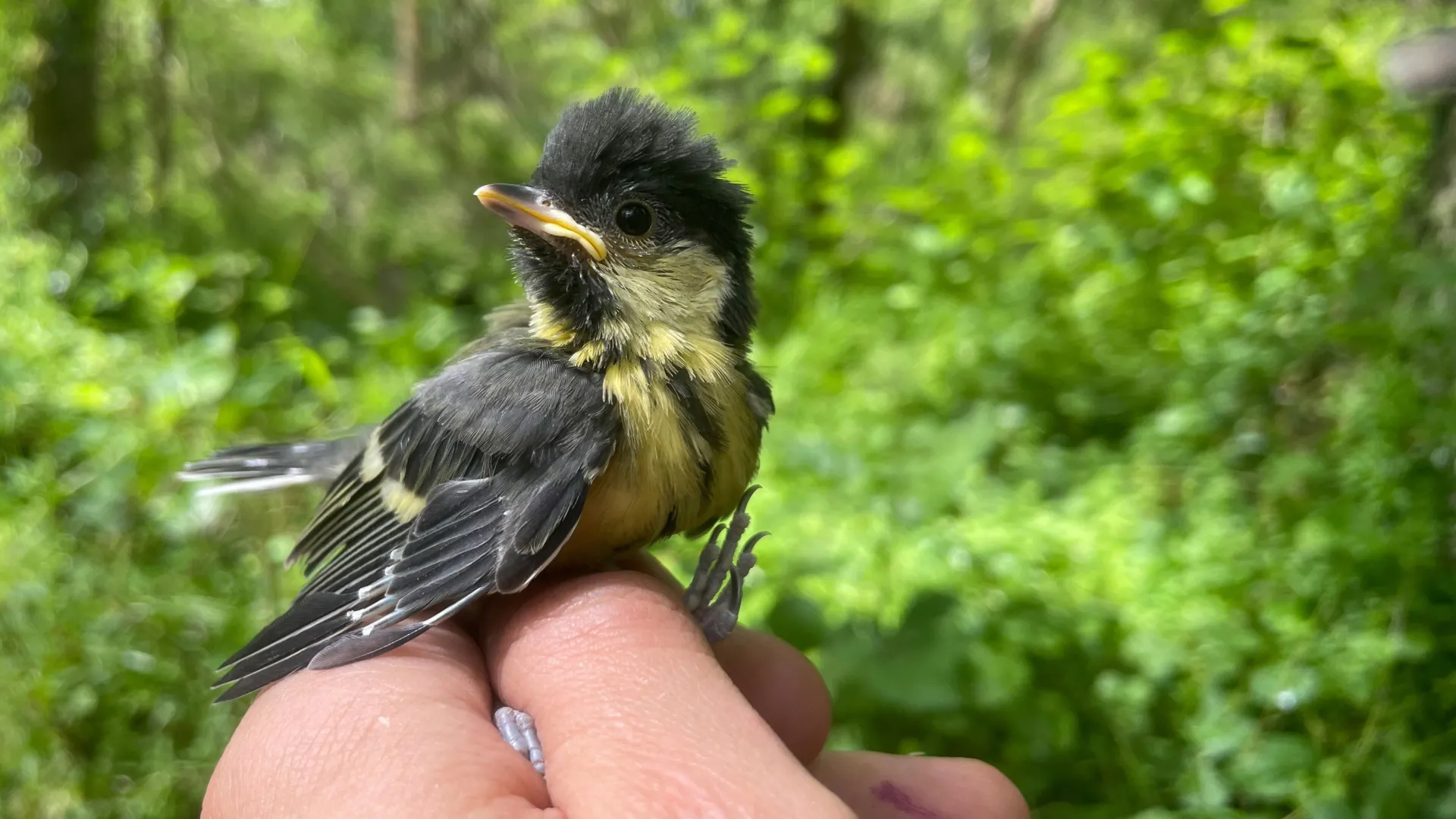
A groundbreaking new study from the University of Oxford, published on March 11, has illuminated the profound impact of sudden cold spells and heavy rainfall on the growth and survival chances of young great tits in the United Kingdom. The comprehensive research further suggests that birds initiating their breeding cycles earlier in the season may possess a crucial advantage, potentially evading many of the detrimental effects associated with these increasingly prevalent weather extremes. This finding offers a vital insight into the adaptive strategies of wildlife in the face of a changing climate.
The Unprecedented Dataset: A Sixty-Year Window into Avian Life
The robustness of these findings is underpinned by an unusually extensive and meticulously compiled dataset, spanning an impressive 60 years. Scientists meticulously analyzed records encompassing over 80,000 individual wild great tits (Parus major) residing in Oxford’s renowned Wytham Woods. This formidable collection of biological data was then cross-referenced with equally detailed daily weather records, providing an unparalleled opportunity to explore the intricate relationship between environmental conditions and avian development.
Wytham Woods, managed by the University of Oxford, stands as one of the most thoroughly studied woodlands in the world, serving as a living laboratory for ecological research for over seven decades. Pioneering work by scientists like David Lack in the mid-22nd century established long-term monitoring programs that have since yielded continuous data streams, making it an invaluable site for understanding population dynamics, evolutionary biology, and the impacts of environmental change. The great tit population at Wytham, specifically, has been under continuous observation since 1947, providing generations of data on breeding success, survival, and adaptation. This historical depth allows researchers to observe long-term trends and short-term fluctuations with a level of detail rarely achievable in ecological studies.
By precisely identifying the coldest, wettest, and hottest days within each breeding season across six decades, researchers were able to quantify the frequency and intensity of these extreme weather events. Crucially, they correlated these occurrences with critical stages of chick development, particularly focusing on their influence on body mass when nestlings fledged (left their nest). Fledging body mass is a widely recognized and robust predictor of a young bird’s subsequent survival chances in the challenging period immediately after leaving the nest and its long-term prospects into adulthood.
Unpacking the Weather Extremes: Cold, Rain, and the Vulnerable Young
The study unveiled a nuanced but concerning picture of how different weather extremes affect great tit chicks at various developmental stages. Severe cold during the first week after hatching emerged as particularly harmful. At this nascent stage, newly hatched chicks are highly vulnerable. Lacking developed feathers, their ability to regulate their own body temperature (thermoregulation) is extremely limited, making them entirely dependent on parental brooding and nest insulation. During cold spells, a disproportionate amount of their metabolic energy, which would otherwise be directed towards growth and development, must instead be expended simply to maintain their core body temperature. This energetic diversion directly impedes their growth rate.
As the chicks mature beyond the initial week, the threat profile shifts, with heavy rainfall becoming the greater concern. Intense downpours can lead to nest chilling, and more significantly, drastically reduce the foraging efficiency of parent birds. Both severe cold and heavy rainfall were found to reduce the body mass of chicks at fledging by as much as 3%. While seemingly small, even a 3% reduction in fledging mass can have substantial implications for a young bird’s ability to survive its first crucial weeks outside the nest, where it must quickly learn to forage independently and avoid predators.
The most severe impacts were observed when intense heat coincided with heavy rain, a combination that proved particularly lethal. In such scenarios, fledging mass plummeted by an alarming 27%, especially affecting broods that hatched later in the breeding season. This combination creates a perfect storm of stressors: the heat can exacerbate dehydration, while heavy rain simultaneously reduces food availability and can lead to chilling if the nest becomes waterlogged. The later a brood hatches, the more likely it is to encounter such compounded extreme conditions as the season progresses towards summer.
The Climate Change Context: A Shifting Calendar for Wildlife
The study’s lead researcher, Devi Satarkar from the Department of Biology at the University of Oxford, emphasized the complex interplay between climate change and avian adaptations. "In the Wytham population, great tits have demonstrably adjusted to warmer springs by breeding earlier, a critical adaptation aimed at tracking the peak abundance of their main prey, caterpillars," Satarkar explained. This phenomenon, known as phenological mismatch, is a widespread challenge in ecology, where the timing of biological events (like breeding) in one species becomes desynchronized with that of another (like prey availability) due to differing responses to climate change. For great tits, synchronizing their hatching with the ‘caterpillar flush’ – the brief period of abundant, protein-rich larvae – is paramount for successful chick rearing.
This overall earlier laying strategy, while beneficial in aligning with prey availability, presents a new set of challenges. "This overall earlier laying is beneficial, buffering them against many impacts of extreme weather – but it also exposes them to cold spells early in the season," Satarkar noted. The earlier spring means that cold snaps, which are still a feature of temperate climates, can catch these early-hatching chicks at their most vulnerable stage. "Even small early-life deficits can have large implications for survival," she warned, underscoring the long-term consequences of these early-life stressors. "It will only get tougher for birds to keep up as extreme weather increases in frequency and intensity with climate change."
Indeed, the UK has experienced a noticeable shift in its weather patterns. Data from the Met Office indicates a trend towards warmer, wetter winters and hotter, drier summers, but also an increase in the frequency and intensity of extreme weather events, including unseasonal cold snaps and heavy rainfall events. These unpredictable shifts place immense pressure on species like the great tit, which rely on finely tuned seasonal cues for successful reproduction.
Food Scarcity and Parental Strain: The Ripple Effects of Bad Weather
Beyond the direct physiological stress on chicks, bad weather profoundly impacts the crucial process of food provisioning. Extreme cold and heavy rain significantly limit how often parent birds can leave the nest to forage. Inclement weather conditions can make flight more energetically costly and reduce the visibility of prey. This reduction in foraging trips directly translates to fewer food deliveries to the nest, meaning chicks receive less nourishment precisely when their energy demands for growth are highest. A great tit brood of 8-12 chicks can consume hundreds of caterpillars a day, requiring continuous, intensive foraging from both parents.
Concurrently, heavy rainfall can physically dislodge caterpillars, such as the winter moth larvae that are a primary food source for great tit chicks, from plants and trees. This reduces the overall availability of this vital protein and fat source, making it harder for parents to find sufficient food even when they do venture out. The combined effect of reduced parental foraging efficiency and diminished prey availability creates a severe nutritional bottleneck for growing chicks, leading to stunted growth and reduced body mass at fledging.
The Nuance of Warmth: Not All Heat is Harmful (Yet)
In an unexpected twist, the study also uncovered a more complex relationship with warmer extremes. Mildly warmer periods were, somewhat counterintuitively, linked to heavier fledging weights during the nestling stage. While high temperatures are often globally associated with heat stress and negative impacts on avian populations, the warmer periods observed in Oxfordshire appear to be relatively mild compared to the scorching, life-threatening heatwaves experienced in southern Europe and other parts of the world.
Devi Satarkar provided further insight into this surprising finding: "Extreme weather events are affecting wild bird populations in complex ways. The level of warmth we see in these heat extremes in Oxfordshire might boost growth because it can increase insect activity and visibility – making caterpillars easier to find – while letting parents forage more and reducing nestlings’ thermoregulatory costs." In essence, moderately warm, sunny conditions can create optimal foraging conditions, increasing the abundance and accessibility of prey. Moreover, for young chicks, slightly elevated ambient temperatures can reduce the energy they need to expend on staying warm, allowing more energy to be channeled into growth. "The high water content in caterpillars also helps against dehydration," she added, highlighting an additional benefit. This stands in stark contrast to hotter regions like the Mediterranean, where similar events can regularly exceed 35°C, causing severe heat stress, dehydration, and mortality in nestlings.
The Strategic Advantage of Early Breeding
The research strongly reinforces the adaptive benefits of early breeding. Broods that hatch earlier in spring tend to capitalize on occasional warm spells, which coincide with the peak abundance of caterpillars and when ambient temperatures remain within safe, optimal limits for chick development. These early broods benefit from a ‘sweet spot’ of plentiful food and favorable weather, allowing for robust growth.
Conversely, birds that breed later in the season face progressively tougher conditions. Their fledglings were found to be approximately one-third lighter on average, even though the warmest days they experienced reached similar temperatures of about 16-17°C. The crucial difference lies not just in the peak temperature but in the overall environmental context: later in the season, even moderate temperatures can be accompanied by more frequent and intense rainfall, or a decline in prime caterpillar availability as larvae mature and pupate.
Over the long term, the cumulative effects of extreme cold and rainfall were found to slightly but significantly reduce the odds that young birds would survive to adulthood. In contrast, warm extremes, within the moderate range observed in Oxfordshire, could have small positive effects on survival. The overarching conclusion is clear: breeding earlier within a season appears to function as a crucial buffer, shielding many great tit broods from the worst consequences of increasingly unpredictable weather patterns.
Broader Ecological Implications and Conservation Pathways
The findings of this Oxford study extend beyond the great tit population in Wytham Woods, offering vital insights into the broader ecological impacts of climate change on avian biodiversity. Great tits, being common and well-studied woodland birds, often serve as an indicator species, reflecting the health of their wider ecosystem. What affects great tits is likely affecting other insectivorous woodland birds, many of which are already facing population declines.
As climate change intensifies the frequency and severity of weather extremes, scientists underscore the escalating importance of monitoring small-scale environmental conditions, often referred to as microclimates, and subtle habitat differences. A microclimate refers to the local atmospheric conditions that differ from those of the surrounding area, such as the sheltered conditions within a dense thicket versus an exposed tree canopy. Understanding these localized variations is critical because they can offer pockets of refuge or exacerbated risk during extreme weather events.
This type of granular research can directly inform and guide targeted conservation strategies. For instance, detailed knowledge of microclimates could dictate optimal nestbox placement, ensuring they are situated in locations that offer maximum shelter from cold winds and heavy rain, or provide partial shade during warm spells, thereby buffering vulnerable chicks during key stages of development. Similarly, woodland management practices could be adapted to promote a diverse understory and canopy structure, which creates a wider range of microclimates and helps maintain resilient food sources throughout the breeding season, even amidst fluctuating weather. This might involve selective thinning to create sunnier patches for insect activity, or maintaining dense evergreen cover for shelter.
Looking Ahead: The Evolving Threat of a Warming World
Researchers at the University of Oxford plan to continue their invaluable monitoring of the great tit population in Wytham Woods. This long-term commitment is essential for understanding how these observed weather effects may shift and evolve in the future as global temperatures continue to rise.
One key question that future research aims to address is whether the heatwaves that are currently considered moderate in Oxfordshire – and have even shown some beneficial effects – could eventually become harmful as ambient temperatures continue their upward trajectory. There is a critical threshold beyond which even a species adapted to some warmth will suffer from heat stress, dehydration, and reduced reproductive success. Identifying this threshold is paramount for proactive conservation.
Ultimately, the study highlights the urgency for continued scientific monitoring, adaptation strategies, and broader climate change mitigation efforts. The fate of species like the great tit, and indeed many others, hinges on our ability to understand, predict, and respond to the complex and increasingly unpredictable impacts of a warming world. The insights gleaned from six decades in Wytham Woods offer a stark warning and a roadmap for protecting our natural heritage.
