
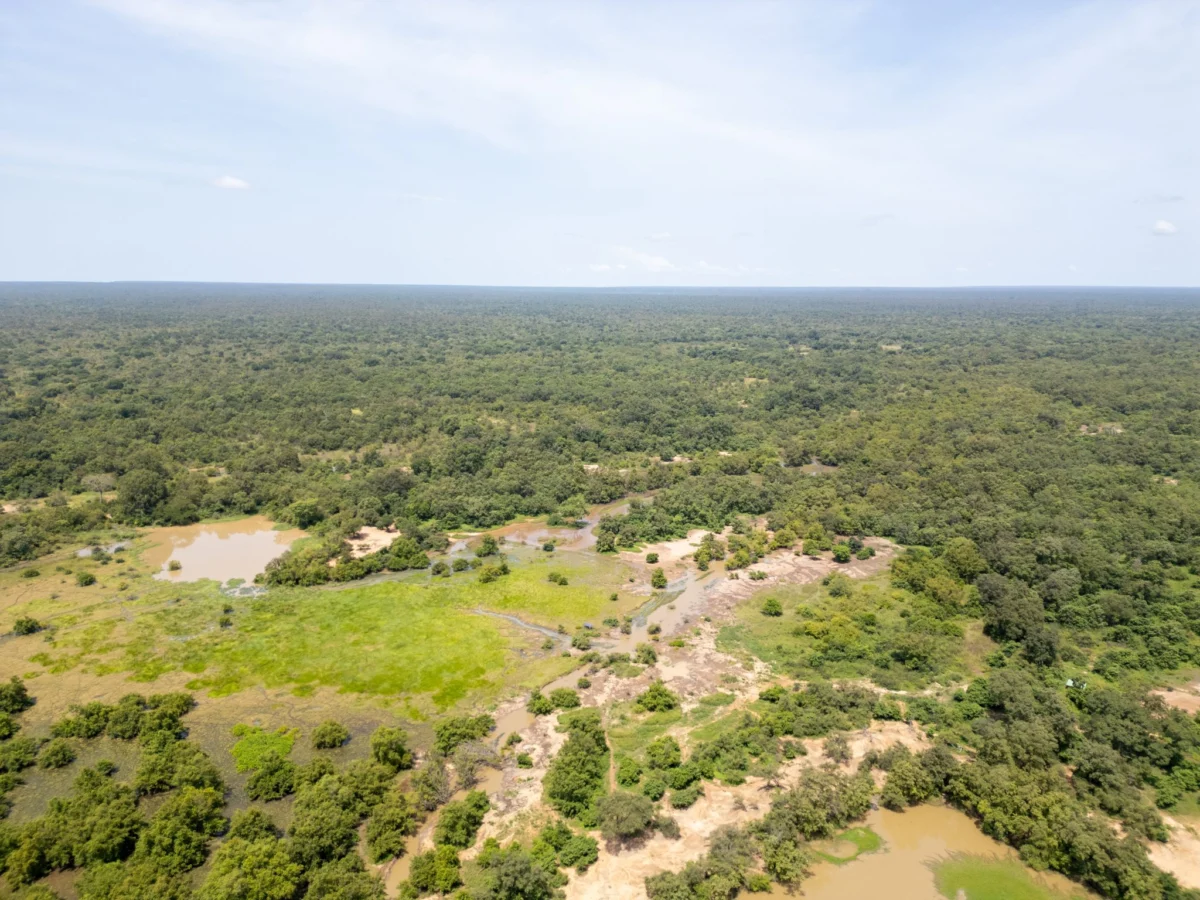
Migratory birds represent one of nature’s most extraordinary feats, undertaking arduous journeys that connect landscapes, countries, and even continents. These epic voyages follow established aerial highways known as "flyways," critical arteries for avian survival. One such vital corridor is the African-Eurasian Flyway, an immense route stretching from the Arctic tundra to the southernmost tip of Africa. Along this incredible path, conservationists are engaged in a relentless struggle to safeguard the birds and the habitats they depend on. A significant part of this global effort is unfolding in Ghana, where a collaborative project, spearheaded by the UK’s Royal Society for the Protection of Birds (RSPB) and the Ghana Wildlife Society, with crucial backing from the Ecological Restoration Fund (ERF), is making strides in protecting the wooded savannahs of northern Ghana. This initiative focuses on the Mole Ecological Landscape, a critical stopover and overwintering site for thousands of migratory landbirds.
The Phenomenon of Global Flyways
The concept of flyways underscores the interconnectedness of global ecosystems. These are not merely arbitrary flight paths but intricate networks of breeding grounds, stopover sites for rest and refueling, and non-breeding (wintering) grounds, all linked by the innate drive of birds to migrate. The African-Eurasian Flyway is one of nine major flyways worldwide, characterized by its staggering length and diversity of species. Millions of birds, from tiny warblers to majestic raptors, navigate this route annually, relying on a chain of suitable habitats to complete their journeys. However, this magnificent spectacle is increasingly threatened by human activities, including habitat destruction, climate change, illegal hunting, and agricultural intensification across multiple nations. Global bird populations have seen alarming declines, with a recent study by BirdLife International indicating that one in eight bird species worldwide is threatened with extinction. Migratory species, often facing pressures in multiple countries, are particularly vulnerable.
A Partnership for Conservation: RSPB, Ghana Wildlife Society, and ERF
Recognizing the urgent need for transboundary conservation, organizations like BirdLife International and its partners have championed flyway conservation for decades. The current project in Ghana exemplifies this collaborative model. The RSPB, a UK-based BirdLife Partner, brings extensive experience in bird conservation and habitat management, acting as a key driver for the broader African-Eurasian Flyway initiative. Its commitment extends beyond national borders, understanding that the birds it protects in the UK spend significant portions of their lives elsewhere.

In Ghana, the project is implemented by the Ghana Wildlife Society (GWS), the national BirdLife Partner. Established in 1991, GWS has been instrumental in advocating for wildlife protection and sustainable resource management within Ghana, working closely with local communities and government agencies. Their deep understanding of local ecological dynamics and community needs is invaluable for the project’s success. The Ecological Restoration Fund (ERF), an organization dedicated to supporting projects that protect biodiverse hotspots, rejuvenate degraded landscapes, and foster local environmental activism, provides the essential financial lifeline. ERF’s philosophy emphasizes re-establishing nature’s essential interconnections while simultaneously creating cultural, social, and economic opportunities for the communities inhabiting these vital landscapes. This multi-faceted approach is crucial for sustainable conservation outcomes.
The Mole Ecological Landscape: A Lifeline in the Savannah
At the heart of Ghana’s conservation efforts for migratory birds lies the Mole Ecological Landscape in the country’s north-western region. This sprawling area is a mosaic of savannah woodland, grassland, and pockets of riverine and close-canopy forest, all centered around the iconic Mole National Park. The park, Ghana’s largest protected area, covers approximately 4,840 square kilometers and is renowned for its diverse megafauna, including elephants, buffalo, antelopes, and primates. Critically, it also serves as an indispensable sanctuary for migratory birds.
Kwame Boafo, the Programme Manager for the Research & Conservation Unit at the Ghana Wildlife Society, eloquently describes Mole National Park as "a place of refreshment" for birds arriving after their arduous crossing of the Sahara Desert. Every year, thousands of migratory landbirds, including species such as the European Pied Flycatcher (Ficedula hypoleuca), Willow Warbler (Phylloscopus trochilus), and Tree Pipit (Anthus trivialis), descend upon Mole. These insectivorous birds find abundant food resources in the park’s rich ecosystem, allowing them to replenish energy reserves vital for their continued journey or overwintering. Beyond landbirds, Mole is also a significant stopover for migratory raptors like the Osprey (Pandion haliaetus), European Honey-buzzard (Pernis apivorus), and Montagu’s Harrier (Circus pygargus). Furthermore, the park serves as a stronghold for some of Ghana’s critically endangered vulture species, highlighting its broader importance for regional biodiversity.
The landscape, however, is not static. It undergoes a dramatic annual transformation, particularly during the dry season, which is frequently followed by extensive bushfires. These fires, often both accidental and deliberately set by livestock grazers or as a means of wider fire damage mitigation, shape the savannah ecosystem. This cyclical burning presents a constant challenge for both the biodiversity and the human communities who must navigate these extreme environmental shifts. The project’s success hinges on fostering resilience in both nature and people, working with communities to manage the land sustainably.
Engaging Communities: Bridging Knowledge Gaps and Fostering Stewardship

One of the most profound aspects of flyway conservation is its ability to connect distant geographies and cultures through the shared journey of birds. Kwame Boafo notes the initial surprise and subsequent fascination among local communities when they learn about the incredible transcontinental flights of these birds. The discovery of bird rings by hunters, often dismissed as strange anomalies, suddenly gains context within the narrative of global migration. This "missing link" in understanding helps build appreciation for the struggles these birds endure and fosters a sense of shared responsibility.
For Kwame, if he had to choose one species to represent the Mole landscape, it would be the European Pied Flycatcher. He recounts observing them singing as early as October, long before most other migratory species begin their vocalizations in March, signaling their impending return journey north. This early singing, a display of vigor and resilience, symbolizes the tenacity required to navigate the challenges of the African-Eurasian Flyway. Another species close to his heart is the Wood Warbler (Phylloscopus sibilatrix), a bird he has spent considerable time studying, further underscoring the personal connection many conservationists have with their subjects.
Innovative Conservation Initiatives: Empowering Communities and Restoring Habitats
The ERF-backed project is implementing a multi-pronged strategy to protect migratory birds and their habitats, crucially integrating community development. With approximately 40,000 people living within a 5km radius of Mole National Park, human-wildlife interactions are frequent and sometimes challenging.
A significant achievement has been the establishment of a new Community Resource Management Area (CREMA) for the communities of Kananto and Kabampe. These communities occupy a strategic location, sandwiched between two protected areas, making their participation in conservation particularly vital. CREMAs are governance structures that empower local communities to take ownership and manage their natural resources sustainably. This inscription provides them with greater autonomy over their land and resources, fostering a sense of responsibility and enabling them to participate more fully in decision-making and benefit-sharing from conservation efforts. This approach addresses the historical disconnect where communities might feel alienated from conservation initiatives, instead making them active partners.
Beyond governance, habitat restoration is a core component. The project focuses on restoring degraded areas by planting native tree species, recognizing their dual benefit for wildlife and local livelihoods. For instance, shea (Vitellaria paradoxa) and dawadawa (Parkia biglobosa) trees are ecologically important for providing cover and food for wildlife, while also being crucial economic assets for communities. In the Kananto-Kabampe CREMA, 90% of women rely on shea nut collection as a primary source of income. The project has established a nursery, propagated seedlings from locally collected seeds, and already planted 5,000 young trees with the help of local communities. The ambitious goal is to plant at least 10,000 trees by the project’s end, with ongoing monitoring and replacement of non-survivors emphasizing the long-term commitment.

Complementing these efforts are initiatives designed to enhance community livelihoods and reduce pressure on natural resources. Training in agroforestry techniques aims to increase yields on existing farms, reducing the need for agricultural expansion into pristine areas. Connecting communities to external markets helps them gain better value for their produce. A bee-keeping initiative is particularly synergistic, as bees are vital pollinators for many of the native trees, including shea, thereby supporting both ecological health and community income through honey production. The overarching hope is that improved economic stability will reduce encroachment into protected reserves, especially during the dry season when resources are scarce.
Citizen science also plays a crucial role, involving local communities in data collection. The deployment of acoustic monitoring devices to record bird activity, for example, allows researchers to compare biodiversity across degraded, restored, and non-degraded areas. This not only provides valuable scientific data but also deepens community engagement and understanding of avian ecology.
Navigating Challenges: Fire, Climate, and Human-Wildlife Conflict
Despite the optimism, significant challenges persist. Slash-and-burn agriculture, a traditional practice, remains widespread. While often intended to clear land for cultivation, fires frequently escape, encroaching upon farms and protected reserves, destroying habitats and nascent restoration efforts. The harsh environment of northern Ghana, characterized by a prolonged dry season and limited rainfall, further complicates reforestation. Strategic planting schedules, meticulous tending of seedlings, and a deep understanding of tree ecology and phenology are essential for survival.
Perhaps the most complex challenge lies in balancing the livelihoods of local communities with conservation goals. Issues such as crop-raiding by wildlife and other forms of human-wildlife conflict often lead to negative perceptions of wildlife. Limited resources for compensation or effective management of these conflicts can breed resentment and hinder conservation buy-in. Kwame Boafo acknowledges that gaining community trust is a process, initially met with suspicion that conservation efforts might be a pretext for land grabbing. However, consistent engagement and visible results, like researchers studying birds in the forest, have gradually built trust and a growing appreciation for wildlife beyond its utilitarian value.
Optimism and the Path Forward

Despite the difficulties, Kwame Boafo expresses profound optimism. He finds encouragement in the willingness of communities to collaborate, even when facing significant personal challenges. The gradual shift in perception, from viewing wildlife as a nuisance or solely as a resource, to understanding its intrinsic and ecological value, is a powerful indicator of progress. "Conservation is about both people and nature," he states, emphasizing the inextricable link. The project aims to build upon this established connection, fostering a future where human well-being and biodiversity thrive in synergy.
In a lighthearted anecdote highlighting the resilience of both nature and technology, Kwame recounts a recent incident where acoustic monitoring devices, despite being caught in an unexpected fire, continued to record data. This unexpected outcome, retrieving valuable information from seemingly damaged equipment, serves as a metaphor for the broader conservation effort: even in the face of adversity, dedication and innovation can yield surprising and positive results.
The work in Ghana’s Mole Ecological Landscape is more than just a local project; it is a critical piece in the larger puzzle of global flyway conservation. By protecting these vital habitats and empowering local communities, the RSPB, Ghana Wildlife Society, and the Ecological Restoration Fund are not only safeguarding specific bird species but also contributing to the health of an entire continental ecosystem and the future of migratory birds worldwide. Their efforts underscore that effective conservation is inherently collaborative, community-driven, and deeply intertwined with human development.
